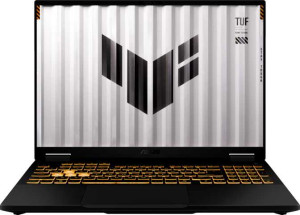
Asus TUF Gaming F16 (2025) FX608 16"
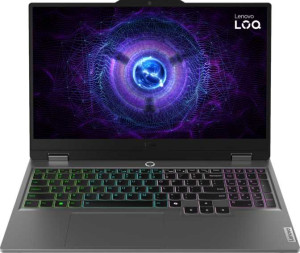
Lenovo LOQ 15IRX9 15.6" Intel Core i7-13650HX 2.6GHz / Nvidia GeForce RTX 4060 Laptop / 32GB RAM / 1TB SSD

Asus TUF Gaming F16 (2025) FX608 16" Lenovo LOQ 15IRX9 15.6" Intel Core i7-13650HX 2.6GHz / Nvidia GeForce RTX 4060 Laptop / 32GB RAM / 1TB SSD

Common Features

  • Both products have a fan design.
  • Both products have a backlit keyboard.
  • Neither product is weather-sealed.
  • Both products have an LCD, LED-backlit, IPS display type.
  • Both products have anti-reflection coating.
  • Both products support four displays.
  • Both products use flash storage.
  • Both products have an NVMe SSD.
  • Both products support DirectX 12 Ultimate.
  • Both products have two memory slots.
  • Both products support multithreading.
  • Both products have 32GB RAM.
  • Both products support Wi-Fi.
  • Both products have an HDMI output.
  • Both products support ray tracing.
  • Both products support DLSS.
  • Both products have stereo speakers.
  • Both products have a 3.5mm audio jack.
  • Both products have a front camera.
  • Both products support multi-display technology.
Specs Comparison
Asus TUF Gaming F16 (2025) FX608 16"

Asus TUF Gaming F16 (2025) FX608 16"

Lenovo LOQ 15IRX9 15.6" Intel Core i7-13650HX 2.6GHz / Nvidia GeForce RTX 4060 Laptop / 32GB RAM / 1TB SSD

Lenovo LOQ 15IRX9 15.6" Intel Core i7-13650HX 2.6GHz / Nvidia GeForce RTX 4060 Laptop / 32GB RAM / 1TB SSD

Design:
Type Gaming Gaming
weight 2200 g 2380 g
Uses a fanless design
Has a backlit keyboard
volume 1618.842 cm³ 1945.062 cm³
width 354 mm 359 mm
height 269 mm 258 mm
thickness 17 mm 21 mm
is weather-sealed (splashproof)

The Asus TUF Gaming F16 (2025) FX608 and the Lenovo LOQ 15IRX9 are both gaming laptops, but they differ in a few design aspects. The Asus model weighs 2200 g, while the Lenovo is slightly heavier at 2380 g. In terms of volume, the Lenovo is also larger, with a volume of 1945.062 cm³ compared to the Asus’s 1618.842 cm³.

Both laptops feature a backlit keyboard, making them suitable for low-light gaming environments. However, neither laptop uses a fanless design, so both will produce some noise during intensive use. The thickness of the laptops varies as well, with the Asus being thinner at 17 mm, while the Lenovo is 21 mm thick. The Asus is also slightly wider at 354 mm, compared to the Lenovo’s 359 mm width. The height of the Asus is 269 mm, while the Lenovo measures 258 mm, making the Lenovo slightly shorter in height.

Neither of the laptops is weather-sealed (splashproof), so they may not be ideal for use in humid or wet conditions. Overall, these gaming laptops share some similar design features, but the Lenovo is bulkier in size and weight, while the Asus is thinner and a bit more compact in height.

Display:
screen size 16" 15.6"
resolution 2560 x 1600 px 1920 x 1080 px
pixel density 188 ppi 141 ppi
Display type LCD, LED-backlit, IPS LCD, LED-backlit, IPS
has a touch screen
refresh rate 165Hz 144Hz
has anti-reflection coating
supported displays 4 4

The Asus TUF Gaming F16 (2025) FX608 and the Lenovo LOQ 15IRX9 both feature high-quality LCD, LED-backlit, IPS displays. However, there are a few differences in their screen specifications. The Asus has a larger 16″ screen, compared to the Lenovo's 15.6″. The resolution on the Asus is 2560 x 1600 px, providing a sharper image than the Lenovo's 1920 x 1080 px resolution. This gives the Asus a higher pixel density of 188 ppi, versus the Lenovo's 141 ppi, meaning the Asus display offers more detail and clarity.

Both laptops have a refresh rate of 165Hz (Asus) and 144Hz (Lenovo), making them great choices for smooth gaming performance. Neither product has a touchscreen, and both displays include anti-reflection coating to reduce glare. Additionally, both the Asus and Lenovo support up to 4 external displays, providing flexibility for multi-monitor setups.

Overall, while both displays share similar technology and features, the Asus offers a higher screen resolution and pixel density, making it better suited for users who prioritize sharpness and detail, whereas the Lenovo has a slightly smaller screen with lower resolution and pixel density.

Performance:
RAM 32GB 32GB
RAM speed 5600 MHz 4800 MHz
Uses flash storage
CPU speed 8 x 2.2 & 8 x 1.6 GHz 6 x 2.6 & 8 x 1.9 GHz
CPU threads 24 threads 20 threads
VRAM 8GB 8GB
floating-point performance 23.22 TFLOPS 14.56 TFLOPS
GDDR version GDDR7 GDDR6
texture rate 362.9 GTexels/s 227.52 GTexels/s
pixel rate 121 GPixel/s 113.76 GPixel/s
Is an NVMe SSD
DirectX version DirectX 12 Ultimate DirectX 12 Ultimate
GPU clock speed 2235 MHz 1545 MHz
uses multithreading
maximum memory amount 64GB 32GB
DDR memory version 5 5
turbo clock speed 5.2GHz 4.9GHz
GPU turbo 2520 MHz 2370 MHz
memory slots 2 2
PCI Express (PCIe) version 4 4
semiconductor size 4 nm 5 nm
has XeSS (XMX)
Supports 64-bit

The Asus TUF Gaming F16 (2025) FX608 and the Lenovo LOQ 15IRX9 both come equipped with 32GB of RAM, but their RAM speeds differ. The Asus features faster 5600 MHz RAM, while the Lenovo has 4800 MHz RAM. Both laptops use flash storage and are equipped with NVMe SSDs for fast data access. The Asus is capable of supporting up to 64GB of RAM, whereas the Lenovo can only handle a maximum of 32GB.

In terms of CPU performance, the Asus has a more powerful processor with 24 threads (8 cores at 2.2 GHz and 8 cores at 1.6 GHz), compared to the Lenovo's 20 threads (6 cores at 2.6 GHz and 8 cores at 1.9 GHz). The Asus’s CPU turbo clock speed is also higher at 5.2 GHz, versus the Lenovo’s 4.9 GHz. Both laptops feature powerful GPUs with 8GB of VRAM, but the Asus uses a GDDR7 version, while the Lenovo uses GDDR6. The Asus has a higher GPU clock speed of 2235 MHz, while the Lenovo’s GPU clock speed is 1545 MHz.

The floating-point performance of the Asus is 23.22 TFLOPS, significantly higher than the Lenovo’s 14.56 TFLOPS. Additionally, the Asus has a higher texture rate of 362.9 GTexels/s and a higher pixel rate of 121 GPixel/s, compared to the Lenovo’s 227.52 GTexels/s and 113.76 GPixel/s. Both laptops support multithreading, PCI Express (PCIe) version 4, and 64-bit systems, but the Asus has a smaller semiconductor size of 4 nm compared to the Lenovo’s 5 nm. Neither product supports XeSS (XMX).

Benchmarks:
Geekbench 6 result (multi) 13325 14077
Geekbench 6 result (single) 2443 2524
PassMark (G3D) result 19987 17710
PassMark result 34910 30674
PassMark result (single) 3862 3767

The Asus TUF Gaming F16 (2025) FX608 and the Lenovo LOQ 15IRX9 show some differences in benchmark results. For multi-core performance, the Asus scores 13,325 on Geekbench 6, while the Lenovo achieves a slightly higher score of 14,077. On single-core performance, the Asus scores 2,443, and the Lenovo scores 2,524, which is a small difference but still notable.

In terms of PassMark results, the Asus scores 34,910 overall, compared to the Lenovo's 30,674. However, for the 3D graphics (G3D) benchmark, the Asus performs better with a score of 19,987, while the Lenovo scores 17,710. When it comes to the PassMark single-core result, the Asus has a score of 3,862, which is higher than the Lenovo's score of 3,767.

Overall, both laptops perform similarly in benchmarks, with the Asus showing a higher PassMark score and a better G3D result, while the Lenovo has a slight edge in Geekbench multi-core and single-core performance.

Connectivity:
USB 3.2 Gen 2 ports (USB-C) 1 1
USB 3.2 Gen 2 ports (USB-A) 3 0
USB 4 20Gbps ports 0 0
USB 4 40Gbps ports 1 0
Thunderbolt 4 ports 1 0
USB 3.2 Gen 1 ports (USB-C) 0 0
USB 3.2 Gen 1 ports (USB-A) 0 3
Thunderbolt 3 ports 0 0
has an HDMI output
Has USB Type-C
supports Wi-Fi
Wi-Fi version Wi-Fi 6E (802.11ax), Wi-Fi 6 (802.11ax), Wi-Fi 5 (802.11ac), Wi-Fi 4 (802.11n) Wi-Fi 6 (802.11ax), Wi-Fi 5 (802.11ac), Wi-Fi 4 (802.11n)
has an external memory slot
Bluetooth version 5.3 5.2
RJ45 ports 1 1
HDMI ports 1 1
HDMI version HDMI 2.1 HDMI 2.1
DisplayPort outputs 0 0
has AirPlay
mini DisplayPort outputs 0 0
has a VGA connector

The Asus TUF Gaming F16 (2025) FX608 and the Lenovo LOQ 15IRX9 both offer solid connectivity options, with some notable differences. Both laptops include one USB 3.2 Gen 2 port (USB-C) and one HDMI output with HDMI 2.1 support. The Asus stands out with additional connectivity features, such as one USB 4 40Gbps port, one Thunderbolt 4 port, and Bluetooth version 5.3, while the Lenovo has Bluetooth version 5.2 and lacks Thunderbolt or USB 4 support.

Both laptops support Wi-Fi 6 (802.11ax), Wi-Fi 5 (802.11ac), and Wi-Fi 4 (802.11n), ensuring fast wireless connections. They also both have one RJ45 port for wired internet access, but neither laptop offers an external memory slot or DisplayPort outputs. In terms of USB-A ports, the Asus has three USB 3.2 Gen 2 (USB-A) ports, while the Lenovo offers three USB 3.2 Gen 1 (USB-A) ports. Both devices also have AirPlay support and no VGA connector.

In summary, the Asus provides more advanced connectivity with Thunderbolt 4, USB 4, and Bluetooth 5.3, while the Lenovo offers a more standard connectivity setup with Bluetooth 5.2 and lacks the faster USB 4 or Thunderbolt options.

Battery:
battery size 90 Wh 60 Wh
Has sleep-and-charge USB ports
Has a MagSafe power adapter

The Asus TUF Gaming F16 (2025) FX608 and the Lenovo LOQ 15IRX9 both feature sleep-and-charge USB ports, allowing for convenient charging of devices even when the laptops are in sleep mode. However, they differ in battery size. The Asus has a larger 90 Wh battery, while the Lenovo has a smaller 60 Wh battery. Neither laptop includes a MagSafe power adapter, so they both rely on standard charging methods.

With the larger battery, the Asus may offer longer usage times, particularly during intensive tasks, compared to the Lenovo with its smaller battery. Both laptops share similar charging features but differ when it comes to battery capacity.

Features:
release date January 2025 February 2025
has stereo speakers
has a socket for a 3.5 mm audio jack
supports ray tracing
supports DLSS
has Dolby Atmos
Stylus included
Has a fingerprint scanner
number of microphones 1 2
Uses 3D facial recognition
has voice commands
has a front camera
Has S/PDIF Out port
has a gyroscope
has GPS
has an accelerometer
has a compass
Has an optical disc drive

Both the Asus TUF Gaming F16 (2025) FX608 and the Lenovo LOQ 15IRX9 come equipped with stereo speakers and a 3.5 mm audio jack, making them suitable for audio connectivity. Both laptops support ray tracing and DLSS for enhanced gaming visuals. Neither device includes Dolby Atmos, stylus support, or a fingerprint scanner.

The Asus stands out with 3D facial recognition and voice command functionality, which are not available on the Lenovo. Additionally, the Asus has a single microphone, while the Lenovo has two microphones, providing potentially improved audio capture for communication. Both laptops feature a front camera for video calls, but the Lenovo does not include 3D facial recognition or voice commands.

Neither laptop offers advanced sensors like a gyroscope, GPS, accelerometer, or compass, and both lack an optical disc drive. Overall, the main differences between the two lie in the Asus offering 3D facial recognition and voice commands, while the Lenovo has an extra microphone for better audio input.

Miscellaneous:
clock multiplier 22 26
GPU architecture Blackwell Ada Lovelace
has LHR
Thermal Design Power (TDP) 50W 115W
Supports 3D
Supports multi-display technology
OpenCL version 3 3
OpenGL version 4.6 4.6
Supports ECC memory
memory bus width 128-bit 128-bit
effective memory speed 25400 MHz 16000 MHz
maximum memory bandwidth 405.8 GB/s 256 GB/s
render output units (ROPs) 48 48
texture mapping units (TMUs) 144 96
shading units 4608 3072
Has Double Precision Floating Point (DPFP)
GPU memory speed 2000 MHz 2000 MHz
GPU name UHD Graphics 710 UHD Graphics 710
Type Laptop Laptop
instruction sets MMX, F16C, FMA3, AES, AVX, AVX2, SSE 4.1, SSE 4.2 SSE 4.2, SSE 4.1, AVX, AES, FMA3, F16C, MMX
L3 cache 30 MB 24 MB
Has an unlocked multiplier
Has NX bit
CPU temperature 100 °C 100 °C
GPU execution units 16 16
Has integrated graphics
memory channels 2 2
RAM speed (max) 5600 MHz 4800 MHz
Uses big.LITTLE technology

The Asus TUF Gaming F16 (2025) FX608 and the Lenovo LOQ 15IRX9 differ in several key technical features. Both laptops support 3D and multi-display technology, but their clock multipliers vary. The Asus has a clock multiplier of 22, while the Lenovo’s is higher at 26, suggesting different CPU performance characteristics. The Asus has a Thermal Design Power (TDP) of 50W, much lower than the Lenovo's 115W TDP, indicating that the Lenovo’s components may require more power, likely due to its higher-end GPU.

Both laptops support ECC memory, have a 128-bit memory bus width, and feature the same GPU memory speed of 2000 MHz. However, the Asus has a maximum memory bandwidth of 405.8 GB/s, significantly higher than the Lenovo’s 256 GB/s. The Asus also boasts 144 texture mapping units (TMUs) and 4608 shading units, while the Lenovo has fewer TMUs (96) and shading units (3072). Both systems have integrated graphics, but the Asus uses UHD Graphics 710, while the Lenovo also uses UHD Graphics 710.

Regarding other specs, both laptops support similar instruction sets, such as AVX, AES, and MMX. The Asus features a 30 MB L3 cache, whereas the Lenovo has a smaller 24 MB L3 cache. Both laptops use big.LITTLE technology and have the same number of memory channels (2). The Asus supports a RAM speed of up to 5600 MHz, while the Lenovo's max RAM speed is lower at 4800 MHz. Both laptops maintain a CPU temperature of 100°C, and neither has an unlocked multiplier.

Comparison Summary

This is a specification comparison between Asus TUF Gaming F16 (2025) FX608 16″ and Lenovo LOQ 15IRX9 15.6″ Intel Core i7-13650HX 2.6GHz / Nvidia GeForce RTX 4060 Laptop / 32GB RAM / 1TB SSD. Both laptops share 32GB RAM, support Wi-Fi, and have a backlit keyboard. Key differences include the screen size (16″ on the Asus and 15.6″ on the Lenovo), the battery size (90 Wh on the Asus and 60 Wh on the Lenovo), and the GPU clock speed (2235 MHz on the Asus versus 1545 MHz on the Lenovo). Additionally, the Asus model offers a higher pixel density and RAM speed compared to the Lenovo variant.