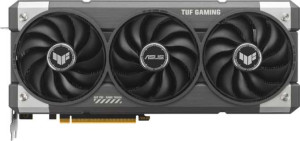
Asus TUF Gaming GeForce RTX 5060 OC Edition
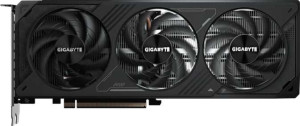
Gigabyte GeForce RTX 5070 WindForce OC SFF

Asus TUF Gaming GeForce RTX 5060 OC Edition Gigabyte GeForce RTX 5070 WindForce OC SFF

Overview

Choosing between the Asus TUF Gaming GeForce RTX 5060 OC Edition and the Gigabyte GeForce RTX 5070 WindForce OC SFF means navigating a compelling trade-off between power efficiency and raw graphical muscle. Both cards are rooted in the same modern Blackwell architecture and share a strong feature set, yet they diverge sharply when it comes to VRAM capacity, shading units, and thermal design. This head-to-head comparison breaks down every meaningful specification to help you determine which GPU best suits your system and workload.

Common Features

  • GPU memory speed is 1750 MHz on both products.
  • Both products support Double Precision Floating Point (DPFP).
  • Effective memory speed is 28000 MHz on both products.
  • Both products use GDDR7 memory.
  • Both products support ECC memory.
  • Both products support DirectX 12 Ultimate.
  • OpenGL version is 4.6 on both products.
  • OpenCL version is 3 on both products.
  • Both products support multi-display technology.
  • Both products support ray tracing.
  • Both products support 3D.
  • Both products support DLSS.
  • XeSS (XMX) support is not available on either product.
  • Both products have an HDMI output.
  • Both products have 1 HDMI port.
  • HDMI version is 2.1b on both products.
  • Both products have 3 DisplayPort outputs.
  • Neither product has USB-C ports.
  • Neither product has DVI outputs.
  • Neither product has mini DisplayPort outputs.
  • Both products are built on the Blackwell GPU architecture.
  • Both products use PCIe version 5.
  • Both products are manufactured on a 5 nm semiconductor process.
  • Neither product has air-water cooling.

Main Differences

  • GPU clock speed is 2280 MHz on Asus TUF Gaming GeForce RTX 5060 OC Edition and 2325 MHz on Gigabyte GeForce RTX 5070 WindForce OC SFF.
  • GPU turbo speed is 2640 MHz on Asus TUF Gaming GeForce RTX 5060 OC Edition and 2542 MHz on Gigabyte GeForce RTX 5070 WindForce OC SFF.
  • Pixel rate is 126.7 GPixel/s on Asus TUF Gaming GeForce RTX 5060 OC Edition and 203.4 GPixel/s on Gigabyte GeForce RTX 5070 WindForce OC SFF.
  • Floating-point performance is 20.28 TFLOPS on Asus TUF Gaming GeForce RTX 5060 OC Edition and 31.24 TFLOPS on Gigabyte GeForce RTX 5070 WindForce OC SFF.
  • Texture rate is 316.8 GTexels/s on Asus TUF Gaming GeForce RTX 5060 OC Edition and 488.1 GTexels/s on Gigabyte GeForce RTX 5070 WindForce OC SFF.
  • Shading units total 3840 on Asus TUF Gaming GeForce RTX 5060 OC Edition and 6144 on Gigabyte GeForce RTX 5070 WindForce OC SFF.
  • Texture mapping units (TMUs) number 120 on Asus TUF Gaming GeForce RTX 5060 OC Edition and 192 on Gigabyte GeForce RTX 5070 WindForce OC SFF.
  • Render output units (ROPs) number 48 on Asus TUF Gaming GeForce RTX 5060 OC Edition and 80 on Gigabyte GeForce RTX 5070 WindForce OC SFF.
  • Maximum memory bandwidth is 448 GB/s on Asus TUF Gaming GeForce RTX 5060 OC Edition and 672 GB/s on Gigabyte GeForce RTX 5070 WindForce OC SFF.
  • VRAM is 8GB on Asus TUF Gaming GeForce RTX 5060 OC Edition and 12GB on Gigabyte GeForce RTX 5070 WindForce OC SFF.
  • Memory bus width is 128-bit on Asus TUF Gaming GeForce RTX 5060 OC Edition and 192-bit on Gigabyte GeForce RTX 5070 WindForce OC SFF.
  • Thermal Design Power (TDP) is 145W on Asus TUF Gaming GeForce RTX 5060 OC Edition and 250W on Gigabyte GeForce RTX 5070 WindForce OC SFF.
  • Number of transistors is 21900 million on Asus TUF Gaming GeForce RTX 5060 OC Edition and 31100 million on Gigabyte GeForce RTX 5070 WindForce OC SFF.
  • Width is 302 mm on Asus TUF Gaming GeForce RTX 5060 OC Edition and 282 mm on Gigabyte GeForce RTX 5070 WindForce OC SFF.
  • Height is 133.5 mm on Asus TUF Gaming GeForce RTX 5060 OC Edition and 110 mm on Gigabyte GeForce RTX 5070 WindForce OC SFF.
Specs Comparison
Asus TUF Gaming GeForce RTX 5060 OC Edition

Asus TUF Gaming GeForce RTX 5060 OC Edition

Gigabyte GeForce RTX 5070 WindForce OC SFF

Gigabyte GeForce RTX 5070 WindForce OC SFF

Performance:
GPU clock speed 2280 MHz 2325 MHz
GPU turbo 2640 MHz 2542 MHz
pixel rate 126.7 GPixel/s 203.4 GPixel/s
floating-point performance 20.28 TFLOPS 31.24 TFLOPS
texture rate 316.8 GTexels/s 488.1 GTexels/s
GPU memory speed 1750 MHz 1750 MHz
shading units 3840 6144
texture mapping units (TMUs) 120 192
render output units (ROPs) 48 80
Has Double Precision Floating Point (DPFP)

At the heart of the performance gap between these two cards lies raw hardware scale. The RTX 5070 WindForce OC SFF fields 6144 shading units, 192 TMUs, and 80 ROPs — roughly 60% more of each compared to the RTX 5060 OC Edition's 3840 shaders, 120 TMUs, and 48 ROPs. This directly translates into the 5070's commanding leads in real-world throughput metrics: its 31.24 TFLOPS of floating-point performance is over 54% higher than the 5060's 20.28 TFLOPS, and its texture and pixel fill rates follow suit at 488.1 GTexels/s and 203.4 GPixel/s versus 316.8 and 126.7 respectively. In practice, this means faster geometry processing, smoother high-resolution rendering, and more headroom for demanding rasterization workloads.

One counterintuitive detail worth noting: the RTX 5060 OC Edition actually achieves a higher peak GPU turbo clock of 2640 MHz versus the 5070's 2542 MHz. However, clock speed alone is a poor proxy for performance when the underlying shader count differs so substantially. The 5060's higher boost frequency is essentially compensating for its narrower execution width — it cannot overcome the architectural deficit imposed by having far fewer compute units. Both cards share identical GPU memory speed of 1750 MHz and both support Double Precision Floating Point, so neither holds a differentiating advantage on those fronts.

The RTX 5070 WindForce OC SFF holds a clear and significant performance edge across every major throughput metric in this group. It is the stronger GPU for users targeting higher frame rates at 1440p or 4K, or for compute-adjacent tasks where FLOPS and texture bandwidth matter. The RTX 5060 OC Edition remains competitive at its tier, but buyers should have realistic expectations: this is a capable 1080p-to-1440p card, not a rival to the 5070 in raw horsepower.
Memory:
effective memory speed 28000 MHz 28000 MHz
maximum memory bandwidth 448 GB/s 672 GB/s
VRAM 8GB 12GB
GDDR version GDDR7 GDDR7
memory bus width 128-bit 192-bit
Supports ECC memory

When comparing the memory specifications of the Asus TUF Gaming GeForce RTX 5060 OC Edition and the Gigabyte GeForce RTX 5070 WindForce OC SFF, there are some notable differences. Both cards feature an effective memory speed of 28000 MHz and use GDDR7 memory, but they differ in terms of memory bandwidth, VRAM, and memory bus width.

The Asus card has a maximum memory bandwidth of 448 GB/s, while the Gigabyte model offers a significantly higher bandwidth of 672 GB/s. For VRAM, the Asus card is equipped with 8GB, while the Gigabyte card comes with 12GB. Additionally, the Asus has a memory bus width of 128-bit, whereas the Gigabyte boasts a wider 192-bit memory bus width.

Both cards support ECC memory, ensuring error correction for better stability during intense workloads, which is a feature common to both models.

Features:
DirectX version DirectX 12 Ultimate DirectX 12 Ultimate
OpenGL version 4.6 4.6
OpenCL version 3 3
Supports multi-display technology
supports ray tracing
Supports 3D
supports DLSS
has XeSS (XMX)
AMD SAM / Intel Resizable BAR Intel Resizable BAR Intel Resizable BAR
has LHR
has RGB lighting
supported displays 4 4

The features of the Asus TUF Gaming GeForce RTX 5060 OC Edition and the Gigabyte GeForce RTX 5070 WindForce OC SFF are identical across several categories. Both cards support DirectX 12 Ultimate, OpenGL 4.6, and OpenCL 3. They also support multi-display technology, ray tracing, 3D, and DLSS. Neither model supports XeSS (XMX), and both have Intel Resizable BAR support (AMD SAM / Intel Resizable BAR).

In terms of extra features, both cards lack LHR (Low Hash Rate) functionality, which can be a key feature for cryptocurrency mining. Additionally, both models include RGB lighting for customizable aesthetics and can support up to four displays.

Overall, there are no differences in features between these two cards as per the provided specifications.

Ports:
has an HDMI output
HDMI ports 1 1
HDMI version HDMI 2.1b HDMI 2.1b
DisplayPort outputs 3 3
USB-C ports 0 0
DVI outputs 0 0
mini DisplayPort outputs 0 0

The port configurations of the Asus TUF Gaming GeForce RTX 5060 OC Edition and the Gigabyte GeForce RTX 5070 WindForce OC SFF are identical. Both cards feature one HDMI output with HDMI 2.1b support, along with three DisplayPort outputs. Neither card has USB-C, DVI, or mini DisplayPort outputs.

In terms of the number of ports and the versions of HDMI and DisplayPort, both models offer the same capabilities and specifications.

General info:
GPU architecture Blackwell Blackwell
release date May 2025 January 2025
Thermal Design Power (TDP) 145W 250W
PCI Express (PCIe) version 5 5
semiconductor size 5 nm 5 nm
number of transistors 21900 million 31100 million
Has air-water cooling
width 302 mm 282 mm
height 133.5 mm 110 mm

The Asus TUF Gaming GeForce RTX 5060 OC Edition and the Gigabyte GeForce RTX 5070 WindForce OC SFF share the same GPU architecture, both utilizing Blackwell. However, there are some differences in other general specifications. The Asus card has a thermal design power (TDP) of 145W, whereas the Gigabyte card has a higher TDP of 250W. Both cards support PCI Express (PCIe) version 5 and use a 5 nm semiconductor size.

In terms of the number of transistors, the Gigabyte model has 31,100 million, which is more than the Asus card's 21,900 million. Both cards lack air-water cooling solutions.

Finally, the physical dimensions differ slightly, with the Asus card measuring 302 mm in width and 133.5 mm in height, while the Gigabyte model is slightly smaller at 282 mm in width and 110 mm in height.

Comparison Summary & Verdict

Both GPUs share a solid common ground: Blackwell architecture, GDDR7 memory, PCIe 5 connectivity, DirectX 12 Ultimate, ray tracing, and DLSS support. However, the Gigabyte GeForce RTX 5070 WindForce OC SFF pulls clearly ahead in raw compute, delivering 31.24 TFLOPS, 6144 shading units, 12GB of VRAM on a 192-bit bus, and 672 GB/s of bandwidth — making it the stronger candidate for high-resolution gaming and demanding workloads. The Asus TUF Gaming GeForce RTX 5060 OC Edition answers with a significantly lower 145W TDP and a higher turbo clock of 2640 MHz, making it a smart pick for power-conscious builds. Users seeking maximum throughput in a compact form factor should lean toward the RTX 5070, while those prioritizing energy efficiency and lower system demands will find the RTX 5060 a well-rounded and capable choice.

Asus TUF Gaming GeForce RTX 5060 OC Edition
Buy Asus TUF Gaming GeForce RTX 5060 OC Edition if...

Buy the Asus TUF Gaming GeForce RTX 5060 OC Edition if you want a power-efficient GPU with a low 145W TDP and a higher turbo clock of 2640 MHz, and your use case does not require more than 8GB of VRAM.

Gigabyte GeForce RTX 5070 WindForce OC SFF
Buy Gigabyte GeForce RTX 5070 WindForce OC SFF if...

Buy the Gigabyte GeForce RTX 5070 WindForce OC SFF if you need maximum graphical performance, with 12GB of GDDR7 VRAM, 31.24 TFLOPS of floating-point compute, and 672 GB/s of memory bandwidth in a more compact physical footprint.