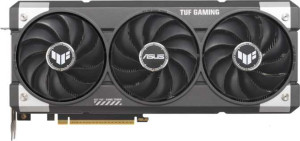
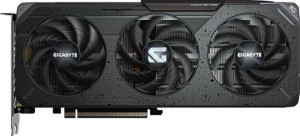
At the foundation, these two cards are remarkably well-matched: both support DirectX 12 Ultimate, OpenGL 4.6, ray tracing, 3D output, multi-display setups, and RGB lighting. Neither implements XeSS, and neither carries an LHR mining limiter. The most consequential divergence, however, lies in upscaling support. The RTX 5060 Ti supports DLSS, NVIDIA's AI-driven upscaling and frame generation technology, while the RX 9060 XT does not — instead relying on AMD's FSR ecosystem, which is not explicitly listed here but is the AMD equivalent. DLSS, particularly in its latest iterations with frame generation, can dramatically boost effective framerates in supported titles, making it one of the most impactful software features a GPU can offer in real-world gaming scenarios.
A few secondary differences are worth noting. The RTX 5060 Ti supports 4 simultaneous displays versus 3 on the RX 9060 XT — a meaningful distinction only for users running complex multi-monitor workstation setups, but irrelevant for typical gaming configurations. On the compute side, the 5060 Ti's OpenCL 3 versus the 9060 XT's OpenCL 2.2 represents a generational step that could matter for GPU-accelerated productivity and development tools, though the practical gap depends heavily on specific software support. The memory resizability features — Intel Resizable BAR on the 5060 Ti and AMD SAM on the 9060 XT — are functionally equivalent technologies that improve CPU-to-GPU data transfer efficiency, so this is a wash in practice.
The Asus RTX 5060 Ti holds the edge in this group, primarily on the strength of DLSS support and the broader display connectivity. For gamers invested in DLSS-compatible titles, that upscaling advantage alone is a decisive differentiator that can meaningfully extend the card's effective performance ceiling.