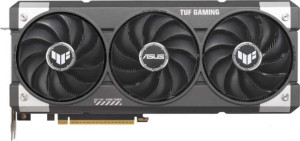
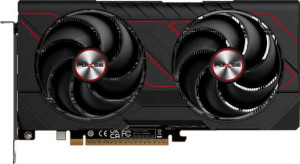
Underneath the heatsink, these two cards represent different silicon philosophies. The RX 9060 XT is built on a 4 nm process node and packs 29,700 million transistors, while the RTX 5060 Ti uses a 5 nm node with 21,900 million transistors. The AMD chip's denser, more transistor-rich die is a key reason it achieves higher throughput metrics despite a smaller shader array — RDNA 4 extracts more work per unit of silicon. The finer process node also contributes to power efficiency, which shows up directly in the TDP figures.
On thermal load, the RX 9060 XT draws a rated 170W versus the RTX 5060 Ti's 180W — a modest 10W gap, but meaningful when combined with the RX 9060 XT's higher compute output. That implies better performance-per-watt on AMD's side, which translates to less heat generated per frame, potentially quieter fan behavior under sustained load, and marginally lower electricity costs over time. Both cards connect via PCIe 5.0, ensuring neither is bottlenecked by the slot in any current or near-future platform.
Physical dimensions tell a practical story as well. At 240 mm long, the RX 9060 XT is noticeably more compact than the RTX 5060 Ti's 302 mm length — a 62 mm difference that matters significantly in smaller mid-tower or ITX-adjacent cases where clearance is tight. Overall, the RX 9060 XT holds an advantage in this group: a more advanced process node, greater transistor density, lower TDP, and a smaller footprint collectively make it the more efficient and physically flexible design of the two.