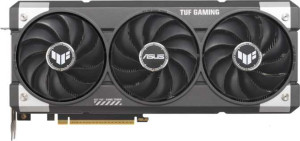
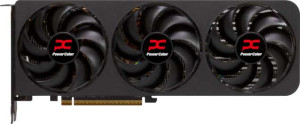
The most consequential difference in this group is upscaling support. The RTX 5060 Ti supports DLSS, Nvidia's AI-driven upscaling technology, while the RX 9070 does not list support for DLSS or XeSS. DLSS can deliver substantial frame rate gains with minimal visual quality loss in supported titles, making it a meaningful practical advantage for gaming workloads — particularly as the game library supporting it has grown considerably. The RX 9070 relies on AMD SAM for its memory access optimization, whereas the RTX 5060 Ti uses Intel Resizable BAR; both serve a similar purpose of allowing the CPU full access to VRAM, so neither card holds a clear edge there.
On the API front, the RTX 5060 Ti pulls ahead again with DirectX 12 Ultimate versus the RX 9070's DirectX 12. The ″Ultimate″ designation unlocks hardware-level support for features like mesh shaders and sampler feedback at the API layer, which developers can target for higher-fidelity effects. The RTX 5060 Ti also carries a newer OpenCL 3 implementation compared to the RX 9070's OpenCL 2.2, a minor but relevant advantage for GPU-accelerated compute applications. Both cards share ray tracing support, identical multi-display and 3D capability, and a four-display output limit.
Factoring in the full picture, the RTX 5060 Ti holds a clear edge in features. DLSS support alone is a significant differentiator for gamers, and the newer DirectX and OpenCL versions reinforce that lead. The RX 9070's lack of RGB lighting is cosmetically minor, but it has no feature in this group that meaningfully offsets what the RTX 5060 Ti brings to the table.