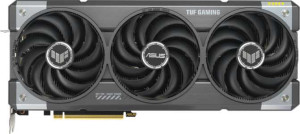
Asus TUF Gaming GeForce RTX 5070 Ti OC Edition
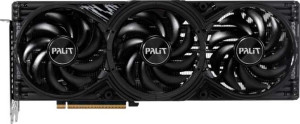
Palit GeForce RTX 5070 Ti GamingPro-S OC

Asus TUF Gaming GeForce RTX 5070 Ti OC Edition Palit GeForce RTX 5070 Ti GamingPro-S OC

Overview

Welcome to our in-depth specification comparison between the Asus TUF Gaming GeForce RTX 5070 Ti OC Edition and the Palit GeForce RTX 5070 Ti GamingPro-S OC. Both cards are built on the same Blackwell architecture and share a 300W TDP, but key battlegrounds emerge around boosted clock speeds, raw compute throughput, display connectivity, and physical dimensions — making this a genuinely interesting matchup for enthusiast builders.

Common Features

  • Both cards share a base GPU clock speed of 2295 MHz.
  • Both cards have a GPU memory speed of 1750 MHz.
  • Both cards feature 8960 shading units.
  • Both cards have 280 texture mapping units (TMUs).
  • Both cards have 96 render output units (ROPs).
  • Double Precision Floating Point (DPFP) is supported on both cards.
  • Both cards have an effective memory speed of 28000 MHz.
  • Both cards offer a maximum memory bandwidth of 896 GB/s.
  • Both cards come with 16GB of VRAM.
  • Both cards use GDDR7 memory.
  • Both cards have a 256-bit memory bus width.
  • ECC memory is supported on both cards.
  • Both cards support DirectX 12 Ultimate.
  • Both cards support OpenGL version 4.6.
  • Multi-display technology is supported on both cards.
  • Ray tracing is supported on both cards.
  • DLSS is supported on both cards.
  • XeSS (XMX) is not available on either card.
  • Both cards support Intel Resizable BAR.
  • Both cards have an HDMI 2.1b output.
  • Both cards feature 3 DisplayPort outputs.
  • Neither card has USB-C, DVI, or mini DisplayPort outputs.
  • Both cards are based on the Blackwell GPU architecture.
  • Both cards have a Thermal Design Power (TDP) of 300W.
  • Both cards use PCIe 5.0.
  • Both cards are manufactured on a 5 nm process.
  • Both cards have 45600 million transistors.
  • Air-water cooling is not available on either card.
  • 3D support is available on both cards.

Main Differences

  • GPU turbo clock is 2588 MHz on the Asus TUF Gaming GeForce RTX 5070 Ti OC Edition and 2482 MHz on the Palit GeForce RTX 5070 Ti GamingPro-S OC.
  • Pixel rate is 248.4 GPixel/s on the Asus TUF Gaming GeForce RTX 5070 Ti OC Edition and 238.3 GPixel/s on the Palit GeForce RTX 5070 Ti GamingPro-S OC.
  • Floating-point performance is 46.38 TFLOPS on the Asus TUF Gaming GeForce RTX 5070 Ti OC Edition and 44.48 TFLOPS on the Palit GeForce RTX 5070 Ti GamingPro-S OC.
  • Texture rate is 724.6 GTexels/s on the Asus TUF Gaming GeForce RTX 5070 Ti OC Edition and 695 GTexels/s on the Palit GeForce RTX 5070 Ti GamingPro-S OC.
  • HDMI port count is 2 on the Asus TUF Gaming GeForce RTX 5070 Ti OC Edition and 1 on the Palit GeForce RTX 5070 Ti GamingPro-S OC.
  • Width is 329 mm on the Asus TUF Gaming GeForce RTX 5070 Ti OC Edition and 331.9 mm on the Palit GeForce RTX 5070 Ti GamingPro-S OC.
  • Height is 140 mm on the Asus TUF Gaming GeForce RTX 5070 Ti OC Edition and 127.1 mm on the Palit GeForce RTX 5070 Ti GamingPro-S OC.
Specs Comparison
Asus TUF Gaming GeForce RTX 5070 Ti OC Edition

Asus TUF Gaming GeForce RTX 5070 Ti OC Edition

Palit GeForce RTX 5070 Ti GamingPro-S OC

Palit GeForce RTX 5070 Ti GamingPro-S OC

Performance:
GPU clock speed 2295 MHz 2295 MHz
GPU turbo 2588 MHz 2482 MHz
pixel rate 248.4 GPixel/s 238.3 GPixel/s
floating-point performance 46.38 TFLOPS 44.48 TFLOPS
texture rate 724.6 GTexels/s 695 GTexels/s
GPU memory speed 1750 MHz 1750 MHz
shading units 8960 8960
texture mapping units (TMUs) 280 280
render output units (ROPs) 96 96
Has Double Precision Floating Point (DPFP)

Both cards share an identical foundation: the same 2295 MHz base clock, 8960 shading units, 280 TMUs, 96 ROPs, and 1750 MHz memory speed. This means the raw shader and memory bandwidth machinery is identical, and any real-world performance gap between them will be driven entirely by how aggressively each card boosts under load.

That is where the Asus TUF OC Edition pulls ahead. Its 2588 MHz turbo clock outpaces the Palit GamingPro-S OC's 2482 MHz by 106 MHz — a roughly 4.3% boost frequency advantage. That delta flows directly into every derived throughput metric: the Asus delivers 46.38 TFLOPS of floating-point performance versus 44.48 TFLOPS for the Palit, a 724.6 GTexels/s texture fill rate versus 695 GTexels/s, and a pixel rate of 248.4 GPixel/s against 238.3 GPixel/s. In practice, this translates to a modest but consistent edge in GPU-bound scenarios — particularly at high resolutions where texture and pixel throughput are the limiting factors.

The Asus TUF OC Edition holds a clear, if not dramatic, performance advantage in this group. The Palit is not slow by any measure, but its lower boost ceiling means it consistently leaves some throughput on the table relative to the Asus. For users who want the most headroom from this GPU architecture out of the box — without manual overclocking — the Asus is the stronger choice based strictly on these specs.

Memory:
effective memory speed 28000 MHz 28000 MHz
maximum memory bandwidth 896 GB/s 896 GB/s
VRAM 16GB 16GB
GDDR version GDDR7 GDDR7
memory bus width 256-bit 256-bit
Supports ECC memory

The memory specifications for the Asus TUF Gaming GeForce RTX 5070 Ti OC Edition and the Palit GeForce RTX 5070 Ti GamingPro-S OC are identical across the board. Both cards feature an effective memory speed of 28000 MHz and a maximum memory bandwidth of 896 GB/s. They are equipped with 16GB of VRAM, use GDDR7 memory, and have a 256-bit memory bus width.

Additionally, both products support ECC (Error Correcting Code) memory, ensuring enhanced stability in workloads that demand high reliability.

In summary, the two graphics cards offer the same memory configuration, so there are no differences in this area between the Asus and Palit models.

Features:
DirectX version DirectX 12 Ultimate DirectX 12 Ultimate
OpenGL version 4.6 4.6
Supports multi-display technology
supports ray tracing
Supports 3D
supports DLSS
has XeSS (XMX)
AMD SAM / Intel Resizable BAR Intel Resizable BAR Intel Resizable BAR
has LHR
has RGB lighting
supported displays 4 4

The Asus TUF Gaming GeForce RTX 5070 Ti OC Edition and the Palit GeForce RTX 5070 Ti GamingPro-S OC share identical features in all aspects within this group. Both cards support DirectX 12 Ultimate and OpenGL 4.6, ensuring compatibility with modern gaming and software applications. They also both support multi-display technology, ray tracing, 3D, and DLSS, providing a premium visual experience for gamers and creators alike.

Neither product features XeSS (XMX) support, and both cards are compatible with Intel Resizable BAR, but not AMD SAM. Additionally, neither product has LHR (Lite Hash Rate) limitations, which is important for users interested in cryptocurrency mining performance.

Both models include RGB lighting for customization and support up to 4 displays, offering flexibility in multi-monitor setups.

Ports:
has an HDMI output
HDMI ports 2 1
HDMI version HDMI 2.1b HDMI 2.1b
DisplayPort outputs 3 3
USB-C ports 0 0
DVI outputs 0 0
mini DisplayPort outputs 0 0

The Asus TUF Gaming GeForce RTX 5070 Ti OC Edition and the Palit GeForce RTX 5070 Ti GamingPro-S OC differ slightly in their HDMI configurations. The Asus model features 2 HDMI ports, while the Palit model has just 1 HDMI port. Both cards support HDMI 2.1b, offering high-quality video output for gaming and multimedia.

In terms of DisplayPort outputs, both cards provide 3 DisplayPort connections. Neither product includes USB-C, DVI, or mini DisplayPort outputs, which are not present in either model.

Overall, the primary distinction between the two cards in this group is the number of HDMI ports, with the Asus model offering a slightly greater number of HDMI ports than the Palit model.

General info:
GPU architecture Blackwell Blackwell
release date January 2025 February 2025
Thermal Design Power (TDP) 300W 300W
PCI Express (PCIe) version 5 5
semiconductor size 5 nm 5 nm
number of transistors 45600 million 45600 million
Has air-water cooling
width 329 mm 331.9 mm
height 140 mm 127.1 mm

The Asus TUF Gaming GeForce RTX 5070 Ti OC Edition and the Palit GeForce RTX 5070 Ti GamingPro-S OC share identical specifications in several key areas. Both cards utilize the Blackwell GPU architecture, have a Thermal Design Power (TDP) of 300W, and support PCI Express (PCIe) version 5. They are also built with a 5 nm semiconductor size and feature 45.6 billion transistors.

Neither card includes air-water cooling, which may affect their cooling systems compared to other products on the market. When it comes to physical dimensions, the Asus model has a width of 329 mm and a height of 140 mm, while the Palit model is slightly wider at 331.9 mm and shorter in height at 127.1 mm.

In summary, while both products are similar in terms of architecture and power requirements, the Palit card is a bit more compact in height, though it is slightly wider than the Asus card.

Comparison Summary & Verdict

After reviewing every specification, both cards are closely matched at their core, sharing the same 16GB GDDR7 memory, 256-bit bus, and full feature support for ray tracing and DLSS. Where they diverge is meaningful: the Asus TUF Gaming GeForce RTX 5070 Ti OC Edition pulls ahead with a higher GPU turbo clock of 2588 MHz, delivering a floating-point performance of 46.38 TFLOPS and a superior texture rate, making it the stronger pick for users who want every last frame. It also offers two HDMI 2.1b ports, a clear advantage for multi-display or console-passthrough setups. The Palit GeForce RTX 5070 Ti GamingPro-S OC counters with a more compact height of 127.1 mm, which can matter in tighter chassis builds. Neither card is objectively superior in every scenario, so your ideal choice depends on your specific priorities.

Asus TUF Gaming GeForce RTX 5070 Ti OC Edition
Buy Asus TUF Gaming GeForce RTX 5070 Ti OC Edition if...

Buy the Asus TUF Gaming GeForce RTX 5070 Ti OC Edition if you want the highest possible boost clock and compute performance, or if you need two HDMI outputs for a multi-display or dual-screen setup.

Palit GeForce RTX 5070 Ti GamingPro-S OC
Buy Palit GeForce RTX 5070 Ti GamingPro-S OC if...

Buy the Palit GeForce RTX 5070 Ti GamingPro-S OC if you are working with a compact or space-constrained case and need a card with a smaller height footprint.