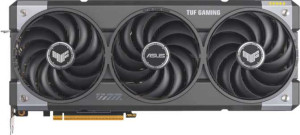
Asus TUF Gaming GeForce RTX 5070 Ti
Asus TUF Gaming Radeon RX 9070 XT OC Edition

Asus TUF Gaming GeForce RTX 5070 Ti Asus TUF Gaming Radeon RX 9070 XT OC Edition

Overview

Welcome to our in-depth spec comparison between the Asus TUF Gaming GeForce RTX 5070 Ti and the Asus TUF Gaming Radeon RX 9070 XT OC Edition — two powerful mid-to-high-end graphics cards from rival GPU architectures. Both cards share 16GB of VRAM, ray tracing support, and DirectX 12 Ultimate compatibility, yet they diverge sharply on memory technology, shader count, and key software features. Read on to see how they stack up across performance, memory, features, and connectivity.

Common Features

  • Both products support Double Precision Floating Point (DPFP).
  • Both products come with 16GB of VRAM.
  • Both products use a 256-bit memory bus width.
  • ECC memory support is available on both products.
  • Both products support DirectX 12 Ultimate.
  • Both products support OpenGL version 4.6.
  • Multi-display technology is supported on both products.
  • Ray tracing support is available on both products.
  • 3D support is available on both products.
  • XeSS (XMX) support is not available on either product.
  • LHR is not present on either product.
  • RGB lighting is available on both products.
  • Both products feature an HDMI output.
  • Both products use HDMI version 2.1b.
  • Both products include 3 DisplayPort outputs.
  • Neither product has USB-C ports.
  • Neither product has DVI outputs.
  • Neither product has mini DisplayPort outputs.
  • Both products use PCI Express (PCIe) version 5.
  • Air-water cooling is not available on either product.
  • Both products share a height of 140 mm.

Main Differences

  • GPU base clock speed is 2295 MHz on Asus TUF Gaming GeForce RTX 5070 Ti and 1660 MHz on Asus TUF Gaming Radeon RX 9070 XT OC Edition.
  • GPU turbo clock speed is 2452 MHz on Asus TUF Gaming GeForce RTX 5070 Ti and 3060 MHz on Asus TUF Gaming Radeon RX 9070 XT OC Edition.
  • Pixel rate is 235.4 GPixel/s on Asus TUF Gaming GeForce RTX 5070 Ti and 391.7 GPixel/s on Asus TUF Gaming Radeon RX 9070 XT OC Edition.
  • Floating-point performance is 43.94 TFLOPS on Asus TUF Gaming GeForce RTX 5070 Ti and 50.14 TFLOPS on Asus TUF Gaming Radeon RX 9070 XT OC Edition.
  • Texture rate is 686.6 GTexels/s on Asus TUF Gaming GeForce RTX 5070 Ti and 783.4 GTexels/s on Asus TUF Gaming Radeon RX 9070 XT OC Edition.
  • GPU memory speed is 1750 MHz on Asus TUF Gaming GeForce RTX 5070 Ti and 2518 MHz on Asus TUF Gaming Radeon RX 9070 XT OC Edition.
  • Shading units count is 8960 on Asus TUF Gaming GeForce RTX 5070 Ti and 4096 on Asus TUF Gaming Radeon RX 9070 XT OC Edition.
  • Texture mapping units (TMUs) total 280 on Asus TUF Gaming GeForce RTX 5070 Ti and 256 on Asus TUF Gaming Radeon RX 9070 XT OC Edition.
  • Render output units (ROPs) number 96 on Asus TUF Gaming GeForce RTX 5070 Ti and 128 on Asus TUF Gaming Radeon RX 9070 XT OC Edition.
  • Effective memory speed is 28000 MHz on Asus TUF Gaming GeForce RTX 5070 Ti and 20000 MHz on Asus TUF Gaming Radeon RX 9070 XT OC Edition.
  • Maximum memory bandwidth is 896 GB/s on Asus TUF Gaming GeForce RTX 5070 Ti and 644.6 GB/s on Asus TUF Gaming Radeon RX 9070 XT OC Edition.
  • Asus TUF Gaming GeForce RTX 5070 Ti uses GDDR7 memory, while Asus TUF Gaming Radeon RX 9070 XT OC Edition uses GDDR6 memory.
  • OpenCL version is 3 on Asus TUF Gaming GeForce RTX 5070 Ti and 2.2 on Asus TUF Gaming Radeon RX 9070 XT OC Edition.
  • DLSS support is present on Asus TUF Gaming GeForce RTX 5070 Ti but not available on Asus TUF Gaming Radeon RX 9070 XT OC Edition.
  • Asus TUF Gaming GeForce RTX 5070 Ti uses Intel Resizable BAR, while Asus TUF Gaming Radeon RX 9070 XT OC Edition uses AMD SAM.
  • HDMI port count is 2 on Asus TUF Gaming GeForce RTX 5070 Ti and 1 on Asus TUF Gaming Radeon RX 9070 XT OC Edition.
  • GPU architecture is Blackwell on Asus TUF Gaming GeForce RTX 5070 Ti and RDNA 4.0 on Asus TUF Gaming Radeon RX 9070 XT OC Edition.
  • Thermal Design Power (TDP) is 300W on Asus TUF Gaming GeForce RTX 5070 Ti and 304W on Asus TUF Gaming Radeon RX 9070 XT OC Edition.
  • Semiconductor size is 5 nm on Asus TUF Gaming GeForce RTX 5070 Ti and 4 nm on Asus TUF Gaming Radeon RX 9070 XT OC Edition.
  • Transistor count is 45600 million on Asus TUF Gaming GeForce RTX 5070 Ti and 53900 million on Asus TUF Gaming Radeon RX 9070 XT OC Edition.
  • Card width is 329 mm on Asus TUF Gaming GeForce RTX 5070 Ti and 330 mm on Asus TUF Gaming Radeon RX 9070 XT OC Edition.
Specs Comparison
Asus TUF Gaming GeForce RTX 5070 Ti

Asus TUF Gaming GeForce RTX 5070 Ti

Asus TUF Gaming Radeon RX 9070 XT OC Edition

Asus TUF Gaming Radeon RX 9070 XT OC Edition

Performance:
GPU clock speed 2295 MHz 1660 MHz
GPU turbo 2452 MHz 3060 MHz
pixel rate 235.4 GPixel/s 391.7 GPixel/s
floating-point performance 43.94 TFLOPS 50.14 TFLOPS
texture rate 686.6 GTexels/s 783.4 GTexels/s
GPU memory speed 1750 MHz 2518 MHz
shading units 8960 4096
texture mapping units (TMUs) 280 256
render output units (ROPs) 96 128
Has Double Precision Floating Point (DPFP)

One of the most striking contrasts in this group is how differently these two GPUs are architected to reach their peak performance. The RTX 5070 Ti leans on a massive 8,960 shading units and a higher base clock of 2295 MHz, while the RX 9070 XT OC Edition uses just 4,096 shading units but compensates with an aggressive turbo clock of 3060 MHz — more than 600 MHz higher than the 5070 Ti's turbo of 2452 MHz. This reflects a fundamental architectural difference: Nvidia's Blackwell spreads work across more compute units at moderate frequencies, while AMD's RDNA 4 pushes fewer units much harder. Neither approach is inherently superior, but the end numbers tell a clear story.

When it comes to raw throughput metrics, the RX 9070 XT OC Edition holds the advantage across the board. Its floating-point performance of 50.14 TFLOPS outpaces the 5070 Ti's 43.94 TFLOPS by roughly 14%, which in practice translates to more headroom for compute-heavy workloads and shader-intensive scenes. The pixel fill rate of 391.7 GPixel/s versus 235.4 GPixel/s is an especially significant gap — higher pixel rate directly impacts how fast the GPU can resolve and output rendered frames, particularly at higher resolutions. Similarly, the RX 9070 XT's 128 ROPs versus the 5070 Ti's 96 ROPs reinforce this rendering throughput advantage. Its faster GPU memory speed of 2518 MHz (vs. 1750 MHz) also means data is fed to the GPU more rapidly, reducing potential bottlenecks in memory-bound scenarios.

Both cards support Double Precision Floating Point (DPFP), which matters for professional compute tasks, though gaming workloads rarely rely on it. Overall, based strictly on the provided performance specs, the RX 9070 XT OC Edition holds a clear edge in peak throughput and rendering output, despite its lower shading unit count — a testament to the efficiency gains in AMD's RDNA 4 architecture. The RTX 5070 Ti's advantage in TMU count (280 vs. 256) offers slightly better texture throughput at a given clock, but the RX 9070 XT's higher turbo speed ultimately closes and reverses that gap in the final texture rate figure.

Memory:
effective memory speed 28000 MHz 20000 MHz
maximum memory bandwidth 896 GB/s 644.6 GB/s
VRAM 16GB 16GB
GDDR version GDDR7 GDDR6
memory bus width 256-bit 256-bit
Supports ECC memory

The Asus TUF Gaming GeForce RTX 5070 Ti and the Asus TUF Gaming Radeon RX 9070 XT OC Edition share some similarities in their memory specifications, but they also have notable differences. Both cards come with 16GB of VRAM and support ECC memory. They also share the same memory bus width of 256-bit, which indicates a similar architecture in terms of memory bandwidth handling.

However, the memory performance differs significantly. The RTX 5070 Ti features an effective memory speed of 28000 MHz, which is considerably higher than the RX 9070 XT's 20000 MHz. This results in a higher maximum memory bandwidth for the RTX 5070 Ti, offering 896 GB/s, compared to the RX 9070 XT's 644.6 GB/s. Additionally, the RTX 5070 Ti uses the newer GDDR7 memory standard, while the RX 9070 XT is equipped with GDDR6 memory.

Overall, while both cards offer similar VRAM and support for ECC memory, the RTX 5070 Ti provides faster memory speeds, greater bandwidth, and the newer GDDR7 standard, which may offer a performance advantage in certain memory-intensive tasks.

Features:
DirectX version DirectX 12 Ultimate DirectX 12 Ultimate
OpenGL version 4.6 4.6
OpenCL version 3 2.2
Supports multi-display technology
supports ray tracing
Supports 3D
supports DLSS
has XeSS (XMX)
AMD SAM / Intel Resizable BAR Intel Resizable BAR AMD SAM
has LHR
has RGB lighting
supported displays 4 4

The Asus TUF Gaming GeForce RTX 5070 Ti and the Asus TUF Gaming Radeon RX 9070 XT OC Edition share many similar features, but there are a few distinctions. Both cards support DirectX 12 Ultimate, OpenGL 4.6, OpenCL 3 (for the RTX 5070 Ti) and OpenCL 2.2 (for the RX 9070 XT), and multi-display technology. They also both support ray tracing, 3D, and RGB lighting, and can drive up to four displays simultaneously.

One key difference between the two is in DLSS support. The RTX 5070 Ti supports DLSS, while the RX 9070 XT does not. Additionally, while both cards do not feature XeSS (XMX), the RX 9070 XT supports AMD SAM, while the RTX 5070 Ti is compatible with Intel Resizable BAR.

Both products lack LHR (Lite Hash Rate), which is important for cryptocurrency miners. Overall, while these two cards share many similar capabilities, the differences mainly revolve around DLSS support and the specific Resizable BAR technology they support.

Ports:
has an HDMI output
HDMI ports 2 1
HDMI version HDMI 2.1b HDMI 2.1b
DisplayPort outputs 3 3
USB-C ports 0 0
DVI outputs 0 0
mini DisplayPort outputs 0 0

The Asus TUF Gaming GeForce RTX 5070 Ti and the Asus TUF Gaming Radeon RX 9070 XT OC Edition offer similar ports, but with some differences in HDMI outputs. The RTX 5070 Ti features two HDMI 2.1b ports, while the RX 9070 XT only has one HDMI 2.1b port. Both cards provide three DisplayPort outputs and lack USB-C, DVI, or mini DisplayPort outputs.

In summary, the key distinction between the two products is that the RTX 5070 Ti offers more HDMI ports, while the RX 9070 XT has just one. Otherwise, both cards have the same number of DisplayPort outputs and no other types of video outputs.

General info:
GPU architecture Blackwell RDNA 4.0
release date January 2025 March 2025
Thermal Design Power (TDP) 300W 304W
PCI Express (PCIe) version 5 5
semiconductor size 5 nm 4 nm
number of transistors 45600 million 53900 million
Has air-water cooling
width 329 mm 330 mm
height 140 mm 140 mm

The Asus TUF Gaming GeForce RTX 5070 Ti and the Asus TUF Gaming Radeon RX 9070 XT OC Edition differ in several general specifications. The RTX 5070 Ti is based on the Blackwell GPU architecture, while the RX 9070 XT utilizes RDNA 4.0. In terms of power consumption, the RTX 5070 Ti has a Thermal Design Power (TDP) of 300W, slightly lower than the RX 9070 XT's 304W.

Both cards support PCI Express 5.0 and have similar physical dimensions, with the RTX 5070 Ti measuring 329 mm in width and the RX 9070 XT being just 1 mm wider at 330 mm. The height of both cards is identical at 140 mm. Additionally, the RTX 5070 Ti is built on a 5 nm semiconductor process, while the RX 9070 XT uses a 4 nm process, with the latter having a larger number of transistors: 53900 million compared to the RTX 5070 Ti's 45600 million.

Both cards lack air-water cooling, and while they differ in some specs, they are fairly similar in overall size and power requirements.

Comparison Summary & Verdict

After examining every spec, both cards emerge as strong contenders aimed at slightly different buyers. The Asus TUF Gaming GeForce RTX 5070 Ti leads with a higher memory bandwidth of 896 GB/s, faster GDDR7 memory, a significantly larger shading unit count of 8960, and exclusive DLSS support — making it the stronger choice for workflows and games that leverage Nvidia-specific upscaling and bandwidth-intensive tasks. The Asus TUF Gaming Radeon RX 9070 XT OC Edition, on the other hand, pulls ahead in raw compute with 50.14 TFLOPS, a higher turbo clock of 3060 MHz, better pixel and texture rates, and a more advanced 4 nm process node with 53900 million transistors. For buyers who prioritize rasterization throughput and compute performance, the AMD card is compelling. Both cards consume nearly identical power and occupy the same physical footprint, making the decision largely about software ecosystem and workload priorities.

Asus TUF Gaming GeForce RTX 5070 Ti
Buy Asus TUF Gaming GeForce RTX 5070 Ti if...

Buy the Asus TUF Gaming GeForce RTX 5070 Ti if you want higher memory bandwidth, faster GDDR7 memory, and access to DLSS upscaling technology for Nvidia-optimized games and applications.

Asus TUF Gaming Radeon RX 9070 XT OC Edition
Buy Asus TUF Gaming Radeon RX 9070 XT OC Edition if...

Buy the Asus TUF Gaming Radeon RX 9070 XT OC Edition if you prioritize superior raw floating-point performance, a higher turbo clock speed, and better pixel and texture throughput for compute-heavy and rasterization-focused workloads.