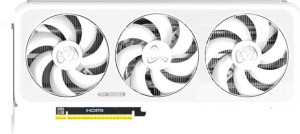
Asus TUF Gaming GeForce RTX 5070 Ti
AX Gaming Rebel GeForce RTX 5070 Ti X3W

Asus TUF Gaming GeForce RTX 5070 Ti AX Gaming Rebel GeForce RTX 5070 Ti X3W

Overview

In this detailed specification face-off between the Asus TUF Gaming GeForce RTX 5070 Ti and the AX Gaming Rebel GeForce RTX 5070 Ti X3W, two Blackwell-generation powerhouses go head-to-head. While both cards share a strong common foundation of 16GB GDDR7 memory and a 300W TDP, key battlegrounds emerge around GPU turbo clock speeds, real-world throughput figures, port configurations, and physical dimensions. Read on to find out which card best suits your needs.

Common Features

  • Both cards share a base GPU clock speed of 2295 MHz.
  • Both cards have a GPU memory speed of 1750 MHz.
  • Both cards feature 8960 shading units.
  • Both cards include 280 texture mapping units (TMUs).
  • Both cards have 96 render output units (ROPs).
  • Double Precision Floating Point (DPFP) is supported on both cards.
  • Both cards have an effective memory speed of 28000 MHz.
  • Both cards offer a maximum memory bandwidth of 896 GB/s.
  • Both cards come with 16GB of VRAM.
  • Both cards use GDDR7 memory.
  • Both cards have a 256-bit memory bus width.
  • ECC memory is supported on both cards.
  • Both cards support DirectX 12 Ultimate.
  • Both cards support OpenGL version 4.6.
  • Both cards support OpenCL version 3.
  • Multi-display technology is supported on both cards.
  • Ray tracing is supported on both cards.
  • 3D support is available on both cards.
  • DLSS is supported on both cards.
  • XeSS (XMX) support is not available on either card.
  • Both cards include an HDMI output with HDMI version 2.1b.
  • Both cards have 3 DisplayPort outputs.
  • Neither card has USB-C ports, DVI outputs, or mini DisplayPort outputs.
  • Both cards are based on the Blackwell GPU architecture.
  • Both cards have a Thermal Design Power (TDP) of 300W.
  • Both cards use PCIe version 5.
  • Both cards are manufactured on a 5 nm semiconductor process.
  • Both cards have 45600 million transistors.
  • Air-water cooling is not available on either card.

Main Differences

  • GPU turbo clock speed is 2452 MHz on the Asus TUF Gaming GeForce RTX 5070 Ti and 2482 MHz on the AX Gaming Rebel GeForce RTX 5070 Ti X3W.
  • Pixel rate is 235.4 GPixel/s on the Asus TUF Gaming GeForce RTX 5070 Ti and 238.3 GPixel/s on the AX Gaming Rebel GeForce RTX 5070 Ti X3W.
  • Floating-point performance is 43.94 TFLOPS on the Asus TUF Gaming GeForce RTX 5070 Ti and 44.48 TFLOPS on the AX Gaming Rebel GeForce RTX 5070 Ti X3W.
  • Texture rate is 686.6 GTexels/s on the Asus TUF Gaming GeForce RTX 5070 Ti and 695 GTexels/s on the AX Gaming Rebel GeForce RTX 5070 Ti X3W.
  • HDMI port count is 2 on the Asus TUF Gaming GeForce RTX 5070 Ti and 1 on the AX Gaming Rebel GeForce RTX 5070 Ti X3W.
  • Card width is 329 mm on the Asus TUF Gaming GeForce RTX 5070 Ti and 316 mm on the AX Gaming Rebel GeForce RTX 5070 Ti X3W.
  • Card height is 140 mm on the Asus TUF Gaming GeForce RTX 5070 Ti and 131 mm on the AX Gaming Rebel GeForce RTX 5070 Ti X3W.
Specs Comparison
Asus TUF Gaming GeForce RTX 5070 Ti

Asus TUF Gaming GeForce RTX 5070 Ti

AX Gaming Rebel GeForce RTX 5070 Ti X3W

AX Gaming Rebel GeForce RTX 5070 Ti X3W

Performance:
GPU clock speed 2295 MHz 2295 MHz
GPU turbo 2452 MHz 2482 MHz
pixel rate 235.4 GPixel/s 238.3 GPixel/s
floating-point performance 43.94 TFLOPS 44.48 TFLOPS
texture rate 686.6 GTexels/s 695 GTexels/s
GPU memory speed 1750 MHz 1750 MHz
shading units 8960 8960
texture mapping units (TMUs) 280 280
render output units (ROPs) 96 96
Has Double Precision Floating Point (DPFP)

Both cards share an identical foundation: the same 2295 MHz base clock, 8960 shading units, 280 TMUs, 96 ROPs, and 1750 MHz memory speed. This means their theoretical compute architecture is identical at rest, and neither card holds an advantage in raw shader or memory bandwidth potential at the hardware level.

The only meaningful separation emerges under sustained load, where boost clocks diverge. The AX Gaming Rebel reaches a GPU turbo of 2482 MHz versus the Asus TUF's 2452 MHz — a 30 MHz gap that cascades into slightly higher derived metrics: 44.48 TFLOPS of floating-point performance versus 43.94 TFLOPS, a texture rate of 695 GTexels/s versus 686.6 GTexels/s, and a pixel rate of 238.3 versus 235.4 GPixel/s. In practice, a ~1.2% boost clock advantage translates to an equally marginal real-world gain — users are unlikely to notice the difference in frame rates or rendering workloads.

In this performance group, the AX Gaming Rebel holds a narrow technical edge due to its higher turbo clock and the slightly better throughput figures that follow from it. However, the advantage is so slim that it would rarely be perceptible in gaming or GPU-compute scenarios. For most buyers, these two cards are effectively performance-equivalent, and other factors — cooling, noise, price, and power delivery — will matter far more than this marginal clock speed difference.

Memory:
effective memory speed 28000 MHz 28000 MHz
maximum memory bandwidth 896 GB/s 896 GB/s
VRAM 16GB 16GB
GDDR version GDDR7 GDDR7
memory bus width 256-bit 256-bit
Supports ECC memory

The memory specifications for the Asus TUF Gaming GeForce RTX 5070 Ti and the AX Gaming Rebel GeForce RTX 5070 Ti X3W are identical across all key metrics. Both products feature an effective memory speed of 28000 MHz and a maximum memory bandwidth of 896 GB/s. They also come equipped with 16GB of VRAM, utilize GDDR7 memory, and have a 256-bit memory bus width.

Additionally, both the Asus TUF and the AX Gaming Rebel support ECC (Error Correction Code) memory, ensuring data integrity in memory operations. Since all of these memory specifications match between the two products, there is no difference in performance or capabilities in this regard.

Features:
DirectX version DirectX 12 Ultimate DirectX 12 Ultimate
OpenGL version 4.6 4.6
OpenCL version 3 3
Supports multi-display technology
supports ray tracing
Supports 3D
supports DLSS
has XeSS (XMX)
AMD SAM / Intel Resizable BAR Intel Resizable BAR Intel Resizable BAR
has LHR
has RGB lighting
supported displays 4 4

The Asus TUF Gaming GeForce RTX 5070 Ti and the AX Gaming Rebel GeForce RTX 5070 Ti X3W are identical in terms of their feature set. Both products support DirectX 12 Ultimate, OpenGL version 4.6, and OpenCL version 3. They also both support multi-display technology, ray tracing, and 3D, making them well-suited for advanced graphical tasks. Additionally, both cards support DLSS, which improves performance and visual quality in supported games.

Neither product has XeSS (XMX) support, and both feature Intel Resizable BAR under the AMD SAM / Intel Resizable BAR specification. Additionally, both products lack LHR (Lite Hash Rate), meaning they are not limited in performance for mining cryptocurrency.

RGB lighting is included on both the Asus TUF and the AX Gaming Rebel, allowing for customizable lighting effects. Both cards also support up to 4 displays, enabling multi-monitor setups for enhanced gaming or productivity experiences. Since all specifications match, there is no distinction in terms of features between the two products.

Ports:
has an HDMI output
HDMI ports 2 1
HDMI version HDMI 2.1b HDMI 2.1b
DisplayPort outputs 3 3
USB-C ports 0 0
DVI outputs 0 0
mini DisplayPort outputs 0 0

The Asus TUF Gaming GeForce RTX 5070 Ti and the AX Gaming Rebel GeForce RTX 5070 Ti X3W both feature HDMI 2.1b outputs. However, the number of HDMI ports differs between the two: the Asus TUF has 2 HDMI ports, while the AX Gaming Rebel has 1 HDMI port.

Both graphics cards are equipped with 3 DisplayPort outputs, and neither product includes USB-C, DVI, or mini DisplayPort outputs. There is no significant difference in these areas.

Overall, the main distinction between the two products in terms of ports is the number of HDMI ports, with the Asus TUF offering more flexibility with two HDMI outputs compared to the AX Gaming Rebel's single HDMI port.

General info:
GPU architecture Blackwell Blackwell
release date January 2025 February 2025
Thermal Design Power (TDP) 300W 300W
PCI Express (PCIe) version 5 5
semiconductor size 5 nm 5 nm
number of transistors 45600 million 45600 million
Has air-water cooling
width 329 mm 316 mm
height 140 mm 131 mm

The Asus TUF Gaming GeForce RTX 5070 Ti and the AX Gaming Rebel GeForce RTX 5070 Ti X3W share identical specifications in terms of GPU architecture, thermal design power (TDP), PCI Express version, semiconductor size, and number of transistors. Both cards are based on the Blackwell architecture, have a TDP of 300W, support PCIe 5.0, use a 5 nm semiconductor process, and feature 45.6 billion transistors.

Neither card has air-water cooling, and their physical dimensions differ slightly. The Asus TUF is 329 mm wide and 140 mm tall, while the AX Gaming Rebel is a bit more compact at 316 mm wide and 131 mm tall.

In summary, the only notable difference between the two products in this group is the size, with the AX Gaming Rebel being smaller in both width and height compared to the Asus TUF.

Comparison Summary & Verdict

The Asus TUF Gaming GeForce RTX 5070 Ti and the AX Gaming Rebel GeForce RTX 5070 Ti X3W are remarkably similar at their core, sharing the same Blackwell GPU architecture, identical 16GB GDDR7 memory with 896 GB/s bandwidth, a 300W TDP, and full support for ray tracing and DLSS. Where they diverge is in the finer details. The AX Gaming Rebel holds a performance edge with a higher GPU turbo clock of 2482 MHz versus 2452 MHz on the Asus TUF, resulting in a slightly better pixel rate, texture rate, and floating-point output. It is also the more compact card at 316 x 131 mm. The Asus TUF Gaming, on the other hand, distinguishes itself with two HDMI 2.1b ports compared to just one on the Rebel, giving it a clear advantage for multi-display HDMI setups. Your choice ultimately comes down to priorities: peak performance and a smaller footprint, or broader HDMI connectivity flexibility.

Asus TUF Gaming GeForce RTX 5070 Ti
Buy Asus TUF Gaming GeForce RTX 5070 Ti if...

Buy the Asus TUF Gaming GeForce RTX 5070 Ti if you need to connect two HDMI displays simultaneously, as it offers two HDMI 2.1b ports versus just one on the competition.

AX Gaming Rebel GeForce RTX 5070 Ti X3W
Buy AX Gaming Rebel GeForce RTX 5070 Ti X3W if...

Buy the AX Gaming Rebel GeForce RTX 5070 Ti X3W if you want the highest possible GPU turbo clock speed and marginally better throughput performance, while also benefiting from a more compact card size.