Asus TUF Gaming GeForce RTX 5070 Ti
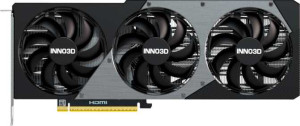
Inno3D GeForce RTX 5070 Ti X3

Asus TUF Gaming GeForce RTX 5070 Ti Inno3D GeForce RTX 5070 Ti X3

Overview

When comparing the Asus TUF Gaming GeForce RTX 5070 Ti and the Inno3D GeForce RTX 5070 Ti X3, you are looking at two cards built on the same powerful Blackwell foundation, sharing identical performance specs, memory configurations, and core feature sets. The real competition between them comes down to physical dimensions, connectivity options, and aesthetic choices. This detailed breakdown will help you determine which of these two RTX 5070 Ti variants is the right fit for your build.

Common Features

  • Both cards share a GPU clock speed of 2295 MHz.
  • Both cards share a GPU turbo speed of 2452 MHz.
  • Both cards deliver a pixel rate of 235.4 GPixel/s.
  • Both cards offer a floating-point performance of 43.94 TFLOPS.
  • Both cards provide a texture rate of 686.6 GTexels/s.
  • Both cards have a GPU memory speed of 1750 MHz.
  • Both cards include 8960 shading units.
  • Both cards include 280 texture mapping units (TMUs).
  • Both cards have an effective memory speed of 28000 MHz.
  • Both cards offer a maximum memory bandwidth of 896 GB/s.
  • Both cards come with 16GB of VRAM.
  • Both cards use GDDR7 memory.
  • Both cards feature a 256-bit memory bus width.
  • ECC memory support is available on both cards.
  • Both cards support DirectX 12 Ultimate.
  • Both cards support OpenGL 4.6.
  • Both cards support OpenCL 3.
  • Multi-display technology support is available on both cards.
  • Ray tracing support is available on both cards.
  • DLSS support is available on both cards.
  • 3D support is available on both cards.
  • XeSS (XMX) support is not available on either card.
  • Both cards include an HDMI 2.1b output.
  • Both cards feature 3 DisplayPort outputs.
  • Neither card includes USB-C ports, DVI outputs, or mini DisplayPort outputs.
  • Both cards are based on the Blackwell GPU architecture.
  • Both cards have a Thermal Design Power (TDP) of 300W.
  • Both cards use PCIe 5 interface.
  • Both cards are manufactured on a 5 nm process node.
  • Both cards contain 45600 million transistors.
  • Air-water cooling is not available on either card.

Main Differences

  • RGB lighting is present on the Asus TUF Gaming GeForce RTX 5070 Ti but not available on the Inno3D GeForce RTX 5070 Ti X3.
  • The Asus TUF Gaming GeForce RTX 5070 Ti has 2 HDMI ports, while the Inno3D GeForce RTX 5070 Ti X3 has 1 HDMI port.
  • The width is 329 mm on the Asus TUF Gaming GeForce RTX 5070 Ti and 300 mm on the Inno3D GeForce RTX 5070 Ti X3.
  • The height is 140 mm on the Asus TUF Gaming GeForce RTX 5070 Ti and 116 mm on the Inno3D GeForce RTX 5070 Ti X3.
Specs Comparison
Asus TUF Gaming GeForce RTX 5070 Ti

Asus TUF Gaming GeForce RTX 5070 Ti

Inno3D GeForce RTX 5070 Ti X3

Inno3D GeForce RTX 5070 Ti X3

Performance:
GPU clock speed 2295 MHz 2295 MHz
GPU turbo 2452 MHz 2452 MHz
pixel rate 235.4 GPixel/s 235.4 GPixel/s
floating-point performance 43.94 TFLOPS 43.94 TFLOPS
texture rate 686.6 GTexels/s 686.6 GTexels/s
GPU memory speed 1750 MHz 1750 MHz
shading units 8960 8960
texture mapping units (TMUs) 280 280
render output units (ROPs) 96 96
Has Double Precision Floating Point (DPFP)

In the Performance category, the Asus TUF Gaming RTX 5070 Ti and the Inno3D RTX 5070 Ti X3 are in complete lockstep across every single measurable metric. Both cards share an identical base clock of 2295 MHz and a turbo boost of 2452 MHz, resulting in the exact same 43.94 TFLOPS of floating-point throughput — the key figure that governs raw computational horsepower for gaming and GPU-accelerated workloads alike.

Digging deeper, the architectural building blocks are also perfectly mirrored: 8960 shading units, 280 TMUs, and 96 ROPs — the last of which directly governs how many pixels the GPU can write to the framebuffer per clock cycle, making it a strong indicator of high-resolution rendering capability. Memory runs at 1750 MHz on both, ensuring identical bandwidth feeding the GPU cores. Both also support Double Precision Floating Point (DPFP), which is relevant for compute-oriented tasks like simulation or scientific workloads, though less so for pure gaming.

The verdict here is an unambiguous tie. There is no performance edge to be found between these two cards based on the provided specifications — they are functionally identical at the silicon and clock level. Any real-world difference in performance, if it exists at all, would have to come from factors outside this spec group, such as thermal design or sustained boost behavior under load. Buyers choosing between these two should look beyond Performance specs entirely.

Memory:
effective memory speed 28000 MHz 28000 MHz
maximum memory bandwidth 896 GB/s 896 GB/s
VRAM 16GB 16GB
GDDR version GDDR7 GDDR7
memory bus width 256-bit 256-bit
Supports ECC memory

The memory specifications for both the Asus TUF Gaming GeForce RTX 5070 Ti and Inno3D GeForce RTX 5070 Ti X3 are identical. Both products feature an effective memory speed of 28000 MHz and a maximum memory bandwidth of 896 GB/s. Additionally, both cards come with 16GB of VRAM and utilize GDDR7 memory.

Both products also share the same 256-bit memory bus width, ensuring equal data throughput. Furthermore, both the Asus and Inno3D models support Error-Correcting Code (ECC) memory, which helps ensure data integrity during operation.

With identical memory specs across all key areas, the memory performance of both cards will be essentially the same.

Features:
DirectX version DirectX 12 Ultimate DirectX 12 Ultimate
OpenGL version 4.6 4.6
OpenCL version 3 3
Supports multi-display technology
supports ray tracing
Supports 3D
supports DLSS
has XeSS (XMX)
AMD SAM / Intel Resizable BAR Intel Resizable BAR Intel Resizable BAR
has LHR
has RGB lighting
supported displays 4 4

The Asus TUF Gaming GeForce RTX 5070 Ti and Inno3D GeForce RTX 5070 Ti X3 have nearly identical features. Both products support DirectX 12 Ultimate, OpenGL 4.6, and OpenCL 3, ensuring compatibility with the latest APIs. They also both support multi-display technology, ray tracing, and 3D rendering, as well as DLSS, enhancing gaming performance and visual fidelity.

There are some differences between the two models in terms of additional features. The Asus model has RGB lighting, while the Inno3D version does not. Both products, however, share the same number of supported displays (4) and both support Intel Resizable BAR. Neither product features XeSS (XMX), and neither has LHR, which means they do not have limitations for cryptocurrency mining.

Overall, the two cards offer almost identical features, with the main distinction being the inclusion of RGB lighting in the Asus TUF Gaming GeForce RTX 5070 Ti.

Ports:
has an HDMI output
HDMI ports 2 1
HDMI version HDMI 2.1b HDMI 2.1b
DisplayPort outputs 3 3
USB-C ports 0 0
DVI outputs 0 0
mini DisplayPort outputs 0 0

The Asus TUF Gaming GeForce RTX 5070 Ti and Inno3D GeForce RTX 5070 Ti X3 have similar port configurations, with both cards featuring HDMI 2.1b outputs. However, the number of HDMI ports differs between the two: the Asus model has 2 HDMI ports, while the Inno3D version has only 1 HDMI port.

Both cards offer 3 DisplayPort outputs, but neither of them includes any USB-C, DVI, or mini DisplayPort outputs. The HDMI version is the same for both models, supporting HDMI 2.1b.

Overall, the key difference in the ports is the number of HDMI ports, with the Asus model offering an additional HDMI output compared to the Inno3D model.

General info:
GPU architecture Blackwell Blackwell
release date January 2025 February 2025
Thermal Design Power (TDP) 300W 300W
PCI Express (PCIe) version 5 5
semiconductor size 5 nm 5 nm
number of transistors 45600 million 45600 million
Has air-water cooling
width 329 mm 300 mm
height 140 mm 116 mm

The Asus TUF Gaming GeForce RTX 5070 Ti and Inno3D GeForce RTX 5070 Ti X3 share the same key general specifications. Both cards are based on the Blackwell GPU architecture, have a Thermal Design Power (TDP) of 300W, and support PCIe version 5. They also feature a 5 nm semiconductor size and contain 45,600 million transistors.

However, the two models differ slightly in their physical dimensions. The Asus TUF Gaming GeForce RTX 5070 Ti has a width of 329 mm and a height of 140 mm, while the Inno3D GeForce RTX 5070 Ti X3 is more compact, with a width of 300 mm and a height of 116 mm.

Both products lack air-water cooling systems, but the main difference in this category lies in the size, with the Inno3D model being smaller in both width and height compared to the Asus model.

Comparison Summary & Verdict

Both the Asus TUF Gaming GeForce RTX 5070 Ti and the Inno3D GeForce RTX 5070 Ti X3 deliver the same 43.94 TFLOPS of floating-point performance, 16GB of GDDR7 memory with 896 GB/s of bandwidth, and full support for ray tracing and DLSS, making either card an equally powerful choice for demanding tasks. The differences come down to practicality and personal preference. The Asus TUF, at 329 x 140 mm, is the larger of the two but stands out with RGB lighting and dual HDMI ports, making it ideal for enthusiasts who want visual flair and flexible multi-display connectivity. The Inno3D X3, measuring a more compact 300 x 116 mm, is better suited for builds where space is at a premium or a clean, minimal look is preferred, though buyers should note it offers only a single HDMI output alongside its three DisplayPort connections.

Asus TUF Gaming GeForce RTX 5070 Ti
Buy Asus TUF Gaming GeForce RTX 5070 Ti if...

Buy the Asus TUF Gaming GeForce RTX 5070 Ti if you want RGB lighting and the added flexibility of two HDMI outputs for connecting multiple displays at once.

Inno3D GeForce RTX 5070 Ti X3
Buy Inno3D GeForce RTX 5070 Ti X3 if...

Choose the Inno3D GeForce RTX 5070 Ti X3 if you need a more compact card that fits tighter cases and prefer a straightforward, no-RGB aesthetic.