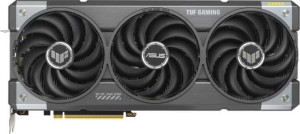
Asus TUF Gaming GeForce RTX 5070
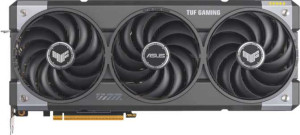
Asus TUF Gaming Radeon RX 9070 XT OC Edition

Asus TUF Gaming GeForce RTX 5070 Asus TUF Gaming Radeon RX 9070 XT OC Edition

Overview

Welcome to our in-depth spec comparison between the Asus TUF Gaming GeForce RTX 5070 and the Asus TUF Gaming Radeon RX 9070 XT OC Edition — two high-performance graphics cards that take very different approaches to delivering gaming power. From raw compute throughput and memory configuration to feature sets and power consumption, these two GPUs each bring distinct strengths to the table. Read on to see how they stack up across every major specification.

Common Features

  • Both products support Double Precision Floating Point (DPFP).
  • Both products support ECC memory.
  • Both products support DirectX 12 Ultimate.
  • Both products support OpenGL version 4.6.
  • Both products support multi-display technology.
  • Both products support ray tracing.
  • Both products support 3D.
  • XeSS (XMX) support is not available on either product.
  • LHR is not present on either product.
  • RGB lighting is available on both products.
  • Both products have an HDMI output.
  • Both products use HDMI version 2.1b.
  • Both products have 3 DisplayPort outputs.
  • Neither product has USB-C ports.
  • Neither product has DVI outputs.
  • Neither product has mini DisplayPort outputs.
  • Both products use PCI Express (PCIe) version 5.
  • Neither product uses air-water cooling.
  • Both products have a height of 140 mm.

Main Differences

  • GPU clock speed is 2325 MHz on Asus TUF Gaming GeForce RTX 5070 and 1660 MHz on Asus TUF Gaming Radeon RX 9070 XT OC Edition.
  • GPU turbo speed is 2512 MHz on Asus TUF Gaming GeForce RTX 5070 and 3060 MHz on Asus TUF Gaming Radeon RX 9070 XT OC Edition.
  • Pixel rate is 201 GPixel/s on Asus TUF Gaming GeForce RTX 5070 and 391.7 GPixel/s on Asus TUF Gaming Radeon RX 9070 XT OC Edition.
  • Floating-point performance is 30.87 TFLOPS on Asus TUF Gaming GeForce RTX 5070 and 50.14 TFLOPS on Asus TUF Gaming Radeon RX 9070 XT OC Edition.
  • Texture rate is 482.3 GTexels/s on Asus TUF Gaming GeForce RTX 5070 and 783.4 GTexels/s on Asus TUF Gaming Radeon RX 9070 XT OC Edition.
  • GPU memory speed is 1750 MHz on Asus TUF Gaming GeForce RTX 5070 and 2518 MHz on Asus TUF Gaming Radeon RX 9070 XT OC Edition.
  • Shading units number 6144 on Asus TUF Gaming GeForce RTX 5070 and 4096 on Asus TUF Gaming Radeon RX 9070 XT OC Edition.
  • Texture mapping units (TMUs) number 192 on Asus TUF Gaming GeForce RTX 5070 and 256 on Asus TUF Gaming Radeon RX 9070 XT OC Edition.
  • Render output units (ROPs) number 80 on Asus TUF Gaming GeForce RTX 5070 and 128 on Asus TUF Gaming Radeon RX 9070 XT OC Edition.
  • Effective memory speed is 28000 MHz on Asus TUF Gaming GeForce RTX 5070 and 20000 MHz on Asus TUF Gaming Radeon RX 9070 XT OC Edition.
  • Maximum memory bandwidth is 672 GB/s on Asus TUF Gaming GeForce RTX 5070 and 644.6 GB/s on Asus TUF Gaming Radeon RX 9070 XT OC Edition.
  • VRAM is 12GB on Asus TUF Gaming GeForce RTX 5070 and 16GB on Asus TUF Gaming Radeon RX 9070 XT OC Edition.
  • GDDR version is GDDR7 on Asus TUF Gaming GeForce RTX 5070 and GDDR6 on Asus TUF Gaming Radeon RX 9070 XT OC Edition.
  • Memory bus width is 192-bit on Asus TUF Gaming GeForce RTX 5070 and 256-bit on Asus TUF Gaming Radeon RX 9070 XT OC Edition.
  • OpenCL version is 3 on Asus TUF Gaming GeForce RTX 5070 and 2.2 on Asus TUF Gaming Radeon RX 9070 XT OC Edition.
  • DLSS support is present on Asus TUF Gaming GeForce RTX 5070 but not available on Asus TUF Gaming Radeon RX 9070 XT OC Edition.
  • Asus TUF Gaming GeForce RTX 5070 uses Intel Resizable BAR while Asus TUF Gaming Radeon RX 9070 XT OC Edition uses AMD SAM.
  • HDMI port count is 2 on Asus TUF Gaming GeForce RTX 5070 and 1 on Asus TUF Gaming Radeon RX 9070 XT OC Edition.
  • GPU architecture is Blackwell on Asus TUF Gaming GeForce RTX 5070 and RDNA 4.0 on Asus TUF Gaming Radeon RX 9070 XT OC Edition.
  • Thermal Design Power (TDP) is 250W on Asus TUF Gaming GeForce RTX 5070 and 304W on Asus TUF Gaming Radeon RX 9070 XT OC Edition.
  • Semiconductor size is 5 nm on Asus TUF Gaming GeForce RTX 5070 and 4 nm on Asus TUF Gaming Radeon RX 9070 XT OC Edition.
  • Number of transistors is 31100 million on Asus TUF Gaming GeForce RTX 5070 and 53900 million on Asus TUF Gaming Radeon RX 9070 XT OC Edition.
  • Width is 329 mm on Asus TUF Gaming GeForce RTX 5070 and 330 mm on Asus TUF Gaming Radeon RX 9070 XT OC Edition.
Specs Comparison
Asus TUF Gaming GeForce RTX 5070

Asus TUF Gaming GeForce RTX 5070

Asus TUF Gaming Radeon RX 9070 XT OC Edition

Asus TUF Gaming Radeon RX 9070 XT OC Edition

Performance:
GPU clock speed 2325 MHz 1660 MHz
GPU turbo 2512 MHz 3060 MHz
pixel rate 201 GPixel/s 391.7 GPixel/s
floating-point performance 30.87 TFLOPS 50.14 TFLOPS
texture rate 482.3 GTexels/s 783.4 GTexels/s
GPU memory speed 1750 MHz 2518 MHz
shading units 6144 4096
texture mapping units (TMUs) 192 256
render output units (ROPs) 80 128
Has Double Precision Floating Point (DPFP)

The raw throughput numbers tell a clear story here. The Asus TUF Radeon RX 9070 XT OC Edition holds a commanding lead in the metrics that most directly translate to rendering horsepower: its pixel rate of 391.7 GPixel/s is nearly double the RTX 5070's 201 GPixel/s, and its floating-point performance of 50.14 TFLOPS outpaces the RTX 5070's 30.87 TFLOPS by roughly 62%. In practical terms, this gap points to faster fill rates at high resolutions and more headroom for compute-intensive workloads like ray tracing or physics simulation on the shader pipeline.

Part of what drives that advantage is the RX 9070 XT's substantially wider back-end: 128 ROPs versus 80 ROPs on the RTX 5070, and 256 TMUs versus 192 TMUs. More ROPs means the GPU can write more pixels per clock to the framebuffer — critical at 4K — while more TMUs accelerate texture sampling, directly benefiting complex scenes with high texture density. The RTX 5070 does field more shading units (6,144 vs 4,096), which can improve parallelism in certain shader-heavy workloads, but this advantage is largely offset by the RX 9070 XT's higher boost clock of 3,060 MHz compared to the RTX 5070's 2,512 MHz, and its faster memory bus speed of 2,518 MHz vs 1,750 MHz, meaning data is fed to those shaders more quickly. Both cards support Double Precision Floating Point, so neither has an edge in professional DPFP compute tasks.

Based strictly on the provided performance specifications, the RX 9070 XT OC Edition holds a clear overall advantage. Its superior pixel fill rate, TFLOPS, texture throughput, ROP count, and memory speed consistently outclass the RTX 5070 across the metrics that define gaming and compute performance. The RTX 5070's higher shader unit count is a notable footnote but does not reverse the balance when the rest of the pipeline is narrower and slower.
Memory:
effective memory speed 28000 MHz 20000 MHz
maximum memory bandwidth 672 GB/s 644.6 GB/s
VRAM 12GB 16GB
GDDR version GDDR7 GDDR6
memory bus width 192-bit 256-bit
Supports ECC memory

The Asus TUF Gaming GeForce RTX 5070 and the Asus TUF Gaming Radeon RX 9070 XT OC Edition differ in several memory-related specs. The RTX 5070 has an effective memory speed of 28000 MHz, which is higher than the RX 9070 XT's 20000 MHz. In terms of memory bandwidth, the RTX 5070 leads with a maximum of 672 GB/s, while the RX 9070 XT offers 644.6 GB/s.

The RX 9070 XT, however, features more VRAM, offering 16GB compared to the 12GB found in the RTX 5070. The memory bus width on the RX 9070 XT is also wider, at 256-bit, while the RTX 5070 uses a 192-bit bus width. Both products support ECC memory, so there's no difference in this feature.

Additionally, the RTX 5070 uses GDDR7 memory, while the RX 9070 XT uses GDDR6 memory, which reflects a difference in the memory technology used in each card.

Features:
DirectX version DirectX 12 Ultimate DirectX 12 Ultimate
OpenGL version 4.6 4.6
OpenCL version 3 2.2
Supports multi-display technology
supports ray tracing
Supports 3D
supports DLSS
has XeSS (XMX)
AMD SAM / Intel Resizable BAR Intel Resizable BAR AMD SAM
has LHR
has RGB lighting
supported displays 4 4

The Asus TUF Gaming GeForce RTX 5070 and the Asus TUF Gaming Radeon RX 9070 XT OC Edition both support DirectX 12 Ultimate, OpenGL 4.6, and multi-display technology, with a maximum of 4 supported displays for each product. Both cards also support ray tracing and 3D technology, but they differ in OpenCL version, with the RTX 5070 supporting OpenCL 3 and the RX 9070 XT supporting OpenCL 2.2.

When it comes to additional features, the RTX 5070 supports DLSS, while the RX 9070 XT does not. Neither card supports XeSS (XMX), and both have no LHR (Lite Hash Rate). In terms of memory technology, the RTX 5070 uses Intel's Resizable BAR, while the RX 9070 XT supports AMD's SAM (Smart Access Memory).

Both cards include RGB lighting, but the RX 9070 XT does not support DLSS, which sets it apart from the RTX 5070 in terms of next-gen gaming enhancements.

Ports:
has an HDMI output
HDMI ports 2 1
HDMI version HDMI 2.1b HDMI 2.1b
DisplayPort outputs 3 3
USB-C ports 0 0
DVI outputs 0 0
mini DisplayPort outputs 0 0

The Asus TUF Gaming GeForce RTX 5070 and the Asus TUF Gaming Radeon RX 9070 XT OC Edition both feature HDMI 2.1b outputs. However, the RTX 5070 has 2 HDMI ports, while the RX 9070 XT only has 1 HDMI port. Both cards include 3 DisplayPort outputs, and neither has USB-C, DVI, or mini DisplayPort outputs.

While the HDMI version is the same for both products, the number of HDMI ports differs, giving the RTX 5070 a slight edge in terms of HDMI connectivity.

General info:
GPU architecture Blackwell RDNA 4.0
release date January 2025 March 2025
Thermal Design Power (TDP) 250W 304W
PCI Express (PCIe) version 5 5
semiconductor size 5 nm 4 nm
number of transistors 31100 million 53900 million
Has air-water cooling
width 329 mm 330 mm
height 140 mm 140 mm

The Asus TUF Gaming GeForce RTX 5070 and the Asus TUF Gaming Radeon RX 9070 XT OC Edition differ in several general specs. The RTX 5070 is built on the Blackwell GPU architecture, while the RX 9070 XT uses the RDNA 4.0 architecture. In terms of thermal design power (TDP), the RTX 5070 has a lower TDP of 250W compared to the 304W of the RX 9070 XT.

Both cards use PCIe version 5, but they differ in their semiconductor size. The RTX 5070 has a 5 nm semiconductor, while the RX 9070 XT uses a smaller 4 nm semiconductor. The number of transistors is also different, with the RTX 5070 featuring 31,100 million transistors, while the RX 9070 XT has 53,900 million transistors.

Both products lack air-water cooling systems. In terms of physical dimensions, the RX 9070 XT is slightly wider, measuring 330 mm in width compared to the RTX 5070's 329 mm, but both cards have the same height of 140 mm.

Comparison Summary & Verdict

After a thorough comparison, both cards prove to be compelling options, but for different kinds of buyers. The Asus TUF Gaming Radeon RX 9070 XT OC Edition dominates in raw throughput, posting superior floating-point performance (50.14 TFLOPS vs 30.87 TFLOPS), higher pixel and texture rates, more ROPs, a wider 256-bit memory bus, and a larger 16GB VRAM pool — making it the stronger pick for pure rasterization workloads. The Asus TUF Gaming GeForce RTX 5070, on the other hand, counters with DLSS support, faster effective memory speed (28000 MHz), and a notably lower TDP of 250W versus 304W, making it more power-efficient. Both cards share DirectX 12 Ultimate, ray tracing, and PCIe 5 compatibility. Choose the RTX 5070 if efficiency and DLSS-powered frame generation matter most; choose the RX 9070 XT if raw rasterization performance and larger VRAM are your top priorities.

Asus TUF Gaming GeForce RTX 5070
Buy Asus TUF Gaming GeForce RTX 5070 if...

Buy the Asus TUF Gaming GeForce RTX 5070 if you want a more power-efficient card with DLSS support and faster effective memory speed, and prefer a lower TDP of 250W for a cooler, quieter system.

Asus TUF Gaming Radeon RX 9070 XT OC Edition
Buy Asus TUF Gaming Radeon RX 9070 XT OC Edition if...

Buy the Asus TUF Gaming Radeon RX 9070 XT OC Edition if you prioritize maximum raw compute performance, a larger 16GB VRAM pool, and a wider 256-bit memory bus for demanding rasterization workloads.