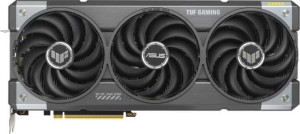
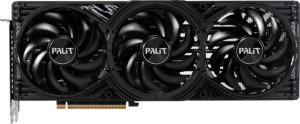
When comparing the performance specs of the Asus TUF Gaming GeForce RTX 5070 and the Palit GeForce RTX 5070 GamingPro-S, the picture is immediately clear: every single metric is identical across both cards. Both operate at a base GPU clock of 2325 MHz and a boost of 2512 MHz, delivering the same 30.87 TFLOPS of floating-point performance, 201 GPixel/s pixel rate, and 482.3 GTexels/s texture throughput. The underlying silicon — 6144 shading units, 192 TMUs, and 80 ROPs — is precisely the same, as is the 1750 MHz memory speed.
This parity is not coincidental. Both cards are built on the same GPU die and neither vendor has applied a factory overclock, meaning neither card carries any inherent throughput advantage out of the box. In practice, the identical ROP and TMU counts mean frame rendering throughput and texture fill rates will be indistinguishable in gaming workloads. The shared support for Double Precision Floating Point (DPFP) also puts them on equal footing for compute-adjacent tasks, though DPFP performance at this tier is typically constrained relative to professional-grade cards.
On raw performance alone, these two cards are in a complete tie. A buyer choosing between them based solely on this spec group will find no advantage on either side. The decision will need to hinge entirely on other factors — cooling design, build quality, pricing, or software ecosystem — none of which are reflected here.