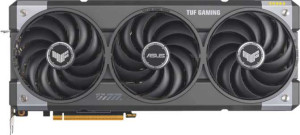
Asus TUF Gaming Radeon RX 9070 OC Edition
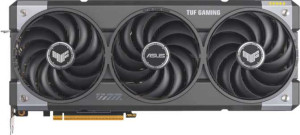
Asus TUF Gaming Radeon RX 9070 XT OC Edition

Asus TUF Gaming Radeon RX 9070 OC Edition Asus TUF Gaming Radeon RX 9070 XT OC Edition

Overview

When choosing between the Asus TUF Gaming Radeon RX 9070 OC Edition and the Asus TUF Gaming Radeon RX 9070 XT OC Edition, the decision goes beyond a simple name difference. Both cards are built on the same RDNA 4.0 architecture and share identical 16GB GDDR6 memory configurations, yet they diverge sharply in raw compute throughput, clock speeds, and power draw. This comparison examines exactly where each card pulls ahead and what that means for your build.

Common Features

  • GPU memory speed is 2518 MHz on both products.
  • Both products have 128 render output units (ROPs).
  • Double Precision Floating Point (DPFP) is supported on both products.
  • Effective memory speed is 20000 MHz on both products.
  • Maximum memory bandwidth is 644.6 GB/s on both products.
  • Both products have 16GB of VRAM.
  • Both products use GDDR6 memory.
  • Memory bus width is 256-bit on both products.
  • ECC memory is supported on both products.
  • Both products support DirectX 12 Ultimate.
  • OpenGL version is 4.6 on both products.
  • OpenCL version is 2.2 on both products.
  • Multi-display technology is supported on both products.
  • Ray tracing is supported on both products.
  • 3D support is available on both products.
  • DLSS is not supported on either product.
  • FSR4 is available on both products.
  • Both products have one HDMI output running HDMI 2.1b.
  • Both products have 3 DisplayPort outputs and no USB-C, DVI, or mini DisplayPort outputs.
  • Both products are based on the RDNA 4.0 GPU architecture.
  • Both products use PCIe version 5.
  • Both products contain 53900 million transistors.
  • Air-water cooling is not available on either product.
  • Both products share the same dimensions of 330 mm width and 140 mm height.

Main Differences

  • GPU base clock speed is 1330 MHz on Asus TUF Gaming Radeon RX 9070 OC Edition and 1660 MHz on Asus TUF Gaming Radeon RX 9070 XT OC Edition.
  • GPU turbo clock speed is 2650 MHz on Asus TUF Gaming Radeon RX 9070 OC Edition and 3060 MHz on Asus TUF Gaming Radeon RX 9070 XT OC Edition.
  • Pixel rate is 339.2 GPixel/s on Asus TUF Gaming Radeon RX 9070 OC Edition and 391.7 GPixel/s on Asus TUF Gaming Radeon RX 9070 XT OC Edition.
  • Floating-point performance is 37.99 TFLOPS on Asus TUF Gaming Radeon RX 9070 OC Edition and 50.14 TFLOPS on Asus TUF Gaming Radeon RX 9070 XT OC Edition.
  • Texture rate is 593.6 GTexels/s on Asus TUF Gaming Radeon RX 9070 OC Edition and 783.4 GTexels/s on Asus TUF Gaming Radeon RX 9070 XT OC Edition.
  • Shading units number 3584 on Asus TUF Gaming Radeon RX 9070 OC Edition and 4096 on Asus TUF Gaming Radeon RX 9070 XT OC Edition.
  • Texture mapping units (TMUs) total 224 on Asus TUF Gaming Radeon RX 9070 OC Edition and 256 on Asus TUF Gaming Radeon RX 9070 XT OC Edition.
  • Thermal Design Power (TDP) is 240W on Asus TUF Gaming Radeon RX 9070 OC Edition and 304W on Asus TUF Gaming Radeon RX 9070 XT OC Edition.
  • Semiconductor size is 5 nm on Asus TUF Gaming Radeon RX 9070 OC Edition and 4 nm on Asus TUF Gaming Radeon RX 9070 XT OC Edition.
Specs Comparison
Asus TUF Gaming Radeon RX 9070 OC Edition

Asus TUF Gaming Radeon RX 9070 OC Edition

Asus TUF Gaming Radeon RX 9070 XT OC Edition

Asus TUF Gaming Radeon RX 9070 XT OC Edition

Performance:
GPU clock speed 1330 MHz 1660 MHz
GPU turbo 2650 MHz 3060 MHz
pixel rate 339.2 GPixel/s 391.7 GPixel/s
floating-point performance 37.99 TFLOPS 50.14 TFLOPS
texture rate 593.6 GTexels/s 783.4 GTexels/s
GPU memory speed 2518 MHz 2518 MHz
shading units 3584 4096
texture mapping units (TMUs) 224 256
render output units (ROPs) 128 128
Has Double Precision Floating Point (DPFP)

The most telling gap between these two cards lies in raw compute throughput. The RX 9070 XT OC delivers 50.14 TFLOPS of floating-point performance versus 37.99 TFLOPS on the standard RX 9070 OC — a roughly 32% advantage that directly translates to more geometry, shading, and compute workloads processed per second. This is driven by a larger shader array (4096 vs 3584 shading units) and a higher turbo clock (3060 MHz vs 2650 MHz), meaning the XT benefits from both more execution resources and higher sustained frequencies. In practice, this combination tends to show up most clearly at higher resolutions and in GPU-bound scenarios like demanding AAA titles or GPU compute tasks.

Texture throughput reinforces this picture: the XT's 783.4 GTexels/s vs the standard card's 593.6 GTexels/s reflects its extra 32 TMUs, which matters for texture-heavy rendering — think open-world environments with dense surface detail. Notably, both cards share identical 128 ROPs and the same 2518 MHz memory speed, so pixel output and memory bandwidth sit on equal footing. This means the XT's pixel rate advantage (391.7 vs 339.2 GPixel/s) is purely a function of its higher clock, not a wider ROP array.

Both cards support Double Precision Floating Point (DPFP), which is a shared baseline for any workstation or mixed creative/gaming use. Overall, the RX 9070 XT OC Edition holds a clear and meaningful performance edge in this group — the ~32% compute and texture advantage is substantial enough to expect a real-world performance difference, not just a spec-sheet footnote. The standard RX 9070 OC remains competitive for its tier, but users prioritizing peak rendering throughput will find the XT the stronger choice.

Memory:
effective memory speed 20000 MHz 20000 MHz
maximum memory bandwidth 644.6 GB/s 644.6 GB/s
VRAM 16GB 16GB
GDDR version GDDR6 GDDR6
memory bus width 256-bit 256-bit
Supports ECC memory

Memory is one area where these two cards offer absolutely no grounds for differentiation. Both the RX 9070 OC and RX 9070 XT OC are equipped with an identical memory subsystem: 16GB of GDDR6 running at an effective 20000 MHz across a 256-bit bus, producing 644.6 GB/s of peak bandwidth. Every variable — capacity, speed, bus width, and resulting throughput — is a perfect match.

That 644.6 GB/s bandwidth figure is meaningful in context: it provides ample headroom for high-resolution texture streaming and large frame buffers at 4K, and the 16GB capacity comfortably accommodates modern titles that push VRAM usage, as well as creative workloads like video editing or AI inference. ECC memory support is also shared by both, which adds error-correction capability relevant to professional and compute use cases rather than gaming specifically.

This group is a clear and complete tie. Choosing between the RX 9070 OC and RX 9070 XT OC on memory grounds is impossible — and by design. Both cards share the same memory platform, so any performance difference between them (as seen in compute throughput) is entirely attributable to the GPU itself, not memory constraints.

Features:
DirectX version DirectX 12 Ultimate DirectX 12 Ultimate
OpenGL version 4.6 4.6
OpenCL version 2.2 2.2
Supports multi-display technology
supports ray tracing
Supports 3D
supports DLSS
has FSR4
has XeSS (XMX)
AMD SAM / Intel Resizable BAR AMD SAM AMD SAM
has LHR
has RGB lighting
supported displays 4 4

Feature parity is total here. Both the RX 9070 OC and RX 9070 XT OC carry an identical software and API feature set, anchored by DirectX 12 Ultimate support — the current gold standard for modern PC gaming, enabling hardware ray tracing, mesh shaders, and variable rate shading across compatible titles. Ray tracing support is confirmed for both, meaning neither card is disadvantaged when it comes to lighting and reflection fidelity in supported games.

On the upscaling front, both cards support FSR4 (AMD's latest spatial upscaling technology) and neither supports DLSS or XeSS — an expected outcome given their AMD architecture. FSR4 is particularly relevant as it allows both cards to render at lower internal resolutions and reconstruct a higher-quality output, effectively boosting frame rates with a manageable quality trade-off. AMD SAM (Smart Access Memory) is present on both as well, which allows a compatible AMD CPU to access the full GPU frame buffer, a feature that can improve performance in certain titles when paired with the right platform. Both cards also top out at 4 supported displays, making them equally capable for multi-monitor setups.

Much like the memory group, this is an unambiguous tie. Every feature that matters for gaming, compute compatibility, and multi-display use is shared identically between the two cards. The decision between them cannot be made on features alone — buyers should focus entirely on the performance and thermal/power trade-offs instead.
Ports:
has an HDMI output
HDMI ports 1 1
HDMI version HDMI 2.1b HDMI 2.1b
DisplayPort outputs 3 3
USB-C ports 0 0
DVI outputs 0 0
mini DisplayPort outputs 0 0

Connectivity is identical across both cards. The RX 9070 OC and RX 9070 XT OC each offer 3 DisplayPort outputs and 1 HDMI 2.1b port, totaling four display connections — consistent with the four supported displays noted in their feature specs. The absence of USB-C, DVI, and mini DisplayPort outputs is the same for both.

HDMI 2.1b is the most capable HDMI specification available, supporting up to 10K resolution, high frame rates, and features like Variable Refresh Rate (VRR) — making it well-suited for high-end TV gaming setups or any display requiring HDMI input. Three full-size DisplayPort outputs alongside it give users substantial flexibility for mixed monitor configurations without the need for adapters.

No differentiation exists between these two cards on ports. Buyers with specific connectivity requirements — such as a USB-C display or a legacy DVI monitor — will find neither card accommodates those needs, but for standard modern display setups, both are equally well-equipped. This group is a complete tie.

General info:
GPU architecture RDNA 4.0 RDNA 4.0
release date March 2025 March 2025
Thermal Design Power (TDP) 240W 304W
PCI Express (PCIe) version 5 5
semiconductor size 5 nm 4 nm
number of transistors 53900 million 53900 million
Has air-water cooling
width 330 mm 330 mm
height 140 mm 140 mm

Both cards are built on AMD's RDNA 4.0 architecture and share an identical transistor count of 53,900 million, which tells an interesting story: the XT's higher performance (as seen in the compute group) is extracted from the same fundamental die complexity, primarily through a larger active shader configuration and higher clocks rather than a completely different chip. Both also use PCIe 5.0 and are physically identical at 330 × 140 mm, so case compatibility and slot requirements are a non-issue when choosing between them.

Where this group reveals a genuine trade-off is in the combination of TDP and process node. The RX 9070 XT OC carries a 304W TDP versus 240W for the standard RX 9070 OC — a 27% increase in peak power draw. That gap has real implications: it demands a higher-rated power supply, produces more heat under load, and will likely result in higher sustained fan speeds. Partially offsetting this is the XT's slightly finer 4 nm process node compared to 5 nm on the standard card, which generally yields better power efficiency per transistor — meaning the XT is pushing its architecture harder to hit those higher clocks, not simply running inefficiently.

From a general info standpoint, the RX 9070 OC holds a practical advantage for users with tighter power budgets or thermally constrained cases, while the XT's higher TDP is the direct cost of its performance lead. Neither card uses liquid cooling, and their identical footprints mean the physical installation experience is the same. The edge in this group goes to the RX 9070 OC for its significantly lower power demand — though whether that trade-off is worth it depends on how much the XT's compute headroom matters to the buyer.

Comparison Summary & Verdict

After a thorough look at the specs, both cards deliver a strong foundation: identical 16GB GDDR6 memory with 644.6 GB/s bandwidth, full DirectX 12 Ultimate and ray tracing support, and FSR4 compatibility. However, the Asus TUF Gaming Radeon RX 9070 XT OC Edition steps ahead with a significantly higher 50.14 TFLOPS floating-point performance, a 3060 MHz turbo clock, 4096 shading units, and a refined 4nm process node, making it the stronger pick for users who demand maximum frame rates and future headroom. On the other hand, the Asus TUF Gaming Radeon RX 9070 OC Edition offers a compelling balance with its 240W TDP and 37.99 TFLOPS, appealing to builders who prioritize power efficiency and system thermals without sacrificing a modern, capable GPU.

Asus TUF Gaming Radeon RX 9070 OC Edition
Buy Asus TUF Gaming Radeon RX 9070 OC Edition if...

Buy the Asus TUF Gaming Radeon RX 9070 OC Edition if you want a power-efficient RDNA 4.0 card with a 240W TDP that still delivers capable performance with 16GB GDDR6 memory and ray tracing support.

Asus TUF Gaming Radeon RX 9070 XT OC Edition
Buy Asus TUF Gaming Radeon RX 9070 XT OC Edition if...

Buy the Asus TUF Gaming Radeon RX 9070 XT OC Edition if you need maximum GPU performance, with 50.14 TFLOPS, a 3060 MHz turbo clock, and 4096 shading units for demanding workloads and high-refresh gaming.