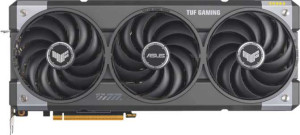
Asus TUF Gaming Radeon RX 9070 OC Edition
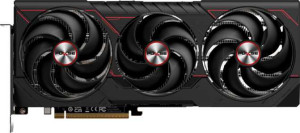
Sapphire Pulse Radeon RX 9070 XT

Asus TUF Gaming Radeon RX 9070 OC Edition Sapphire Pulse Radeon RX 9070 XT

Common Features

  • Both cards have a GPU memory speed of 2518 MHz.
  • Both cards have 128 render output units (ROPs).
  • Double Precision Floating Point (DPFP) is supported on both cards.
  • Both cards have an effective memory speed of 20000 MHz.
  • Both cards offer a maximum memory bandwidth of 644.6 GB/s.
  • Both cards are equipped with 16GB of VRAM.
  • Both cards use GDDR6 memory.
  • Both cards have a 256-bit memory bus width.
  • ECC memory is supported on both cards.
  • Both cards support DirectX 12 Ultimate.
  • Both cards support OpenGL version 4.6.
  • Both cards support OpenCL version 2.2.
  • Multi-display technology is supported on both cards.
  • Ray tracing is supported on both cards.
  • 3D support is available on both cards.
  • DLSS is not supported on either card.
  • FSR4 is available on both cards.
  • Both cards have an HDMI output with HDMI version 2.1b.
  • Neither card has USB-C ports, DVI outputs, or mini DisplayPort outputs.
  • Both cards use the RDNA 4.0 GPU architecture.
  • Both cards use PCIe version 5.
  • Both cards have 53900 million transistors.
  • Neither card uses air-water cooling.

Main Differences

  • GPU base clock speed is 1330 MHz on Asus TUF Gaming Radeon RX 9070 OC Edition and 1660 MHz on Sapphire Pulse Radeon RX 9070 XT.
  • GPU turbo clock speed is 2650 MHz on Asus TUF Gaming Radeon RX 9070 OC Edition and 2970 MHz on Sapphire Pulse Radeon RX 9070 XT.
  • Pixel rate is 339.2 GPixel/s on Asus TUF Gaming Radeon RX 9070 OC Edition and 380.2 GPixel/s on Sapphire Pulse Radeon RX 9070 XT.
  • Floating-point performance is 37.99 TFLOPS on Asus TUF Gaming Radeon RX 9070 OC Edition and 48.66 TFLOPS on Sapphire Pulse Radeon RX 9070 XT.
  • Texture rate is 593.6 GTexels/s on Asus TUF Gaming Radeon RX 9070 OC Edition and 760.3 GTexels/s on Sapphire Pulse Radeon RX 9070 XT.
  • Shading units number 3584 on Asus TUF Gaming Radeon RX 9070 OC Edition and 4096 on Sapphire Pulse Radeon RX 9070 XT.
  • Texture mapping units (TMUs) total 224 on Asus TUF Gaming Radeon RX 9070 OC Edition and 256 on Sapphire Pulse Radeon RX 9070 XT.
  • RGB lighting is present on Asus TUF Gaming Radeon RX 9070 OC Edition but not available on Sapphire Pulse Radeon RX 9070 XT.
  • The number of HDMI ports is 1 on Asus TUF Gaming Radeon RX 9070 OC Edition and 2 on Sapphire Pulse Radeon RX 9070 XT.
  • DisplayPort outputs number 3 on Asus TUF Gaming Radeon RX 9070 OC Edition and 2 on Sapphire Pulse Radeon RX 9070 XT.
  • Thermal Design Power (TDP) is 240W on Asus TUF Gaming Radeon RX 9070 OC Edition and 304W on Sapphire Pulse Radeon RX 9070 XT.
  • Semiconductor size is 5 nm on Asus TUF Gaming Radeon RX 9070 OC Edition and 4 nm on Sapphire Pulse Radeon RX 9070 XT.
  • Card width is 330 mm on Asus TUF Gaming Radeon RX 9070 OC Edition and 320 mm on Sapphire Pulse Radeon RX 9070 XT.
  • Card height is 140 mm on Asus TUF Gaming Radeon RX 9070 OC Edition and 120.3 mm on Sapphire Pulse Radeon RX 9070 XT.
Specs Comparison
Asus TUF Gaming Radeon RX 9070 OC Edition

Asus TUF Gaming Radeon RX 9070 OC Edition

Sapphire Pulse Radeon RX 9070 XT

Sapphire Pulse Radeon RX 9070 XT

Performance:
GPU clock speed 1330 MHz 1660 MHz
GPU turbo 2650 MHz 2970 MHz
pixel rate 339.2 GPixel/s 380.2 GPixel/s
floating-point performance 37.99 TFLOPS 48.66 TFLOPS
texture rate 593.6 GTexels/s 760.3 GTexels/s
GPU memory speed 2518 MHz 2518 MHz
shading units 3584 4096
texture mapping units (TMUs) 224 256
render output units (ROPs) 128 128
Has Double Precision Floating Point (DPFP)

The core performance gap between these two cards comes down to shader count and clock speeds. The Sapphire Pulse RX 9070 XT fields 4096 shading units against the Asus TUF RX 9070 OC's 3584 — a 14% wider execution engine — and pairs that with a significantly higher boost clock of 2970 MHz versus 2650 MHz. In practice, more shading units mean more parallel work gets done per clock cycle, and higher clocks mean each cycle arrives faster; the two effects compound directly into the raw compute figures.

That compounding shows clearly in the throughput numbers. The 9070 XT delivers 48.66 TFLOPS of floating-point performance versus 37.99 TFLOPS on the 9070 OC — roughly a 28% advantage — and its texture rate of 760.3 GTexels/s similarly outpaces the 9070 OC's 593.6 GTexels/s by about 28%. These are the figures that translate most directly to frame rates in GPU-limited scenarios: more texels per second means faster texture fill in complex scenes, and higher TFLOPS headroom benefits shader-heavy workloads like ray tracing or compute. The one area where neither card has an edge is render output throughput — both share 128 ROPs and identical 2518 MHz memory speeds, meaning pixel write bandwidth and memory bandwidth are effectively matched.

The verdict for this group is clear: the Sapphire Pulse RX 9070 XT holds a decisive performance advantage across every compute and throughput metric. The Asus TUF RX 9070 OC is not a slow card, but it is architecturally a tier below — the XT's wider shader array and higher clocks give it a consistent ~28% lead in raw GPU horsepower that will be felt in demanding titles and at higher resolutions. Both support double-precision floating point, which is a minor perk for users doing GPU-accelerated compute work on the side.

Memory:
effective memory speed 20000 MHz 20000 MHz
maximum memory bandwidth 644.6 GB/s 644.6 GB/s
VRAM 16GB 16GB
GDDR version GDDR6 GDDR6
memory bus width 256-bit 256-bit
Supports ECC memory

Memory is the rare category where these two cards are in absolute lockstep. Both carry 16GB of GDDR6 across a 256-bit bus, running at an effective 20000 MHz and delivering 644.6 GB/s of peak bandwidth — not a single figure separates them. That bandwidth figure is substantial: it means the GPU can feed its shader array with texture and frame buffer data quickly enough to avoid becoming a bottleneck in most gaming workloads, including high-resolution and high-texture-quality scenarios.

The 16GB VRAM allocation deserves particular attention. At this tier, 16GB is a future-conscious amount — it comfortably handles 4K gaming with high-res texture packs, and provides meaningful headroom for memory-hungry workloads like AI-assisted rendering or content creation. Neither card will feel pinched here in the near term. ECC memory support is also present on both, a minor but notable feature for users who occasionally run GPU compute tasks where data integrity matters.

There is no winner to declare in this group — this is a complete tie across every memory specification. A buyer choosing between these two cards can remove memory entirely from their decision-making process; any performance difference they experience will originate entirely from the GPU compute gap analyzed in the Performance group, not from memory constraints.

Features:
DirectX version DirectX 12 Ultimate DirectX 12 Ultimate
OpenGL version 4.6 4.6
OpenCL version 2.2 2.2
Supports multi-display technology
supports ray tracing
Supports 3D
supports DLSS
has FSR4
has XeSS (XMX)
AMD SAM / Intel Resizable BAR AMD SAM AMD SAM
has LHR
has RGB lighting
supported displays 4 4

For the most part, these two cards operate from an identical feature foundation. Both support DirectX 12 Ultimate and ray tracing, meaning neither cuts corners on modern rendering capabilities — DX12 Ultimate specifically guarantees hardware-level support for ray tracing, variable rate shading, and mesh shaders, so both cards are fully equipped for current and near-future game engines. The shared support for FSR4 (AMD's latest upscaling generation) is equally significant: FSR4 brings improved image reconstruction that can meaningfully boost frame rates with minimal visual quality loss, and neither card has an edge here since both include it. Neither supports DLSS, which is expected given these are AMD products.

AMD SAM (Smart Access Memory) is present on both cards, which allows a compatible AMD or supported Intel CPU to access the full VRAM pool rather than a limited 256MB window — a feature that can provide a measurable frame rate uplift in SAM-optimized titles. Both cards also top out at 4 supported displays, making them equally capable for multi-monitor productivity or gaming setups.

The only concrete differentiator in this group is RGB lighting: the Asus TUF RX 9070 OC includes it, while the Sapphire Pulse RX 9070 XT does not. Whether this registers as an advantage depends entirely on the buyer — for those building an aesthetically coordinated system, the Asus TUF holds a minor edge; for those indifferent to lighting, it is irrelevant. Functionally, the two cards are tied across every meaningful feature, and neither holds a software or API capability lead over the other.
Ports:
has an HDMI output
HDMI ports 1 2
HDMI version HDMI 2.1b HDMI 2.1b
DisplayPort outputs 3 2
USB-C ports 0 0
DVI outputs 0 0
mini DisplayPort outputs 0 0

Both cards offer a total of four display outputs and share the same HDMI 2.1b standard, which supports 4K at high refresh rates and 8K output — so the quality of each HDMI connection is identical. Where they differ is in how that total is split: the Asus TUF RX 9070 OC goes with 1 HDMI and 3 DisplayPorts, while the Sapphire Pulse RX 9070 XT flips the balance to 2 HDMI and 2 DisplayPorts. Neither configuration is objectively superior — it comes down entirely to what monitors and displays the buyer already owns or plans to buy.

The practical implications are straightforward. The Asus TUF's three DisplayPort outputs make it the stronger pick for users running multiple PC monitors, since most high-refresh-rate gaming and productivity displays connect via DisplayPort. The Sapphire Pulse's dual HDMI outputs, on the other hand, cater better to users who mix TVs or consoles into their setup, or who own HDMI-only displays — connecting two HDMI devices simultaneously without an adapter is a real convenience in those scenarios.

Neither card includes USB-C output, so users requiring that for specific monitors or VR headsets will need an adapter on either card. Overall, this group is effectively a tie in capability, with the port layout difference amounting to a preference match rather than a clear advantage for either product.

General info:
GPU architecture RDNA 4.0 RDNA 4.0
release date March 2025 March 2025
Thermal Design Power (TDP) 240W 304W
PCI Express (PCIe) version 5 5
semiconductor size 5 nm 4 nm
number of transistors 53900 million 53900 million
Has air-water cooling
width 330 mm 320 mm
height 140 mm 120.3 mm

Sharing the same RDNA 4.0 architecture and an identical transistor count of 53,900 million, these two cards are clearly cut from the same silicon family — yet a closer look at the general specs reveals meaningful differences in how they are configured. The most striking detail is the process node: the Sapphire Pulse RX 9070 XT is built on a 4nm node versus the Asus TUF RX 9070 OC's 5nm. A smaller node generally enables higher transistor density and improved power efficiency at equivalent clock speeds, which contextualizes how the XT achieves its higher performance figures while both chips pack the same transistor count.

Power consumption tells an important story here. The Asus TUF draws 240W TDP compared to the Sapphire Pulse XT's 304W — a 64W difference that has real-world consequences. Over extended gaming sessions, that gap translates to meaningfully higher electricity costs, greater heat output requiring better case airflow, and more demanding PSU requirements. Users with tighter power budgets or smaller chassis with limited thermal headroom will find the Asus TUF considerably easier to accommodate. Both cards rely on air cooling, so neither has a thermal solution advantage from the outset.

On physical footprint, the Sapphire Pulse XT is actually the more compact card — 320mm long and 120.3mm tall versus the Asus TUF's 330mm length and 140mm height. The lower height in particular can matter in cases with tight GPU clearance above the motherboard. Taken together, the Asus TUF RX 9070 OC holds a clear edge in this group for power-conscious and space-constrained builds, while the Sapphire Pulse XT's higher TDP is the direct cost of its performance advantage.

Comparison Summary & Verdict

This is a specification comparison between the Asus TUF Gaming Radeon RX 9070 OC Edition and Sapphire Pulse Radeon RX 9070 XT. Both products feature 16GB of VRAM and GDDR6 memory, as well as support for DirectX 12 Ultimate and ray tracing. Key differences include the GPU clock speed of 1330 MHz on the Asus model and 1660 MHz on the Sapphire model, along with variations in pixel rate (339.2 GPixel/s vs. 380.2 GPixel/s) and thermal design power (TDP) (240W vs. 304W). Additionally, the Asus model has 1 HDMI port, while the Sapphire model has 2 HDMI ports, and the shading units are 3584 on the Asus and 4096 on the Sapphire model.