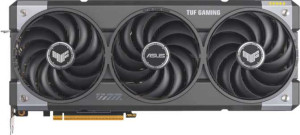
Asus TUF Gaming Radeon RX 9070 XT OC Edition
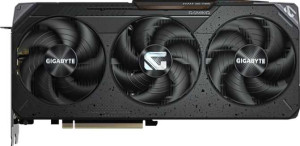
Gigabyte Radeon RX 9070 XT Gaming OC

Asus TUF Gaming Radeon RX 9070 XT OC Edition Gigabyte Radeon RX 9070 XT Gaming OC

Overview

Welcome to our in-depth specification comparison between the Asus TUF Gaming Radeon RX 9070 XT OC Edition and the Gigabyte Radeon RX 9070 XT Gaming OC. Both cards are built on the same RDNA 4.0 architecture and share identical core performance metrics, making the choice between them a nuanced one. The key battlegrounds in this matchup are port configuration and physical dimensions — factors that could prove decisive depending on your setup and connectivity needs.

Common Features

  • Both cards share a base GPU clock speed of 1660 MHz.
  • Both cards reach a GPU turbo clock of 3060 MHz.
  • Both cards deliver a pixel rate of 391.7 GPixel/s.
  • Both cards offer 50.14 TFLOPS of floating-point performance.
  • Both cards provide a texture rate of 783.4 GTexels/s.
  • Both cards feature a GPU memory speed of 2518 MHz.
  • Both cards include 4096 shading units.
  • Both cards have 256 texture mapping units (TMUs).
  • Both cards come with 16GB of VRAM.
  • Both cards use GDDR6 memory.
  • Both cards have an effective memory speed of 20000 MHz.
  • Both cards offer a maximum memory bandwidth of 644.6 GB/s.
  • Both cards use a 256-bit memory bus width.
  • ECC memory support is available on both cards.
  • Both cards support DirectX 12 Ultimate.
  • Both cards support OpenGL version 4.6.
  • Both cards support OpenCL version 2.2.
  • Multi-display technology support is available on both cards.
  • Ray tracing support is available on both cards.
  • 3D support is available on both cards.
  • DLSS support is not available on either card.
  • FSR4 support is available on both cards.
  • Both cards include an HDMI output using HDMI version 2.1b.
  • Neither card includes USB-C ports, DVI outputs, or mini DisplayPort outputs.
  • Both cards are built on the RDNA 4.0 GPU architecture.
  • Both cards have a Thermal Design Power (TDP) of 304W.
  • Both cards use PCIe version 5.
  • Both cards are manufactured on a 4 nm semiconductor process.
  • Both cards contain 53900 million transistors.
  • Neither card uses air-water cooling.

Main Differences

  • HDMI port count is 1 on the Asus TUF Gaming Radeon RX 9070 XT OC Edition and 2 on the Gigabyte Radeon RX 9070 XT Gaming OC.
  • DisplayPort output count is 3 on the Asus TUF Gaming Radeon RX 9070 XT OC Edition and 2 on the Gigabyte Radeon RX 9070 XT Gaming OC.
  • Card width is 330 mm on the Asus TUF Gaming Radeon RX 9070 XT OC Edition and 288 mm on the Gigabyte Radeon RX 9070 XT Gaming OC.
  • Card height is 140 mm on the Asus TUF Gaming Radeon RX 9070 XT OC Edition and 132 mm on the Gigabyte Radeon RX 9070 XT Gaming OC.
Specs Comparison
Asus TUF Gaming Radeon RX 9070 XT OC Edition

Asus TUF Gaming Radeon RX 9070 XT OC Edition

Gigabyte Radeon RX 9070 XT Gaming OC

Gigabyte Radeon RX 9070 XT Gaming OC

Performance:
GPU clock speed 1660 MHz 1660 MHz
GPU turbo 3060 MHz 3060 MHz
pixel rate 391.7 GPixel/s 391.7 GPixel/s
floating-point performance 50.14 TFLOPS 50.14 TFLOPS
texture rate 783.4 GTexels/s 783.4 GTexels/s
GPU memory speed 2518 MHz 2518 MHz
shading units 4096 4096
texture mapping units (TMUs) 256 256
render output units (ROPs) 128 128
Has Double Precision Floating Point (DPFP)

In terms of raw performance metrics, the Asus TUF Gaming RX 9070 XT OC and the Gigabyte RX 9070 XT Gaming OC are essentially identical twins. Both cards share the exact same base clock of 1660 MHz and boost clock of 3060 MHz, and consequently deliver the same 50.14 TFLOPS of floating-point compute power. This parity extends to every sub-metric: pixel fill rate, texture throughput, and memory speed are all carbon copies of one another.

Under the hood, both GPUs are built on the same silicon configuration — 4096 shading units, 256 TMUs, and 128 ROPs — which means they will produce statistically identical frame rates, rendering workloads, and compute tasks. The shared 2518 MHz memory speed ensures neither card has an edge in bandwidth-sensitive scenarios like high-resolution textures or large VRAM data transfers. Both also support Double Precision Floating Point, which matters for certain professional or scientific compute tasks, though it is a non-factor for pure gaming.

The verdict for this group is a complete tie. There is no performance advantage to be found between these two cards based on the provided specs — every number is identical. Any real-world difference in performance would come down to thermal headroom and power delivery design, which fall outside this group. Buyers should look to other factors — cooling solution, price, software ecosystem, or warranty — to differentiate between the two.
Memory:
effective memory speed 20000 MHz 20000 MHz
maximum memory bandwidth 644.6 GB/s 644.6 GB/s
VRAM 16GB 16GB
GDDR version GDDR6 GDDR6
memory bus width 256-bit 256-bit
Supports ECC memory

The memory configuration on both the Asus TUF RX 9070 XT OC and the Gigabyte RX 9070 XT Gaming OC is generous and well-suited for modern gaming demands. A 16GB GDDR6 framebuffer over a 256-bit bus is a meaningful step up from the 8GB or 12GB cards that populated the previous generation mid-range segment, giving both cards comfortable headroom for high-resolution texture packs, 4K asset streaming, and memory-hungry titles that have begun pushing past the 12GB threshold.

The 644.6 GB/s peak memory bandwidth — driven by an effective speed of 20000 MHz — ensures that neither card will be starved for data throughput in GPU-bound scenarios. This level of bandwidth is particularly impactful in compute workloads and ray-tracing pipelines, where large volumes of data need to move between the framebuffer and the shader cores at high frequency. Both cards also support ECC memory, a feature typically associated with professional or workstation GPUs, adding an extra layer of reliability for users running compute or creative workloads alongside gaming.

As with the performance group, this is an unambiguous tie. Every memory specification — capacity, speed, bus width, generation, and error correction support — is identical across both cards. Memory subsystem performance will be indistinguishable in practice, and neither card holds any advantage here. Purchasing decisions should hinge on other differentiating factors.

Features:
DirectX version DirectX 12 Ultimate DirectX 12 Ultimate
OpenGL version 4.6 4.6
OpenCL version 2.2 2.2
Supports multi-display technology
supports ray tracing
Supports 3D
supports DLSS
has FSR4
has XeSS (XMX)
AMD SAM / Intel Resizable BAR AMD SAM AMD SAM
has LHR
has RGB lighting
supported displays 4 4

Both the Asus TUF RX 9070 XT OC and the Gigabyte RX 9070 XT Gaming OC arrive with a feature set that firmly plants them in the current generation. DirectX 12 Ultimate support is the headline here — it unlocks the full suite of modern rendering features including hardware-accelerated ray tracing, mesh shaders, and variable rate shading, all of which are increasingly leveraged by AAA titles. Ray tracing support is confirmed for both cards, though AMD's implementation has historically trailed Nvidia's in raw efficiency, a context worth keeping in mind even if it sits outside the provided data.

On the upscaling front, both cards support FSR4 — AMD's latest spatial and machine-learning-based upscaling technology — while lacking DLSS, which is exclusive to Nvidia hardware. FSR4 represents a significant leap over its predecessors and works across a broader range of games than XeSS, which is also absent here. Combined with AMD SAM (Smart Access Memory), which allows the CPU to access the full VRAM pool for improved performance in compatible systems, these cards are well-equipped for the AMD ecosystem. Both also support up to 4 simultaneous displays, catering to multi-monitor productivity and gaming setups alike.

Once again, the two cards are in a dead heat — every feature flag is identical. The shared feature set is strong and modern, but there is nothing in this group that separates the Asus from the Gigabyte. Shoppers focused purely on software capabilities and API support will find no reason to favor one over the other.

Ports:
has an HDMI output
HDMI ports 1 2
HDMI version HDMI 2.1b HDMI 2.1b
DisplayPort outputs 3 2
USB-C ports 0 0
DVI outputs 0 0
mini DisplayPort outputs 0 0

This is the first group in this comparison where a genuine, practical difference emerges. Both cards offer four total display outputs and share the same HDMI 2.1b standard — capable of driving 4K at 144Hz or 8K at 60Hz — but the port split diverges meaningfully. The Asus TUF RX 9070 XT OC opts for 1 HDMI and 3 DisplayPort outputs, while the Gigabyte RX 9070 XT Gaming OC goes with 2 HDMI and 2 DisplayPort.

For most single-monitor or dual-monitor gaming setups, this distinction is largely irrelevant — both cards can drive any modern display without an adapter. However, the split matters in specific scenarios. Users connecting multiple TVs, AV receivers, or HDMI-native monitors will find the Gigabyte's dual-HDMI layout more convenient, eliminating the need for DisplayPort-to-HDMI adapters. Conversely, users building multi-monitor PC workstation setups — where DisplayPort daisy-chaining or high-refresh-rate monitors with native DP connections are more common — will appreciate the Asus's three DisplayPort outputs.

Neither layout is objectively superior; it comes down to the user's display ecosystem. That said, the Gigabyte holds a slight edge for home theater and living-room-adjacent setups given its two HDMI ports, while the Asus is the stronger choice for traditional desktop multi-monitor configurations. This is the one area in the entire comparison so far where buyer preference and use case should actively influence the decision.

General info:
GPU architecture RDNA 4.0 RDNA 4.0
release date March 2025 March 2025
Thermal Design Power (TDP) 304W 304W
PCI Express (PCIe) version 5 5
semiconductor size 4 nm 4 nm
number of transistors 53900 million 53900 million
Has air-water cooling
width 330 mm 288 mm
height 140 mm 132 mm

At a foundational level, these two cards are cut from the same cloth — both are built on RDNA 4.0 architecture using a 4nm process node with 53,900 million transistors, and both carry an identical 304W TDP. The shared power envelope means system builders can expect the same PSU requirements and thermal output from either card, and PCIe 5.0 support on both ensures neither will face any bandwidth bottleneck on current or near-future motherboard platforms.

Where this group finally reveals a tangible difference is physical size. The Asus TUF RX 9070 XT OC measures 330mm × 140mm, while the Gigabyte RX 9070 XT Gaming OC comes in noticeably more compact at 288mm × 132mm — a difference of 42mm in length and 8mm in height. That 42mm gap is significant in practice: smaller cases, mid-towers with tight GPU clearance, or builds where cable management space behind the card is limited may only accommodate the Gigabyte. Builders working with full-size ATX towers will likely fit either card without issue, but compact case owners should measure carefully before committing to the Asus.

The Gigabyte holds a clear edge in this group purely on the basis of its smaller footprint, making it the more case-friendly option for constrained builds. Since TDP and architecture are identical, there is no performance or efficiency trade-off implied by the size reduction — it is a straightforward win for build flexibility. The Asus's larger dimensions offer no apparent advantage from the data provided here.

Comparison Summary & Verdict

After a thorough look at the specifications, the Asus TUF Gaming Radeon RX 9070 XT OC Edition and the Gigabyte Radeon RX 9070 XT Gaming OC are virtually identical in raw performance, memory subsystem, and feature set — both delivering 50.14 TFLOPS, 16GB of GDDR6 memory, FSR4 support, and ray tracing capability at a 304W TDP. The differences come down to connectivity and size. The Asus card offers 3 DisplayPort outputs and 1 HDMI port, making it the stronger pick for multi-monitor setups relying on DisplayPort. The Gigabyte card counters with 2 HDMI ports and 2 DisplayPort outputs, suiting users who need dual HDMI connections, and its more compact 288 mm width and 132 mm height give it an edge in tighter chassis builds. Neither card is objectively superior in performance — your decision should hinge entirely on your case clearance and display connectivity requirements.

Asus TUF Gaming Radeon RX 9070 XT OC Edition
Buy Asus TUF Gaming Radeon RX 9070 XT OC Edition if...

Buy the Asus TUF Gaming Radeon RX 9070 XT OC Edition if you run a multi-monitor setup that relies on three DisplayPort connections and have sufficient case clearance for its larger footprint.

Gigabyte Radeon RX 9070 XT Gaming OC
Buy Gigabyte Radeon RX 9070 XT Gaming OC if...

Buy the Gigabyte Radeon RX 9070 XT Gaming OC if you need dual HDMI outputs for your display configuration, or if your PC case demands a more compact graphics card.