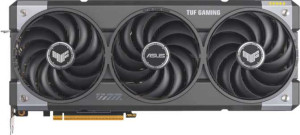
Asus TUF Gaming Radeon RX 9070 XT OC Edition
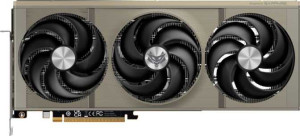
Sapphire Nitro+ Radeon RX 9070 XT

Asus TUF Gaming Radeon RX 9070 XT OC Edition Sapphire Nitro+ Radeon RX 9070 XT

Overview

Choosing between the Asus TUF Gaming Radeon RX 9070 XT OC Edition and the Sapphire Nitro+ Radeon RX 9070 XT is a genuinely close call, as both cards are built on the same RDNA 4.0 architecture and deliver identical core performance figures. In this comparison, we put the two GPUs head to head and zoom in on the areas where they actually differ, including power consumption, display connectivity options, and physical dimensions, to help you make the most informed choice for your build.

Common Features

  • Both products have a base GPU clock speed of 1660 MHz.
  • Both products have a GPU turbo clock speed of 3060 MHz.
  • Both products deliver a pixel rate of 391.7 GPixel/s.
  • Both products offer a floating-point performance of 50.14 TFLOPS.
  • Both products have a texture rate of 783.4 GTexels/s.
  • Both products feature a GPU memory speed of 2518 MHz.
  • Both products include 4096 shading units.
  • Both products have 256 texture mapping units (TMUs).
  • Both products have an effective memory speed of 20000 MHz.
  • Both products have a maximum memory bandwidth of 644.6 GB/s.
  • Both products come with 16GB of VRAM.
  • Both products use GDDR6 memory.
  • Both products feature a 256-bit memory bus width.
  • ECC memory is supported on both products.
  • Both products support DirectX 12 Ultimate.
  • Both products support OpenGL version 4.6.
  • Both products support OpenCL version 2.2.
  • Multi-display technology is supported on both products.
  • Ray tracing is supported on both products.
  • 3D support is available on both products.
  • DLSS is not supported on either product.
  • FSR4 is available on both products.
  • An HDMI output is present on both products.
  • Both products use HDMI version 2.1b.
  • Neither product has USB-C ports.
  • Neither product has DVI outputs.
  • Neither product has mini DisplayPort outputs.
  • Both products are built on the RDNA 4.0 GPU architecture.
  • Both products use PCIe version 5.
  • Both products are manufactured on a 4 nm semiconductor process.
  • Both products contain 53900 million transistors.
  • Neither product features air-water cooling.

Main Differences

  • HDMI ports number 1 on the Asus TUF Gaming Radeon RX 9070 XT OC Edition and 2 on the Sapphire Nitro+ Radeon RX 9070 XT.
  • DisplayPort outputs number 3 on the Asus TUF Gaming Radeon RX 9070 XT OC Edition and 2 on the Sapphire Nitro+ Radeon RX 9070 XT.
  • Thermal Design Power (TDP) is 304W on the Asus TUF Gaming Radeon RX 9070 XT OC Edition and 330W on the Sapphire Nitro+ Radeon RX 9070 XT.
  • Width is 330 mm on the Asus TUF Gaming Radeon RX 9070 XT OC Edition and 330.8 mm on the Sapphire Nitro+ Radeon RX 9070 XT.
  • Height is 140 mm on the Asus TUF Gaming Radeon RX 9070 XT OC Edition and 128.5 mm on the Sapphire Nitro+ Radeon RX 9070 XT.
Specs Comparison
Asus TUF Gaming Radeon RX 9070 XT OC Edition

Asus TUF Gaming Radeon RX 9070 XT OC Edition

Sapphire Nitro+ Radeon RX 9070 XT

Sapphire Nitro+ Radeon RX 9070 XT

Performance:
GPU clock speed 1660 MHz 1660 MHz
GPU turbo 3060 MHz 3060 MHz
pixel rate 391.7 GPixel/s 391.7 GPixel/s
floating-point performance 50.14 TFLOPS 50.14 TFLOPS
texture rate 783.4 GTexels/s 783.4 GTexels/s
GPU memory speed 2518 MHz 2518 MHz
shading units 4096 4096
texture mapping units (TMUs) 256 256
render output units (ROPs) 128 128
Has Double Precision Floating Point (DPFP)

In terms of raw Performance specs, the Asus TUF Gaming RX 9070 XT OC and the Sapphire Nitro+ RX 9070 XT are in a complete dead heat. Both cards share identical core clock figures — a base of 1660 MHz and a boost of 3060 MHz — and carry the same shader configuration of 4096 shading units, 256 TMUs, and 128 ROPs. As a result, derived throughput metrics like pixel fill rate (391.7 GPixel/s), texture rate (783.4 GTexels/s), and floating-point performance (50.14 TFLOPS) are numerically indistinguishable between the two.

Memory bandwidth potential is also matched, with both operating their GDDR6 at 2518 MHz. In practice, this means neither card holds a theoretical advantage in memory-bound workloads. Both also support Double Precision Floating Point (DPFP), which is relevant for compute-adjacent tasks like GPU-accelerated simulation or certain professional workflows layered on top of a gaming card.

Based strictly on the provided specs, this group is an absolute tie. Every measurable performance figure is identical. Any real-world difference in gaming or compute performance between these two cards would stem entirely from factors outside this spec group — such as cooling efficiency sustaining boost clocks, power delivery stability, or driver-level tuning — not from a fundamental hardware advantage on either side.

Memory:
effective memory speed 20000 MHz 20000 MHz
maximum memory bandwidth 644.6 GB/s 644.6 GB/s
VRAM 16GB 16GB
GDDR version GDDR6 GDDR6
memory bus width 256-bit 256-bit
Supports ECC memory

The memory subsystem on both cards is built around a 16GB GDDR6 frame buffer running across a 256-bit bus — a configuration that delivers a peak bandwidth of 644.6 GB/s. That is a substantial pipeline for a consumer GPU at this tier, meaning neither card is likely to encounter memory bottlenecks in high-resolution gaming, even at 4K with demanding texture packs or ray tracing workloads enabled.

The 16GB VRAM capacity itself is worth highlighting: it comfortably exceeds what most current titles require, and more importantly, it provides meaningful headroom as next-generation games and upscaling techniques grow more memory-hungry. Both cards also support ECC (Error-Correcting Code) memory, a feature more commonly associated with workstation hardware. For a gaming card, ECC support adds a degree of computational reliability that can benefit GPU-accelerated creative or technical workloads run alongside gaming use cases.

Much like the Performance group, the Memory specs are a complete tie across every dimension — capacity, speed, bus width, bandwidth, and ECC support are all identical. Neither the Asus TUF Gaming RX 9070 XT OC nor the Sapphire Nitro+ RX 9070 XT holds any advantage here; a buyer's decision between the two cannot be informed by memory specifications alone.

Features:
DirectX version DirectX 12 Ultimate DirectX 12 Ultimate
OpenGL version 4.6 4.6
OpenCL version 2.2 2.2
Supports multi-display technology
supports ray tracing
Supports 3D
supports DLSS
has FSR4
has XeSS (XMX)
AMD SAM / Intel Resizable BAR AMD SAM AMD SAM
has LHR
has RGB lighting
supported displays 4 4

Both cards share the same feature foundation, anchored by DirectX 12 Ultimate support — the current gold standard for modern PC gaming, enabling hardware-level ray tracing, mesh shaders, and variable-rate shading. Speaking of ray tracing, both the Asus TUF Gaming RX 9070 XT OC and the Sapphire Nitro+ RX 9070 XT support it natively, which is increasingly important as more titles ship with RT effects as a core visual pillar rather than an optional extra.

On the upscaling front, the picture is equally matched. Neither card supports DLSS — unsurprising given that is an Nvidia-exclusive technology — but both carry FSR4, AMD's latest spatial and machine-learning-based upscaling solution. FSR4 represents a meaningful generational improvement for image quality in supported titles, and having it on both cards means buyers are not sacrificing upscaling capability regardless of which they choose. AMD SAM (Smart Access Memory) is also present on both, allowing compatible AMD CPUs to access the full VRAM pool simultaneously, which can yield measurable frame rate gains in CPU-to-GPU communication scenarios.

With support for up to 4 simultaneous displays, RGB lighting, and identical API coverage across OpenGL 4.6 and OpenCL 2.2, the feature set is indistinguishable between these two cards. This group is a tie in every meaningful respect — no spec here gives either card a functional or practical edge over the other.
Ports:
has an HDMI output
HDMI ports 1 2
HDMI version HDMI 2.1b HDMI 2.1b
DisplayPort outputs 3 2
USB-C ports 0 0
DVI outputs 0 0
mini DisplayPort outputs 0 0

This is the first spec group in this comparison where a genuine, practical difference emerges. Both cards offer four total display outputs and share the same HDMI 2.1b standard — capable of driving 4K at 144Hz or 8K at 60Hz over a single cable — but they distribute those ports differently. The Asus TUF Gaming RX 9070 XT OC goes with 1 HDMI and 3 DisplayPort, while the Sapphire Nitro+ RX 9070 XT flips the ratio to 2 HDMI and 2 DisplayPort.

In real-world terms, this distinction matters depending on your display setup. DisplayPort is generally preferred for high-refresh-rate PC monitors, so the Asus TUF's three-port layout is arguably better suited to a multi-monitor gaming rig where all screens are DP-native. The Sapphire Nitro+'s dual-HDMI configuration, on the other hand, is more convenient for users who mix a TV or projector into their setup alongside a primary monitor — since most consumer televisions use HDMI exclusively.

Neither layout is objectively superior, but the edge goes to the Sapphire Nitro+ RX 9070 XT for users with mixed display ecosystems, while the Asus TUF RX 9070 XT OC has a slight advantage for dedicated multi-monitor PC setups. Buyers should match this spec directly against their own display inventory before deciding, as it is the one area in this comparison where the two cards diverge in a way that could affect day-to-day usability.

General info:
GPU architecture RDNA 4.0 RDNA 4.0
release date March 2025 March 2025
Thermal Design Power (TDP) 304W 330W
PCI Express (PCIe) version 5 5
semiconductor size 4 nm 4 nm
number of transistors 53900 million 53900 million
Has air-water cooling
width 330 mm 330.8 mm
height 140 mm 128.5 mm

Sharing the same RDNA 4.0 architecture, 4nm fabrication process, and 53.9 billion transistors, both cards are built on identical silicon — so any divergence in this group comes down to how each manufacturer has chosen to implement and package that hardware. The most significant difference here is thermal design power: the Asus TUF Gaming RX 9070 XT OC is rated at 304W, while the Sapphire Nitro+ RX 9070 XT comes in at 330W — a gap of 26 watts that has real implications.

A higher TDP means the Sapphire Nitro+ draws more power from the system and generates more heat under load, requiring a more robust PSU headroom and potentially more case airflow. Conversely, the Asus TUF's lower power envelope is friendlier to tighter builds and less beefy power supplies. It is worth noting, however, that since both cards deliver identical clock speeds and compute throughput, the Nitro+'s higher TDP does not translate into any performance gain visible in the spec sheet — it simply reflects Sapphire's chosen power and cooling strategy.

On physical footprint, the two cards are nearly identical in length (~330mm), but differ in height: the Asus TUF stands taller at 140mm versus the Sapphire Nitro+'s slimmer 128.5mm profile. The Nitro+'s lower height could be advantageous in cases with restricted vertical clearance or when installed alongside large motherboard heatsinks. Overall, the Asus TUF RX 9070 XT OC holds a meaningful edge in this group for efficiency-conscious and space-constrained builders, thanks to its lower TDP at equivalent performance — while the Sapphire Nitro+'s slimmer height offers a minor but real benefit for specific case configurations.

Comparison Summary & Verdict

When all the specifications are laid out, both cards are evenly matched where it matters most, sharing the same 50.14 TFLOPS of floating-point performance, 16GB GDDR6 VRAM on a 256-bit bus, and full support for ray tracing, FSR4, and DirectX 12 Ultimate. The deciding factors come down to connectivity and efficiency. The Asus TUF Gaming Radeon RX 9070 XT OC Edition stands out with its three DisplayPort outputs and a lower 304W TDP, making it the smarter pick for multi-monitor enthusiasts using DisplayPort displays and for builders watching their power budget. The Sapphire Nitro+ Radeon RX 9070 XT counters with two HDMI 2.1b ports, giving it a clear edge for users who need to drive multiple HDMI devices such as TVs or HDMI-native monitors simultaneously, albeit at a higher 330W power draw.

Asus TUF Gaming Radeon RX 9070 XT OC Edition
Buy Asus TUF Gaming Radeon RX 9070 XT OC Edition if...

Buy the Asus TUF Gaming Radeon RX 9070 XT OC Edition if you run a multi-monitor setup using DisplayPort displays and want the same RDNA 4.0 performance at a lower 304W power draw.

Sapphire Nitro+ Radeon RX 9070 XT
Buy Sapphire Nitro+ Radeon RX 9070 XT if...

Choose the Sapphire Nitro+ Radeon RX 9070 XT if you need two HDMI 2.1b outputs to connect TVs or HDMI-based displays at the same time.