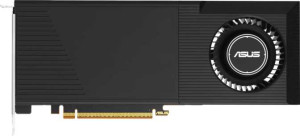
Asus Turbo Radeon AI Pro R9700
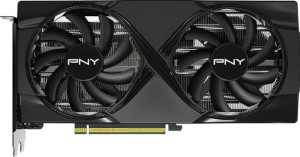
PNY GeForce RTX 5060 Ti Dual Fan 16GB

Asus Turbo Radeon AI Pro R9700 PNY GeForce RTX 5060 Ti Dual Fan 16GB

Common Features

  • Both products support DirectX version 12 Ultimate.
  • Both products support OpenGL version 4.6.
  • Both products support multi-display technology.
  • Both products support ray tracing.
  • Both products support 3D.
  • Both products do not have XeSS (XMX) support.
  • Both products do not have LHR.
  • Both products do not have RGB lighting.
  • Both products have an HDMI output.
  • Both products have one HDMI port.
  • Both products have HDMI version 2.1b.
  • Both products have three DisplayPort outputs.
  • Both products do not have USB-C ports.
  • Both products do not have DVI outputs.
  • Both products do not have mini DisplayPort outputs.
  • Both products have PCI Express (PCIe) version 5.
  • Both products do not have air-water cooling.
  • Both products support ECC memory.
  • Both products have a double precision floating point (DPFP).

Main Differences

  • GPU clock speed is 1660 MHz on Asus Turbo Radeon AI Pro R9700 and 2407 MHz on PNY GeForce RTX 5060 Ti Dual Fan 16GB.
  • GPU turbo is 2920 MHz on Asus Turbo Radeon AI Pro R9700 and 2572 MHz on PNY GeForce RTX 5060 Ti Dual Fan 16GB.
  • Pixel rate is 373.8 GPixel/s on Asus Turbo Radeon AI Pro R9700 and 123.5 GPixel/s on PNY GeForce RTX 5060 Ti Dual Fan 16GB.
  • Floating-point performance is 47.84 TFLOPS on Asus Turbo Radeon AI Pro R9700 and 23.7 TFLOPS on PNY GeForce RTX 5060 Ti Dual Fan 16GB.
  • Texture rate is 747.5 GTexels/s on Asus Turbo Radeon AI Pro R9700 and 370.4 GTexels/s on PNY GeForce RTX 5060 Ti Dual Fan 16GB.
  • GPU memory speed is 2518 MHz on Asus Turbo Radeon AI Pro R9700 and 1750 MHz on PNY GeForce RTX 5060 Ti Dual Fan 16GB.
  • Shading units are 4096 on Asus Turbo Radeon AI Pro R9700 and 4608 on PNY GeForce RTX 5060 Ti Dual Fan 16GB.
  • Texture mapping units (TMUs) are 256 on Asus Turbo Radeon AI Pro R9700 and 144 on PNY GeForce RTX 5060 Ti Dual Fan 16GB.
  • Render output units (ROPs) are 128 on Asus Turbo Radeon AI Pro R9700 and 48 on PNY GeForce RTX 5060 Ti Dual Fan 16GB.
  • Effective memory speed is 20000 MHz on Asus Turbo Radeon AI Pro R9700 and 28000 MHz on PNY GeForce RTX 5060 Ti Dual Fan 16GB.
  • Maximum memory bandwidth is 644.6 GB/s on Asus Turbo Radeon AI Pro R9700 and 448 GB/s on PNY GeForce RTX 5060 Ti Dual Fan 16GB.
  • VRAM is 32GB on Asus Turbo Radeon AI Pro R9700 and 16GB on PNY GeForce RTX 5060 Ti Dual Fan 16GB.
  • GDDR version is GDDR6 on Asus Turbo Radeon AI Pro R9700 and GDDR7 on PNY GeForce RTX 5060 Ti Dual Fan 16GB.
  • Memory bus width is 256-bit on Asus Turbo Radeon AI Pro R9700 and 128-bit on PNY GeForce RTX 5060 Ti Dual Fan 16GB.
  • OpenCL version is 2.2 on Asus Turbo Radeon AI Pro R9700 and 3 on PNY GeForce RTX 5060 Ti Dual Fan 16GB.
  • AMD SAM is supported on Asus Turbo Radeon AI Pro R9700 and Intel Resizable BAR is supported on PNY GeForce RTX 5060 Ti Dual Fan 16GB.
  • GPU architecture is RDNA 4.0 on Asus Turbo Radeon AI Pro R9700 and Blackwell on PNY GeForce RTX 5060 Ti Dual Fan 16GB.
  • Thermal Design Power (TDP) is 300W on Asus Turbo Radeon AI Pro R9700 and 180W on PNY GeForce RTX 5060 Ti Dual Fan 16GB.
  • Semiconductor size is 4 nm on Asus Turbo Radeon AI Pro R9700 and 5 nm on PNY GeForce RTX 5060 Ti Dual Fan 16GB.
  • Number of transistors is 53900 million on Asus Turbo Radeon AI Pro R9700 and 21900 million on PNY GeForce RTX 5060 Ti Dual Fan 16GB.
  • Width is 266.7 mm on Asus Turbo Radeon AI Pro R9700 and 245 mm on PNY GeForce RTX 5060 Ti Dual Fan 16GB.
  • Height is 111.1 mm on Asus Turbo Radeon AI Pro R9700 and 120 mm on PNY GeForce RTX 5060 Ti Dual Fan 16GB.
Specs Comparison
Asus Turbo Radeon AI Pro R9700

Asus Turbo Radeon AI Pro R9700

PNY GeForce RTX 5060 Ti Dual Fan 16GB

PNY GeForce RTX 5060 Ti Dual Fan 16GB

Performance:
GPU clock speed 1660 MHz 2407 MHz
GPU turbo 2920 MHz 2572 MHz
pixel rate 373.8 GPixel/s 123.5 GPixel/s
floating-point performance 47.84 TFLOPS 23.7 TFLOPS
texture rate 747.5 GTexels/s 370.4 GTexels/s
GPU memory speed 2518 MHz 1750 MHz
shading units 4096 4608
texture mapping units (TMUs) 256 144
render output units (ROPs) 128 48
Has Double Precision Floating Point (DPFP)

The Asus Turbo Radeon AI Pro R9700 and the PNY GeForce RTX 5060 Ti Dual Fan 16GB differ significantly in several performance-related specs. Starting with GPU clock speeds, the Asus card runs at a base of 1660 MHz and can boost up to 2920 MHz, while the PNY card has a higher base clock of 2407 MHz and a turbo boost of 2572 MHz. This gives the PNY card a higher base clock but a slightly lower turbo speed compared to the Asus.

When it comes to pixel rate, the Asus Turbo Radeon AI Pro R9700 excels with 373.8 GPixel/s, far outpacing the PNY GeForce RTX 5060 Ti's 123.5 GPixel/s. The Asus card also leads in floating-point performance, offering 47.84 TFLOPS compared to the PNY's 23.7 TFLOPS. This could suggest the Asus card may handle high-level computations and demanding workloads better in these areas.

In terms of texture rate, the Asus card offers 747.5 GTexels/s, which is significantly higher than the PNY's 370.4 GTexels/s. The Asus card also has a larger GPU memory speed at 2518 MHz, compared to the PNY’s 1750 MHz. Regarding architecture, the Asus card features 4096 shading units, 256 TMUs, and 128 ROPs, while the PNY card has 4608 shading units, 144 TMUs, and 48 ROPs. The Asus card has a more balanced texture and render output unit setup, while the PNY card leads with more shading units but fewer texture mapping and render output units.

Memory:
effective memory speed 20000 MHz 28000 MHz
maximum memory bandwidth 644.6 GB/s 448 GB/s
VRAM 32GB 16GB
GDDR version GDDR6 GDDR7
memory bus width 256-bit 128-bit
Supports ECC memory

The Asus Turbo Radeon AI Pro R9700 and the PNY GeForce RTX 5060 Ti Dual Fan 16GB differ in several key memory specs. The Asus card comes with 32GB of VRAM, while the PNY card offers half that at 16GB. In terms of memory type, the Asus uses GDDR6, while the PNY is equipped with the newer GDDR7.

Looking at memory speed, the Asus has an effective memory speed of 20000 MHz, while the PNY card is faster with an effective memory speed of 28000 MHz. However, the maximum memory bandwidth of the Asus card is higher at 644.6 GB/s, compared to the PNY's 448 GB/s. This difference in bandwidth could influence how each card performs in memory-intensive tasks.

Both cards support ECC (Error-Correcting Code) memory, ensuring reliability in critical applications. The memory bus width of the Asus card is 256-bit, while the PNY card has a narrower 128-bit bus width, which may affect the data transfer rate across the memory.

Features:
DirectX version DirectX 12 Ultimate DirectX 12 Ultimate
OpenGL version 4.6 4.6
OpenCL version 2.2 3
Supports multi-display technology
supports ray tracing
Supports 3D
has XeSS (XMX)
AMD SAM / Intel Resizable BAR AMD SAM Intel Resizable BAR
has LHR
has RGB lighting
supported displays 4 4

The Asus Turbo Radeon AI Pro R9700 and the PNY GeForce RTX 5060 Ti Dual Fan 16GB are quite similar in terms of features, with a few key differences. Both cards support DirectX 12 Ultimate, OpenGL 4.6, OpenCL 2.2 (for Asus) and 3.0 (for PNY), and both support multi-display technology, ray tracing, and 3D. These similarities ensure a similar experience in modern gaming and content creation environments for both products.

The Asus card supports AMD SAM (Smart Access Memory), while the PNY card supports Intel Resizable BAR, which are both technologies for improving system performance in compatible setups. In terms of display support, both cards can handle up to four displays, making them a good choice for multi-monitor setups. Neither card has RGB lighting, and neither features XeSS (XMX) support.

One notable difference is that the PNY card has a slightly newer OpenCL version, 3.0, compared to the 2.2 found on the Asus card. Both products also lack LHR (Lite Hash Rate) capabilities, which means they can be used for cryptocurrency mining without the hash rate restrictions seen in some other GPUs.

Ports:
has an HDMI output
HDMI ports 1 1
HDMI version HDMI 2.1b HDMI 2.1b
DisplayPort outputs 3 3
USB-C ports 0 0
DVI outputs 0 0
mini DisplayPort outputs 0 0

Both the Asus Turbo Radeon AI Pro R9700 and the PNY GeForce RTX 5060 Ti Dual Fan 16GB share very similar port configurations. Both cards feature one HDMI output with HDMI 2.1b support, and both offer three DisplayPort outputs. Neither card includes USB-C ports, DVI outputs, or mini DisplayPort outputs, so they both rely on HDMI and DisplayPort for display connections.

In terms of HDMI version and number of ports, both products are identical. The presence of HDMI 2.1b on both cards ensures support for high-quality video outputs. Overall, these two cards are nearly identical when it comes to their port offerings.

General info:
GPU architecture RDNA 4.0 Blackwell
release date July 2025 April 2025
Thermal Design Power (TDP) 300W 180W
PCI Express (PCIe) version 5 5
semiconductor size 4 nm 5 nm
number of transistors 53900 million 21900 million
Has air-water cooling
width 266.7 mm 245 mm
height 111.1 mm 120 mm

The Asus Turbo Radeon AI Pro R9700 and the PNY GeForce RTX 5060 Ti Dual Fan 16GB differ in a few key general specifications. The Asus card is built on the RDNA 4.0 GPU architecture, while the PNY card uses the Blackwell architecture. This reflects the different designs of the two cards. The Asus card has a higher thermal design power (TDP) of 300W, compared to the PNY's 180W, suggesting that the Asus card may require more power for operation.

In terms of semiconductor size, the Asus card features a 4 nm process, while the PNY card uses a slightly larger 5 nm process. The Asus card has a significantly higher transistor count, with 53,900 million transistors, compared to the PNY’s 21,900 million. This difference in transistor count could affect the cards' performance and efficiency in handling complex tasks.

Both cards use PCIe version 5 for data transfer, and neither includes air-water cooling systems. In terms of physical dimensions, the Asus card is wider at 266.7 mm compared to the PNY’s 245 mm, but the PNY card is taller at 120 mm compared to the Asus card's 111.1 mm. These size differences may impact the fit within certain PC cases.

Comparison Summary

This is a specification comparison between Asus Turbo Radeon AI Pro R9700 and PNY GeForce RTX 5060 Ti Dual Fan 16GB. Both products support DirectX 12 Ultimate and ray tracing, as well as having one HDMI port and three DisplayPort outputs. However, the Asus model features a higher GPU clock speed of 1660 MHz compared to 2407 MHz on the PNY model. The Asus product also offers 32GB VRAM compared to 16GB on the PNY model, while the PNY model has GDDR7 memory, unlike the Asus with GDDR6. Additionally, the TDP is 300W for the Asus and 180W for the PNY, reflecting a significant power difference.