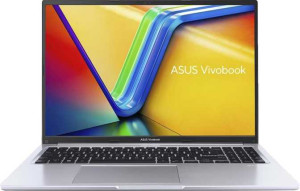
Asus VivoBook 16 16"
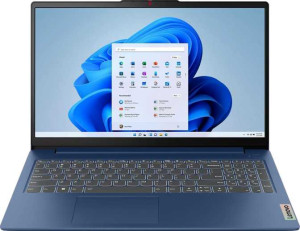
Lenovo IdeaPad Slim 3 Gen 8 15.6"

Asus VivoBook 16 16" Lenovo IdeaPad Slim 3 Gen 8 15.6"

Common Features

  • Both products use flash storage.
  • Both products are equipped with NVMe SSDs.
  • Both products support DirectX 12.
  • Both products support multithreading.
  • Both products support 64-bit architecture.
  • Both products have a 60Hz refresh rate.
  • Both products have an anti-reflection coating on the display.
  • Both products have a screen resolution of 1920 x 1080 px.
  • Both products have stereo speakers.
  • Both products have a socket for a 3.5 mm audio jack.
  • Both products have Bluetooth support.
  • Both products have an HDMI output.
  • Both products have integrated graphics.
  • Both products have two memory channels.
  • Both products have Wi-Fi support.
  • Both products have USB ports.
  • Both products do not have a fanless design.
  • Both products do not have a backlit keyboard.
  • Both products do not have a rugged build.

Main Differences

  • Asus VivoBook 16 16″ weighs 1880 g, while Lenovo IdeaPad Slim 3 Gen 8 15.6″ weighs 1620 g.
  • Asus VivoBook 16 16″ has a volume of 1693.698 cm³, while Lenovo IdeaPad Slim 3 Gen 8 15.6″ has a volume of 1434.205 cm³.
  • Asus VivoBook 16 16″ has a width of 358 mm, while Lenovo IdeaPad Slim 3 Gen 8 15.6″ has a width of 359 mm.
  • Asus VivoBook 16 16″ has a height of 249 mm, while Lenovo IdeaPad Slim 3 Gen 8 15.6″ has a height of 235 mm.
  • Asus VivoBook 16 16″ has a thickness of 19 mm, while Lenovo IdeaPad Slim 3 Gen 8 15.6″ has a thickness of 17 mm.
  • Asus VivoBook 16 16″ has a screen size of 16″, while Lenovo IdeaPad Slim 3 Gen 8 15.6″ has a screen size of 15.6″.
  • Asus VivoBook 16 16″ has a resolution of 1920 x 1080 px, while Lenovo IdeaPad Slim 3 Gen 8 15.6″ has a resolution of 1080 x 1920 px.
  • Asus VivoBook 16 16″ has a pixel density of 137 ppi, while Lenovo IdeaPad Slim 3 Gen 8 15.6″ has a pixel density of 141 ppi.
  • Asus VivoBook 16 16″ has a typical brightness of 300 nits, while Lenovo IdeaPad Slim 3 Gen 8 15.6″ has a typical brightness of 250 nits.
  • Asus VivoBook 16 16″ has 8GB of RAM, while Lenovo IdeaPad Slim 3 Gen 8 15.6″ has 16GB of RAM.
  • Asus VivoBook 16 16″ has 512GB of internal storage, while Lenovo IdeaPad Slim 3 Gen 8 15.6″ has 1024GB of internal storage.
  • Asus VivoBook 16 16″ has a CPU speed of 6 x 2.3 GHz, while Lenovo IdeaPad Slim 3 Gen 8 15.6″ has a CPU speed of 6 x 2.4 & 4 x 1.8 GHz.
  • Asus VivoBook 16 16″ has 12 CPU threads, while Lenovo IdeaPad Slim 3 Gen 8 15.6″ has 16 CPU threads.
  • Asus VivoBook 16 16″ has a maximum memory amount of 64GB, while Lenovo IdeaPad Slim 3 Gen 8 15.6″ has a maximum memory amount of 16GB.
  • Asus VivoBook 16 16″ uses DDR memory version 4, while Lenovo IdeaPad Slim 3 Gen 8 15.6″ uses DDR memory version 5.
  • Asus VivoBook 16 16″ has a turbo clock speed of 4.3GHz, while Lenovo IdeaPad Slim 3 Gen 8 15.6″ has a turbo clock speed of 4.9GHz.
  • Asus VivoBook 16 16″ has a GPU turbo of 1800 MHz, while Lenovo IdeaPad Slim 3 Gen 8 15.6″ has a GPU turbo of 1500 MHz.
  • Asus VivoBook 16 16″ has 1 memory slot, while Lenovo IdeaPad Slim 3 Gen 8 15.6″ has 0 memory slots.
  • Asus VivoBook 16 16″ supports PCI Express (PCIe) version 3, while Lenovo IdeaPad Slim 3 Gen 8 15.6″ supports PCI Express (PCIe) version 4.
  • Asus VivoBook 16 16″ uses a 7 nm semiconductor size, while Lenovo IdeaPad Slim 3 Gen 8 15.6″ uses a 10 nm semiconductor size.
  • Asus VivoBook 16 16″ has a PassMark result of 15601, while Lenovo IdeaPad Slim 3 Gen 8 15.6″ has a PassMark result of 23805.
  • Asus VivoBook 16 16″ has a PassMark single result of 2948, while Lenovo IdeaPad Slim 3 Gen 8 15.6″ has a PassMark single result of 3569.
  • Asus VivoBook 16 16″ has 0 USB 3.2 Gen 1 ports (USB-C), while Lenovo IdeaPad Slim 3 Gen 8 15.6″ has 1 USB 3.2 Gen 1 port (USB-C).
  • Asus VivoBook 16 16″ has 0 USB 3.2 Gen 1 ports (USB-A), while Lenovo IdeaPad Slim 3 Gen 8 15.6″ has 2 USB 3.2 Gen 1 ports (USB-A).
  • Asus VivoBook 16 16″ does not have an external memory slot, while Lenovo IdeaPad Slim 3 Gen 8 15.6″ has an external memory slot.
  • Asus VivoBook 16 16″ has Bluetooth version 5.3, while Lenovo IdeaPad Slim 3 Gen 8 15.6″ has Bluetooth version 5.2.
  • Asus VivoBook 16 16″ has 1 USB 2.0 port, while Lenovo IdeaPad Slim 3 Gen 8 15.6″ has 0 USB 2.0 ports.
  • Asus VivoBook 16 16″ does not have a VGA connector, while Lenovo IdeaPad Slim 3 Gen 8 15.6″ has a VGA connector.
  • Asus VivoBook 16 16″ has a battery size of 42 Wh, while Lenovo IdeaPad Slim 3 Gen 8 15.6″ has a battery size of 47 Wh.
  • Asus VivoBook 16 16″ does not have sleep-and-charge USB ports, while Lenovo IdeaPad Slim 3 Gen 8 15.6″ has sleep-and-charge USB ports.
  • Asus VivoBook 16 16″ has 1 microphone, while Lenovo IdeaPad Slim 3 Gen 8 15.6″ has 2 microphones.
  • Asus VivoBook 16 16″ has 3 USB 3.0 ports, while Lenovo IdeaPad Slim 3 Gen 8 15.6″ has 0 USB 3.0 ports.
  • Asus VivoBook 16 16″ has 4 USB ports, while Lenovo IdeaPad Slim 3 Gen 8 15.6″ has 3 USB ports.
  • Asus VivoBook 16 16″ uses big.LITTLE technology, while Lenovo IdeaPad Slim 3 Gen 8 15.6″ does not.
Specs Comparison
Asus VivoBook 16 16"

Asus VivoBook 16 16"

Lenovo IdeaPad Slim 3 Gen 8 15.6"

Lenovo IdeaPad Slim 3 Gen 8 15.6"

Design:
weight 1880 g 1620 g
Uses a fanless design
Has a backlit keyboard
volume 1693.698 cm³ 1434.205 cm³
width 358 mm 359 mm
height 249 mm 235 mm
thickness 19 mm 17 mm
is weather-sealed (splashproof)
has a rugged build

The Asus VivoBook 16 16″ and Lenovo IdeaPad Slim 3 Gen 8 15.6″ have some differences in design specifications. The VivoBook weighs 1880 g, while the IdeaPad is lighter at 1620 g. In terms of volume, the VivoBook has a larger size at 1693.698 cm³, compared to the IdeaPad's 1434.205 cm³.

Both products use a fanless design, and neither has a backlit keyboard, weather-sealing (splashproof), or a rugged build. The thickness of the VivoBook is 19 mm, slightly thicker than the IdeaPad's 17 mm. The VivoBook's width measures 358 mm, while the IdeaPad is just 1 mm wider at 359 mm. For height, the VivoBook stands at 249 mm, while the IdeaPad is shorter at 235 mm.

Overall, both devices share many similarities in terms of design features, with the main differences being the weight, dimensions, and overall volume, with the VivoBook being both heavier and larger in volume.

Display:
screen size 16" 15.6"
resolution 1920 x 1080 px 1080 x 1920 px
pixel density 137 ppi 141 ppi
has a touch screen
brightness (typical) 300 nits 250 nits
refresh rate 60Hz 60Hz
has anti-reflection coating

The Asus VivoBook 16 16″ and Lenovo IdeaPad Slim 3 Gen 8 15.6″ both offer Full HD displays, but there are a few differences in their specifications. The VivoBook features a 16″ screen with a resolution of 1920 x 1080 px, while the IdeaPad has a slightly smaller 15.6″ screen with the same resolution of 1080 x 1920 px. The VivoBook has a pixel density of 137 ppi, while the IdeaPad has a slightly higher pixel density of 141 ppi.

In terms of brightness, the VivoBook offers a typical 300 nits brightness, which is brighter than the IdeaPad's 250 nits. Both devices share a 60Hz refresh rate and have an anti-reflection coating to reduce glare. Neither product offers a touch screen.

Overall, while both displays are quite similar, the VivoBook has a larger screen and higher brightness, while the IdeaPad has a marginally higher pixel density.

Performance:
RAM 8GB 16GB
Uses flash storage
internal storage 512GB 1024GB
CPU speed 6 x 2.3 GHz 6 x 2.4 & 4 x 1.8 GHz
CPU threads 12 threads 16 threads
Is an NVMe SSD
DirectX version DirectX 12 DirectX 12
uses multithreading
maximum memory amount 64GB 16GB
DDR memory version 4 5
turbo clock speed 4.3GHz 4.9GHz
GPU turbo 1800 MHz 1500 MHz
memory slots 1 0
PCI Express (PCIe) version 3 4
semiconductor size 7 nm 10 nm
Supports 64-bit

The Asus VivoBook 16 16″ and Lenovo IdeaPad Slim 3 Gen 8 15.6″ differ in several key performance specifications. The VivoBook comes with 8GB of RAM, while the IdeaPad offers 16GB of RAM, providing it with more memory. In terms of internal storage, the VivoBook has 512GB, compared to the IdeaPad's larger 1024GB of storage. Both devices use flash storage and feature NVMe SSDs.

For the CPU, the VivoBook is equipped with a 6-core processor running at 2.3 GHz, with a turbo clock speed of 4.3 GHz. In contrast, the IdeaPad has a more complex CPU setup with 6 cores running at 2.4 GHz and 4 cores running at 1.8 GHz, along with a turbo clock speed of 4.9 GHz. The VivoBook has 12 CPU threads, while the IdeaPad has 16 threads. Both products support multithreading and DirectX 12.

Regarding other performance features, the VivoBook supports up to 64GB of RAM, while the IdeaPad is limited to a maximum of 16GB. The VivoBook uses DDR4 memory, while the IdeaPad uses the newer DDR5 version. The VivoBook's GPU turbo is 1800 MHz, compared to the IdeaPad's 1500 MHz. Additionally, the VivoBook has PCIe version 3, while the IdeaPad supports the faster PCIe version 4. The VivoBook uses a 7 nm semiconductor size, while the IdeaPad uses a 10 nm size.

Benchmarks:
PassMark result 15601 23805
PassMark result (single) 2948 3569

The Asus VivoBook 16 16″ and Lenovo IdeaPad Slim 3 Gen 8 15.6″ show a notable difference in their benchmark results. The VivoBook has a PassMark result of 15601, while the IdeaPad significantly outperforms it with a result of 23805. For single-core performance, the VivoBook scores 2948, whereas the IdeaPad scores 3569.

These results highlight that the IdeaPad has a higher overall performance in both multi-core and single-core benchmarks compared to the VivoBook.

Connectivity:
USB 3.2 Gen 2 ports (USB-C) 0 0
USB 3.2 Gen 2 ports (USB-A) 0 0
USB 4 20Gbps ports 0 0
USB 4 40Gbps ports 0 0
Thunderbolt 4 ports 0 0
USB 3.2 Gen 1 ports (USB-C) 0 1
USB 3.2 Gen 1 ports (USB-A) 0 2
Thunderbolt 3 ports 0 0
has an HDMI output
Has USB Type-C
supports Wi-Fi
Wi-Fi version Wi-Fi 6E (802.11ax), Wi-Fi 6 (802.11ax), Wi-Fi 5 (802.11ac), Wi-Fi 4 (802.11n) Wi-Fi 6 (802.11ax), Wi-Fi 5 (802.11ac), Wi-Fi 4 (802.11n)
has an external memory slot
Bluetooth version 5.3 5.2
RJ45 ports 0 0
HDMI ports 1 1
HDMI version HDMI 1.4 HDMI 1.4
DisplayPort outputs 0 0
USB 2.0 ports 1 0
has AirPlay
mini DisplayPort outputs 0 0
has a VGA connector

The Asus VivoBook 16 16″ and Lenovo IdeaPad Slim 3 Gen 8 15.6″ both offer a variety of connectivity options, but with some key differences. Neither product includes USB 3.2 Gen 2 ports (USB-C or USB-A), USB 4 ports, or Thunderbolt 3 or 4 ports. The VivoBook has one USB 2.0 port and no USB Type-C, while the IdeaPad includes one USB 3.2 Gen 1 Type-C port and two USB 3.2 Gen 1 Type-A ports.

Both laptops have an HDMI output (with HDMI 1.4 version) and support Wi-Fi, though the VivoBook supports the newer Wi-Fi 6E, along with Wi-Fi 6, Wi-Fi 5, and Wi-Fi 4, while the IdeaPad supports Wi-Fi 6, Wi-Fi 5, and Wi-Fi 4, but does not include Wi-Fi 6E. Both devices also support Bluetooth, with the VivoBook using version 5.3 and the IdeaPad using version 5.2.

When it comes to external memory, the VivoBook does not include an external memory slot, while the IdeaPad offers one. Both laptops have AirPlay support, but only the IdeaPad includes a VGA connector, which the VivoBook lacks.

Battery:
battery size 42 Wh 47 Wh
Has sleep-and-charge USB ports
Has a MagSafe power adapter

The Asus VivoBook 16 16″ and Lenovo IdeaPad Slim 3 Gen 8 15.6″ differ in a few key battery-related features. The VivoBook has a 42 Wh battery, while the IdeaPad features a slightly larger 47 Wh battery.

When it comes to USB functionality, the IdeaPad supports sleep-and-charge USB ports, which the VivoBook does not have. Both laptops do not have a MagSafe power adapter.

Overall, the IdeaPad offers a larger battery and the added convenience of sleep-and-charge USB ports, while the VivoBook is limited to standard USB ports without this feature.

Features:
release date May 2025 July 2025
has stereo speakers
has a socket for a 3.5 mm audio jack
supports ray tracing
supports DLSS
has Dolby Atmos
Has a fingerprint scanner
number of microphones 1 2
Uses 3D facial recognition
has voice commands
has a front camera
Has S/PDIF Out port
has a gyroscope
has GPS
has an accelerometer
has a compass
Has an optical disc drive

Both the Asus VivoBook 16 16″ and Lenovo IdeaPad Slim 3 Gen 8 15.6″ come with stereo speakers and a 3.5 mm audio jack, but there are some differences in their other features. The VivoBook has one microphone, while the IdeaPad has two microphones. Both products include a front camera but do not support features like ray tracing, DLSS, Dolby Atmos, or 3D facial recognition.

Neither laptop has a fingerprint scanner, S/PDIF Out port, gyroscope, GPS, accelerometer, compass, or optical disc drive. The VivoBook does not feature any additional sensors or voice command support, which is also the case for the IdeaPad.

In summary, both laptops share many common features but differ slightly in microphone count, with the IdeaPad offering two microphones compared to the VivoBook's single microphone.

Miscellaneous:
USB 3.0 ports 3 0
USB ports 4 3
Thunderbolt ports 0 0
clock multiplier 23 24
GPU name AMD Radeon Graphics UHD Graphics 770
Type Desktop, Laptop Laptop
Uses big.LITTLE technology
instruction sets MMX, F16C, FMA3, AES, AVX, AVX2, SSE 4.1, SSE 4.2 SSE 4.2, SSE 4.1, AVX, AES, FMA3, F16C, MMX
L3 cache 16 MB 24 MB
L2 cache 3 MB 9.5 MB
Has an unlocked multiplier
Has NX bit
OpenCL version 2.2 3
OpenGL version 4.6 4.6
GPU execution units 7 64
Has integrated graphics
Supports ECC memory
memory channels 2 2
RAM speed (max) 4267 MHz 5200 MHz
CPU temperature 95 °C 100 °C
Thermal Design Power (TDP) 15W 45W

The Asus VivoBook 16 16″ and Lenovo IdeaPad Slim 3 Gen 8 15.6″ differ in several miscellaneous features. The VivoBook has 3 USB 3.0 ports and a total of 4 USB ports, while the IdeaPad has 0 USB 3.0 ports and a total of 3 USB ports. Both devices lack Thunderbolt ports.

The clock multiplier of the VivoBook is 23, whereas the IdeaPad has a slightly higher multiplier of 24. The VivoBook uses the AMD Radeon Graphics GPU with 7 execution units, while the IdeaPad uses the UHD Graphics 770 GPU with 64 execution units. Both products have integrated graphics.

Other specifications include cache sizes, with the VivoBook offering a 16 MB L3 cache and a 3 MB L2 cache, while the IdeaPad features a 24 MB L3 cache and a 9.5 MB L2 cache. The VivoBook supports ECC memory, while the IdeaPad does not. The VivoBook’s maximum RAM speed is 4267 MHz, compared to the IdeaPad's faster 5200 MHz. Both devices have 2 memory channels. Additionally, the VivoBook operates at a Thermal Design Power (TDP) of 15W, while the IdeaPad has a higher TDP of 45W. The VivoBook's CPU temperature is 95 °C, while the IdeaPad's is slightly higher at 100 °C.

Comparison Summary

This is a specification comparison between Asus VivoBook 16 16″ and Lenovo IdeaPad Slim 3 Gen 8 15.6″. Both models feature flash storage, NVMe SSD, and support DirectX 12. The Asus VivoBook 16 16″ has a larger screen size of 16″, while the Lenovo IdeaPad Slim 3 Gen 8 15.6″ offers a more compact 15.6″ display. The Asus model has 8GB of RAM and 512GB of internal storage, whereas the Lenovo has 16GB of RAM and 1024GB of internal storage. Additionally, the Asus has a PassMark result of 15601, while the Lenovo scores higher at 23805. The Lenovo IdeaPad Slim 3 Gen 8 15.6″ also includes USB Type-C support and an external memory slot, which the Asus lacks.