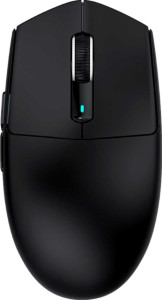
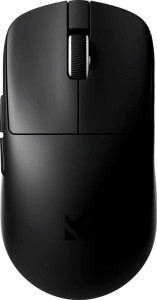
The most striking difference in this group is the polling rate: the Attack Shark G3 operates at 1000 Hz, meaning it reports its position to the PC 1,000 times per second, while the MCHOSE L7 Pro Plus runs at 8000 Hz — eight times faster. In practice, a higher polling rate reduces the latency between physical movement and cursor response on screen, which is most noticeable in fast-paced competitive gaming where milliseconds matter. For the vast majority of users and even most competitive players, 1000 Hz is perfectly adequate, but the L7 Pro Plus's 8000 Hz puts it in a different tier for those chasing every possible edge.
The motion tracking figures tell a similar story. The L7 Pro Plus supports a maximum speed of 650 IPS and 50G acceleration, versus the G3's 400 IPS and 40G. This means the L7 Pro Plus can track accurately even during the most explosive flick movements without losing position, whereas the G3 may theoretically lose tracking in extreme high-speed swipes — though 400 IPS is still well above what most users ever reach. On DPI, both mice are competitive: the G3 tops out at 25,000 DPI while the L7 Pro Plus reaches 26,000 DPI, a difference that is effectively irrelevant in real use. More meaningfully, the L7 Pro Plus's minimum DPI of 200 offers finer low-sensitivity control compared to the G3's floor of 800 DPI, which could matter for precision tasks or users who prefer very low sensitivity settings.
Overall, the MCHOSE L7 Pro Plus holds a clear performance advantage across every measurable spec in this group — higher polling rate, faster tracking speed, greater acceleration tolerance, and a wider DPI range. The G3's specs are solid and sufficient for mainstream gaming, but the L7 Pro Plus is objectively the stronger performer on paper for users who prioritize peak technical responsiveness.