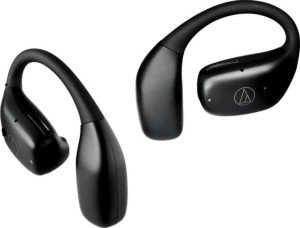
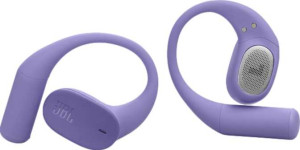
From a sound quality standpoint, these two open-ear earbuds are remarkably alike on paper. Both cover the full standard audible range of 20 Hz – 20,000 Hz, and neither offers ANC, passive noise reduction, spatial audio, Dolby Atmos, or Dirac Virtuo processing. For open-ear designs, the absence of noise isolation is expected by nature — sound leaks in both directions by design — so the lack of ANC is not a surprise, but it does mean neither earphone is suited for noisy commutes or focused listening in loud environments.
The one measurable differentiator is driver size: the JBL Sense Lite uses a 15.4 mm driver versus the ATH-AC5TW's 14.3 mm. A larger driver surface area can theoretically move more air, which may translate to fuller bass response and higher maximum volume. That said, driver size alone does not determine sound quality — tuning, diaphragm material, and acoustic chamber design matter equally — and neither product discloses those variables here. The gap of roughly 1 mm is modest, so real-world differences, if any, are likely subtle rather than dramatic.
On the whole, this group is essentially a tie. With identical frequency ranges, no advanced audio processing on either side, and only a marginal driver size difference, neither product holds a clear, spec-verified acoustic advantage. Listeners prioritizing premium sound features like spatial audio or Atmos will find both products equally limited in this category.