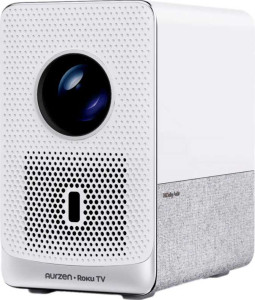
Aurzen Boom Air
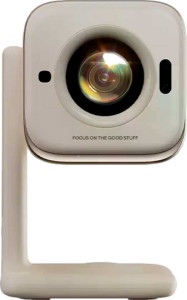
Aurzen Eazze D1R Cube

Aurzen Boom Air Aurzen Eazze D1R Cube

Overview

When choosing between the Aurzen Boom Air and the Aurzen Eazze D1R Cube, buyers are faced with two capable 1080p projectors that share a surprisingly strong common foundation, yet diverge in meaningful ways. This comparison digs into the key battlegrounds: image contrast and brightness, physical footprint, audio configuration, and smart feature support — helping you determine which projector best fits your setup and viewing ambitions.

Common Features

  • Neither product uses a laser light source.
  • Both products output at 1080p resolution.
  • Both products feature motorized focus.
  • Neither product displays 3D content with glasses.
  • Neither product has motorized zoom.
  • HDR10+ support is not available on either product.
  • Manual focus is not available on either product.
  • Dolby Vision support is not available on either product.
  • HLG support is not available on either product.
  • Both products have 1 HDMI port.
  • Both products support AirPlay.
  • Both products have Bluetooth.
  • Both products support Wi-Fi.
  • Both products have 1 USB port.
  • Both products have Chromecast built-in.
  • Neither product has a VGA connector.
  • Neither product has a DVI connector.
  • Vertical lens shift is not available on either product.
  • Horizontal lens shift is not available on either product.
  • Both products include a remote control.
  • Both products have a built-in smart TV platform.
  • Both products have a built-in speaker.
  • Both products support Dolby Atmos.

Main Differences

  • Width is 100 mm on Aurzen Boom Air and 177.8 mm on Aurzen Eazze D1R Cube.
  • Height is 260 mm on Aurzen Boom Air and 188.5 mm on Aurzen Eazze D1R Cube.
  • Thickness is 100 mm on Aurzen Boom Air and 199 mm on Aurzen Eazze D1R Cube.
  • Weight is 1200 g on Aurzen Boom Air and 1830 g on Aurzen Eazze D1R Cube.
  • Volume is 2600 cm³ on Aurzen Boom Air and 6669.5447 cm³ on Aurzen Eazze D1R Cube.
  • Warranty period is 1 year on Aurzen Boom Air and 2 years on Aurzen Eazze D1R Cube.
  • ANSI lumens brightness is 300 lumens on Aurzen Boom Air and 330 lumens on Aurzen Eazze D1R Cube.
  • Contrast ratio is 500:1 on Aurzen Boom Air and 1500:1 on Aurzen Eazze D1R Cube.
  • Maximum projection size is 200″ on Aurzen Boom Air and 150″ on Aurzen Eazze D1R Cube.
  • HDR10 support is present on Aurzen Boom Air but not available on Aurzen Eazze D1R Cube.
  • Stereo speakers are present on Aurzen Eazze D1R Cube but not available on Aurzen Boom Air.
  • Audio output power is 1 x 10W on Aurzen Boom Air and 2 x 5W on Aurzen Eazze D1R Cube.
  • A 3.5 mm audio jack socket is present on Aurzen Eazze D1R Cube but not available on Aurzen Boom Air.
Specs Comparison
Aurzen Boom Air

Aurzen Boom Air

Aurzen Eazze D1R Cube

Aurzen Eazze D1R Cube

General info:
has laser light source
release date August 2025 September 2025
width 100 mm 177.8 mm
height 260 mm 188.5 mm
thickness 100 mm 199 mm
weight 1200 g 1830 g
volume 2600 cm³ 6669.5447 cm³
warranty period 1 years 2 years

The most immediate difference between these two projectors lies in their physical footprint. The Aurzen Boom Air adopts a tall, slim tower profile (100 × 260 × 100 mm), while the Eazze D1R Cube lives up to its name with a more cube-like, bulkier body (177.8 × 188.5 × 199 mm). In terms of raw volume, the Cube occupies roughly 6,670 cm³ compared to the Boom Air's 2,600 cm³ — making the Cube more than 2.5× larger. This translates directly to portability: the Boom Air is noticeably easier to slip into a bag or reposition on a shelf, while the Cube demands considerably more dedicated space.

Weight reinforces this gap. At 1,200 g, the Boom Air is meaningfully lighter than the Cube's 1,830 g — a difference of over 600 g that becomes relevant when transporting the unit or adjusting its placement frequently. Neither product uses a laser light source, so both are on equal footing regarding lamp technology.

Where the Cube reclaims ground is in the warranty period: it comes backed by 2 years of coverage versus the Boom Air's 1 year. For a device that will sit in a fixed home setup and be used intensively, that extra year of manufacturer protection carries real value. Overall, the Boom Air has a clear edge in portability and compactness, while the Eazze D1R Cube offers stronger long-term purchase confidence through its extended warranty.

Projection quality:
ANSI lumens 300 lumens 330 lumens
output resolution 1080p 1080p
contrast ratio 500:1 1500:1
has motorized focus
displays 3D with glasses
maximum projection size 200" 150"
has motorized zoom
supports HDR10+
has manual focus
supports Dolby Vision
supports HDR10
supports HLG

Both projectors output at 1080p resolution with motorized focus, so setup convenience and base image sharpness are evenly matched. Where they diverge meaningfully is in contrast and screen size capability. The Eazze D1R Cube delivers a 1500:1 contrast ratio — three times that of the Boom Air's 500:1 — which is arguably the most impactful image quality differentiator here. Higher contrast means deeper perceived blacks and more visual punch, especially in moderately lit rooms where projectors typically struggle to reproduce shadow detail.

Flip the advantage, though, and the Boom Air scales to a 200″ maximum projection size versus the Cube's cap of 150″. For users with large walls or dedicated home theater ambitions, that extra 50 inches of diagonal real estate is substantial. The Boom Air also supports HDR10, a wide-industry standard for high dynamic range content, while the Cube offers no HDR support at all — meaning streaming HDR content on the Boom Air can preserve more of the intended color and brightness gradations from the source.

Taken together, these specs point in different directions depending on use case. The Cube has the edge for image depth and contrast quality in typical room conditions, but the Boom Air wins on projection scale and HDR compatibility — making it the stronger choice for users who prioritize a cinematic-sized image with modern streaming content.

Connectivity:
HDMI ports 1 1
has AirPlay
Has Bluetooth
supports Wi-Fi
USB ports 1 1
has Chromecast built-in
has a VGA connector
has a DVI connector
supports Miracast
RJ45 ports 0 0
Has S/PDIF Out port

Connectivity is one area where choosing between these two projectors requires no deliberation — the specs are identical across every single data point. Both carry one HDMI port, one USB port, Bluetooth, Wi-Fi, AirPlay, built-in Chromecast, and Miracast support. Neither offers an Ethernet (RJ45) port or an S/PDIF optical audio output.

In practical terms, this is a well-rounded wireless ecosystem. The combination of AirPlay, Chromecast, and Miracast means users can mirror or cast content from virtually any device — iPhones and Macs via AirPlay, Android phones and Chromebooks via Chromecast, and Windows laptops via Miracast — without needing adapters or cables. The absence of an Ethernet port does mean both units rely entirely on Wi-Fi for network streaming, which could be a minor drawback in environments with unstable wireless signals.

This group is a complete tie. There is no connectivity-based reason to favor one projector over the other; any decision should rest entirely on the differences found in other specification groups.

Features:
has stereo speakers
has lens shift (vertical)
has lens shift (horizontal)
has a remote control
has built-in smart TV
has a built-in speaker
audio output power 1 x 10W 2 x 5W
has a socket for a 3.5 mm audio jack
has Dolby Atmos

Audio is where these two projectors part ways most noticeably. Both deliver 10W of total output power and support Dolby Atmos, but the way that power is deployed differs. The Eazze D1R Cube splits it across a stereo speaker pair (2 × 5W), while the Boom Air channels all its wattage into a single mono speaker (1 × 10W). In practice, stereo separation creates a wider, more spatially convincing soundstage — meaningful for movies and music — whereas a single driver, even at higher individual wattage, produces a more centralized, point-source sound. For casual viewing this may be imperceptible, but in a dedicated home theater context the Cube's stereo configuration offers a more immersive baseline audio experience.

The Cube also includes a 3.5 mm audio jack, which the Boom Air lacks entirely. This is a practical differentiator: it allows users to plug in wired headphones or connect the projector directly to a stereo system or soundbar without relying on Bluetooth — useful for late-night viewing or for those with existing wired audio setups. The Boom Air, with no such output, is limited to wireless audio routing for external speakers.

On shared ground, both units feature a built-in smart TV platform and a remote control, making them self-contained streaming devices. Overall, the Eazze D1R Cube holds a clear advantage in this group — its stereo speaker layout and headphone jack output make it the more versatile and audio-capable option of the two.

Comparison Summary & Verdict

Both the Aurzen Boom Air and the Aurzen Eazze D1R Cube deliver 1080p resolution, motorized focus, Chromecast, AirPlay, and Dolby Atmos, making either a solid smart projector choice. However, the differences matter. The Aurzen Eazze D1R Cube pulls ahead with a superior 1500:1 contrast ratio, stereo speakers, a 3.5 mm audio jack, and a longer 2-year warranty, making it the stronger all-rounder for dedicated home cinema use. On the other hand, the Aurzen Boom Air is notably lighter and more compact, supports HDR10, and can project up to an impressive 200″, giving it an edge for users who prioritize portability and larger screen potential over audio richness and contrast depth.

Aurzen Boom Air
Buy Aurzen Boom Air if...

Buy the Aurzen Boom Air if you want a lighter, more compact projector with HDR10 support and the ability to project onto screens up to 200″.

Aurzen Eazze D1R Cube
Buy Aurzen Eazze D1R Cube if...

Buy the Aurzen Eazze D1R Cube if you prioritize a higher contrast ratio, built-in stereo speakers, a 3.5 mm audio jack, and a longer 2-year warranty for a richer home cinema experience.