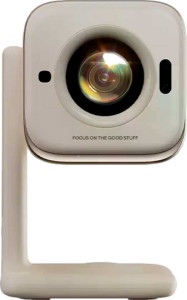
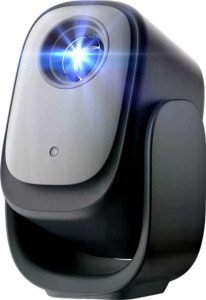
Aurzen Boom Air
Dangbei N2 Mini

Aurzen Boom Air Dangbei N2 Mini

Overview

Welcome to our in-depth spec comparison of the Aurzen Boom Air and the Dangbei N2 Mini, two compact 1080p projectors that share a surprising amount of common ground while differing in some genuinely important areas. From their physical footprint and weight to their approaches to audio performance, HDR support, and maximum projection size, these two projectors cater to overlapping but distinct audiences. Read on to see how they stack up across every major specification category.

Common Features

  • Both products produce an audible noise level of 27 dB.
  • Neither product uses a laser light source.
  • Both products come with a 1-year warranty period.
  • Both products output at 1080p resolution.
  • Both products feature motorized focus.
  • Neither product includes motorized zoom.
  • Neither product supports HDR10+.
  • Both products have an 8-bit color depth.
  • Neither product supports manual focus.
  • Both products have a minimum throw distance of 1.1 m.
  • Neither product supports Dolby Vision.
  • Both products include 1 HDMI port.
  • AirPlay is supported on both products.
  • Bluetooth is available on both products.
  • Wi-Fi connectivity is supported on both products.
  • Both products include 1 USB port.
  • Chromecast is built into both products.
  • Neither product has a VGA connector.
  • Neither product has a DVI connector.
  • Stereo speakers are not present on either product.
  • Vertical lens shift is not available on either product.
  • Horizontal lens shift is not available on either product.
  • Both products include a remote control.
  • A built-in smart TV system is present on both products.
  • Both products have a built-in speaker.
  • Neither product has an external memory slot.

Main Differences

  • Width is 100 mm on Aurzen Boom Air and 150 mm on Dangbei N2 Mini.
  • Height is 260 mm on Aurzen Boom Air and 240 mm on Dangbei N2 Mini.
  • Thickness is 100 mm on Aurzen Boom Air and 140 mm on Dangbei N2 Mini.
  • Weight is 1200 g on Aurzen Boom Air and 1700 g on Dangbei N2 Mini.
  • Volume is 2600 cm³ on Aurzen Boom Air and 5040 cm³ on Dangbei N2 Mini.
  • 3D with glasses support is available on Dangbei N2 Mini but not on Aurzen Boom Air.
  • Maximum projection size is 200″ on Aurzen Boom Air and 120″ on Dangbei N2 Mini.
  • HDR10 support is available on Aurzen Boom Air but not on Dangbei N2 Mini.
  • An S/PDIF Out port is present on Dangbei N2 Mini but not on Aurzen Boom Air.
  • Audio output power is 1 x 10W on Aurzen Boom Air and 1 x 5W on Dangbei N2 Mini.
  • A 3.5 mm audio jack socket is available on Dangbei N2 Mini but not on Aurzen Boom Air.
  • Dolby Atmos support is present on Aurzen Boom Air but not on Dangbei N2 Mini.
Specs Comparison
Aurzen Boom Air

Aurzen Boom Air

Dangbei N2 Mini

Dangbei N2 Mini

General info:
audible noise 27 dB 27 dB
has laser light source
release date August 2025 April 2025
width 100 mm 150 mm
height 260 mm 240 mm
thickness 100 mm 140 mm
weight 1200 g 1700 g
volume 2600 cm³ 5040 cm³
warranty period 1 years 1 years

The most meaningful distinction in this group comes down to physical footprint and portability. The Aurzen Boom Air is notably more compact, with a volume of just 2,600 cm³ compared to the Dangbei N2 Mini's 5,040 cm³ — nearly half the size. Its weight of 1,200 g versus the N2 Mini's 1,700 g reinforces this gap. In practical terms, the Boom Air is a significantly easier device to carry, reposition, or set up in tight spaces, making it the stronger choice for users who prioritize mobility or plan to use the projector across multiple rooms or on the go.

On shared specifications, both projectors are evenly matched where it matters for everyday comfort: each operates at 27 dB of audible noise, which is a quiet, near-whisper level that should not distract during movie playback or presentations. Neither unit uses a laser light source, and both come with a 1-year warranty, so there is no differentiation in after-sales coverage.

Overall, the Aurzen Boom Air holds a clear edge in this group purely on the basis of its much smaller size and lower weight. The Dangbei N2 Mini's larger chassis does not offer any general-info advantage to offset this, though its extra bulk may simply reflect a larger internal optical or thermal design — something to watch for in other spec groups.

Projection quality:
output resolution 1080p 1080p
has motorized focus
displays 3D with glasses
maximum projection size 200" 120"
has motorized zoom
supports HDR10+
bit depth 8-bit 8-bit
has manual focus
minimum throw distance 1.1 m 1.1 m
supports Dolby Vision
supports HDR10

Both projectors output at 1080p resolution with 8-bit color depth and share identical focus mechanics — motorized autofocus only, with no manual fallback. That parity means neither has a pixel-density or ease-of-setup advantage over the other. Where things diverge meaningfully is in screen size capability and HDR support. The Aurzen Boom Air can throw an image up to 200″, a genuinely cinematic scale suited to dedicated home theater setups or large living rooms, while the Dangbei N2 Mini tops out at 120″ — a more modest but still respectable size for typical living spaces.

On HDR, the Boom Air supports HDR10, which enables better highlight detail and wider dynamic range when playing compatible content. The N2 Mini lacks HDR10 support entirely, meaning it will tone-map HDR sources without the metadata-driven optimization that HDR10 provides — a real-world disadvantage for streaming or Blu-ray content mastered with high dynamic range. Neither unit supports HDR10+ or Dolby Vision, so the Boom Air's edge here is meaningful but not absolute. Conversely, the N2 Mini supports 3D playback with glasses, which the Boom Air does not — a niche but distinct advantage for users with a 3D content library.

Taken together, the Aurzen Boom Air holds the stronger position in this group for most users: its larger maximum image size and HDR10 support make it the more capable choice for immersive, quality-focused viewing. The Dangbei N2 Mini's 3D capability is a genuine differentiator, but its smaller screen ceiling and absence of HDR10 put it at a disadvantage unless 3D is a specific priority.

Connectivity:
HDMI ports 1 1
has AirPlay
Has Bluetooth
supports Wi-Fi
USB ports 1 1
has Chromecast built-in
has a VGA connector
has a DVI connector
supports Miracast
RJ45 ports 0 0
Has S/PDIF Out port

Connectivity is essentially a tie between these two projectors across almost every dimension. Both carry identical wired and wireless feature sets: a single HDMI port, one USB port, no ethernet, and a full wireless stack that includes Wi-Fi, Bluetooth, AirPlay, Chromecast built-in, and Miracast. That wireless lineup is genuinely comprehensive — it covers Apple, Google, and cross-platform casting protocols simultaneously, meaning users can mirror or stream from virtually any device ecosystem without adapters or workarounds.

The sole differentiator is the Dangbei N2 Mini's inclusion of an S/PDIF optical audio output, which the Boom Air lacks. This port allows the N2 Mini to connect directly to a soundbar, AV receiver, or DAC via optical cable, bypassing any internal audio processing for cleaner, lossless digital audio. For users who plan to integrate the projector into a dedicated home theater system with external audio hardware, this is a practical and meaningful advantage.

For most users relying on wireless streaming or HDMI, both projectors are functionally identical in this category. The Dangbei N2 Mini takes a narrow but real edge thanks to its S/PDIF output, which caters specifically to audiophile or home-cinema setups — a feature the Boom Air simply cannot match.

Features:
has stereo speakers
has lens shift (vertical)
has lens shift (horizontal)
has a remote control
has built-in smart TV
has a built-in speaker
audio output power 1 x 10W 1 x 5W
has a socket for a 3.5 mm audio jack
has Dolby Atmos
has an external memory slot

Audio is where this group's most telling differences emerge. The Aurzen Boom Air packs a 10W mono speaker and supports Dolby Atmos decoding, while the Dangbei N2 Mini delivers just 5W and has no Atmos support. In practical terms, the Boom Air's speaker is twice as powerful — capable of filling a larger room at comfortable volumes without distortion — and Dolby Atmos compatibility means spatially encoded audio from streaming services like Netflix or Disney+ will be processed with the correct metadata rather than stripped down. For a standalone, all-in-one viewing experience, that combination is a meaningful advantage.

The Dangbei N2 Mini counters with a 3.5 mm audio jack, which the Boom Air omits entirely. This is a practical inclusion: it lets users plug in wired headphones or a passive speaker without relying on Bluetooth, which matters in scenarios where wireless audio latency is a concern or pairing is inconvenient. Neither projector offers stereo speakers or an external memory slot, and both include a remote and a built-in smart TV platform — so the feature baseline is otherwise identical.

Weighing these trade-offs, the Aurzen Boom Air holds the stronger position for most use cases. Its double the speaker wattage and Dolby Atmos support make it more capable as a self-contained entertainment device. The N2 Mini's headphone jack is a useful convenience feature, but it does not offset the Boom Air's clear lead in raw audio output and format support.

Comparison Summary & Verdict

After a thorough side-by-side review, it is clear that both the Aurzen Boom Air and the Dangbei N2 Mini deliver 1080p resolution with motorized focus and a broad shared connectivity suite including AirPlay, Chromecast, Bluetooth, and Wi-Fi. However, their differences reveal two distinct personalities. The Aurzen Boom Air stands out for its significantly larger 200″ maximum projection size, stronger 10W audio output, Dolby Atmos support, and HDR10 compatibility, making it the better pick for home cinema enthusiasts who want a big-screen, immersive experience. The Dangbei N2 Mini, while bulkier and capped at 120″, counters with 3D content support, an S/PDIF Out port, a 3.5 mm audio jack, and a more flexible audio output ecosystem, appealing to users who value connectivity options and 3D playback over raw projection scale.

Aurzen Boom Air
Buy Aurzen Boom Air if...

Buy the Aurzen Boom Air if you want the largest possible screen size of up to 200″, more powerful 10W audio output, Dolby Atmos, and HDR10 support for a premium home cinema setup.

Dangbei N2 Mini
Buy Dangbei N2 Mini if...

Buy the Dangbei N2 Mini if you need 3D content playback, a versatile audio setup with S/PDIF Out and a 3.5 mm jack, and do not require a projection size beyond 120″.