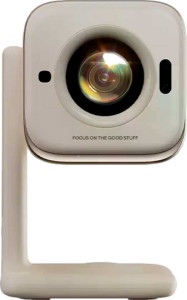
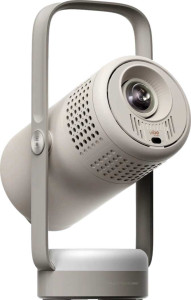
The most consequential difference in this group is contrast ratio. The XGIMI Vibe One delivers a 1500:1 contrast ratio versus the Aurzen Boom Air's 500:1 — a three-fold gap that has real perceptual weight. Contrast ratio governs how distinct bright highlights appear against dark shadows, so in a dimmed room, the Vibe One will render deeper blacks and more visually dynamic images. The Boom Air's lower contrast ratio means the picture can look comparatively flat or washed out, especially in darker scenes.
Where the Boom Air fights back is in screen size and usability convenience. Its 200″ maximum projection size outreaches the Vibe One's cap of 150″, giving it an edge for users who want a truly cinematic, large-wall experience. It also includes motorized focus, allowing effortless, precise focus adjustment without physically touching the unit — a meaningful quality-of-life advantage the Vibe One lacks entirely, offering neither motorized nor manual focus adjustment. On the HDR front, the Boom Air supports HDR10, the most widely adopted HDR standard, while the Vibe One supports HLG, a format primarily used in broadcast content. Neither supports the more advanced HDR10+ or Dolby Vision, so both have a ceiling here, but HDR10 compatibility is arguably more broadly useful for streamed and disc-based content today.
This group does not produce a clean overall winner — it comes down to priorities. The Vibe One holds the edge in image quality fundamentals thanks to its superior contrast ratio, which is harder to compensate for than screen size. However, the Boom Air is the stronger choice for large-venue projection, ease of setup via motorized focus, and mainstream HDR content compatibility. Users who prioritize picture depth over raw screen size will lean toward the Vibe One.