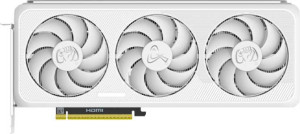
AX Gaming GeForce RTX 5080 X3W OC
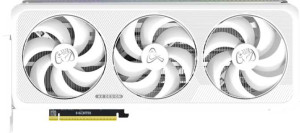
AX Gaming Rebel GeForce RTX 5080 X3W Max

AX Gaming GeForce RTX 5080 X3W OC AX Gaming Rebel GeForce RTX 5080 X3W Max

Overview

When choosing between two premium RTX 5080 cards, the AX Gaming GeForce RTX 5080 X3W OC and the AX Gaming Rebel GeForce RTX 5080 X3W Max present a compelling dilemma. Both are rooted in the same Blackwell architecture and share identical memory configurations, yet they diverge in peak boost clocks and physical dimensions. This comparison breaks down exactly where these two cards align and where they part ways, helping you find the right fit for your build.

Common Features

  • Both cards share a base GPU clock speed of 2295 MHz.
  • Both cards have a GPU memory speed of 1875 MHz.
  • Both cards feature 10752 shading units.
  • Both cards include 336 texture mapping units (TMUs).
  • Both cards have 112 render output units (ROPs).
  • Double Precision Floating Point (DPFP) is supported on both cards.
  • Both cards have an effective memory speed of 30000 MHz.
  • Both cards offer a maximum memory bandwidth of 960 GB/s.
  • Both cards come with 16GB of VRAM.
  • Both cards use GDDR7 memory.
  • Both cards have a 256-bit memory bus width.
  • ECC memory is supported on both cards.
  • Both cards support DirectX 12 Ultimate.
  • Both cards support OpenGL version 4.6.
  • Both cards support OpenCL version 3.
  • Multi-display technology is supported on both cards.
  • Ray tracing is supported on both cards.
  • DLSS is supported on both cards.
  • XeSS (XMX) is not available on either card.
  • Both cards include 1 HDMI 2.1b port and 3 DisplayPort outputs, with no USB-C, DVI, or mini DisplayPort outputs.
  • Both cards are built on the Blackwell GPU architecture.
  • Both cards have a Thermal Design Power (TDP) of 360W.
  • Both cards use PCIe version 5.
  • Both cards are manufactured on a 5 nm semiconductor process.
  • Both cards contain 45600 million transistors.
  • Air-water cooling is not available on either card.

Main Differences

  • GPU turbo clock speed is 2640 MHz on AX Gaming GeForce RTX 5080 X3W OC and 2670 MHz on AX Gaming Rebel GeForce RTX 5080 X3W Max.
  • Pixel rate is 295.7 GPixel/s on AX Gaming GeForce RTX 5080 X3W OC and 299 GPixel/s on AX Gaming Rebel GeForce RTX 5080 X3W Max.
  • Floating-point performance is 56.77 TFLOPS on AX Gaming GeForce RTX 5080 X3W OC and 57.42 TFLOPS on AX Gaming Rebel GeForce RTX 5080 X3W Max.
  • Texture rate is 887 GTexels/s on AX Gaming GeForce RTX 5080 X3W OC and 897.1 GTexels/s on AX Gaming Rebel GeForce RTX 5080 X3W Max.
  • Width is 316 mm on AX Gaming GeForce RTX 5080 X3W OC and 358 mm on AX Gaming Rebel GeForce RTX 5080 X3W Max.
  • Height is 131 mm on AX Gaming GeForce RTX 5080 X3W OC and 148 mm on AX Gaming Rebel GeForce RTX 5080 X3W Max.
Specs Comparison
AX Gaming GeForce RTX 5080 X3W OC

AX Gaming GeForce RTX 5080 X3W OC

AX Gaming Rebel GeForce RTX 5080 X3W Max

AX Gaming Rebel GeForce RTX 5080 X3W Max

Performance:
GPU clock speed 2295 MHz 2295 MHz
GPU turbo 2640 MHz 2670 MHz
pixel rate 295.7 GPixel/s 299 GPixel/s
floating-point performance 56.77 TFLOPS 57.42 TFLOPS
texture rate 887 GTexels/s 897.1 GTexels/s
GPU memory speed 1875 MHz 1875 MHz
shading units 10752 10752
texture mapping units (TMUs) 336 336
render output units (ROPs) 112 112
Has Double Precision Floating Point (DPFP)

Both cards share the same architectural foundation: identical base clocks of 2295 MHz, the same 10,752 shading units, 336 TMUs, 112 ROPs, and matching memory speeds of 1875 MHz. This means the bulk of their compute machinery is equivalent, and real-world gaming workloads at the same clock speeds would be indistinguishable between them.

The meaningful separation appears at boost frequencies. The AX Gaming Rebel RTX 5080 X3W Max reaches a GPU turbo of 2670 MHz, versus 2640 MHz on the X3W OC — a 30 MHz advantage that cascades into every throughput metric. The X3W Max delivers 57.42 TFLOPS of floating-point performance against 56.77 TFLOPS, a 897.1 GTexels/s texture rate versus 887 GTexels/s, and a pixel rate of 299 GPixel/s compared to 295.7 GPixel/s. In practical terms, higher boost clocks translate to more sustained performance headroom in thermally demanding scenarios and in titles that are sensitive to shader throughput.

The X3W Max holds a clear, if narrow, performance edge in this group. The gains — roughly 1.1% across compute and texture metrics — are modest and unlikely to be felt in most gaming scenarios, but they are consistent and directly implied by the boost clock advantage. For users prioritizing peak theoretical throughput, the X3W Max is the stronger choice; for those indifferent to marginal frequency differences, the two cards are effectively matched.

Memory:
effective memory speed 30000 MHz 30000 MHz
maximum memory bandwidth 960 GB/s 960 GB/s
VRAM 16GB 16GB
GDDR version GDDR7 GDDR7
memory bus width 256-bit 256-bit
Supports ECC memory

On memory, these two cards are completely identical across every measurable dimension. Both carry 16GB of GDDR7 VRAM over a 256-bit bus, running at an effective speed of 30,000 MHz and delivering a peak bandwidth of 960 GB/s. There is no differentiator to weigh here — the memory subsystem is a straight copy between the two SKUs.

That said, the specifications themselves are worth contextualizing. GDDR7 at 960 GB/s represents a substantial bandwidth ceiling, well-suited to feeding the GPU's shader array in high-resolution workloads, texture-heavy scenes, and bandwidth-sensitive tasks like video encoding or AI inference. The 256-bit bus keeps latency predictable, and ECC memory support adds a layer of data integrity relevant to prosumers or anyone running the card in semi-professional workloads alongside gaming.

This group is a complete tie. Neither card holds any memory advantage over the other, and memory specifications should play no role in choosing between the X3W OC and the X3W Max.

Features:
DirectX version DirectX 12 Ultimate DirectX 12 Ultimate
OpenGL version 4.6 4.6
OpenCL version 3 3
Supports multi-display technology
supports ray tracing
Supports 3D
supports DLSS
has XeSS (XMX)
AMD SAM / Intel Resizable BAR Intel Resizable BAR Intel Resizable BAR
has LHR
has RGB lighting
supported displays 4 4

Feature parity is total between these two cards. Both support DirectX 12 Ultimate and ray tracing, the combination that underpins modern real-time lighting effects in titles like Cyberpunk 2077 and Alan Wake 2. DLSS support is present on both, enabling AI-driven upscaling that can significantly boost frame rates with minimal visual cost — a practically important feature for high-resolution gaming on a card of this class.

Neither card supports XeSS, which is expected for an NVIDIA-based GPU. Both include Intel Resizable BAR, allowing the CPU to access the full VRAM pool simultaneously rather than in chunks, which can yield modest frame rate improvements in CPU-bound scenarios. Support for up to 4 displays and multi-display technology is identical, as is the presence of RGB lighting for aesthetics-conscious builds.

There is no feature-based reason to choose one over the other — this group is a complete tie. Every software capability, API version, and display configuration is shared identically between the X3W OC and the X3W Max.

Ports:
has an HDMI output
HDMI ports 1 1
HDMI version HDMI 2.1b HDMI 2.1b
DisplayPort outputs 3 3
USB-C ports 0 0
DVI outputs 0 0
mini DisplayPort outputs 0 0

The port configuration is identical on both cards: 3 DisplayPort outputs and 1 HDMI 2.1b port, totalling four display connections — which aligns with the four-display limit noted in the Features group. The absence of USB-C, DVI, and mini DisplayPort outputs is consistent across both SKUs.

HDMI 2.1b is the most capable consumer HDMI standard available, supporting up to 10K resolution, high frame rates at 4K and 8K, and Variable Refresh Rate — making it well-suited for connecting to a high-end TV or monitor without compromises. The three DisplayPort outputs give multi-monitor users flexible options for daisy-chaining or running independent displays simultaneously.

Port selection is a complete tie. Users deciding between the X3W OC and the X3W Max will find zero difference in connectivity, and neither card offers any advantage in display output flexibility or protocol support.

General info:
GPU architecture Blackwell Blackwell
release date January 2025 January 2025
Thermal Design Power (TDP) 360W 360W
PCI Express (PCIe) version 5 5
semiconductor size 5 nm 5 nm
number of transistors 45600 million 45600 million
Has air-water cooling
width 316 mm 358 mm
height 131 mm 148 mm

At their core, these two cards are built from the same silicon: identical Blackwell architecture, a 5nm process node, 45.6 billion transistors, and a 360W TDP. This means thermal planning, power supply requirements, and case ventilation considerations are exactly the same for both — buyers need not factor in any difference in power draw or heat output when choosing between them.

Where they diverge is physical footprint. The X3W Max is meaningfully larger, measuring 358mm wide and 148mm tall, versus 316mm and 131mm for the X3W OC. That is a 42mm length difference — not trivial in a compact or mid-tower case. The extra size of the X3W Max likely accommodates a larger cooler, which could support better sustained thermal performance under load, but no thermal or cooling data is provided here to confirm that. What is confirmed is that the X3W Max demands more physical clearance, making case compatibility a real consideration.

The X3W OC has a practical advantage in this group purely by virtue of its smaller dimensions, offering the same TDP and architecture in a more case-friendly package. Builders working with tighter enclosures should take note of the X3W Max's significantly larger footprint before committing.

Comparison Summary & Verdict

Having reviewed all available specifications, the AX Gaming GeForce RTX 5080 X3W OC and the AX Gaming Rebel GeForce RTX 5080 X3W Max share a remarkably similar DNA — identical 16GB GDDR7 memory, a 256-bit bus, 360W TDP, and full support for ray tracing and DLSS. The differences come down to marginal but measurable performance gains and a notably different physical footprint. The Rebel X3W Max pulls ahead with a GPU turbo of 2670 MHz, a pixel rate of 299 GPixel/s, and 57.42 TFLOPS, but it demands more case real estate at 358 x 148 mm. The X3W OC, at a more manageable 316 x 131 mm, is the smarter choice for compact builds where space is a constraint. Choose the Max for absolute peak performance in a spacious rig; choose the OC when form factor matters as much as frame rates.

AX Gaming GeForce RTX 5080 X3W OC
Buy AX Gaming GeForce RTX 5080 X3W OC if...

Buy the AX Gaming GeForce RTX 5080 X3W OC if you are working with a compact or mid-tower case and need a smaller card without sacrificing the core RTX 5080 experience.

AX Gaming Rebel GeForce RTX 5080 X3W Max
Buy AX Gaming Rebel GeForce RTX 5080 X3W Max if...

Buy the AX Gaming Rebel GeForce RTX 5080 X3W Max if you have a full-size case and want the highest available boost clock, pixel rate, and floating-point performance this GPU family offers.