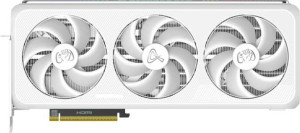
AX Gaming GeForce RTX 5090 D X3W
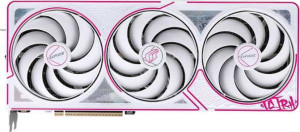
Colorful iGame GeForce RTX 5070 Ti Ultra W OC

AX Gaming GeForce RTX 5090 D X3W Colorful iGame GeForce RTX 5070 Ti Ultra W OC

Overview

Welcome to our detailed spec comparison between the AX Gaming GeForce RTX 5090 D X3W and the Colorful iGame GeForce RTX 5070 Ti Ultra W OC, two Blackwell-architecture GPUs built on a 5 nm process. Both cards share a strong feature foundation, yet they diverge sharply when it comes to raw compute power, memory capacity, and thermal demands. Read on as we break down every key specification to help you decide which card fits your needs.

Common Features

  • Both products share a GPU memory speed of 1750 MHz.
  • Double Precision Floating Point (DPFP) is supported on both products.
  • Both products use an effective memory speed of 28000 MHz.
  • Both products feature GDDR7 memory.
  • ECC memory support is available on both products.
  • Both products support DirectX 12 Ultimate.
  • Both products support OpenGL version 4.6.
  • Both products support OpenCL version 3.
  • Multi-display technology is supported on both products.
  • Ray tracing is supported on both products.
  • 3D support is available on both products.
  • DLSS support is available on both products.
  • XeSS (XMX) support is not available on either product.
  • Both products include one HDMI output running HDMI version 2.1b.
  • Both products feature three DisplayPort outputs.
  • Neither product includes USB-C ports, DVI outputs, or mini DisplayPort outputs.
  • Both products are built on the Blackwell GPU architecture.
  • Both products use PCIe version 5.
  • Both products are manufactured with a 5 nm semiconductor process.
  • Air-water cooling is not available on either product.

Main Differences

  • GPU clock speed is 2017 MHz on AX Gaming GeForce RTX 5090 D X3W and 2295 MHz on Colorful iGame GeForce RTX 5070 Ti Ultra W OC.
  • GPU turbo speed is 2407 MHz on AX Gaming GeForce RTX 5090 D X3W and 2497 MHz on Colorful iGame GeForce RTX 5070 Ti Ultra W OC.
  • Pixel rate is 423.6 GPixel/s on AX Gaming GeForce RTX 5090 D X3W and 239.7 GPixel/s on Colorful iGame GeForce RTX 5070 Ti Ultra W OC.
  • Floating-point performance is 104.8 TFLOPS on AX Gaming GeForce RTX 5090 D X3W and 44.75 TFLOPS on Colorful iGame GeForce RTX 5070 Ti Ultra W OC.
  • Texture rate is 1637 GTexels/s on AX Gaming GeForce RTX 5090 D X3W and 699.2 GTexels/s on Colorful iGame GeForce RTX 5070 Ti Ultra W OC.
  • Shading units total 21760 on AX Gaming GeForce RTX 5090 D X3W and 8960 on Colorful iGame GeForce RTX 5070 Ti Ultra W OC.
  • Texture mapping units (TMUs) number 680 on AX Gaming GeForce RTX 5090 D X3W and 280 on Colorful iGame GeForce RTX 5070 Ti Ultra W OC.
  • Render output units (ROPs) total 176 on AX Gaming GeForce RTX 5090 D X3W and 96 on Colorful iGame GeForce RTX 5070 Ti Ultra W OC.
  • Maximum memory bandwidth is 1790 GB/s on AX Gaming GeForce RTX 5090 D X3W and 896 GB/s on Colorful iGame GeForce RTX 5070 Ti Ultra W OC.
  • VRAM is 32 GB on AX Gaming GeForce RTX 5090 D X3W and 16 GB on Colorful iGame GeForce RTX 5070 Ti Ultra W OC.
  • Memory bus width is 512-bit on AX Gaming GeForce RTX 5090 D X3W and 256-bit on Colorful iGame GeForce RTX 5070 Ti Ultra W OC.
  • Thermal Design Power (TDP) is 575W on AX Gaming GeForce RTX 5090 D X3W and 300W on Colorful iGame GeForce RTX 5070 Ti Ultra W OC.
  • Number of transistors is 92200 million on AX Gaming GeForce RTX 5090 D X3W and 45600 million on Colorful iGame GeForce RTX 5070 Ti Ultra W OC.
  • Card width is 358 mm on AX Gaming GeForce RTX 5090 D X3W and 331 mm on Colorful iGame GeForce RTX 5070 Ti Ultra W OC.
  • Card height is 148 mm on AX Gaming GeForce RTX 5090 D X3W and 139.3 mm on Colorful iGame GeForce RTX 5070 Ti Ultra W OC.
Specs Comparison
AX Gaming GeForce RTX 5090 D X3W

AX Gaming GeForce RTX 5090 D X3W

Colorful iGame GeForce RTX 5070 Ti Ultra W OC

Colorful iGame GeForce RTX 5070 Ti Ultra W OC

Performance:
GPU clock speed 2017 MHz 2295 MHz
GPU turbo 2407 MHz 2497 MHz
pixel rate 423.6 GPixel/s 239.7 GPixel/s
floating-point performance 104.8 TFLOPS 44.75 TFLOPS
texture rate 1637 GTexels/s 699.2 GTexels/s
GPU memory speed 1750 MHz 1750 MHz
shading units 21760 8960
texture mapping units (TMUs) 680 280
render output units (ROPs) 176 96
Has Double Precision Floating Point (DPFP)

At first glance, the Colorful iGame RTX 5070 Ti Ultra W OC appears to have a clock speed advantage, running a base of 2295 MHz and a turbo of 2497 MHz compared to the AX Gaming RTX 5090 D X3W's 2017 MHz / 2407 MHz. However, clock speed alone is a misleading metric when comparing GPUs from different tiers — what truly matters is how many execution units those clocks are driving.

The RTX 5090 D X3W operates on an entirely different scale in terms of raw silicon. With 21,760 shading units, 680 TMUs, and 176 ROPs, it dwarfs the RTX 5070 Ti's 8,960 shaders, 280 TMUs, and 96 ROPs — roughly 2.4× more rendering resources across the board. This translates directly into the throughput numbers: the 5090 D delivers 104.8 TFLOPS of floating-point performance versus 44.75 TFLOPS for the 5070 Ti, and a texture rate of 1,637 GTexels/s against 699.2 GTexels/s. In practice, this means the 5090 D can push far more geometry, shading complexity, and compute workloads simultaneously — a decisive advantage in high-resolution gaming, AI-accelerated rendering, and compute tasks alike. Both cards share the same 1750 MHz memory speed and both support Double Precision Floating Point, so those factors do not differentiate them here.

The AX Gaming RTX 5090 D X3W holds a clear and commanding performance advantage in this group. The 5070 Ti's higher clock speeds cannot compensate for its significantly smaller shader array; the 5090 D's throughput leads of roughly 2.3× in TFLOPS and pixel rate make it the dominant card for demanding workloads. The 5070 Ti remains competitive in its own tier, but on pure performance metrics, there is no contest between these two.
Memory:
effective memory speed 28000 MHz 28000 MHz
maximum memory bandwidth 1790 GB/s 896 GB/s
VRAM 32GB 16GB
GDDR version GDDR7 GDDR7
memory bus width 512-bit 256-bit
Supports ECC memory

Both cards share the same GDDR7 memory type and identical 28000 MHz effective memory speed, so the quality and frequency of the memory chips themselves are evenly matched. Where they diverge sharply is in how much of that memory is available and how wide the pipeline is to access it.

The RTX 5090 D X3W pairs a 512-bit memory bus with 32GB of VRAM, yielding a maximum bandwidth of 1790 GB/s — exactly double the 5070 Ti Ultra W OC's 256-bit bus, 16GB, and 896 GB/s. The bus width is the key lever here: it determines how many bits the GPU can move per clock cycle, and doubling it directly doubles peak throughput at the same memory speed. In practice, this bandwidth gap matters most at high resolutions and with texture-heavy workloads, where the GPU constantly needs to stream large amounts of data to and from VRAM. The 32GB capacity also gives the 5090 D a meaningful edge for scenarios that are increasingly VRAM-constrained — think 4K gaming with high-resolution texture packs, multi-display setups, or running large AI inference models locally. Both cards support ECC memory, which is a useful reliability feature for professional and compute workloads.

The AX Gaming RTX 5090 D X3W wins this category decisively, offering twice the VRAM capacity and twice the memory bandwidth thanks to its wider bus. For users operating at the bleeding edge of resolution or compute demands, that gap is not a marginal advantage — it is the difference between being constrained by memory and not.

Features:
DirectX version DirectX 12 Ultimate DirectX 12 Ultimate
OpenGL version 4.6 4.6
OpenCL version 3 3
Supports multi-display technology
supports ray tracing
Supports 3D
supports DLSS
has XeSS (XMX)
AMD SAM / Intel Resizable BAR Intel Resizable BAR Intel Resizable BAR
has LHR
has RGB lighting
supported displays 4 4

Across every feature in this group, the AX Gaming RTX 5090 D X3W and the Colorful iGame RTX 5070 Ti Ultra W OC are in complete lockstep. Both run DirectX 12 Ultimate — the current gold standard for modern gaming APIs, enabling features like hardware-accelerated ray tracing, mesh shaders, and variable-rate shading. They share the same OpenGL 4.6 and OpenCL 3 support, keeping both cards well-covered for creative, scientific, and legacy workloads.

On the gaming feature side, both support ray tracing and DLSS, the latter being particularly significant as it uses AI-based upscaling to recover performance lost to demanding rendering techniques — a crucial tool at high resolutions. Both also support up to 4 simultaneous displays and include Intel Resizable BAR, which allows the CPU to access the full GPU frame buffer at once rather than in chunks, offering a modest but measurable performance uplift in supported titles. RGB lighting is present on both as well.

This group is a complete tie. There is no feature differentiator between these two cards — a buyer choosing between them based on software capabilities and API support will find nothing to separate them here. The decision must rest entirely on the performance and hardware specifications covered in other groups.

Ports:
has an HDMI output
HDMI ports 1 1
HDMI version HDMI 2.1b HDMI 2.1b
DisplayPort outputs 3 3
USB-C ports 0 0
DVI outputs 0 0
mini DisplayPort outputs 0 0

Port selection is identical on both cards: each offers 1 HDMI 2.1b output and 3 DisplayPort outputs, totaling 4 display connections — consistent with the 4-display limit noted in the Features group. HDMI 2.1b is the latest revision of the standard, supporting up to 10K resolution and high refresh rates at 4K and 8K, making it well-suited for high-end gaming monitors and modern TVs alike. The three DisplayPort outputs provide flexible multi-monitor configurations for productivity or immersive gaming setups.

Neither card includes USB-C, DVI, or mini DisplayPort outputs, so users with older monitors relying on DVI will need an adapter regardless of which card they choose. The absence of USB-C is worth noting for those who use USB-C-connected displays or VR headsets that rely on that interface directly from the GPU.

This is another complete tie — every port type, count, and version is identical across both cards. Connectivity will not factor into a purchase decision between these two products.

General info:
GPU architecture Blackwell Blackwell
release date January 2025 February 2025
Thermal Design Power (TDP) 575W 300W
PCI Express (PCIe) version 5 5
semiconductor size 5 nm 5 nm
number of transistors 92200 million 45600 million
Has air-water cooling
width 358 mm 331 mm
height 148 mm 139.3 mm

Both cards are built on the same Blackwell architecture, manufactured on a 5 nm process node, and connect via PCIe 5.0 — so the generational foundation is identical. The divergence lies in scale. The RTX 5090 D X3W packs 92,200 million transistors compared to the RTX 5070 Ti Ultra W OC's 45,600 million, reflecting roughly twice the die complexity. This aligns precisely with the 2× performance gap seen in compute and memory throughput across other spec groups — the silicon difference here is the root cause of everything else.

The most practically significant difference for system builders is power consumption. The RTX 5090 D X3W carries a 575W TDP versus the 5070 Ti's 300W — a gap of 275W that has real consequences. A system running the 5090 D will require a substantially more powerful PSU, likely 1000W or above when accounting for the rest of the platform, and will generate considerably more heat, placing higher demands on case airflow and ambient cooling. The 5070 Ti, at 300W, is far more manageable in a typical high-end gaming build. Neither card uses air-water hybrid cooling, so both rely entirely on their air cooler solutions to handle their respective thermal loads.

Physically, the 5090 D is also the larger card at 358 × 148 mm versus 331 × 139.3 mm for the 5070 Ti, so case clearance should be verified for the 5090 D in particular. On this group, there is no single winner — the 5070 Ti has a clear advantage in power efficiency and build compatibility, while the 5090 D's transistor count underpins its dominant performance figures. The right choice depends entirely on whether a buyer's system and environment can accommodate the 5090 D's substantially higher demands.

Comparison Summary & Verdict

After examining every specification, a clear picture emerges for each card. The AX Gaming GeForce RTX 5090 D X3W is the undisputed powerhouse of this comparison, delivering 104.8 TFLOPS of floating-point performance, 32 GB of GDDR7 memory on a 512-bit bus, and a massive 1790 GB/s of memory bandwidth — making it the go-to choice for demanding workloads like 4K gaming, AI-accelerated tasks, and professional content creation. In contrast, the Colorful iGame GeForce RTX 5070 Ti Ultra W OC offers a higher base and turbo GPU clock speed, a more manageable 300W TDP, and a smaller physical footprint, making it a well-balanced option for enthusiasts who want strong performance without extreme power requirements. Both cards support ray tracing, DLSS, and DirectX 12 Ultimate, so the decision ultimately comes down to whether you need maximum throughput or a more efficient, compact powerhouse.

AX Gaming GeForce RTX 5090 D X3W
Buy AX Gaming GeForce RTX 5090 D X3W if...

Buy the AX Gaming GeForce RTX 5090 D X3W if you need maximum GPU horsepower, with 32 GB of GDDR7 memory, 104.8 TFLOPS of compute performance, and 1790 GB/s of memory bandwidth for the most demanding tasks.

Colorful iGame GeForce RTX 5070 Ti Ultra W OC
Buy Colorful iGame GeForce RTX 5070 Ti Ultra W OC if...

Buy the Colorful iGame GeForce RTX 5070 Ti Ultra W OC if you want a higher factory GPU clock speed in a more compact, power-efficient package with a 300W TDP that is easier to accommodate in a wider range of systems.