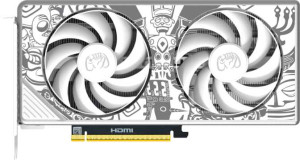
AX Gaming Rebel GeForce RTX 5070 X2W
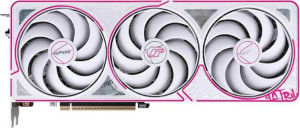
Colorful iGame GeForce RTX 5070 Ultra W OC

AX Gaming Rebel GeForce RTX 5070 X2W Colorful iGame GeForce RTX 5070 Ultra W OC

Overview

When choosing between the AX Gaming Rebel GeForce RTX 5070 X2W and the Colorful iGame GeForce RTX 5070 Ultra W OC, buyers are looking at two RTX 5070-class cards that share the same Blackwell architecture, 12GB of GDDR7 memory, and a 250W TDP, yet diverge in key areas. This head-to-head examines their GPU turbo clock speeds, raw compute throughput, and physical dimensions to help you decide which card best fits your build and performance goals.

Common Features

  • Both cards share a base GPU clock speed of 2325 MHz.
  • Both cards have a GPU memory speed of 1750 MHz.
  • Both cards feature 6144 shading units.
  • Both cards include 192 texture mapping units (TMUs).
  • Both cards have 80 render output units (ROPs).
  • Double Precision Floating Point (DPFP) is supported on both cards.
  • Both cards have an effective memory speed of 28000 MHz.
  • Both cards offer a maximum memory bandwidth of 672 GB/s.
  • Both cards come with 12GB of VRAM.
  • Both cards use GDDR7 memory.
  • Both cards have a 192-bit memory bus width.
  • ECC memory is supported on both cards.
  • Both cards support DirectX 12 Ultimate.
  • Both cards support OpenGL version 4.6.
  • Both cards support OpenCL version 3.
  • Multi-display technology is supported on both cards.
  • Ray tracing is supported on both cards.
  • 3D support is available on both cards.
  • DLSS is supported on both cards.
  • XeSS (XMX) support is not available on either card.
  • Both cards have one HDMI 2.1b output and three DisplayPort outputs.
  • Neither card has USB-C, DVI, or mini DisplayPort outputs.
  • Both cards are based on the Blackwell GPU architecture.
  • Both cards have a Thermal Design Power (TDP) of 250W.
  • Both cards use PCIe version 5.
  • Both cards are manufactured on a 5 nm process with 31100 million transistors.
  • Air-water cooling is not available on either card.
  • Both cards have a height of 120 mm.

Main Differences

  • GPU turbo clock speed is 2512 MHz on the AX Gaming Rebel GeForce RTX 5070 X2W and 2557 MHz on the Colorful iGame GeForce RTX 5070 Ultra W OC.
  • Pixel rate is 201 GPixel/s on the AX Gaming Rebel GeForce RTX 5070 X2W and 204.6 GPixel/s on the Colorful iGame GeForce RTX 5070 Ultra W OC.
  • Floating-point performance is 30.87 TFLOPS on the AX Gaming Rebel GeForce RTX 5070 X2W and 31.42 TFLOPS on the Colorful iGame GeForce RTX 5070 Ultra W OC.
  • Texture rate is 482.3 GTexels/s on the AX Gaming Rebel GeForce RTX 5070 X2W and 490.9 GTexels/s on the Colorful iGame GeForce RTX 5070 Ultra W OC.
  • Card width is 240 mm on the AX Gaming Rebel GeForce RTX 5070 X2W and 300.5 mm on the Colorful iGame GeForce RTX 5070 Ultra W OC.
Specs Comparison
AX Gaming Rebel GeForce RTX 5070 X2W

AX Gaming Rebel GeForce RTX 5070 X2W

Colorful iGame GeForce RTX 5070 Ultra W OC

Colorful iGame GeForce RTX 5070 Ultra W OC

Performance:
GPU clock speed 2325 MHz 2325 MHz
GPU turbo 2512 MHz 2557 MHz
pixel rate 201 GPixel/s 204.6 GPixel/s
floating-point performance 30.87 TFLOPS 31.42 TFLOPS
texture rate 482.3 GTexels/s 490.9 GTexels/s
GPU memory speed 1750 MHz 1750 MHz
shading units 6144 6144
texture mapping units (TMUs) 192 192
render output units (ROPs) 80 80
Has Double Precision Floating Point (DPFP)

Both the AX Gaming Rebel RTX 5070 X2W and the Colorful iGame RTX 5070 Ultra W OC share the same underlying silicon foundation: identical 6144 shading units, 192 TMUs, 80 ROPs, a base GPU clock of 2325 MHz, and matched memory speeds of 1750 MHz. This means any performance difference between these two cards is not architectural — it comes down entirely to how aggressively each board partner has tuned the boost behavior.

That is where the iGame Ultra W OC pulls ahead. Its GPU turbo reaches 2557 MHz versus the Rebel's 2512 MHz — a 45 MHz advantage that directly translates into higher derived metrics: 31.42 TFLOPS of floating-point throughput versus 30.87 TFLOPS, and a texture rate of 490.9 GTexels/s against 482.3 GTexels/s. In practice, this roughly 1.8% clock advantage is unlikely to be perceptible in most gaming workloads, but it does mean the iGame will sustain marginally higher frame rates and slightly faster shader-heavy rendering tasks when both cards are running at their sustained boost ceilings.

In conclusion, the Colorful iGame RTX 5070 Ultra W OC holds a narrow but consistent performance edge in this group, driven purely by its higher factory boost clock. The AX Gaming Rebel is not meaningfully behind — the gap is small enough that real-world results will often fall within margin-of-error territory — but based strictly on the provided specifications, the iGame is the faster card on paper.

Memory:
effective memory speed 28000 MHz 28000 MHz
maximum memory bandwidth 672 GB/s 672 GB/s
VRAM 12GB 12GB
GDDR version GDDR7 GDDR7
memory bus width 192-bit 192-bit
Supports ECC memory

Across every memory specification provided, the AX Gaming Rebel RTX 5070 X2W and the Colorful iGame RTX 5070 Ultra W OC are completely identical. Both carry 12GB of GDDR7 VRAM over a 192-bit bus, running at an effective speed of 28000 MHz and delivering a maximum bandwidth of 672 GB/s. These are not configurable variables — they are fixed by the shared GPU die and memory specification, so no board partner can differentiate here.

The numbers themselves are worth contextualizing. GDDR7 at 672 GB/s represents a substantial generational leap in memory throughput, which benefits texture streaming, high-resolution asset loading, and AI-accelerated workloads. The 192-bit bus width is a practical constraint at this tier, but GDDR7's efficiency largely compensates — this bandwidth figure is competitive with wider-bus GDDR6X implementations from prior generations. ECC memory support on both cards is a minor but notable inclusion, adding a layer of data integrity useful in creative or compute workloads where memory errors could corrupt output.

This group is a clear and complete tie. There is no memory-related reason to prefer one card over the other — the decision must rest entirely on other specification groups.

Features:
DirectX version DirectX 12 Ultimate DirectX 12 Ultimate
OpenGL version 4.6 4.6
OpenCL version 3 3
Supports multi-display technology
supports ray tracing
Supports 3D
supports DLSS
has XeSS (XMX)
AMD SAM / Intel Resizable BAR Intel Resizable BAR Intel Resizable BAR
has LHR
has RGB lighting
supported displays 4 4

Feature parity is total between these two cards. Both support DirectX 12 Ultimate — the current ceiling for gaming API compatibility, enabling hardware-accelerated ray tracing, mesh shaders, and variable rate shading in supported titles. Alongside this, shared support for DLSS is a meaningful inclusion: NVIDIA's AI-driven upscaling allows both cards to render at lower internal resolutions and reconstruct high-quality output frames, delivering a tangible performance-to-image-quality benefit in a growing library of games.

On the practical side, both cards support up to 4 simultaneous displays and include Intel Resizable BAR, which allows the CPU to access the full GPU frame buffer at once rather than in smaller chunks — a feature that can reduce CPU-side bottlenecks in certain workloads. Neither card carries LHR restrictions, meaning compute and mining workloads run uncapped, and both include RGB lighting for users who factor aesthetics into their build.

With every feature in this group mirrored exactly, this is another unambiguous tie. Neither the Rebel nor the iGame Ultra W OC offers any functional or software capability the other lacks — the feature set is determined by the shared GPU platform, leaving no differentiating factor here.

Ports:
has an HDMI output
HDMI ports 1 1
HDMI version HDMI 2.1b HDMI 2.1b
DisplayPort outputs 3 3
USB-C ports 0 0
DVI outputs 0 0
mini DisplayPort outputs 0 0

The port configuration on both cards is identical: one HDMI 2.1b output and three DisplayPort outputs, for a total of four physical display connections — matching the four-display limit noted in the Features group. HDMI 2.1b is the latest revision of the standard, capable of driving 4K at high refresh rates and 8K output, making it well-suited for modern TVs and high-end monitors alike. The three DisplayPort outputs give multi-monitor users plenty of flexibility without adapters.

The absence of USB-C on either card is worth noting for users who own USB-C or Thunderbolt-based displays, as they would need an active adapter. However, since neither card offers it, this is not a differentiating factor — it is simply a shared limitation of both designs.

Predictably, this group ends in a tie. The connectivity layout is a platform-level decision that neither board partner has altered, so display compatibility and output options are equivalent regardless of which card you choose.

General info:
GPU architecture Blackwell Blackwell
release date March 2025 March 2025
Thermal Design Power (TDP) 250W 250W
PCI Express (PCIe) version 5 5
semiconductor size 5 nm 5 nm
number of transistors 31100 million 31100 million
Has air-water cooling
width 240 mm 300.5 mm
height 120 mm 120 mm

At the platform level, these two cards are once again built from the same blueprint: the Blackwell architecture on a 5nm process node, 31.1 billion transistors, a 250W TDP, and PCIe 5.0 connectivity. The shared TDP means both cards draw the same maximum power and will impose equivalent demands on your power supply and case airflow — no advantage to either side there.

The one concrete differentiator in this group is physical size. The AX Gaming Rebel measures 240 mm in length, while the Colorful iGame Ultra W OC stretches to 300.5 mm — a gap of over 60 mm. That is not a trivial difference. In compact or mid-tower cases with tight GPU clearance, the Rebel's shorter footprint can be the deciding factor between a card that fits and one that does not. Conversely, the iGame's larger PCB typically allows for a more spread-out cooling solution, which may contribute to its marginally higher sustained boost clock seen in the Performance group.

For this group, the AX Gaming Rebel RTX 5070 X2W holds a practical edge for anyone working with space-constrained builds. The iGame Ultra W OC is not at a disadvantage in a full-size case, but the Rebel's 240 mm length offers meaningfully broader compatibility — making it the more versatile choice based strictly on the data provided here.

Comparison Summary & Verdict

Both the AX Gaming Rebel GeForce RTX 5070 X2W and the Colorful iGame GeForce RTX 5070 Ultra W OC deliver an identical feature set — including ray tracing, DLSS, DirectX 12 Ultimate, and a generous 12GB GDDR7 frame buffer — making the decision between them a matter of fine margins. The Colorful iGame GeForce RTX 5070 Ultra W OC pulls ahead with a higher GPU turbo of 2557 MHz, a floating-point performance of 31.42 TFLOPS, and a texture rate of 490.9 GTexels/s, giving it a measurable edge for users who demand peak throughput. However, it comes in a noticeably larger 300.5 mm body. The AX Gaming Rebel GeForce RTX 5070 X2W, at just 240 mm wide, is the better choice for compact or mid-tower builds where space is at a premium, with still-competitive performance figures throughout.

AX Gaming Rebel GeForce RTX 5070 X2W
Buy AX Gaming Rebel GeForce RTX 5070 X2W if...

Buy the AX Gaming Rebel GeForce RTX 5070 X2W if you need a more compact card at 240 mm wide that still delivers strong RTX 5070-class performance within a space-constrained build.

Colorful iGame GeForce RTX 5070 Ultra W OC
Buy Colorful iGame GeForce RTX 5070 Ultra W OC if...

Buy the Colorful iGame GeForce RTX 5070 Ultra W OC if you want the highest possible turbo clock, floating-point throughput, and texture rate this GPU tier offers, and your case can accommodate its 300.5 mm width.