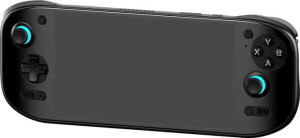
Ayn Odin 2 Portal Max 16GB RAM / 1TB
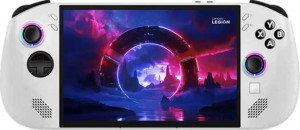
Lenovo Legion Go S AMD Ryzen Z2 Go / 32GB RAM / 1TB SSD

Ayn Odin 2 Portal Max 16GB RAM / 1TB Lenovo Legion Go S AMD Ryzen Z2 Go / 32GB RAM / 1TB SSD

Overview

Welcome to our in-depth comparison of the Ayn Odin 2 Portal Max 16GB RAM / 1TB and the Lenovo Legion Go S AMD Ryzen Z2 Go / 32GB RAM / 1TB SSD — two ambitious handheld gaming devices targeting different kinds of players. Both share a 120Hz refresh rate and DDR5 memory, yet they diverge sharply when it comes to display technology, raw GPU performance, portability, and controller versatility. Read on to see how every spec stacks up.

Common Features

  • Both devices use an NVMe SSD for storage.
  • Both devices can connect to an external drive.
  • Both devices use multithreading.
  • Both devices have a 120Hz refresh rate.
  • Both devices use DDR5 memory.
  • Both devices are handheld type consoles.
  • Both devices have a replaceable hard drive.
  • Both devices have an internal power supply.
  • Both devices offer 1024GB of internal storage.
  • Both devices are region free.
  • Neither device has an optical disc drive.
  • Both devices have a 3.5mm audio jack.
  • Both devices support Wi-Fi.
  • Neither device has an HDMI output.
  • Both devices have Bluetooth 5.3.
  • Both devices have an external memory slot.
  • Neither device supports connectivity between home and portable devices.
  • Both devices have USB Type-C.
  • Neither device has a cellular module.
  • Both devices can play games while they download.
  • Both devices support quick resume.
  • Both devices support Discord voice chat.
  • Neither device supports 3D audio.
  • Neither device supports Dolby Vision.
  • Neither device has a 4K Blu-ray drive.
  • Both devices have 2-channel sound output.
  • Both devices have a touch screen.
  • Neither device has adaptive triggers.
  • Neither device is compatible with a motion-sensing controller.
  • Both devices have 2 analog sticks.
  • Neither device has dual force feedback.

Main Differences

  • CPU speed is 8 x 3.2 GHz on Ayn Odin 2 Portal Max 16GB RAM / 1TB and 4 x 3 GHz on Lenovo Legion Go S AMD Ryzen Z2 Go / 32GB RAM / 1TB SSD.
  • Floating-point performance is 2 TFLOPS on Ayn Odin 2 Portal Max 16GB RAM / 1TB and 2.5 TFLOPS on Lenovo Legion Go S AMD Ryzen Z2 Go / 32GB RAM / 1TB SSD.
  • RAM is 16GB on Ayn Odin 2 Portal Max 16GB RAM / 1TB and 32GB on Lenovo Legion Go S AMD Ryzen Z2 Go / 32GB RAM / 1TB SSD.
  • GPU clock speed is 680 MHz on Ayn Odin 2 Portal Max 16GB RAM / 1TB and 800 MHz on Lenovo Legion Go S AMD Ryzen Z2 Go / 32GB RAM / 1TB SSD.
  • Ray tracing support is present on Lenovo Legion Go S AMD Ryzen Z2 Go / 32GB RAM / 1TB SSD but not available on Ayn Odin 2 Portal Max 16GB RAM / 1TB.
  • Shading units number 512 on Ayn Odin 2 Portal Max 16GB RAM / 1TB and 768 on Lenovo Legion Go S AMD Ryzen Z2 Go / 32GB RAM / 1TB SSD.
  • RAM speed is 4200 MHz on Ayn Odin 2 Portal Max 16GB RAM / 1TB and 6400 MHz on Lenovo Legion Go S AMD Ryzen Z2 Go / 32GB RAM / 1TB SSD.
  • Display resolution is 1080p (Full HD) on Ayn Odin 2 Portal Max 16GB RAM / 1TB and 1200p on Lenovo Legion Go S AMD Ryzen Z2 Go / 32GB RAM / 1TB SSD.
  • Display type is OLED/AMOLED on Ayn Odin 2 Portal Max 16GB RAM / 1TB and LCD, LED-backlit, IPS on Lenovo Legion Go S AMD Ryzen Z2 Go / 32GB RAM / 1TB SSD.
  • Thickness is 17 mm on Ayn Odin 2 Portal Max 16GB RAM / 1TB and 22 mm on Lenovo Legion Go S AMD Ryzen Z2 Go / 32GB RAM / 1TB SSD.
  • Width is 257 mm on Ayn Odin 2 Portal Max 16GB RAM / 1TB and 299 mm on Lenovo Legion Go S AMD Ryzen Z2 Go / 32GB RAM / 1TB SSD.
  • Height is 98 mm on Ayn Odin 2 Portal Max 16GB RAM / 1TB and 127 mm on Lenovo Legion Go S AMD Ryzen Z2 Go / 32GB RAM / 1TB SSD.
  • Volume is 428.162 cm³ on Ayn Odin 2 Portal Max 16GB RAM / 1TB and 835.406 cm³ on Lenovo Legion Go S AMD Ryzen Z2 Go / 32GB RAM / 1TB SSD.
  • Weight is 430 g on Ayn Odin 2 Portal Max 16GB RAM / 1TB and 730 g on Lenovo Legion Go S AMD Ryzen Z2 Go / 32GB RAM / 1TB SSD.
  • Typical brightness is 800 nits on Ayn Odin 2 Portal Max 16GB RAM / 1TB and 500 nits on Lenovo Legion Go S AMD Ryzen Z2 Go / 32GB RAM / 1TB SSD.
  • Wi-Fi 7 (802.11be) support is present on Ayn Odin 2 Portal Max 16GB RAM / 1TB but not available on Lenovo Legion Go S AMD Ryzen Z2 Go / 32GB RAM / 1TB SSD.
  • DLNA certification is present on Lenovo Legion Go S AMD Ryzen Z2 Go / 32GB RAM / 1TB SSD but not available on Ayn Odin 2 Portal Max 16GB RAM / 1TB.
  • Voice command support is present on Lenovo Legion Go S AMD Ryzen Z2 Go / 32GB RAM / 1TB SSD but not available on Ayn Odin 2 Portal Max 16GB RAM / 1TB.
  • Pixel density is 314 ppi on Ayn Odin 2 Portal Max 16GB RAM / 1TB and 283 ppi on Lenovo Legion Go S AMD Ryzen Z2 Go / 32GB RAM / 1TB SSD.
  • VR support is present on Lenovo Legion Go S AMD Ryzen Z2 Go / 32GB RAM / 1TB SSD but not available on Ayn Odin 2 Portal Max 16GB RAM / 1TB.
  • Screen size is 7″ on Ayn Odin 2 Portal Max 16GB RAM / 1TB and 8″ on Lenovo Legion Go S AMD Ryzen Z2 Go / 32GB RAM / 1TB SSD.
  • Number of controllers is 1 on Ayn Odin 2 Portal Max 16GB RAM / 1TB and 4 on Lenovo Legion Go S AMD Ryzen Z2 Go / 32GB RAM / 1TB SSD.
  • A wireless controller is included with Lenovo Legion Go S AMD Ryzen Z2 Go / 32GB RAM / 1TB SSD but not with Ayn Odin 2 Portal Max 16GB RAM / 1TB.
  • An integrated touchpad is present on Lenovo Legion Go S AMD Ryzen Z2 Go / 32GB RAM / 1TB SSD but not on Ayn Odin 2 Portal Max 16GB RAM / 1TB.
  • Number of buttons is 16 on Ayn Odin 2 Portal Max 16GB RAM / 1TB and 18 on Lenovo Legion Go S AMD Ryzen Z2 Go / 32GB RAM / 1TB SSD.
Specs Comparison
Ayn Odin 2 Portal Max 16GB RAM / 1TB

Ayn Odin 2 Portal Max 16GB RAM / 1TB

Lenovo Legion Go S AMD Ryzen Z2 Go / 32GB RAM / 1TB SSD

Lenovo Legion Go S AMD Ryzen Z2 Go / 32GB RAM / 1TB SSD

Performance:
CPU speed 8 x 3.2 GHz 4 x 3 GHz
floating-point performance 2 TFLOPS 2.5 TFLOPS
RAM 16GB 32GB
GPU clock speed 680 MHz 800 MHz
supports ray tracing
Is an NVMe SSD
Can connect to an external drive
shading units 512 768
uses multithreading
refresh rate 120Hz 120Hz
DDR memory version 5 5
RAM speed 4200 MHz 6400 MHz

On the CPU side, the Ayn Odin 2 Portal Max holds an edge with 8 cores at 3.2 GHz versus the Legion Go S's 4 cores at 3.0 GHz, which translates to better multi-threaded workload handling — useful for background tasks, emulation parallelism, or any scenario where core count matters. Both devices support multithreading, so the Odin 2 Portal Max can fully exploit that wider core configuration. However, the CPU advantage is where the Odin 2's lead ends.

The Lenovo Legion Go S pulls ahead decisively on graphics and memory. Its GPU delivers 2.5 TFLOPS of floating-point performance versus 2 TFLOPS on the Odin 2, backed by a faster 800 MHz GPU clock, significantly more 768 shading units (compared to 512), and crucially, support for ray tracing — a feature entirely absent on the Odin 2. In practice, this means the Legion Go S can handle more graphically demanding titles at higher fidelity and with more modern rendering techniques. Its 6400 MHz DDR5 RAM running at nearly 53% faster than the Odin 2's 4200 MHz also means the GPU and CPU can be fed data more quickly, reducing bottlenecks in memory-intensive workloads. The Legion Go S also doubles the RAM at 32GB, giving it considerably more headroom for demanding games and multitasking.

Both devices share a 120 Hz refresh rate, NVMe SSD storage, and external drive support, so those traits are a wash. Overall, the Legion Go S holds a clear performance advantage for GPU-heavy and memory-bandwidth-sensitive use cases, while the Odin 2 Portal Max only retains a theoretical edge in raw CPU thread count — a narrower benefit in the context of portable gaming.

General info:
Type Handheld Handheld
display resolution 1080p (Full HD) 1200p
release date March 2025 February 2025
Hard drive is replaceable
Has an internal power supply
Display type OLED/AMOLED LCD, LED-backlit, IPS
internal storage 1024GB 1024GB
Is region free
thickness 17 mm 22 mm
width 257 mm 299 mm
height 98 mm 127 mm
volume 428.162 cm³ 835.406 cm³
Has an optical disc drive
weight 430 g 730 g
brightness (typical) 800 nits 500 nits

The most striking physical difference between these two handhelds is size and weight. The Ayn Odin 2 Portal Max is a noticeably more compact device at 430 g and a volume of just 428 cm³, while the Legion Go S nearly doubles that footprint at 730 g and 835 cm³. In handheld gaming, weight accumulates fast — 300 grams of extra load becomes genuinely tiring during extended sessions, and the Legion Go S's 22 mm thickness versus the Odin 2's 17 mm also makes it bulkier in hand and harder to pocket or pack. For users who prioritize portability or gaming on the go, the Odin 2 Portal Max has a meaningful ergonomic advantage.

Display quality is where the gap shifts direction. The Odin 2 Portal Max uses an OLED/AMOLED panel with 800 nits of typical brightness, delivering the deep blacks, vibrant colors, and high contrast that OLED technology is known for. The Legion Go S, by contrast, uses an IPS LCD panel that peaks at 500 nits — adequate indoors, but noticeably dimmer in brighter environments. The Legion Go S does counter with a slightly higher native 1200p resolution versus the Odin 2's 1080p, which on a larger screen could yield marginally sharper visuals, but this advantage is largely offset by the superior per-pixel quality and contrast of OLED.

Both devices share the same 1TB internal storage, replaceable hard drives, and region-free operation, so neither holds an edge on those fronts. Overall, the Odin 2 Portal Max wins the general form-factor battle for most users — it is significantly lighter, more compact, and equipped with a superior display technology — while the Legion Go S appeals to those who prioritize screen real estate and resolution over portability.

Connectivity:
has a socket for a 3.5 mm audio jack
supports Wi-Fi
Wi-Fi version Wi-Fi 7 (802.11be), Wi-Fi 6E (802.11ax), Wi-Fi 6 (802.11ax), Wi-Fi 5 (802.11ac), Wi-Fi 4 (802.11n) Wi-Fi 6E (802.11ax), Wi-Fi 6 (802.11ax), Wi-Fi 5 (802.11ac), Wi-Fi 4 (802.11n)
is DLNA-certified
has an HDMI output
Bluetooth version 5.3 5.3
has an external memory slot
Supports connectivity between home and portable devices
Has USB Type-C
has a cellular module
has NFC
RJ45 ports 0 0

Wireless connectivity is where these two devices diverge most meaningfully. The Ayn Odin 2 Portal Max supports Wi-Fi 7 (802.11be), the latest and fastest Wi-Fi standard, in addition to all prior generations. Wi-Fi 7 brings substantially higher throughput, lower latency, and better performance in congested environments compared to Wi-Fi 6E — a tangible advantage for cloud gaming, fast game downloads, or streaming to and from the device. The Legion Go S tops out at Wi-Fi 6E, which is still a capable and modern standard, but it does fall one generation behind. Both share identical Bluetooth 5.3, so wireless controller, headset, and peripheral pairing is equivalent across the board.

Beyond wireless, the two devices are closely matched. Both offer USB Type-C, a 3.5 mm audio jack, and an external memory slot — covering the essentials for most users. Neither includes an HDMI output, NFC, a cellular module, or an RJ45 ethernet port, so wired network connections and cellular connectivity are off the table for both. The Legion Go S carries DLNA certification, which allows it to stream media to compatible TVs and home devices over a local network — a niche but real convenience for users embedded in a DLNA ecosystem, though it has limited relevance for gaming-focused use.

On balance, the Odin 2 Portal Max holds the connectivity edge here, primarily due to its Wi-Fi 7 support — a forward-looking advantage that will matter more as Wi-Fi 7 infrastructure becomes more widespread. The Legion Go S's DLNA support is a minor differentiator in the opposite direction but unlikely to be a deciding factor for most buyers.
Features:
has voice commands
pixel density 314 ppi 283 ppi
Can play games while they download
supports quick resume
supports Discord voice chat
Supports 3D audio
supports Dolby Vision
supports VR
Has a 4K Blu-ray drive
screen size 7" 8"
number of channels of sound output 2 2
has a touch screen
Has optical tracking
Has an autostereoscopic display
Has a secondary screen
Can play Blu-ray Discs
has two sensors
Access high scores and achievements
has stereo speakers
Supports 3D
has a front camera
Uses flash storage
has a child lock

For day-to-day gaming features, these two handhelds are remarkably well-matched. Both support background downloads during active gameplay, quick resume, Discord voice chat, touchscreens, stereo speakers, achievement tracking, and flash storage — covering the core quality-of-life features modern handheld gamers expect. Neither supports 3D audio, Dolby Vision, or a front camera, so those omissions apply equally to both.

Screen size and pixel density tell an interesting story. The Legion Go S has a larger 8-inch display, while the Odin 2 Portal Max runs a 7-inch panel — but the Odin 2 actually achieves a sharper image at 314 ppi versus the Legion Go S's 283 ppi. This is a direct consequence of the Odin 2's smaller screen pushing the same or higher resolution into a tighter space, resulting in more detailed visuals per inch. The Legion Go S's larger canvas may feel more immersive for some, but it comes with a pixel density trade-off. The Legion Go S also supports VR and voice commands — two features absent on the Odin 2. The VR capability is a meaningful differentiator on paper, though its practical value depends entirely on what VR content and peripherals are compatible with the device.

Taken together, the Legion Go S holds a slight feature edge in this category, primarily due to VR support and voice commands — both exclusive to it among this pair. The Odin 2 Portal Max counters with a sharper pixel density, but for users who want the broadest feature set, the Legion Go S offers marginally more versatility.

Controllers:
number of controllers 1 4
has adaptive triggers
Compatible with a motion-sensing controller(s)
Has a wireless controller
number of analog sticks 2 2
has an integrated touchpad
Has dual force feedback
number of buttons 16 18

Controller flexibility is an area where the Lenovo Legion Go S pulls clearly ahead. It ships with support for 4 controllers compared to the Odin 2 Portal Max's single integrated unit, and crucially, it includes a wireless controller option — meaning players can detach and use it from a distance, much like a console experience. The Legion Go S also features an integrated touchpad and a slightly higher 18-button count versus 16 on the Odin 2, giving it more input options for games that benefit from cursor-style navigation or extra mappable inputs.

Where the two devices converge, both offer 2 analog sticks, and neither supports adaptive triggers, motion-sensing controllers, or dual force feedback. The absence of haptic rumble on both is a shared limitation that users coming from console controllers may notice, but it affects neither device differently.

Overall, the Legion Go S holds a meaningful advantage in this category. The combination of a wireless controller, more supported controllers simultaneously, a touchpad, and extra buttons gives it substantially more versatility — particularly for users who want to play in a TV-docked or tabletop setup, or those who simply want richer input options. The Odin 2 Portal Max covers the fundamentals, but its controller setup is comparatively basic.

Comparison Summary & Verdict

After examining every specification, these two handhelds emerge as compelling but clearly distinct choices. The Ayn Odin 2 Portal Max 16GB RAM / 1TB stands out for users who value portability above all: at just 430 g and 17 mm thin, with a vibrant OLED display delivering 800 nits of brightness and a sharper pixel density of 314 ppi, it is the more pocket-friendly and visually immersive option. It also edges ahead with Wi-Fi 7 support and a faster 8-core CPU. The Lenovo Legion Go S AMD Ryzen Z2 Go / 32GB RAM / 1TB SSD, on the other hand, is built for players who demand outright power: it offers 32GB of DDR5 RAM at 6400 MHz, a stronger GPU with 768 shading units, 2.5 TFLOPS of floating-point performance, ray tracing support, VR capability, and a flexible 4-controller setup. If you want a compact, lightweight handheld with a stunning screen, choose the Ayn. If you want maximum gaming horsepower and expandability, the Legion Go S is the stronger performer.

Ayn Odin 2 Portal Max 16GB RAM / 1TB
Buy Ayn Odin 2 Portal Max 16GB RAM / 1TB if...

Buy the Ayn Odin 2 Portal Max 16GB RAM / 1TB if you prioritize a lightweight, compact handheld with a vivid OLED display, higher brightness, and Wi-Fi 7 support for on-the-go gaming.

Lenovo Legion Go S AMD Ryzen Z2 Go / 32GB RAM / 1TB SSD
Buy Lenovo Legion Go S AMD Ryzen Z2 Go / 32GB RAM / 1TB SSD if...

Buy the Lenovo Legion Go S AMD Ryzen Z2 Go / 32GB RAM / 1TB SSD if you need maximum performance with 32GB of faster RAM, superior GPU power, ray tracing, VR support, and a versatile multi-controller setup.