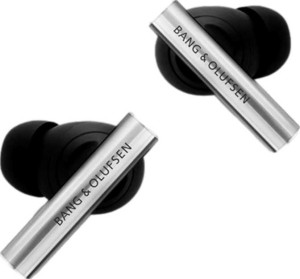
Bang & Olufsen Beo Grace
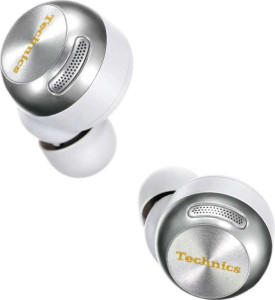
Technics EAH-AZ100

Bang & Olufsen Beo Grace Technics EAH-AZ100

Overview

Welcome to our detailed spec comparison between the Bang & Olufsen Beo Grace and the Technics EAH-AZ100, two premium true wireless earbuds competing at the top of the market. While both share a strong common foundation — including ANC, spatial audio, and Bluetooth 5.3 — key battlegrounds emerge around battery endurance, audio codec support, and water resistance ratings. Read on to discover which earbud best matches your listening lifestyle.

Common Features

  • Both products use an in-ear fit.
  • Neither product has wires or cables.
  • Neither product is a neckband earbud design.
  • Neither product includes wingtips.
  • Neither product features RGB lighting.
  • Both products have stereo speakers.
  • Neither product includes a UV light.
  • Neither product has a display.
  • Both products have active noise cancellation (ANC).
  • Both products offer passive noise reduction.
  • Both products support spatial audio.
  • Neither product features Dirac Virtuo.
  • Both products support wireless charging.
  • Neither product has a solar power battery.
  • Both products have a battery level indicator.
  • Both products have a rechargeable battery.
  • Both products include a USB Type-C connection.
  • Both products use Bluetooth version 5.3.
  • Neither product supports LDHC.
  • Both products support Bluetooth LE Audio.
  • Neither product supports aptX Adaptive, aptX Low Latency, aptX HD, or aptX.
  • Both products have an ambient sound mode.
  • Both products support fast charging.
  • Neither product can read notifications.
  • Both products have a mute function.
  • Both products can be used as a headset.
  • Both products have a control panel placed on the device.
  • Both products feature voice prompts.
  • Both products include a travel bag.
  • Both products have 6 microphones.
  • Both products feature a noise-canceling microphone.

Main Differences

  • The Ingress Protection rating is IP54 and IP57 on Bang & Olufsen Beo Grace, while it is IPX4 on Technics EAH-AZ100.
  • Bang & Olufsen Beo Grace is waterproof, whereas Technics EAH-AZ100 is only sweat resistant.
  • The weight is 12 g on Bang & Olufsen Beo Grace and 11.8 g on Technics EAH-AZ100.
  • The driver unit size is 12 mm on Bang & Olufsen Beo Grace and 10 mm on Technics EAH-AZ100.
  • The lowest frequency reaches 10 Hz on Bang & Olufsen Beo Grace and 20 Hz on Technics EAH-AZ100.
  • The highest frequency reaches 20000 Hz on Bang & Olufsen Beo Grace and 40000 Hz on Technics EAH-AZ100.
  • Dolby Atmos support is present on Technics EAH-AZ100 but not available on Bang & Olufsen Beo Grace.
  • A neodymium magnet is present in Bang & Olufsen Beo Grace but not in Technics EAH-AZ100.
  • Battery life with ANC is 4.5 hours on Bang & Olufsen Beo Grace and 10 hours on Technics EAH-AZ100.
  • Charge time is 1.4 hours on Bang & Olufsen Beo Grace and 2 hours on Technics EAH-AZ100.
  • Fast pairing is available on Technics EAH-AZ100 but not on Bang & Olufsen Beo Grace.
  • LDAC support is present on Technics EAH-AZ100 but not available on Bang & Olufsen Beo Grace.
  • The multipoint connection count is 2 on Bang & Olufsen Beo Grace and 3 on Technics EAH-AZ100.
Specs Comparison
Bang & Olufsen Beo Grace

Bang & Olufsen Beo Grace

Technics EAH-AZ100

Technics EAH-AZ100

Design:
Fit In-ear In-ear
Ingress Protection (IP) rating IP54, IP57 IPX4
water resistance Waterproof Sweat resistant
weight 12 g 11.8 g
has no wires or cables
are neckband earbuds
wingtips included
has RGB lighting
has stereo speakers
has UV light
Has a display

Both the Bang & Olufsen Beo Grace and the Technics EAH-AZ100 share the same fundamental design philosophy: a true wireless, in-ear form factor with no neckband, no RGB lighting, and no display. At 12 g and 11.8 g respectively, the two earbuds are essentially identical in weight — a difference of 0.2 g is imperceptible during real-world use, meaning neither product holds a meaningful ergonomic advantage on that front.

The most significant differentiator in this group is water and dust resistance. The Beo Grace carries a dual rating of IP54 and IP57, which translates to full waterproof protection — it can withstand submersion in up to 1 meter of water for 30 minutes, in addition to being dust-protected. The EAH-AZ100, rated at IPX4, is only sweat and splash resistant, with no rated dust protection at all. In practical terms, this means the Beo Grace can handle rain, accidental drops in water, or use near a pool, while the Technics is better suited strictly to dry workouts and light perspiration.

For users who prioritize durability and versatility across varied environments, the Beo Grace holds a clear edge in this group purely on the strength of its superior ingress protection. The Technics EAH-AZ100 is adequate for everyday gym use, but it cannot match the robustness that IP57 certification provides.

Sound quality:
has active noise cancellation (ANC)
has passive noise reduction
driver unit size 12 mm 10 mm
lowest frequency 10 Hz 20 Hz
highest frequency 20000 Hz 40000 Hz
supports spatial audio
has Dolby Atmos
has Dirac Virtuo
has a neodymium magnet

On the fundamentals, these two earbuds are well-matched: both offer active and passive noise cancellation, spatial audio support, and neodymium-class driver technology. The divergence begins with driver size — the Beo Grace uses a 12 mm driver versus the EAH-AZ100's 10 mm unit. Larger drivers generally move more air and tend to produce a fuller low-end response, which aligns with the Beo Grace's lower frequency floor of 10 Hz compared to the Technics' 20 Hz — meaning the Beo Grace can technically reproduce sub-bass frequencies that the EAH-AZ100 simply cannot.

At the opposite end of the spectrum, the EAH-AZ100 reaches up to 40,000 Hz, well beyond the Beo Grace's 20,000 Hz ceiling. While human hearing typically tops out around 20 kHz, the extended high-frequency range becomes relevant when playing hi-res audio formats like LDAC or aptX Lossless, where ultrasonic content can still influence perceived audio texture and airiness. The EAH-AZ100 also supports Dolby Atmos, a certified spatial audio pipeline that offers a more standardized and widely compatible immersive experience than an uncertified spatial audio implementation.

The two products target slightly different listener profiles. The Beo Grace edges ahead for bass-focused listening and raw frequency depth, while the EAH-AZ100 has the advantage for hi-res and home theater content thanks to its extended high-frequency range and Dolby Atmos support. On balance, the EAH-AZ100 holds a modest edge for technical audio versatility, but users who prioritize deep bass reproduction may find the Beo Grace more satisfying.

Power:
Battery life (ANC) 4.5 hours 10 hours
charge time 1.4 hours 2 hours
has wireless charging
Has a solar power battery
has a battery level indicator
has a rechargeable battery

Battery life is where these two earbuds diverge most starkly. The Technics EAH-AZ100 delivers 10 hours of playback with ANC active, while the Beo Grace manages just 4.5 hours under the same conditions — less than half. In practical terms, the EAH-AZ100 can comfortably cover a full workday of listening without a recharge, whereas the Beo Grace will need to return to its case mid-afternoon. For frequent travelers or long-session listeners, this gap is genuinely consequential.

The charge time picture is more nuanced. The Beo Grace replenishes in 1.4 hours versus the EAH-AZ100's 2 hours, meaning it charges meaningfully faster — a partial consolation for its smaller battery. Both support wireless charging, which adds convenience for users who prefer a pad over a cable, and both include a battery level indicator so neither leaves you guessing about remaining runtime.

The EAH-AZ100 holds a decisive advantage in this group. A more than twofold difference in ANC battery life is not a marginal gap — it reflects fundamentally different use-case priorities. The Beo Grace's faster charge time softens the blow slightly, but for any user who values all-day untethered listening, the Technics is the clear choice here.

Connectivity:
has fast pairing
Has USB Type-C
Bluetooth version 5.3 5.3
has LDAC
has LDHC
has Bluetooth LE Audio
has aptX Adaptive
has aptX Low Latency
has aptX HD
has aptX
has aptX Lossless
has aptX Voice
has Auracast
maximum Bluetooth range 10 m 10 m
supports Bluetooth pairing using NFC
Can be used wirelessly
has AAC

The connectivity foundation is largely shared: both earbuds run on Bluetooth 5.3, support LE Audio, top out at a 10 m wireless range, include USB-C charging, and offer AAC codec support. For most users pairing with a smartphone, this common ground means day-to-day wireless performance will feel essentially identical between the two.

The meaningful split comes down to two features. The EAH-AZ100 supports LDAC, Sony's high-resolution wireless codec capable of transmitting up to 990 kbps — nearly three times the bandwidth of AAC. For Android users with LDAC-enabled devices and hi-res audio files, this translates to a noticeably richer and more detailed audio stream. The Beo Grace lacks LDAC entirely, capping wireless audio quality at AAC. Additionally, the EAH-AZ100 includes fast pairing, which streamlines the initial device connection process — a small but genuinely convenient quality-of-life advantage the Beo Grace does not offer.

The EAH-AZ100 holds a clear edge in connectivity. LDAC support alone is a significant differentiator for Android and hi-res audio users, and fast pairing adds further convenience. The Beo Grace is not deficient in absolute terms, but it offers a narrower codec palette that leaves high-fidelity wireless streaming on the table.

Features:
release date September 2025 January 2025
has ambient sound mode
Supports fast charging
multipoint count 2 3
can read notifications
has a mute function
can be used as a headset
control panel placed on a device
Has voice prompts
travel bag is included
Has an in-line control panel
Has a temperature sensor
Has a built-in camera remote control function

Across this feature set, the Bang & Olufsen Beo Grace and the Technics EAH-AZ100 are remarkably well-aligned. Both offer ambient sound mode, fast charging, on-device controls, voice prompts, a mute function, headset capability, and an included travel bag. For the vast majority of everyday use cases, the two earbuds deliver an effectively identical feature experience.

The single differentiator in this group is multipoint connectivity. The Beo Grace supports 2 simultaneous device connections, while the EAH-AZ100 supports 3. In practice, multipoint allows users to stay connected to multiple devices — say, a laptop and a smartphone — without manually re-pairing when switching. A third simultaneous connection is a meaningful upgrade for power users who regularly juggle a computer, phone, and tablet, allowing seamless audio handoff across all three without any pairing management.

Given how closely matched everything else is, the EAH-AZ100 holds a narrow but real edge here, solely on the strength of its three-device multipoint support. For single-device or two-device users, this distinction is irrelevant and the products are effectively tied — but for multi-device workflows, the Technics offers a tangibly more flexible experience.

Microphone:
number of microphones 6 6
has a noise-canceling microphone

On microphone hardware, the Bang & Olufsen Beo Grace and the Technics EAH-AZ100 are identical: both deploy 6 microphones with noise-canceling capability. A six-mic array at this earbud tier is a premium configuration — more pickup points allow the signal processing to more precisely isolate the user's voice from surrounding noise, which benefits both ANC performance and call clarity in louder environments.

With no differentiating data points in this group, a verdict based solely on the provided specs is straightforward: these two earbuds are fully tied on microphone hardware. Neither holds any advantage over the other as specified here.

Comparison Summary & Verdict

After examining every specification, both earbuds prove themselves as serious contenders, but each serves a different kind of user. The Bang & Olufsen Beo Grace stands out with its superior water and dust protection (IP54/IP57 vs IPX4), a larger 12 mm driver, and a faster 1.4-hour charge time, making it an excellent choice for active users who prioritize durability and quick top-ups. The Technics EAH-AZ100, on the other hand, dominates on battery life with 10 hours of ANC playback, adds Dolby Atmos and LDAC support for audiophile-grade wireless audio, extends its frequency range up to 40000 Hz, and offers 3-device multipoint pairing with fast pairing convenience. If longevity and high-resolution audio codec support matter most to you, the Technics is the stronger pick; if ruggedness and rapid recharging are your priorities, the Bang & Olufsen delivers.

Bang & Olufsen Beo Grace
Buy Bang & Olufsen Beo Grace if...

Buy the Bang & Olufsen Beo Grace if you need stronger water and dust resistance for active use and want a faster charging time to get back to your music quickly.

Technics EAH-AZ100
Buy Technics EAH-AZ100 if...

Buy the Technics EAH-AZ100 if you want significantly longer ANC battery life, high-resolution LDAC and Dolby Atmos support, and the flexibility of connecting to three devices simultaneously.