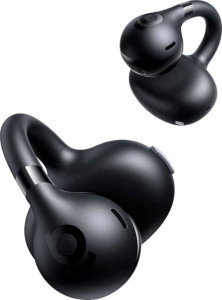
Baseus Bass BC1
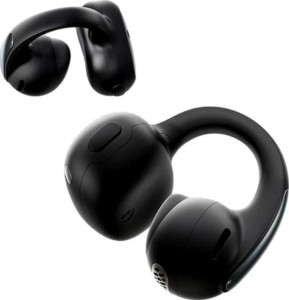
Baseus Bowie MC1

Baseus Bass BC1 Baseus Bowie MC1

Overview

Welcome to our in-depth specs comparison between the Baseus Bass BC1 and the Baseus Bowie MC1, two open-ear true wireless earbuds from Baseus that share a surprisingly similar DNA. While both models offer water resistance, fast charging, and a noise-canceling microphone, key differences in battery endurance, water protection rating, and Bluetooth version make this a closer contest than it first appears. Read on to find out which one suits your needs best.

Common Features

  • Both the Baseus Bass BC1 and Baseus Bowie MC1 use an open-ear fit.
  • Both products are water resistant.
  • Neither product uses wires or cables.
  • Neither product is a neckband earbud design.
  • Neither product includes wingtips.
  • Neither product features RGB lighting.
  • Both products have stereo speakers.
  • Neither product has a UV light.
  • Neither product has active noise cancellation (ANC).
  • Neither product has passive noise reduction.
  • Both products share a lowest frequency of 20 Hz and a highest frequency of 20000 Hz.
  • Neither product supports spatial audio.
  • Neither product has Dolby Atmos or Dirac Virtuo.
  • Neither product has a neodymium magnet.
  • Both products have a charge time of 1.5 hours.
  • Neither product supports wireless charging.
  • Both products have a battery level indicator.
  • Both products have a rechargeable battery.
  • Neither product supports fast pairing.
  • Both products feature a USB Type-C connection.
  • Neither product supports LDAC, LDHC, Bluetooth LE Audio, aptX Adaptive, aptX Low Latency, or aptX HD.
  • Neither product has an ambient sound mode.
  • Neither product has in/on-ear detection.
  • Both products support fast charging.
  • Both products support multipoint connection with 2 devices.
  • Neither product can read notifications.
  • Both products have a mute function.
  • Both products can be used as a headset.
  • Both products have a control panel placed on the device.
  • Both products have a noise-canceling microphone.

Main Differences

  • The Ingress Protection rating is IP55 on the Baseus Bass BC1 and IP57 on the Baseus Bowie MC1.
  • The weight is 10.6 g on the Baseus Bass BC1 and 10.4 g on the Baseus Bowie MC1.
  • The driver unit size is 12 mm on the Baseus Bass BC1 and 10.8 mm on the Baseus Bowie MC1.
  • Battery life is 7.5 hours on the Baseus Bass BC1 and 9 hours on the Baseus Bowie MC1.
  • Battery life of the charging case is 20.5 hours on the Baseus Bass BC1 and 31 hours on the Baseus Bowie MC1.
  • The Bluetooth version is 6 on the Baseus Bass BC1 and 5.4 on the Baseus Bowie MC1.
Specs Comparison
Baseus Bass BC1

Baseus Bass BC1

Baseus Bowie MC1

Baseus Bowie MC1

Design:
Fit Open-ear Open-ear
Ingress Protection (IP) rating IP55 IP57
water resistance Water resistant Water resistant
weight 10.6 g 10.4 g
has no wires or cables
are neckband earbuds
wingtips included
has RGB lighting
has stereo speakers
has UV light
Has a display

Both the Baseus Bass BC1 and the Baseus Bowie MC1 share the same fundamental design philosophy: open-ear, fully wireless earbuds without neckbands, wingtips, or any cabling. This makes them nearly identical in form factor, and both offer stereo audio with no gimmicks like RGB lighting or UV features to add unnecessary bulk.

Where they diverge is in two small but meaningful details. The MC1 carries a slightly higher IP57 rating compared to the BC1's IP55, meaning the MC1 can withstand submersion in up to 1 meter of water for 30 minutes, whereas the BC1 is only protected against low-pressure water jets from any direction. For active users or those frequently caught in rain, this is a practical real-world advantage. The MC1 is also marginally lighter at 10.4 g versus 10.6 g, though a 0.2 g difference is imperceptible during wear.

The Bowie MC1 holds a clear edge in this category, strictly due to its superior water resistance rating. The weight difference is negligible, and all other design attributes are identical between the two models.

Sound quality:
has active noise cancellation (ANC)
has passive noise reduction
driver unit size 12 mm 10.8 mm
lowest frequency 20 Hz 20 Hz
highest frequency 20000 Hz 20000 Hz
supports spatial audio
has Dolby Atmos
has Dirac Virtuo
has a neodymium magnet

On the noise isolation front, neither the Bass BC1 nor the Bowie MC1 offers active or passive noise reduction — an expected trade-off for open-ear designs, which prioritize environmental awareness over acoustic isolation. Users who need to block out the world should look elsewhere; these earbuds are built for situational awareness.

The one tangible differentiator here is driver size: the BC1 uses a 12 mm driver versus the MC1's 10.8 mm unit. Larger drivers generally move more air, which can translate to fuller low-end response and greater overall sound pressure — though driver size alone does not guarantee superior sound quality without accounting for tuning and materials. Both share an identical 20 Hz – 20,000 Hz frequency range, covering the full spectrum of human hearing on paper, and neither supports spatial audio, Dolby Atmos, or Dirac Virtuo.

The Bass BC1 holds a narrow edge in this category. Its larger driver gives it a theoretical advantage in bass reproduction and dynamic range, which is particularly relevant given its ″Bass″ branding. That said, without tuning data, the real-world gap may be modest.

Power:
Battery life 7.5 hours 9 hours
Battery life of charging case 20.5 hours 31 hours
charge time 1.5 hours 1.5 hours
has wireless charging
Has a solar power battery
has a battery level indicator
has a rechargeable battery

Battery life is where the Bowie MC1 pulls ahead most decisively. Its 9 hours of earbud playback versus the Bass BC1's 7.5 hours represents a 20% advantage per charge — meaningful for long commutes, travel days, or extended work sessions where reaching for the case is an interruption. The gap widens further at the case level: the MC1's case delivers 31 hours of total combined runtime compared to the BC1's 20.5 hours, a difference of over 10 hours that could mean the difference between charging daily and charging every few days.

The two products are evenly matched where it counts for convenience: both recharge in 1.5 hours, neither supports wireless charging, and both include a battery level indicator so users are never caught off guard by a dead earbud.

The Bowie MC1 wins this category clearly. Longer per-session battery life and a substantially larger case reserve make it the stronger choice for users who prioritize endurance, while the identical charge time means there is no trade-off in replenishment speed.

Connectivity:
has fast pairing
Has USB Type-C
Bluetooth version 6 5.4
has LDAC
has LDHC
has Bluetooth LE Audio
has aptX Adaptive
has aptX Low Latency
has aptX HD
has aptX
has aptX Lossless
has aptX Voice
has Auracast
maximum Bluetooth range 10 m 10 m
supports Bluetooth pairing using NFC
Can be used wirelessly
has AAC

Connectivity is largely a tie between these two models, with one notable exception: the Bass BC1 runs on Bluetooth 6 while the Bowie MC1 uses Bluetooth 5.4. Bluetooth 6 introduces improved channel sounding for more precise distance estimation and connection reliability enhancements, which on paper gives the BC1 a more future-ready wireless foundation — though in practice, the real-world difference for casual listening at shared 10 m range will be minimal for most users.

Everything else in this category is identical. Neither earbud supports advanced audio codecs such as LDAC, aptX, or AAC, meaning both rely on standard SBC transmission. This is a relevant limitation for audiophiles, but typical for earbuds at this tier. Both charge via USB Type-C, skip NFC pairing, and operate fully wirelessly.

The Bass BC1 holds a technical edge here solely due to its newer Bluetooth version. However, given that codec support, range, and all other connectivity features are identical, this advantage is unlikely to be felt in day-to-day use — making this category effectively a near-tie with a slight specification lead for the BC1.

Features:
release date June 2025 February 2025
has ambient sound mode
has in/on-ear detection
Supports fast charging
multipoint count 2 2
can read notifications
has a mute function
can be used as a headset
control panel placed on a device
Has voice prompts
travel bag is included
Has an in-line control panel
Has a temperature sensor
Has a built-in camera remote control function

Across every feature in this category, the Baseus Bass BC1 and Bowie MC1 are a perfect match. Both support fast charging and multipoint connection to 2 devices simultaneously — the latter being a genuinely useful feature for users who switch between a phone and a laptop throughout the day without needing to manually re-pair.

Both also function as headsets with on-device controls, include a mute function, offer voice prompts, and come with a travel bag. The absence of ambient sound mode and in-ear detection is a shared limitation worth noting, as these are increasingly common features in competing earbuds that improve everyday usability and safety awareness.

This category is a complete tie. There is not a single differentiating data point between the two products in this group, so features alone should not factor into a buying decision between these two models.

Microphone:
has a noise-canceling microphone

Microphone specs offer nothing to separate these two earbuds: both the Bass BC1 and the Bowie MC1 feature a noise-canceling microphone, which is a practical necessity for open-ear designs that inherently let in ambient sound. A noise-canceling mic helps isolate the speaker's voice during calls, compensating for the lack of passive isolation that a closed in-ear design would otherwise provide.

This category is a complete tie. With only one shared data point and no differentiating information provided, microphone capability should play no role in choosing between these two models.

Comparison Summary & Verdict

After reviewing every specification, the choice between the Baseus Bass BC1 and the Baseus Bowie MC1 comes down to your priorities. The BC1 stands out with its larger 12 mm driver unit and newer Bluetooth 6 connectivity, which may appeal to users who value cutting-edge wireless technology and potentially richer low-end audio. The Bowie MC1, on the other hand, earns its place with a superior IP57 water resistance rating, a longer 9-hour battery life, and an impressive 31-hour charging case, making it the stronger companion for active lifestyles and extended listening sessions. Both earbuds are nearly identical in weight and share a strong common feature set, so neither is a poor choice — it simply depends on whether you lean toward connectivity innovation or endurance and durability.

Baseus Bass BC1
Buy Baseus Bass BC1 if...

Buy the Baseus Bass BC1 if you want the latest Bluetooth 6 connectivity and a larger 12 mm driver that may deliver a more powerful sound signature.

Baseus Bowie MC1
Buy Baseus Bowie MC1 if...

Buy the Baseus Bowie MC1 if you need stronger water resistance (IP57), longer battery life of 9 hours, and a charging case that lasts up to 31 hours.