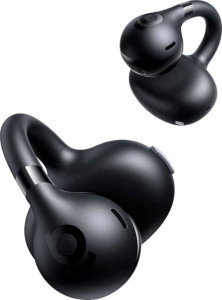
Baseus Bass BC1
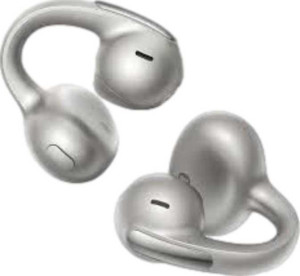
Baseus MC1 Pro

Baseus Bass BC1 Baseus MC1 Pro

Overview

Welcome to our in-depth spec comparison between the Baseus Bass BC1 and the Baseus MC1 Pro, two open-ear wireless earbuds from Baseus that share a strong foundation but diverge in meaningful ways. In this head-to-head, we examine the key battlegrounds: water resistance ratings, audio frequency range, battery endurance, and codec support — to help you decide which pair truly fits your lifestyle and listening needs.

Common Features

  • Both the Baseus Bass BC1 and Baseus MC1 Pro use an open-ear fit.
  • Neither the Baseus Bass BC1 nor the Baseus MC1 Pro has wires or cables.
  • Neither product is a neckband earbud design.
  • Wingtips are not included with either the Baseus Bass BC1 or the Baseus MC1 Pro.
  • RGB lighting is not present on either the Baseus Bass BC1 or the Baseus MC1 Pro.
  • Both the Baseus Bass BC1 and Baseus MC1 Pro feature stereo speakers.
  • Neither the Baseus Bass BC1 nor the Baseus MC1 Pro has a display.
  • Active noise cancellation is not available on either the Baseus Bass BC1 or the Baseus MC1 Pro.
  • Passive noise reduction is not available on either product.
  • Both the Baseus Bass BC1 and Baseus MC1 Pro share a lowest frequency of 20 Hz.
  • Spatial audio is not supported on either the Baseus Bass BC1 or the Baseus MC1 Pro.
  • Both products take 1.5 hours to fully charge.
  • Wireless charging is not available on either the Baseus Bass BC1 or the Baseus MC1 Pro.
  • Both the Baseus Bass BC1 and Baseus MC1 Pro include a battery level indicator.
  • Both products feature a rechargeable battery.
  • Fast pairing is not available on either the Baseus Bass BC1 or the Baseus MC1 Pro.
  • Both the Baseus Bass BC1 and Baseus MC1 Pro use USB Type-C for charging.
  • Both products use Bluetooth version 6.
  • Fast charging is supported on both the Baseus Bass BC1 and the Baseus MC1 Pro.
  • Both the Baseus Bass BC1 and Baseus MC1 Pro include a noise-canceling microphone.

Main Differences

  • The Ingress Protection rating is IP55 on the Baseus Bass BC1 and IP67 on the Baseus MC1 Pro.
  • The Baseus Bass BC1 is water resistant, while the Baseus MC1 Pro is waterproof.
  • The weight is 10.6 g on the Baseus Bass BC1 and 10 g on the Baseus MC1 Pro.
  • The highest frequency reaches 20000 Hz on the Baseus Bass BC1 and 40000 Hz on the Baseus MC1 Pro.
  • Battery life is 7.5 hours on the Baseus Bass BC1 and 8 hours on the Baseus MC1 Pro.
  • The battery life of the charging case is 20.5 hours on the Baseus Bass BC1 and 32 hours on the Baseus MC1 Pro.
  • LDAC support is present on the Baseus MC1 Pro but not available on the Baseus Bass BC1.
  • AAC support is present on the Baseus MC1 Pro but not available on the Baseus Bass BC1.
Specs Comparison
Baseus Bass BC1

Baseus Bass BC1

Baseus MC1 Pro

Baseus MC1 Pro

Design:
Fit Open-ear Open-ear
Ingress Protection (IP) rating IP55 IP67
water resistance Water resistant Waterproof
weight 10.6 g 10 g
has no wires or cables
are neckband earbuds
wingtips included
has RGB lighting
has stereo speakers
has UV light
Has a display

Both the Baseus Bass BC1 and the Baseus MC1 Pro share the same open-ear form factor and are fully wireless — a design philosophy centered on situational awareness and all-day comfort. Neither model includes wingtips, RGB lighting, or a display, keeping their builds lean and purposeful.

The most meaningful differentiator in this group is water resistance. The BC1 carries an IP55 rating, meaning it can handle sweat and light splashes but is not submersion-safe. The MC1 Pro steps up to IP67, which adds full dust protection and the ability to withstand brief submersion — a genuinely practical upgrade for outdoor workouts, rain exposure, or humid environments. On weight, the MC1 Pro is marginally lighter at 10 g versus the BC1's 10.6 g, though that 0.6 g gap is unlikely to be perceptible during wear.

The MC1 Pro holds a clear design edge here, driven almost entirely by its superior ingress protection. For users who prioritize durability in demanding conditions, the IP67 rating is a tangible, real-world advantage over the BC1's IP55.

Sound quality:
has active noise cancellation (ANC)
has passive noise reduction
lowest frequency 20 Hz 20 Hz
highest frequency 20000 Hz 40000 Hz
supports spatial audio
has Dolby Atmos
has Dirac Virtuo
has a neodymium magnet

Neither the Baseus Bass BC1 nor the MC1 Pro offers active or passive noise cancellation — a trade-off typical of open-ear designs, where environmental awareness is a feature rather than something to be blocked out. Both also lack spatial audio processing, so the listening experience is straightforward stereo on each model.

Where they diverge is at the top end of the frequency range. The BC1 covers the standard audible spectrum of 20 Hz to 20,000 Hz, which captures everything a human ear can detect. The MC1 Pro extends that ceiling to 40,000 Hz — well into ultrasonic territory. In practice, most listeners will never consciously perceive frequencies above 20 kHz, but proponents of high-resolution audio argue that extended high-frequency response can contribute to a more natural, ″airy″ reproduction of instruments, even if subconsciously. Whether that translates to an audible improvement depends heavily on the source material and individual sensitivity.

On paper, the MC1 Pro holds a technical edge in this group due to its wider frequency ceiling. That said, with no noise isolation, no spatial audio, and an identical low-frequency floor, the real-world sound quality gap between these two will likely be modest for most listeners. The MC1 Pro's extended range is a differentiator, but not a decisive one unless you are specifically targeting hi-res audio content.

Power:
Battery life 7.5 hours 8 hours
Battery life of charging case 20.5 hours 32 hours
charge time 1.5 hours 1.5 hours
has wireless charging
Has a solar power battery
has a battery level indicator
has a rechargeable battery

Charging speed and convenience features are identical across both models — each takes 1.5 hours to charge, neither supports wireless charging, and both include a battery level indicator. For day-to-day use, this parity means no practical difference in how you manage either pair.

The real separation comes in total battery endurance. The BC1 delivers 7.5 hours per charge with a case that adds up to 20.5 hours of combined playtime — respectable for the category. The MC1 Pro edges ahead with 8 hours per charge, but its bigger story is the case capacity: 32 hours total, which is more than 50% more reserve power than the BC1. That kind of gap is meaningful for frequent travelers or anyone who goes days between charging opportunities.

The MC1 Pro wins this group clearly. The per-earbud gain is modest, but a case that nearly doubles the BC1's total reserve makes a tangible difference in how long you can go without reaching for a cable — a practical advantage that compounds over multi-day use.

Connectivity:
has fast pairing
Has USB Type-C
Bluetooth version 6 6
has LDAC
has LDHC
has Bluetooth LE Audio
has aptX Adaptive
has aptX Low Latency
has aptX HD
has aptX
has aptX Lossless
has aptX Voice
has Auracast
maximum Bluetooth range 10 m 10 m
supports Bluetooth pairing using NFC
Can be used wirelessly
has AAC

At the foundation, these two earbuds are well matched: both run on Bluetooth 6, share a 10 m wireless range, and charge via USB-C. Neither supports fast pairing or NFC, so the out-of-box connection experience is on equal footing.

The codec support is where the MC1 Pro pulls ahead. The BC1 transmits audio without any of the high-quality codec options, meaning it falls back to the basic SBC standard by default. The MC1 Pro, by contrast, supports both AAC and LDAC. AAC is particularly relevant for iPhone users, where it delivers noticeably cleaner audio over Bluetooth compared to SBC. LDAC goes further still — Sony's high-res wireless codec transmits up to three times the data of standard Bluetooth audio, making it the closest thing to lossless quality available over a wireless connection, provided your source device supports it.

The MC1 Pro has a clear connectivity edge. The addition of LDAC alone elevates it into a different tier for audio quality over Bluetooth, and AAC adds practical value for a large share of smartphone users. The BC1's lack of any advanced codec support is a meaningful limitation that directly feeds back into real-world listening quality, not just a spec sheet detail.

Features:
release date June 2025 May 2025
has ambient sound mode
has in/on-ear detection
has find device feature
Supports fast charging
can read notifications
has a mute function
can be used as a headset
control panel placed on a device
Has voice prompts
travel bag is included
Has an in-line control panel
Has a temperature sensor
Has a built-in camera remote control function

Across every feature spec in this group, the Baseus Bass BC1 and the MC1 Pro are identical. Both support fast charging, include on-device controls, offer voice prompts, and come with a travel bag — a practical inclusion that adds everyday carry value to both models equally.

For call and communication use, both function as a headset with a mute function, which covers the essentials for remote work or hands-free calls without any gap between the two. The absence of features like in-ear detection, ambient sound mode, or a find-device function is equally shared, so neither model has a functional advantage or disadvantage in this area.

This group is a complete tie. There is no differentiator to weigh — every feature present or absent is mirrored exactly across both products. Buyers comparing the BC1 and MC1 Pro should look to other spec groups to make their decision, as features alone will not separate them.

Microphone:
has a noise-canceling microphone

Both the Baseus Bass BC1 and the MC1 Pro include a noise-canceling microphone, which is a meaningful inclusion for open-ear earbuds. Given that the open-ear design inherently lets in ambient sound, having mic-level noise cancellation helps ensure that the person on the other end of a call hears your voice clearly rather than your surroundings.

With only a single shared spec in this group, there is no differentiator to analyze — the two products are evenly matched on microphone capability based on the available data.

Comparison Summary & Verdict

After reviewing all the specs, it is clear that both earbuds are solid open-ear options sharing the same core design philosophy, Bluetooth 6, USB-C charging, and noise-canceling microphones. However, they diverge in important areas. The Baseus MC1 Pro pulls ahead with a higher IP67 waterproof rating, an extended frequency range reaching 40000 Hz, a longer case battery life of 32 hours, and added codec support via LDAC and AAC — making it the stronger pick for audiophiles and active users who need durable, high-fidelity gear. The Baseus Bass BC1, meanwhile, remains a capable and lightweight companion for everyday use, offering nearly the same experience at what is likely a lower price point. Choose the BC1 for casual daily wear, and opt for the MC1 Pro if advanced audio quality and weather protection are non-negotiable priorities.

Baseus Bass BC1
Buy Baseus Bass BC1 if...

Buy the Baseus Bass BC1 if you want a capable open-ear earbud for everyday use and do not need advanced codec support or a high waterproof rating.

Baseus MC1 Pro
Buy Baseus MC1 Pro if...

Buy the Baseus MC1 Pro if you prioritize a higher IP67 waterproof rating, extended battery case life of 32 hours, wider frequency response, and LDAC and AAC codec support for superior audio quality.