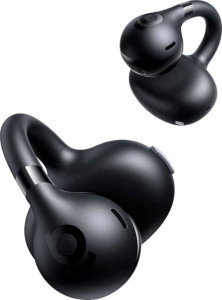
Baseus Bass BC1
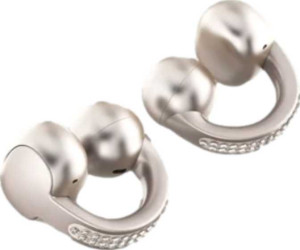
Motorola Moto Buds Loop

Baseus Bass BC1 Motorola Moto Buds Loop

Overview

Welcome to our detailed spec comparison between the Baseus Bass BC1 and the Motorola Moto Buds Loop. Both open-ear wireless earbuds share a surprisingly similar foundation — from their 12 mm drivers and fast charging support to their 4-microphone noise-canceling setups. Yet when it comes to battery endurance and charging case capacity, the two part ways. Read on to see exactly how these two earbuds stack up across every key specification.

Common Features

  • Both products have an open-ear fit.
  • Neither product has wires or cables.
  • Neither product is a neckband earbud design.
  • Wingtips are not included with either product.
  • RGB lighting is not present on either product.
  • Both products have stereo speakers.
  • UV light is not available on either product.
  • Neither product has a display.
  • Active noise cancellation is not available on either product.
  • Passive noise reduction is not available on either product.
  • Both products have a 12 mm driver unit size.
  • The lowest frequency on both products is 20 Hz.
  • The highest frequency on both products is 20000 Hz.
  • Spatial audio is not supported on either product.
  • Dolby Atmos is not available on either product.
  • Dirac Virtuo is not available on either product.
  • Both products have a charge time of 1.5 hours.
  • Wireless charging is not available on either product.
  • Neither product has a solar power battery.
  • Both products have a battery level indicator.
  • Both products have a rechargeable battery.
  • Fast pairing is not available on either product.
  • Both products have USB Type-C connectivity.
  • LDAC support is not available on either product.
  • Bluetooth LE Audio is not supported on either product.
  • aptX Adaptive is not supported on either product.
  • Ambient sound mode is not available on either product.
  • In/on-ear detection is not available on either product.
  • Both products support fast charging.
  • Neither product can read notifications.
  • Both products have a mute function.
  • Both products can be used as a headset.
  • Both products have a control panel placed on the device.
  • Both products have voice prompts.
  • Both products have 4 microphones.
  • Both products have a noise-canceling microphone.

Main Differences

  • Battery life is 7.5 hours on Baseus Bass BC1 and 8 hours on Motorola Moto Buds Loop.
  • Battery life of the charging case is 20.5 hours on Baseus Bass BC1 and 29 hours on Motorola Moto Buds Loop.
Specs Comparison
Baseus Bass BC1

Baseus Bass BC1

Motorola Moto Buds Loop

Motorola Moto Buds Loop

Design:
Fit Open-ear Open-ear
has no wires or cables
are neckband earbuds
wingtips included
has RGB lighting
has stereo speakers
has UV light
Has a display

In terms of design, the Baseus Bass BC1 and the Motorola Moto Buds Loop are virtually identical across every measured attribute. Both adopt an open-ear fit, meaning neither sits inside the ear canal — a design choice that prioritizes ambient awareness and long-term wearing comfort over passive noise isolation. This makes both products well-suited for use during outdoor activities or situations where environmental awareness matters.

Both models are fully wireless with no cables or neckband, and neither includes wingtips, RGB lighting, a UV light, or a display. They both offer stereo audio output, which is the expected baseline for any modern wireless earbud and ensures a standard left-right audio experience.

Based strictly on the provided design specifications, these two products are in a complete tie. There is no differentiating design feature between them — a user choosing based solely on design traits would need to look to other spec groups, such as audio performance or battery life, to find a meaningful distinction.

Sound quality:
has active noise cancellation (ANC)
has passive noise reduction
driver unit size 12 mm 12 mm
lowest frequency 20 Hz 20 Hz
highest frequency 20000 Hz 20000 Hz
supports spatial audio
has Dolby Atmos
has Dirac Virtuo
has a neodymium magnet

Both the Baseus Bass BC1 and the Motorola Moto Buds Loop share an identical sound quality profile on paper. Each is equipped with a 12 mm driver — a respectable size for open-ear buds that generally supports fuller bass reproduction compared to smaller drivers — and both cover the standard 20 Hz–20,000 Hz frequency range, which spans the full breadth of human hearing.

Neither product offers active noise cancellation or passive noise reduction, which is largely expected given their open-ear form factor — that design inherently prioritizes ambient sound over isolation. The absence of spatial audio support, Dolby Atmos, Dirac Virtuo, and neodymium magnets is consistent across both, meaning neither has a hardware or processing edge for immersive or enhanced audio experiences.

The verdict here mirrors the design comparison: these two earbuds are a complete tie in sound quality specifications. With no differentiating features between them in this category, a buyer's decision will need to hinge on other factors such as battery, connectivity, or price.

Power:
Battery life 7.5 hours 8 hours
Battery life of charging case 20.5 hours 29 hours
charge time 1.5 hours 1.5 hours
has wireless charging
Has a solar power battery
has a battery level indicator
has a rechargeable battery

Power is where the first real gap between these two products emerges. The Motorola Moto Buds Loop edges out the Baseus Bass BC1 on earbud battery life with 8 hours versus 7.5 hours — a modest 30-minute difference that most users won't notice in a single listening session, but it does reflect slightly more efficient power management or a larger internal cell.

The more consequential difference lies in the charging case. The Moto Buds Loop's case extends total playback to 29 hours combined, compared to the BC1's 20.5 hours — a gap of roughly 8.5 hours. For users who travel frequently or go extended periods without access to a USB charger, that extra buffer translates directly into fewer interruptions and greater day-to-day reliability. Both cases charge the earbuds in the same 1.5 hours, and neither supports wireless charging, so the charging experience is otherwise identical.

The Motorola Moto Buds Loop holds a clear advantage in this category, primarily driven by its significantly larger case capacity. The earbud-only gap is negligible, but the total endurance difference makes the Moto Buds Loop the stronger choice for users who prioritize going longer between charges.

Connectivity:
has fast pairing
Has USB Type-C
has LDAC
has LDHC
has Bluetooth LE Audio
has aptX Adaptive
has aptX Low Latency
has aptX HD
has aptX
has aptX Lossless
has aptX Voice
has Auracast
maximum Bluetooth range 10 m 10 m
supports Bluetooth pairing using NFC
Can be used wirelessly
has AAC

Connectivity is another category where these two earbuds land in lockstep. Both the Baseus Bass BC1 and the Motorola Moto Buds Loop top out at a 10 m Bluetooth range — adequate for typical use within the same room as a source device, but on the shorter end compared to premium earbuds that often reach 30 m or more. Neither supports fast pairing, NFC pairing, or any advanced codec: LDAC, aptX, AAC, and Bluetooth LE Audio are all absent from both.

The lack of high-quality audio codecs is worth noting in context. Without AAC, LDAC, or any aptX variant, both devices fall back on SBC — the baseline Bluetooth audio codec — which is sufficient for casual listening but limits the ceiling for audio fidelity over a wireless connection. For open-ear buds at this price tier, this is a common trade-off, but it does rule both products out for audiophiles seeking lossless or near-lossless wireless transmission. On the positive side, both include USB Type-C charging, which is the current standard and ensures broad cable compatibility.

With every connectivity attribute matching exactly, this category is a complete tie. Neither product offers a meaningful edge in wireless range, codec support, or pairing features — users seeking richer connectivity options would need to look beyond both of these earbuds.

Features:
release date June 2025 April 2025
has ambient sound mode
has in/on-ear detection
Supports fast charging
can read notifications
has a mute function
can be used as a headset
control panel placed on a device
Has voice prompts
travel bag is included
Has an in-line control panel
Has a temperature sensor
Has a built-in camera remote control function

Feature parity continues to define this comparison. The Baseus Bass BC1 and the Motorola Moto Buds Loop share an identical feature set across every attribute in this group. Notably, both support fast charging — a practical convenience that can meaningfully cut downtime when the case is running low. Both also function as a headset with on-device controls and a mute function, making either a viable option for calls and video meetings, not just casual listening.

A few shared inclusions add everyday value: voice prompts help users navigate pairing and battery status without reaching for a phone, and a travel bag is bundled with both — a small but appreciated accessory that signals a degree of care in the overall package. Neither product offers ambient sound mode or in-ear detection, which are increasingly common on mid-to-upper tier earbuds. Their absence here is consistent with the budget-to-mid-range positioning suggested by the rest of the spec sheet.

Once again, the data yields a complete tie. Every feature present in one is present in the other, and every omission is shared equally. For buyers prioritizing a specific feature in this group — such as fast charging or headset capability — both products deliver it; for those seeking more advanced functionality, neither will satisfy.

Microphone:
number of microphones 4 4
has a noise-canceling microphone

On the microphone front, the Baseus Bass BC1 and the Motorola Moto Buds Loop are once again evenly matched. Both deploy a 4-microphone array with noise-canceling capability — a setup that, in principle, allows for beamforming and background noise suppression during calls. For open-ear earbuds, this is a notably capable configuration, since the lack of in-ear seal means ambient sound bleeds in more freely, making effective mic processing more important than ever.

Having 4 microphones distributed across both earbuds enables each device to use multiple pickup points to isolate the user's voice while filtering out wind, crowd noise, or environmental interference. Combined with active noise-canceling mic processing, this should translate to reasonably clear call quality in moderately noisy environments — a meaningful practical benefit for users who take frequent calls while commuting or outdoors.

With both products sharing an identical microphone specification, this category is a complete tie. Neither holds an edge in mic count or noise-canceling capability as defined by the provided data, and call quality performance will likely come down to implementation and software tuning rather than hardware differences.

Comparison Summary & Verdict

After a thorough side-by-side analysis, the Baseus Bass BC1 and the Motorola Moto Buds Loop prove to be remarkably well-matched across design, sound, connectivity, and features. Both deliver open-ear comfort, 12 mm drivers, fast charging, and a capable 4-microphone setup. The deciding factor comes down to battery performance: the Moto Buds Loop edges ahead with 8 hours of playback versus 7.5 hours, and a significantly larger charging case capacity of 29 hours compared to 20.5 hours on the BC1. If you prioritize all-day stamina and fewer top-ups, the Motorola is the stronger pick. If the battery gap is not a concern and you are already within the Baseus ecosystem, the BC1 remains a fully competitive option at its price point.

Baseus Bass BC1
Buy Baseus Bass BC1 if...

Buy the Baseus Bass BC1 if the battery difference is not critical to you and you want a well-rounded open-ear earbud that matches the Moto Buds Loop on nearly every other specification.

Motorola Moto Buds Loop
Buy Motorola Moto Buds Loop if...

Buy the Motorola Moto Buds Loop if longer battery life matters to you, as it offers 8 hours of playback and a 29-hour charging case compared to 7.5 hours and 20.5 hours on the Baseus Bass BC1.