Baseus Bass BP1 Pro
Baseus BS1

Baseus Bass BP1 Pro Baseus BS1

Overview

Welcome to our detailed specification comparison between the Baseus Bass BP1 Pro and the Baseus BS1. Both earbuds share a solid IP55-rated build and a wireless design, but they take notably different approaches when it comes to sound processing, battery performance, and connectivity features. Whether you are chasing the most immersive audio experience or simply need a reliable everyday pair, this side-by-side breakdown will help you understand exactly where these two models align and where they part ways.

Common Features

  • Both products have an IP55 ingress protection rating.
  • Both products are water resistant.
  • Neither product uses wires or cables.
  • Neither product is a neckband earbud style.
  • Neither product includes wingtips.
  • Neither product has RGB lighting.
  • Both products have stereo speakers.
  • Neither product has a UV light.
  • Both products have a lowest frequency of 20 Hz.
  • Both products have a highest frequency of 20000 Hz.
  • Dolby Atmos support is not available on either product.
  • Neither product has a neodymium magnet.
  • Wireless charging is not available on either product.
  • Neither product has a solar power battery.
  • Both products have a battery level indicator.
  • Both products have a rechargeable battery.
  • Neither product supports fast pairing.
  • Both products have a USB Type-C connector.
  • Both products use Bluetooth version 6.
  • LDHC support is not available on either product.
  • Bluetooth LE Audio is not available on either product.
  • aptX Adaptive support is not available on either product.
  • aptX Low Latency support is not available on either product.
  • aptX HD support is not available on either product.
  • Neither product has in/on-ear detection.
  • Neither product has a find device feature.
  • Both products support fast charging.
  • Neither product can read notifications.
  • Neither product has a built-in translator.
  • Both products have a mute function.
  • Both products can be used as a headset.
  • Both products have a control panel placed on the device.
  • Both products have a noise-canceling microphone.

Main Differences

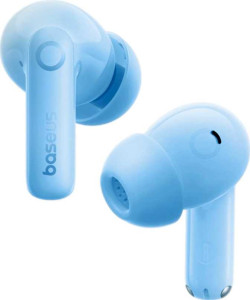
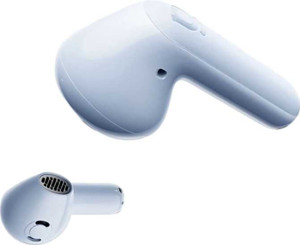
  • Fit style is in-ear on Baseus Bass BP1 Pro and earbud on Baseus BS1.
  • Active noise cancellation (ANC) is present on Baseus Bass BP1 Pro but not available on Baseus BS1.
  • Passive noise reduction is present on Baseus Bass BP1 Pro but not available on Baseus BS1.
  • Spatial audio support is present on Baseus Bass BP1 Pro but not available on Baseus BS1.
  • Battery life is 12 hours on Baseus Bass BP1 Pro and 8 hours on Baseus BS1.
  • Battery life of the charging case is 43 hours on Baseus Bass BP1 Pro and 42 hours on Baseus BS1.
  • Charge time is 1.5 hours on Baseus Bass BP1 Pro and 2 hours on Baseus BS1.
  • LDAC support is present on Baseus Bass BP1 Pro but not available on Baseus BS1.
  • Ambient sound mode is present on Baseus Bass BP1 Pro but not available on Baseus BS1.
  • The number of microphones is 6 on Baseus Bass BP1 Pro and 4 on Baseus BS1.
Specs Comparison
Baseus Bass BP1 Pro

Baseus Bass BP1 Pro

Baseus BS1

Baseus BS1

Design:
Fit In-ear Earbud
Ingress Protection (IP) rating IP55 IP55
water resistance Water resistant Water resistant
has no wires or cables
are neckband earbuds
wingtips included
has RGB lighting
has stereo speakers
has UV light
Has a display

The most meaningful design difference between the Baseus Bass BP1 Pro and the Baseus BS1 lies in their fit style. The BP1 Pro uses an in-ear fit, meaning the eartips create a seal inside the ear canal, which typically delivers better passive noise isolation and a more secure hold during physical activity. The BS1, by contrast, uses an earbud fit — sitting in the outer bowl of the ear without sealing the canal — which tends to feel less fatiguing over long sessions but sacrifices some sound isolation and can be more prone to falling out during movement.

Beyond fit, both products are effectively identical across every other design dimension provided. Both carry an IP55 rating, meaning they are protected against dust ingress and low-pressure water jets from any direction — a solid, real-world rating that covers sweat and rain without qualifying as fully waterproof. Both are fully wireless with no cables, neither uses a neckband form factor, and neither includes wingtips, RGB lighting, a UV light, or a display. Both support stereo audio.

The BP1 Pro holds a clear design edge for users who prioritize noise isolation, bass response (which benefits from an in-ear seal), or a more stable fit during workouts. The BS1′s earbud style may appeal to those who find in-ear tips uncomfortable for extended wear or who prefer a more open, ambient listening experience — but on purely objective design merit, the in-ear form factor of the BP1 Pro is generally considered the more versatile and acoustically capable choice among the two.

Sound quality:
has active noise cancellation (ANC)
has passive noise reduction
lowest frequency 20 Hz 20 Hz
highest frequency 20000 Hz 20000 Hz
supports spatial audio
has Dolby Atmos
has Dirac Virtuo
has a neodymium magnet

Noise isolation is where these two products diverge most sharply. The BP1 Pro features both active noise cancellation (ANC) and passive noise reduction — a meaningful combination that works on two levels: the in-ear seal physically blocks ambient sound, while ANC electronics actively counter low-frequency noise like engine rumble or AC hum. The BS1 has neither, meaning the listener's environment bleeds directly into the audio experience. For commuters, open-plan office workers, or anyone in noisy surroundings, this is a significant functional gap.

Frequency response is identical on paper — both cover 20 Hz to 20,000 Hz, which spans the full range of human hearing. However, this spec alone says little about actual audio tuning or driver quality, so it should not be read as a guarantee of equivalent sound reproduction. Notably, neither product uses a neodymium magnet, and neither supports Dolby Atmos or Dirac Virtuo processing. Where the BP1 Pro does pull further ahead is spatial audio support, which can create a more immersive, three-dimensional soundstage — particularly valuable for video content and gaming.

The BP1 Pro wins this category decisively. ANC, passive noise reduction, and spatial audio are all substantive, real-world sound quality advantages that the BS1 simply does not offer. The BS1 is a competent bare-bones option, but for listeners who care about audio immersion or listening in challenging environments, the BP1 Pro is in a different class based strictly on these specs.
Power:
Battery life 12 hours 8 hours
Battery life of charging case 43 hours 42 hours
charge time 1.5 hours 2 hours
has wireless charging
Has a solar power battery
has a battery level indicator
has a rechargeable battery

Per-earbud battery life is the standout differentiator here. The BP1 Pro delivers 12 hours on a single charge versus 8 hours for the BS1 — a 50% advantage that translates directly into fewer interruptions during long travel days, extended work sessions, or back-to-back meetings. For most users, 8 hours is adequate for a full workday, but the BP1 Pro's extra headroom makes it genuinely useful for long-haul flights or situations where access to the case is inconvenient.

Total system endurance — earbuds plus case — tells a more nuanced story. The BP1 Pro reaches 43 hours combined while the BS1 lands at 42 hours, a difference so marginal it is effectively a tie. This suggests the BS1's case compensates for its shorter earbud runtime by holding more charge in reserve. Charge time favors the BP1 Pro as well: 1.5 hours to a full charge versus 2 hours for the BS1, a meaningful difference when you need a quick top-up before heading out. Neither product supports wireless charging, so both require a cable.

The BP1 Pro takes a clear edge in power, primarily on the strength of its superior single-charge earbud runtime and faster charging. The near-identical total system endurance means both products are comparable for multi-day use, but in day-to-day scenarios — particularly for users who do not always have the case on hand — the BP1 Pro's 12-hour continuous playback is a tangible practical advantage.

Connectivity:
has fast pairing
Has USB Type-C
Bluetooth version 6 6
has LDAC
has LDHC
has Bluetooth LE Audio
has aptX Adaptive
has aptX Low Latency
has aptX HD
has aptX
has aptX Lossless
has aptX Voice
has Auracast
maximum Bluetooth range 10 m 10 m
supports Bluetooth pairing using NFC
Can be used wirelessly
has AAC

Across most connectivity dimensions, these two earbuds are virtually indistinguishable. Both run on Bluetooth 6 — the latest generation, offering improved connection stability and efficiency over its predecessors — and both share an identical 10-meter maximum range, USB-C charging, and AAC codec support. Neither product offers fast pairing, NFC, aptX in any form, or Bluetooth LE Audio, so the baseline wireless experience is equivalent.

The one meaningful split is codec support beyond AAC: the BP1 Pro adds LDAC, Sony's high-resolution audio codec capable of transmitting up to three times more data than standard Bluetooth audio. In practice, LDAC allows compatible Android devices to stream near-lossless audio quality — a genuine advantage for listeners with high-quality source files or streaming subscriptions that offer lossless tiers. The BS1 lacks LDAC, capping its wireless audio fidelity at AAC, which is a solid but noticeably lower-bandwidth codec.

The BP1 Pro holds the edge in connectivity, and the reason is straightforward: LDAC is not a niche or marginal feature — it is the most widely supported high-resolution Bluetooth audio codec available and directly impacts perceived audio quality on compatible devices. Users on iOS or those indifferent to high-res streaming will find the gap less relevant, but Android users with lossless content will find the BP1 Pro's codec advantage meaningful in practice.

Features:
release date August 2025 August 2025
has ambient sound mode
has in/on-ear detection
has find device feature
Supports fast charging
can read notifications
Has a built-in translator
has a mute function
can be used as a headset
control panel placed on a device
Has voice prompts
travel bag is included
Has an in-line control panel
Has a temperature sensor
Has a built-in camera remote control function

The feature set here is largely shared, with one exception that carries real practical weight. Both earbuds support fast charging, include on-device touch controls, offer voice prompts, a mute function, headset capability for calls, and come bundled with a travel bag — a well-rounded baseline that makes both suitable for everyday and on-the-go use. The parity across these points means neither product has a structural advantage in day-to-day usability for most tasks.

Where the BP1 Pro pulls ahead is ambient sound mode — a feature the BS1 entirely lacks. Ambient mode uses the earbuds' microphones to pipe in environmental audio, allowing the user to stay aware of their surroundings without removing the earbuds. This is particularly valuable in urban environments, at airports, or any situation requiring situational awareness — and it complements the BP1 Pro's ANC capability noted in sound quality, giving users a full spectrum of noise control from full isolation to full transparency.

The BP1 Pro takes the edge in features, and ambient sound mode is the sole but significant reason. The BS1 matches it on every other spec in this group, making it a capable device for basic use — but the absence of ambient mode is a meaningful omission for users who switch frequently between focused listening and needing to hear the world around them.

Microphone:
number of microphones 6 4
has a noise-canceling microphone

With only two data points in this group, the comparison is focused but meaningful. Both the BP1 Pro and the BS1 include noise-canceling microphones, ensuring that call quality benefits from active voice isolation on both sides — a shared baseline that makes either a viable option for calls and virtual meetings.

The differentiator is microphone count: the BP1 Pro is equipped with 6 microphones versus 4 on the BS1. More microphones generally enable more sophisticated beamforming and noise-rejection algorithms — the system has more reference points to distinguish the user's voice from background noise and wind. In practice, this tends to produce cleaner voice pickup in challenging environments like busy streets, open offices, or windy conditions, though the actual quality also depends on the underlying signal processing, which cannot be assessed from specs alone.

The BP1 Pro has the edge here. The 50% increase in microphone count is not trivial — it directly supports more capable multi-mic noise cancellation arrays, which is particularly relevant given that the BP1 Pro already features ANC and ambient mode, suggesting it is positioned as a more feature-complete device for communication and environmental audio control. Users who frequently take calls in noisy settings will find the BP1 Pro's microphone configuration the stronger choice based on these specs.

Comparison Summary & Verdict

After examining every specification, it is clear that the Baseus Bass BP1 Pro and the Baseus BS1 serve meaningfully different audiences. The BP1 Pro stands out with its active noise cancellation, spatial audio support, LDAC codec, ambient sound mode, and a superior six-microphone array, making it the stronger choice for listeners who demand premium audio fidelity and call clarity. Its 12-hour battery life and faster 1.5-hour charge time add further practical appeal. The Baseus BS1, on the other hand, offers a more traditional earbud fit with a simpler feature set at what is likely a more accessible price point, making it well-suited for casual, everyday listeners who value comfort and straightforward usability over advanced audio technology. Both share fast charging, USB-C, and Bluetooth 6, so the core connectivity experience remains solid on either device.

Baseus Bass BP1 Pro
Buy Baseus Bass BP1 Pro if...

Buy the Baseus Bass BP1 Pro if you want active noise cancellation, LDAC support, spatial audio, and a longer battery life with faster charging for a more immersive listening experience.

Baseus BS1
Buy Baseus BS1 if...

Buy the Baseus BS1 if you prefer a classic earbud fit and a straightforward feature set without the premium extras, making it ideal for casual everyday use.