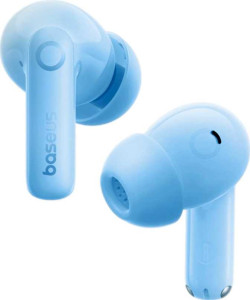
Baseus Bass BP1 Pro
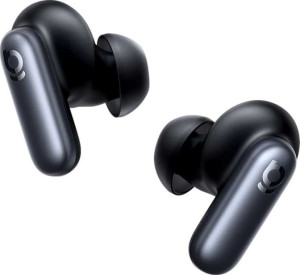
Baseus Inspire XP1

Baseus Bass BP1 Pro Baseus Inspire XP1

Overview

Welcome to our detailed spec comparison between the Baseus Bass BP1 Pro and the Baseus Inspire XP1 — two true wireless earbuds sharing a strong common foundation yet diverging in meaningful ways. Both deliver active noise cancellation, a 6-microphone setup, and fast charging, but key battlegrounds emerge around battery endurance, audio codec support, and wireless connectivity standards. Read on to discover which model best suits your listening needs.

Common Features

  • Both products have an in-ear fit.
  • Neither product has wires or cables.
  • Neither product is a neckband earbud design.
  • Wingtips are not included with either product.
  • RGB lighting is not present on either product.
  • Both products have stereo speakers.
  • UV light is not available on either product.
  • Neither product has a display.
  • Both products have active noise cancellation (ANC).
  • Both products have passive noise reduction.
  • The lowest frequency on both products is 20 Hz.
  • The highest frequency on both products is 20000 Hz.
  • Dolby Atmos support is not available on either product.
  • Dirac Virtuo support is not available on either product.
  • A neodymium magnet is not present in either product.
  • Both products have a charge time of 1.5 hours.
  • Wireless charging is not available on either product.
  • Solar power battery is not present on either product.
  • Both products have a battery level indicator.
  • Both products have a rechargeable battery.
  • Fast pairing is not available on either product.
  • Both products have USB Type-C connectivity.
  • LDHC support is not available on either product.
  • Bluetooth LE Audio is not available on either product.
  • aptX Adaptive support is not available on either product.
  • aptX Low Latency support is not available on either product.
  • aptX HD support is not available on either product.
  • aptX support is not available on either product.
  • Both products have an ambient sound mode.
  • In-ear or on-ear detection is not present on either product.
  • Both products support fast charging.
  • Neither product can read notifications.
  • Both products have a mute function.
  • Both products can be used as a headset.
  • Both products have a control panel placed on the device.
  • Both products have voice prompts.
  • Both products have 6 microphones.
  • Both products have a noise-canceling microphone.

Main Differences

  • Spatial audio support is available on Baseus Bass BP1 Pro but not on Baseus Inspire XP1.
  • Battery life is 12 hours on Baseus Bass BP1 Pro and 8 hours on Baseus Inspire XP1.
  • Battery life of the charging case is 43 hours on Baseus Bass BP1 Pro and 36 hours on Baseus Inspire XP1.
  • The Bluetooth version is 6 on Baseus Bass BP1 Pro and 6.1 on Baseus Inspire XP1.
  • LDAC support is present on Baseus Bass BP1 Pro but not available on Baseus Inspire XP1.
  • AAC support is present on Baseus Bass BP1 Pro but not available on Baseus Inspire XP1.
Specs Comparison
Baseus Bass BP1 Pro

Baseus Bass BP1 Pro

Baseus Inspire XP1

Baseus Inspire XP1

Design:
Fit In-ear In-ear
has no wires or cables
are neckband earbuds
wingtips included
has RGB lighting
has stereo speakers
has UV light
Has a display

In terms of design, the Baseus Bass BP1 Pro and the Baseus Inspire XP1 are essentially identical across every measured specification. Both adopt an in-ear fit, go fully wireless with no cables or neckband, and neither includes wingtips for additional ear stability.

Both models also share the same feature absences: no RGB lighting, no UV light, and no display — keeping their designs straightforward and focused purely on audio functionality. Stereo playback is present on both, which is the baseline expectation for any modern wireless earbud.

Given that every design spec is a perfect match, this category is a clear tie. Neither product offers a meaningful design advantage over the other based on the available data. A buyer choosing between the two should look to other specification groups — such as audio performance, battery life, or connectivity — to find a differentiating factor.

Sound quality:
has active noise cancellation (ANC)
has passive noise reduction
lowest frequency 20 Hz 20 Hz
highest frequency 20000 Hz 20000 Hz
supports spatial audio
has Dolby Atmos
has Dirac Virtuo
has a neodymium magnet

Both earbuds share a solid noise isolation foundation: active noise cancellation (ANC) combined with passive noise reduction work in tandem to block out ambient sound at both a hardware and software level — a meaningful advantage for commuters or open-office users. Their frequency response is identical too, spanning the full standard 20 Hz–20,000 Hz range, which covers the entirety of human hearing without any notable extension in either direction.

The one point where these two diverge is spatial audio support. The Bass BP1 Pro includes it; the Inspire XP1 does not. Spatial audio creates a wider, more three-dimensional soundstage — particularly noticeable when watching movies or gaming — making content feel less ″in your head″ and more like a surrounding environment. It is a genuinely useful feature for multimedia listeners, not just a marketing checkbox.

That single differentiator hands a clear edge to the Baseus Bass BP1 Pro. For users whose priority is purely music listening in quiet settings, the gap may feel minor. But for anyone consuming video content or wanting a more immersive audio experience, the BP1 Pro's spatial audio support adds real, practical value that the Inspire XP1 simply cannot match.

Power:
Battery life 12 hours 8 hours
Battery life of charging case 43 hours 36 hours
charge time 1.5 hours 1.5 hours
has wireless charging
Has a solar power battery
has a battery level indicator
has a rechargeable battery

Battery life is where the Baseus Bass BP1 Pro pulls ahead most concretely. Its 12-hour earbud runtime versus the Inspire XP1's 8 hours represents a 50% difference — enough to cover a full workday of continuous listening on a single charge, where the XP1 would require a top-up mid-session. For heavy users or travelers, that gap is not trivial.

The advantage extends to the charging case as well. The BP1 Pro's case adds up to 43 total hours of combined playback, compared to 36 hours for the XP1. In practical terms, the BP1 Pro can go significantly longer between case recharges — useful on multi-day trips where access to a power outlet is limited. Both cases charge the earbuds in the same 1.5 hours, so there is no speed advantage on either side.

Neither model supports wireless charging, which keeps both in the mid-range expectations bracket. Still, the power category has a clear winner: the Bass BP1 Pro outperforms the Inspire XP1 on both per-charge endurance and total case capacity, making it the stronger pick for users who prioritize going longer between charges.

Connectivity:
has fast pairing
Has USB Type-C
Bluetooth version 6 6.1
has LDAC
has LDHC
has Bluetooth LE Audio
has aptX Adaptive
has aptX Low Latency
has aptX HD
has aptX
has aptX Lossless
has aptX Voice
has Auracast
maximum Bluetooth range 10 m 10 m
supports Bluetooth pairing using NFC
Can be used wirelessly
has AAC

The codec situation is the most consequential difference here. The Bass BP1 Pro supports LDAC and AAC, while the Inspire XP1 supports neither. LDAC is Sony's high-resolution audio codec, capable of transmitting up to three times more data than standard Bluetooth audio — a tangible benefit for listeners using lossless or high-bitrate sources on compatible Android devices. AAC, meanwhile, is the preferred codec for Apple devices, ensuring efficient, higher-quality streaming for iPhone users. The XP1 falls back to standard SBC by default, which is audibly inferior on high-quality source material.

The Inspire XP1 does carry a marginally newer Bluetooth 6.1 versus the BP1 Pro's Bluetooth 6. In practice, the difference between these two versions is negligible for everyday listening — both deliver stable connections and an identical maximum wireless range of 10 m. Neither model adds fast pairing or NFC, so the setup experience is the same on both.

Connectivity is a clear win for the Baseus Bass BP1 Pro. The Bluetooth version delta is too minor to matter, but the codec advantage — particularly LDAC for Android users and AAC for Apple users — means the BP1 Pro can deliver meaningfully higher audio fidelity over the wireless link, something the Inspire XP1 simply cannot replicate.

Features:
release date August 2025 September 2025
has ambient sound mode
has in/on-ear detection
Supports fast charging
can read notifications
has a mute function
can be used as a headset
control panel placed on a device
Has voice prompts
travel bag is included
Has an in-line control panel
Has a temperature sensor
Has a built-in camera remote control function

Across every feature in this category, the Baseus Bass BP1 Pro and Baseus Inspire XP1 are a perfect match. Both support ambient sound mode — a practical must-have for staying aware of surroundings without removing the earbuds — alongside fast charging, which reduces downtime significantly compared to standard charging speeds.

Everyday usability is well covered on both sides: on-device touch or button controls, voice prompts, a mute function for calls, and full headset capability are all present. A travel bag is included with each, which is a small but appreciated addition for portability and protection on the go.

With no spec diverging even slightly, this category is an unambiguous tie. Buyers will find no practical feature advantage on either side here — the decision between these two should rest entirely on the differentiators identified in other specification groups, such as sound quality and battery life.

Microphone:
number of microphones 6 6
has a noise-canceling microphone

Both the Baseus Bass BP1 Pro and the Baseus Inspire XP1 arrive with an identical microphone setup: 6 microphones each, all paired with noise-canceling capability. A six-mic array is a genuinely strong configuration for wireless earbuds — more pickup points allow the firmware to better isolate the speaker's voice from surrounding noise using beamforming techniques, which translates to cleaner call quality in windy or busy environments.

This category is a straightforward tie. With every measurable microphone spec aligned, neither product holds a calling or voice pickup advantage over the other based on the available data.

Comparison Summary & Verdict

After a thorough side-by-side review, the two earbuds cater to distinctly different priorities. The Baseus Bass BP1 Pro stands out for listeners who demand more from their audio experience — offering spatial audio support, a longer 12-hour battery life, an impressive 43-hour charging case, and high-fidelity codec support via LDAC and AAC. On the other hand, the Baseus Inspire XP1 edges ahead with the newer Bluetooth 6.1 standard, which may benefit users who prioritize cutting-edge wireless connectivity. Both earbuds share the same frequency range, ANC, fast charging, and 6-microphone noise-canceling setup, making either a capable daily companion. Choose the BP1 Pro if runtime and audio quality are your top concerns; opt for the XP1 if modern Bluetooth implementation matters most to you.

Baseus Bass BP1 Pro
Buy Baseus Bass BP1 Pro if...

Buy the Baseus Bass BP1 Pro if you want longer battery life, spatial audio support, and high-fidelity codec compatibility with LDAC and AAC.

Baseus Inspire XP1
Buy Baseus Inspire XP1 if...

Buy the Baseus Inspire XP1 if you prioritize the latest Bluetooth 6.1 standard and a more compact total battery commitment suits your lifestyle.