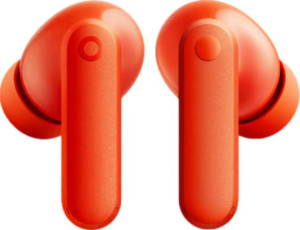
Baseus Bass BP1 Pro
CMF Buds 2a

Baseus Bass BP1 Pro CMF Buds 2a

Overview

Welcome to our detailed spec comparison between the Baseus Bass BP1 Pro and the CMF Buds 2a. Both are wireless in-ear earbuds offering active noise cancellation, ambient sound mode, and multipoint connectivity, yet they take noticeably different approaches when it comes to battery endurance, audio codec support, and smart pairing features. Read on to see how these two contenders stack up across every key specification.

Common Features

  • Both products use an in-ear fit design.
  • Both products are wireless with no cables.
  • Neither product is a neckband earbud style.
  • Neither product includes wingtips.
  • Neither product features RGB lighting.
  • Both products have stereo speakers.
  • Neither product includes a UV light.
  • Neither product has a display.
  • Both products support active noise cancellation (ANC).
  • Both products offer passive noise reduction.
  • The lowest frequency on both products is 20 Hz.
  • The highest frequency on both products is 20000 Hz.
  • Neither product supports Dolby Atmos.
  • Neither product includes a neodymium magnet.
  • Both products have a charge time of 1.5 hours.
  • Neither product supports wireless charging.
  • Both products include a battery level indicator.
  • Both products have a rechargeable battery.
  • Both products use USB Type-C charging.
  • Neither product supports LDAC on the CMF Buds 2a side — both share no LDHC, Bluetooth LE Audio, aptX Adaptive, aptX Low Latency, aptX HD, aptX, or aptX Lossless support.
  • Both products support ambient sound mode.
  • Neither product has in/on-ear detection.
  • Both products support fast charging.
  • Both products support multipoint connection for up to 2 devices.
  • Neither product can read notifications.
  • Both products include a mute function.
  • Both products can be used as a headset.
  • Both products have a control panel placed on the device.
  • Both products feature a noise-canceling microphone.

Main Differences

  • The Ingress Protection rating is IP55 on the Baseus Bass BP1 Pro, while the CMF Buds 2a carries an IP54 and IPX2 rating.
  • Water resistance is present on the Baseus Bass BP1 Pro but not available on the CMF Buds 2a.
  • Spatial audio support is available on the Baseus Bass BP1 Pro but not available on the CMF Buds 2a.
  • Battery life is 12 hours on the Baseus Bass BP1 Pro and 8 hours on the CMF Buds 2a.
  • Battery life of the charging case is 43 hours on the Baseus Bass BP1 Pro and 27.5 hours on the CMF Buds 2a.
  • Battery life with ANC enabled is 7 hours on the Baseus Bass BP1 Pro and 5 hours on the CMF Buds 2a.
  • Fast pairing support is available on the CMF Buds 2a but not available on the Baseus Bass BP1 Pro.
  • The Bluetooth version is 6 on the Baseus Bass BP1 Pro and 5.4 on the CMF Buds 2a.
  • LDAC support is present on the Baseus Bass BP1 Pro but not available on the CMF Buds 2a.
  • A find device feature is available on the CMF Buds 2a but not available on the Baseus Bass BP1 Pro.
  • The number of microphones is 6 on the Baseus Bass BP1 Pro and 4 on the CMF Buds 2a.
Specs Comparison
Baseus Bass BP1 Pro

Baseus Bass BP1 Pro

CMF Buds 2a

CMF Buds 2a

Design:
Fit In-ear In-ear
Ingress Protection (IP) rating IP55 IP54, IPX2
water resistance Water resistant None
has no wires or cables
are neckband earbuds
wingtips included
has RGB lighting
has stereo speakers
has UV light
Has a display

Both the Baseus Bass BP1 Pro and the CMF Buds 2a share the same fundamental design philosophy: fully wireless, in-ear fit with no neckband, no wingtips, no RGB lighting, and no display — keeping things clean and straightforward. For most users, this means a comparable out-of-box experience in terms of form factor and ease of use.

Where they diverge is on water and dust resistance. The BP1 Pro carries an IP55 rating, meaning it is tested against both dust ingress (rated 5 — dust protected) and water jets from any direction (rated 5). The Buds 2a, by contrast, lists IP54 and IPX2 — IP54 offers slightly less water protection (splashes only, no jets), while the IPX2 designation covers only dripping water at a 15-degree tilt, which is notably limited. Critically, the Buds 2a's own spec data lists its water resistance as ″None,″ suggesting the IP ratings may apply only to the charging case or are otherwise partial — a meaningful ambiguity that should give buyers pause.

For real-world use, this distinction matters most during workouts or outdoor activity. The BP1 Pro's IP55 provides genuine confidence against sweat, rain, and splashes, while the Buds 2a's protection story is inconsistent at best. The Baseus Bass BP1 Pro holds a clear edge in the Design category specifically on the basis of more reliable and better-documented water and dust resistance.

Sound quality:
has active noise cancellation (ANC)
has passive noise reduction
lowest frequency 20 Hz 20 Hz
highest frequency 20000 Hz 20000 Hz
supports spatial audio
has Dolby Atmos
has Dirac Virtuo
has a neodymium magnet

On the fundamentals, these two earbuds are closely matched. Both cover the full audible spectrum from 20 Hz to 20,000 Hz, and both offer active noise cancellation (ANC) alongside passive noise reduction through their in-ear fit. For everyday listening — commuting, working, casual music — neither has a raw frequency advantage over the other.

The single differentiator in this group is spatial audio support, which the BP1 Pro has and the Buds 2a lacks. Spatial audio creates a three-dimensional soundstage, making music, movies, and games feel more immersive by simulating sound coming from different directions rather than just left and right channels. It is a feature that particularly elevates cinematic content and live recordings, and its absence on the Buds 2a is a tangible limitation for users who prioritize that kind of listening experience.

The Baseus Bass BP1 Pro takes the edge in this category solely on the strength of spatial audio support. Everything else — frequency range, ANC, passive isolation — is essentially a draw, so buyers who do not care about spatial audio will find the two products functionally equivalent on sound quality specs alone.

Power:
Battery life 12 hours 8 hours
Battery life of charging case 43 hours 27.5 hours
Battery life (ANC) 7 hours 5 hours
charge time 1.5 hours 1.5 hours
has wireless charging
Has a solar power battery
has a battery level indicator
has a rechargeable battery

Battery life is where the Baseus Bass BP1 Pro pulls ahead decisively. It delivers 12 hours of playback per charge compared to the Buds 2a's 8 hours — a 50% gap that is genuinely meaningful for long travel days, extended work sessions, or anyone who forgets to charge regularly. With the case factored in, the total combined endurance reaches 43 hours for the BP1 Pro versus 27.5 hours for the Buds 2a, maintaining that same substantial margin.

Under ANC, both earbuds take a performance hit as expected — active noise cancellation draws extra power — but the BP1 Pro again holds the lead at 7 hours with ANC on, compared to the Buds 2a's 5 hours. For commuters or office users who run ANC all day, that two-hour difference could mean getting through a full workday on a single charge rather than reaching for the case mid-afternoon. Charge time is identical at 1.5 hours for both, and neither supports wireless charging, so that is a non-factor in the decision.

The BP1 Pro holds a clear and consistent advantage across every battery metric in this group. Endurance-conscious buyers will find it the stronger choice without qualification.

Connectivity:
has fast pairing
Has USB Type-C
Bluetooth version 6 5.4
has LDAC
has LDHC
has Bluetooth LE Audio
has aptX Adaptive
has aptX Low Latency
has aptX HD
has aptX
has aptX Lossless
has aptX Voice
has Auracast
maximum Bluetooth range 10 m 10 m
supports Bluetooth pairing using NFC
Can be used wirelessly
has AAC

Two meaningful trade-offs define this category. The Baseus Bass BP1 Pro runs on Bluetooth 6 — the newest generation — while the Buds 2a uses Bluetooth 5.4. In practical terms, Bluetooth 6 brings improvements in connection efficiency and latency management, though real-world range is identical at 10 m for both. The more impactful difference is codec support: the BP1 Pro includes LDAC, Sony's high-resolution audio codec capable of transmitting up to three times the data of standard Bluetooth audio. For listeners streaming lossless or high-bitrate audio from a compatible source, LDAC is a genuine quality upgrade — the Buds 2a tops out at AAC, which both products share as a baseline.

The Buds 2a counters with fast pairing, which the BP1 Pro lacks. This is a convenience feature that streamlines the initial device pairing process, though it has no impact on day-to-day connection quality once set up. Neither earbud supports aptX in any of its variants, NFC pairing, or Bluetooth LE Audio, so those are non-factors. Both charge via USB-C.

For audio enthusiasts or Android users with LDAC-compatible devices, the BP1 Pro holds a meaningful edge here — LDAC support combined with the newer Bluetooth version makes it the stronger connectivity package. The Buds 2a's fast pairing is a convenience perk but does not offset the codec gap for sound-quality-focused buyers.

Features:
release date August 2025 April 2025
has ambient sound mode
has in/on-ear detection
has find device feature
Supports fast charging
multipoint count 2 2
can read notifications
has a mute function
can be used as a headset
control panel placed on a device
Has voice prompts
travel bag is included
Has an in-line control panel
Has a temperature sensor
Has a built-in camera remote control function

Across the features category, these two earbuds are remarkably well-matched. Both support ambient sound mode, fast charging, multipoint connection to 2 devices, on-device controls, a mute function, headset use, voice prompts, and even include a travel bag. For the vast majority of daily use cases — switching between a phone and laptop, taking calls, quickly letting in outside sound — either product covers the bases equally well.

The only differentiator is the find device feature on the CMF Buds 2a, which the BP1 Pro lacks. This function allows users to locate misplaced earbuds via a companion app, typically by triggering a sound from the earbuds. It is a small but genuinely useful safety net, particularly for users who travel frequently or tend to misplace small accessories.

Given how closely aligned everything else is, the Buds 2a earns a narrow edge here on the strength of that find device capability. It does not represent a dramatic functional gap, but when specs are otherwise equal, a practical convenience feature like this is enough to tip the balance.

Microphone:
number of microphones 6 4
has a noise-canceling microphone

Both earbuds feature noise-canceling microphones, so call clarity in moderately noisy environments is a shared baseline. The meaningful distinction is microphone count: the Baseus Bass BP1 Pro includes 6 microphones versus 4 on the CMF Buds 2a. More microphones enable more sophisticated beamforming and noise-isolation algorithms — the system has more reference points to distinguish the user's voice from surrounding noise, which generally translates to cleaner call audio in demanding environments like busy streets or open offices.

The BP1 Pro's two additional microphones are most likely to make a difference during calls in loud, unpredictable surroundings where a 4-mic array may struggle to suppress background noise as aggressively. For quiet indoor use, both setups will perform comparably. The gap becomes more relevant for frequent callers or remote workers dealing with noisy home or office environments.

The BP1 Pro takes the edge here. While microphone quality depends on more than count alone, having 6 microphones versus 4 — with noise cancellation present on both — gives it a structural advantage in call performance that is hard to dismiss.

Comparison Summary & Verdict

After reviewing all the specifications, both earbuds share a solid foundation, including ANC, passive noise reduction, fast charging, and a 20 Hz to 20,000 Hz frequency range. However, clear distinctions emerge for specific user profiles. The Baseus Bass BP1 Pro stands out with a longer 12-hour battery life, an impressive 43-hour charging case, LDAC support for higher-quality audio streaming, spatial audio, Bluetooth 6, and a 6-microphone array, making it the stronger pick for audiophiles and heavy daily users. The CMF Buds 2a, on the other hand, brings fast pairing, a find device feature, and Bluetooth 5.4 to the table, appealing to users who value convenience and everyday practicality over raw performance metrics.

Baseus Bass BP1 Pro
Buy Baseus Bass BP1 Pro if...

Buy the Baseus Bass BP1 Pro if you want superior battery life, LDAC audio codec support, spatial audio, and a more powerful 6-microphone setup for calls and voice clarity.

CMF Buds 2a
Buy CMF Buds 2a if...

Buy the CMF Buds 2a if you prioritize convenient fast pairing and a built-in find device feature for a more streamlined everyday wireless experience.