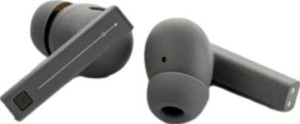
Baseus Bass BP1 Pro
Moondrop Space Travel 2 Ultra

Baseus Bass BP1 Pro Moondrop Space Travel 2 Ultra

Overview

Welcome to our in-depth spec comparison between the Baseus Bass BP1 Pro and the Moondrop Space Travel 2 Ultra. Both are fully wireless in-ear earbuds sharing a strong feature foundation — including active noise cancellation, LDAC support, and Bluetooth 6 — yet they diverge in meaningful ways. In this comparison, we put their battery endurance, microphone setups, and audio feature sets side by side to help you decide which one best fits your lifestyle.

Common Features

  • Both products have an in-ear fit.
  • Neither product uses wires or cables.
  • Neither product is a neckband earbud design.
  • Wingtips are not included with either product.
  • RGB lighting is not available on either product.
  • Both products feature stereo speakers.
  • Active noise cancellation (ANC) is available on both products.
  • Passive noise reduction is present on both products.
  • The lowest frequency on both products is 20 Hz.
  • The highest frequency on both products is 20000 Hz.
  • Dolby Atmos support is not available on either product.
  • LDAC support is available on both products.
  • Both products use Bluetooth version 6.
  • USB Type-C connectivity is available on both products.
  • The charge time is 1.5 hours on both products.
  • Wireless charging is not available on either product.
  • Both products have a battery level indicator.
  • Fast charging is supported on both products.
  • Both products support multipoint connection with 2 devices.
  • An ambient sound mode is available on both products.
  • A mute function is available on both products.
  • Both products are equipped with a noise-canceling microphone.
  • Neither product has in/on-ear detection.
  • A find device feature is not available on either product.

Main Differences

  • Spatial audio support is present on the Baseus Bass BP1 Pro but not available on the Moondrop Space Travel 2 Ultra.
  • Battery life is 12 hours on the Baseus Bass BP1 Pro and 7 hours on the Moondrop Space Travel 2 Ultra.
  • Battery life of the charging case is 43 hours on the Baseus Bass BP1 Pro and 24 hours on the Moondrop Space Travel 2 Ultra.
  • The number of microphones is 6 on the Baseus Bass BP1 Pro and 2 on the Moondrop Space Travel 2 Ultra.
Specs Comparison
Baseus Bass BP1 Pro

Baseus Bass BP1 Pro

Moondrop Space Travel 2 Ultra

Moondrop Space Travel 2 Ultra

Design:
Fit In-ear In-ear
has no wires or cables
are neckband earbuds
wingtips included
has RGB lighting
has stereo speakers
has UV light
Has a display

In terms of design, the Baseus Bass BP1 Pro and the Moondrop Space Travel 2 Ultra are virtually identical across every measurable spec in this category. Both are true wireless in-ear earbuds — no neckband, no wires, no wingtips — and both offer stereo sound without any RGB lighting, UV light, or an onboard display.

Because every design attribute in this comparison is shared equally, there is no differentiator to separate these two products on paper. Users prioritizing a clean, wire-free form factor with stereo audio will find both options equally suited to that need.

This group results in a tie: neither product holds a design advantage over the other based strictly on the provided specifications. Buyers will need to look beyond design — to areas like audio performance, battery life, or additional features — to distinguish between these two earbuds.

Sound quality:
has active noise cancellation (ANC)
has passive noise reduction
lowest frequency 20 Hz 20 Hz
highest frequency 20000 Hz 20000 Hz
supports spatial audio
has Dolby Atmos
has Dirac Virtuo
has a neodymium magnet

Both earbuds share a solid noise-isolation foundation: active noise cancellation (ANC) combined with passive noise reduction from their in-ear fit. Similarly, both cover the full standard human hearing range of 20 Hz to 20,000 Hz, meaning neither product is specced to prioritize a particular slice of the frequency spectrum over the other on paper.

The one meaningful split in this group is spatial audio support. The Baseus Bass BP1 Pro includes it; the Moondrop Space Travel 2 Ultra does not. Spatial audio creates a wider, more three-dimensional soundstage — particularly noticeable when watching movies, gaming, or listening to content mixed for immersive playback. For users who value that sense of audio depth and directionality, this is a tangible advantage in everyday use.

The Baseus Bass BP1 Pro takes the edge in this category solely on the strength of its spatial audio support. Everything else — ANC, passive isolation, frequency range — is evenly matched, making spatial audio the single deciding factor here.

Power:
Battery life 12 hours 7 hours
Battery life of charging case 43 hours 24 hours
charge time 1.5 hours 1.5 hours
has wireless charging
Has a solar power battery
has a battery level indicator
has a rechargeable battery

Battery life is where these two earbuds diverge most sharply. The Baseus Bass BP1 Pro delivers 12 hours of playtime per charge versus just 7 hours for the Moondrop Space Travel 2 Ultra — a gap of five hours that translates directly into fewer interruptions during long commutes, travel days, or extended listening sessions. The case advantage is equally pronounced: 43 total hours for the Baseus against 24 hours for the Moondrop, meaning users could go significantly longer between wall-plug top-ups.

Where the two products converge is on charge time — both refill in 1.5 hours — and neither offers wireless charging. Both also include a battery level indicator, which is a practical convenience for avoiding unexpected shutdowns.

The Baseus Bass BP1 Pro wins this category convincingly. Its leads in both earbud and case battery life are substantial enough to matter in real-world use, making it the clear choice for users who prioritize endurance over frequent charging.

Connectivity:
has fast pairing
Has USB Type-C
Bluetooth version 6 6
has LDAC
has LDHC
has Bluetooth LE Audio
has aptX Adaptive
has aptX Low Latency
has aptX HD
has aptX
has aptX Lossless
has aptX Voice
has Auracast
maximum Bluetooth range 10 m 10 m
supports Bluetooth pairing using NFC
Can be used wirelessly
has AAC

Across the entire connectivity spec sheet, these two earbuds are a perfect match. Both run on Bluetooth 6 — the latest generation, offering improved connection stability and efficiency over its predecessors — and share an identical 10 m wireless range. For everyday use, this means comparable reliability whether the source device is in a pocket or across a room.

On the codec front, both support LDAC and AAC, while lacking aptX variants and Bluetooth LE Audio. LDAC is particularly noteworthy as it allows high-resolution audio streaming at up to 990 kbps over Bluetooth — a meaningful perk for listeners who care about audio fidelity on compatible Android devices. AAC, meanwhile, ensures solid quality for Apple ecosystem users. Neither product supports advanced features like NFC pairing or fast pairing, which are minor but practical omissions.

This category is a dead tie. Every connectivity attribute — Bluetooth version, range, codec support, and wired charging via USB-C — is identical between the Baseus Bass BP1 Pro and the Moondrop Space Travel 2 Ultra. Connectivity will not be a deciding factor in choosing between these two earbuds.

Features:
release date August 2025 September 2025
has ambient sound mode
has in/on-ear detection
has find device feature
Supports fast charging
multipoint count 2 2
can read notifications
Has a built-in translator
has a mute function
can be used as a headset
control panel placed on a device
Has voice prompts
travel bag is included
Has an in-line control panel
Has a temperature sensor
Has a built-in camera remote control function

Feature-for-feature, the Baseus Bass BP1 Pro and the Moondrop Space Travel 2 Ultra are once again perfectly aligned. Both offer ambient sound mode — useful for staying aware of surroundings without removing the earbuds — alongside fast charging support and multipoint connectivity for two devices simultaneously, which is a practical convenience for users juggling a phone and a laptop.

A few other shared highlights are worth noting: both function as a headset for calls, include on-device touch controls, provide voice prompts, and even come with a travel bag in the box. The mute function is a small but welcome addition for frequent call users. Neither product offers ear detection, a find-my-device feature, or notification readout — absences that are increasingly common in competitors at higher price points.

With no spec differing between the two, this group is a complete tie. Users will get an identical feature set regardless of which earbud they choose, so this category offers no grounds for preferring one over the other.

Microphone:
number of microphones 6 2
has a noise-canceling microphone

Microphone hardware is where these two earbuds part ways meaningfully. The Baseus Bass BP1 Pro packs 6 microphones compared to just 2 on the Moondrop Space Travel 2 Ultra. More microphones enable more sophisticated beamforming and noise-filtering algorithms — the hardware can better isolate the speaker's voice by cross-referencing input from multiple pickup points, which tends to result in cleaner call quality in noisy environments like streets, cafes, or open offices.

Both earbuds share noise-canceling microphone technology, so the Moondrop is not without voice-pickup processing. However, noise cancellation in a 2-mic system has significantly less raw data to work with, making it harder to suppress background noise as aggressively or accurately as a 6-mic array can.

The Baseus Bass BP1 Pro holds a clear edge here. For users who frequently take calls or use voice assistants in challenging acoustic environments, the 6-microphone setup is a tangible hardware advantage that the Moondrop Space Travel 2 Ultra's 2-mic configuration simply cannot match on paper.

Comparison Summary & Verdict

After examining all the specs, a clear picture emerges for each product. The Baseus Bass BP1 Pro is the stronger all-rounder for users who demand more from their earbuds: its 12-hour battery life and massive 43-hour charging case make it ideal for frequent travelers and long workdays, while its 6-microphone array and spatial audio support cater to those who prioritize call clarity and an immersive listening experience. The Moondrop Space Travel 2 Ultra, on the other hand, may appeal to audiophile-leaning users who value the Moondrop sound signature and are comfortable with a more modest 7-hour battery and a simpler 2-microphone setup for lighter daily use. Both share ANC, LDAC, fast charging, and multipoint connectivity, so neither is a poor choice — it ultimately comes down to how much you value stamina and call performance.

Baseus Bass BP1 Pro
Buy Baseus Bass BP1 Pro if...

Buy the Baseus Bass BP1 Pro if you need longer battery life, superior call quality with a 6-microphone setup, or want spatial audio support for a more immersive listening experience.

Moondrop Space Travel 2 Ultra
Buy Moondrop Space Travel 2 Ultra if...

Buy the Moondrop Space Travel 2 Ultra if you prefer the Moondrop sound tuning and your usage patterns are light enough that a 7-hour battery and 2-microphone configuration meet your daily needs.