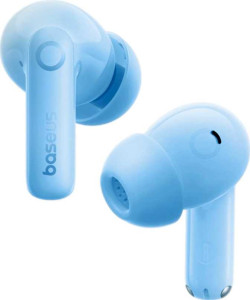
Baseus Bass BP1 Pro
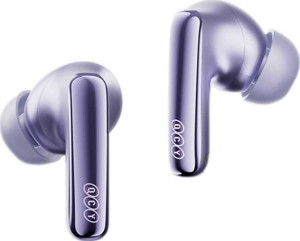
QCY MeloBuds N70

Baseus Bass BP1 Pro QCY MeloBuds N70

Overview

Welcome to this in-depth specification face-off between the Baseus Bass BP1 Pro and the QCY MeloBuds N70 — two feature-rich true wireless earbuds competing for your attention. Both share a strong foundation with ANC, LDAC support, and Bluetooth 6, but key battlegrounds such as battery endurance, spatial audio capability, and ingress protection ratings set them apart. Read on to discover which one better matches your listening lifestyle.

Common Features

  • Both products use an in-ear fit.
  • Both products are water resistant.
  • Neither product has wires or cables.
  • Neither product is a neckband earbud design.
  • Wingtips are not included with either product.
  • RGB lighting is not present on either product.
  • Both products have stereo speakers.
  • A UV light is not present on either product.
  • Both products have active noise cancellation (ANC).
  • Both products have passive noise reduction.
  • The lowest frequency on both products is 20 Hz.
  • The highest frequency on both products is 20000 Hz.
  • Dolby Atmos support is not available on either product.
  • Dirac Virtuo support is not available on either product.
  • A neodymium magnet is not present in either product.
  • Battery life with ANC enabled is 7 hours on both products.
  • Charge time is 1.5 hours on both products.
  • Wireless charging is not available on either product.
  • Solar power battery is not present on either product.
  • A battery level indicator is available on both products.
  • Both products have a rechargeable battery.
  • Fast pairing is not available on either product.
  • Both products have USB Type-C connectivity.
  • Both products use Bluetooth version 6.
  • LDAC support is available on both products.
  • LDHC support is not available on either product.
  • Bluetooth LE Audio is not supported on either product.
  • aptX Adaptive is not supported on either product.
  • aptX Low Latency is not supported on either product.
  • An ambient sound mode is available on both products.
  • In/on-ear detection is not present on either product.
  • A find device feature is not available on either product.
  • Fast charging is supported on both products.
  • Notification reading is not available on either product.
  • A built-in translator is not present on either product.
  • A mute function is available on both products.
  • Both products can be used as a headset.
  • Both products have 6 microphones.
  • Both products have a noise-canceling microphone.

Main Differences

  • The Ingress Protection rating is IP55 on Baseus Bass BP1 Pro and IPX5 on QCY MeloBuds N70.
  • Spatial audio support is present on Baseus Bass BP1 Pro but not available on QCY MeloBuds N70.
  • Battery life is 12 hours on Baseus Bass BP1 Pro and 10 hours on QCY MeloBuds N70.
  • Battery life of the charging case is 43 hours on Baseus Bass BP1 Pro and 40 hours on QCY MeloBuds N70.
Specs Comparison
Baseus Bass BP1 Pro

Baseus Bass BP1 Pro

QCY MeloBuds N70

QCY MeloBuds N70

Design:
Fit In-ear In-ear
Ingress Protection (IP) rating IP55 IPX5
water resistance Water resistant Water resistant
has no wires or cables
are neckband earbuds
wingtips included
has RGB lighting
has stereo speakers
has UV light
Has a display

In terms of overall design, the Baseus Bass BP1 Pro and the QCY MeloBuds N70 share the same fundamental form factor: both are fully wireless, in-ear earbuds with stereo output, no neckband, and no wingtips or RGB lighting. For most users, the day-to-day wearing experience will feel virtually identical on paper.

The one meaningful differentiator in this group is the ingress protection rating. The BP1 Pro carries an IP55 rating, while the MeloBuds N70 is rated IPX5. Both share the same ″5″ dust/water resistance on the water axis, meaning neither will struggle with sweat or rain during workouts. However, the BP1 Pro's full IP55 certification adds a dust resistance rating — the leading ″5″ — indicating it is protected against limited dust ingress. The MeloBuds N70's ″X″ means dust resistance was simply not tested or rated, leaving that protection level undefined. In practical terms, for typical gym or commute use this distinction rarely matters, but in dusty or outdoor environments the BP1 Pro offers a more complete, verified shield.

Overall, the Baseus Bass BP1 Pro holds a slight edge in design purely on the strength of its more comprehensive IP55 rating versus the MeloBuds N70's IPX5. Every other design attribute between these two earbuds is effectively identical.

Sound quality:
has active noise cancellation (ANC)
has passive noise reduction
lowest frequency 20 Hz 20 Hz
highest frequency 20000 Hz 20000 Hz
supports spatial audio
has Dolby Atmos
has Dirac Virtuo
has a neodymium magnet

Both the Baseus Bass BP1 Pro and the QCY MeloBuds N70 cover the full standard audible spectrum from 20 Hz to 20,000 Hz, and both combine active noise cancellation with passive noise reduction — a pairing that, in practice, delivers meaningfully quieter listening than ANC alone, since the physical seal of an in-ear fit blocks ambient sound before the electronics even engage.

The single differentiator in this group is spatial audio support, which the BP1 Pro carries and the MeloBuds N70 does not. Spatial audio processes sound to simulate a three-dimensional soundstage, making music, movies, and games feel more immersive and less like audio is coming from inside your head. It is particularly impactful for cinematic content and compatible streaming platforms. Without it, the MeloBuds N70 is limited to a conventional stereo presentation, which is perfectly serviceable but a step behind for users who prioritize immersion.

The Baseus Bass BP1 Pro takes a clear edge in sound quality features, with spatial audio being a genuinely meaningful addition rather than a checkbox spec. For listeners who primarily use earbuds for music without spatial-aware content, the gap narrows considerably — but for anyone who watches video or plays games, the BP1 Pro's advantage is real and noticeable.

Power:
Battery life 12 hours 10 hours
Battery life of charging case 43 hours 40 hours
Battery life (ANC) 7 hours 7 hours
charge time 1.5 hours 1.5 hours
has wireless charging
Has a solar power battery
has a battery level indicator
has a rechargeable battery

Charging infrastructure is nearly identical between these two: both the Baseus Bass BP1 Pro and the QCY MeloBuds N70 charge in 1.5 hours, skip wireless charging, and include a battery level indicator — a small but practical feature that prevents unexpected shutdowns mid-listening session.

Where the numbers diverge is in raw endurance. The BP1 Pro delivers 12 hours of playback per charge versus the MeloBuds N70's 10 hours, and its case extends total battery to 43 hours compared to 40 hours. Notably, both earbuds land at an identical 7 hours with ANC active, which tells an interesting story: the BP1 Pro's advantage in standard mode likely reflects a more efficient ANC implementation or a larger earbud battery, but when noise cancellation is running continuously, that gap closes entirely. For ANC-heavy users, the real-world difference largely evaporates.

The Baseus Bass BP1 Pro holds a modest edge on paper — two extra hours per charge and three extra hours in the case — but the practical impact depends heavily on usage habits. Commuters and travelers who run ANC constantly will find the two products essentially tied, while those who listen without ANC and need maximum time away from a charger will genuinely benefit from the BP1 Pro's longer standard playback.

Connectivity:
has fast pairing
Has USB Type-C
Bluetooth version 6 6
has LDAC
has LDHC
has Bluetooth LE Audio
has aptX Adaptive
has aptX Low Latency
has aptX HD
has aptX
has aptX Lossless
has aptX Voice
has Auracast
maximum Bluetooth range 10 m 10 m
supports Bluetooth pairing using NFC
Can be used wirelessly
has AAC

Connectivity is a dead heat between the Baseus Bass BP1 Pro and the QCY MeloBuds N70 — and it is a competitive one at that. Both ship with Bluetooth 6, the latest generation of the standard, which brings improved connection stability, lower power consumption, and reduced latency compared to the widely deployed 5.x versions. Paired with a 10 m wireless range and USB-C charging, the baseline experience is modern and well-equipped on both sides.

Codec support is equally matched: each earbud offers LDAC and AAC, and nothing beyond that. LDAC is the standout here — Sony's high-resolution audio codec transmits up to three times the data of standard Bluetooth, making it the closest thing to lossless wireless audio widely available today. AAC complements this well for Apple device users. Neither product reaches for aptX variants or Bluetooth LE Audio with Auracast, so the codec ceiling is the same for both.

This group is a complete tie. Every connectivity specification — Bluetooth version, codec support, range, charging port, and pairing features — is identical. A buyer choosing between these two earbuds will experience no difference whatsoever in how they connect, pair, or stream audio.

Features:
release date August 2025 August 2025
has ambient sound mode
has in/on-ear detection
has find device feature
Supports fast charging
can read notifications
Has a built-in translator
has a mute function
can be used as a headset
control panel placed on a device
Has voice prompts
travel bag is included
Has an in-line control panel
Has a temperature sensor

Feature parity continues to be the defining theme when comparing the Baseus Bass BP1 Pro and the QCY MeloBuds N70. Both support ambient sound mode — a genuinely useful feature that lets environmental audio pass through without removing the earbuds, critical for situational awareness during outdoor activity or when navigating busy spaces. Equally matched is fast charging support, which on earbuds of this class typically translates to meaningful playback time from a short top-up.

The practical feature set shared by both is well-rounded for the category: on-device touch controls, a mute function for calls, voice prompts for status feedback, headset capability for calls and voice assistants, and a travel bag included in the box. The travel bag is a small but appreciated inclusion that signals attention to the full ownership experience, not just the hardware itself. Neither product offers in/on-ear detection or a find-my-device function, which are notable absences at this tier but consistent across both.

This group is another complete tie. Every single feature spec is shared identically between the two earbuds, with no differentiator on either side. Buyers weighing these two products will need to look to other specification groups — design, sound, or battery — to find meaningful separation, as features alone offer no basis for choosing one over the other.

Microphone:
number of microphones 6 6
has a noise-canceling microphone

Microphone hardware is identical across both earbuds: the Baseus Bass BP1 Pro and the QCY MeloBuds N70 each deploy 6 microphones alongside noise-canceling mic processing. A six-mic array is a notably generous configuration at this level — more pickup points allow the beamforming algorithms to more precisely isolate the speaker's voice and suppress wind, crowd, and ambient noise from multiple angles simultaneously, which translates directly to cleaner call quality for the person on the other end.

Noise-canceling microphone processing complements the hardware count well. Rather than simply capturing sound, the system actively works to strip away background interference before the signal is transmitted — a meaningful advantage for anyone taking calls in open offices, on public transit, or outdoors.

With no differences to speak of, this group is a complete tie. Both earbuds bring the same mic count and the same noise-canceling capability to the table, so call quality performance on paper is indistinguishable between them.

Comparison Summary & Verdict

After reviewing every specification, both the Baseus Bass BP1 Pro and the QCY MeloBuds N70 prove to be well-matched wireless earbuds with identical core features — including 6-microphone noise-canceling setups, LDAC, Bluetooth 6, fast charging, and a 7-hour ANC battery life. Where they diverge is telling: the Baseus Bass BP1 Pro edges ahead with a 12-hour battery life, a 43-hour charging case, a fuller IP55 dust-and-water resistance rating, and spatial audio support. The QCY MeloBuds N70 offers a slightly more compact 10-hour playback and a 40-hour case with an IPX5 rating. For listeners who want maximum endurance and immersive spatial sound, the Baseus is the stronger pick; for those content with reliable core performance at potentially different value, the QCY holds its own.

Baseus Bass BP1 Pro
Buy Baseus Bass BP1 Pro if...

Buy the Baseus Bass BP1 Pro if you want longer battery life, full IP55 dust and water resistance, and spatial audio support that the QCY MeloBuds N70 does not offer.

QCY MeloBuds N70
Buy QCY MeloBuds N70 if...

Buy the QCY MeloBuds N70 if you are satisfied with solid core performance and a reliable IPX5 water-resistant build, and the extra battery hours and spatial audio of the Baseus Bass BP1 Pro are not priorities for you.