Baseus BD1
Baseus Bowie MC1

Baseus BD1 Baseus Bowie MC1

Overview

Welcome to our detailed spec comparison of the Baseus BD1 and the Baseus Bowie MC1, two truly wireless earbuds from Baseus that share plenty of common ground yet diverge in some meaningful ways. Both models run on Bluetooth 5.4, support fast charging, and pack a noise-canceling microphone, but key battlegrounds such as fit style, battery endurance, and water resistance ratings make this a genuinely interesting matchup worth exploring closely.

Common Features

  • Both products are water resistant.
  • Neither product uses wires or cables.
  • Neither product is designed as neckband earbuds.
  • Wingtips are not included with either product.
  • RGB lighting is not featured on either product.
  • Both products have stereo speakers.
  • A UV light is not present on either product.
  • Neither product has a display.
  • Neither product has active noise cancellation (ANC).
  • Both products share a frequency range of 20 Hz to 20000 Hz.
  • Spatial audio is not supported on either product.
  • Dolby Atmos is not available on either product.
  • Dirac Virtuo is not available on either product.
  • A neodymium magnet is not used in either product.
  • Both products have a charge time of 1.5 hours.
  • Wireless charging is not available on either product.
  • Neither product has a solar power battery.
  • Both products have a battery level indicator.
  • Both products have a rechargeable battery.
  • Fast pairing is not available on either product.
  • Both products feature USB Type-C connectivity.
  • Both products use Bluetooth version 5.4.
  • LDAC support is not available on either product.
  • LDHC support is not available on either product.
  • Bluetooth LE Audio is not supported on either product.
  • aptX Adaptive is not supported on either product.
  • aptX Low Latency is not supported on either product.
  • An ambient sound mode is not available on either product.
  • In/on-ear detection is not featured on either product.
  • Both products support fast charging.
  • Neither product can read notifications.
  • Both products have a mute function.
  • Both products can be used as a headset.
  • Both products have a control panel placed on the device.
  • Voice prompts are available on both products.
  • Both products have a noise-canceling microphone.

Main Differences

  • The fit is in-ear on Baseus BD1 and open-ear on Baseus Bowie MC1.
  • The Ingress Protection rating is IP55 on Baseus BD1 and IP57 on Baseus Bowie MC1.
  • The weight is 7.6 g on Baseus BD1 and 10.4 g on Baseus Bowie MC1.
  • Passive noise reduction is present on Baseus BD1 but not available on Baseus Bowie MC1.
  • The driver unit size is 8.6 mm on Baseus BD1 and 10.8 mm on Baseus Bowie MC1.
  • Battery life is 8 hours on Baseus BD1 and 9 hours on Baseus Bowie MC1.
  • The battery life of the charging case is 27 hours on Baseus BD1 and 31 hours on Baseus Bowie MC1.
Specs Comparison
Baseus BD1

Baseus BD1

Baseus Bowie MC1

Baseus Bowie MC1

Design:
Fit In-ear Open-ear
Ingress Protection (IP) rating IP55 IP57
water resistance Water resistant Water resistant
weight 7.6 g 10.4 g
has no wires or cables
are neckband earbuds
wingtips included
has RGB lighting
has stereo speakers
has UV light
Has a display

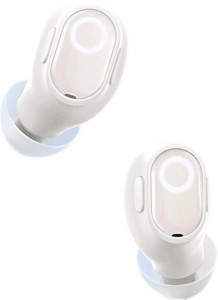
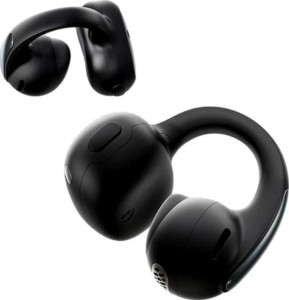
The most fundamental design difference between these two earbuds is their fit style. The Baseus BD1 uses a traditional in-ear design, where silicone tips create a seal inside the ear canal, while the Baseus Bowie MC1 opts for an open-ear form factor that rests outside the canal. In practice, this shapes the entire user experience: in-ear designs generally deliver better passive noise isolation and bass response, whereas open-ear designs prioritize situational awareness and long-wear comfort by avoiding canal fatigue.

On water resistance, both earbuds are rated as water resistant, but the MC1 holds a clear edge with an IP57 rating versus the BD1's IP55. The second digit is the critical one here — a ″7″ means the MC1 can withstand temporary submersion in water up to 1 meter, while the BD1's ″5″ only certifies protection against low-pressure water jets. For outdoor or athletic use in unpredictable conditions, this is a meaningful real-world advantage for the MC1. The BD1 does match the MC1 on dust protection, with both sharing a ″5″ first digit.

Weight is another differentiator: the BD1 comes in at 7.6 g per earbud compared to the MC1's 10.4 g, a roughly 37% difference. Lighter earbuds tend to feel less fatiguing during extended sessions, which slightly favors the BD1 in long-term comfort — though the open-ear fit of the MC1 may compensate for its added weight by reducing pressure on the ear canal. Overall, neither product has a dominant edge across the board: the MC1 wins on water resistance durability, while the BD1's lighter weight and in-ear seal may suit users prioritizing audio immersion and comfort during prolonged use.

Sound quality:
has active noise cancellation (ANC)
has passive noise reduction
driver unit size 8.6 mm 10.8 mm
lowest frequency 20 Hz 20 Hz
highest frequency 20000 Hz 20000 Hz
supports spatial audio
has Dolby Atmos
has Dirac Virtuo
has a neodymium magnet

Neither earbud offers active noise cancellation, and both share an identical frequency response of 20 Hz – 20,000 Hz, covering the full range of human hearing on paper. However, the practical sound experience between these two is shaped more by their physical design than by these matching figures. The BD1's in-ear fit provides passive noise reduction — a meaningful real-world benefit that the MC1 entirely lacks. By physically sealing the ear canal, the BD1 can attenuate ambient noise without any electronics, which also helps preserve perceived bass and overall clarity in noisy environments.

Driver size is the other key differentiator here. The MC1 uses a larger 10.8 mm driver compared to the BD1's 8.6 mm unit. A bigger driver surface can move more air, which typically translates to greater low-frequency authority and dynamic range — though driver size alone does not guarantee superior sound, as tuning and acoustics play equally important roles. For the MC1's open-ear design, the larger driver may be a deliberate engineering choice to compensate for the bass loss that is inherent when there is no ear canal seal.

On balance, the BD1 holds a practical edge for users in noisy settings, where its passive isolation will meaningfully improve the listening experience. The MC1's larger driver gives it potential headroom in raw acoustic output, but without a sealed fit, much of that low-end energy will disperse into the environment. Users prioritizing immersive, focused listening will find the BD1 better suited to that goal based strictly on these specs.
Power:
Battery life 8 hours 9 hours
Battery life of charging case 27 hours 31 hours
charge time 1.5 hours 1.5 hours
has wireless charging
Has a solar power battery
has a battery level indicator
has a rechargeable battery

Battery life figures tell a consistent story here: the Baseus Bowie MC1 edges ahead at every level. Per-earbud playback reaches 9 hours on the MC1 versus 8 hours on the BD1, and the total combined endurance — earbuds plus charging case — comes to 31 hours for the MC1 against 27 hours for the BD1. In day-to-day terms, the MC1's single-charge runtime comfortably clears a full workday or a long-haul flight without a top-up, while the BD1 falls just short of that threshold for heavier users.

Where the two products are perfectly matched is charge time: both replenish in 1.5 hours, which is a reasonable turnaround without being class-leading. Neither model supports wireless charging, so users are committed to a cable regardless. Both also include a battery level indicator, which is a practical convenience that removes guesswork about when to recharge.

The MC1 holds a clear advantage in this category. The gap — roughly one extra hour per charge cycle and four additional hours of total system reserve — is modest but genuinely useful for travelers or anyone who regularly forgets to charge their case. For most everyday use the BD1's figures are entirely adequate, but if battery longevity is a priority, the MC1 is the straightforward pick.

Connectivity:
has fast pairing
Has USB Type-C
Bluetooth version 5.4 5.4
has LDAC
has LDHC
has Bluetooth LE Audio
has aptX Adaptive
has aptX Low Latency
has aptX HD
has aptX
has aptX Lossless
has aptX Voice
has Auracast
maximum Bluetooth range 10 m 10 m
supports Bluetooth pairing using NFC
Can be used wirelessly
has AAC

Connectivity is the one category where these two earbuds are in complete lockstep. Both run Bluetooth 5.4, which is among the more current versions of the standard, bringing improved connection stability, lower power consumption, and better handling of crowded wireless environments compared to older iterations. Both also share an identical 10 m maximum range, which is standard for earbuds of this class and sufficient for typical use within the same room as the source device.

On audio codec support, neither earbud offers any high-resolution wireless codec — no LDAC, aptX, AAC, or any of their variants. This means both devices fall back on the baseline SBC codec for audio transmission, which is adequate for casual listening but places a ceiling on wireless audio quality that more premium earbuds do not have. For users who stream lossless audio, this is a shared limitation worth noting.

Charging port and pairing behavior are equally matched: both use USB-C and neither supports fast pairing or NFC-based pairing. Given the complete spec parity across every connectivity data point, this category is an unambiguous tie. The choice between the BD1 and the MC1 will have to rest on the differences found in other categories.

Features:
release date January 2025 February 2025
has ambient sound mode
has in/on-ear detection
Supports fast charging
can read notifications
has a mute function
can be used as a headset
control panel placed on a device
Has voice prompts
travel bag is included
Has an in-line control panel
Has a temperature sensor
Has a built-in camera remote control function

Much like connectivity, the features category reveals no meaningful separation between these two earbuds — every single data point is identical. Both support fast charging, which is a practical win for users who need a quick top-up before heading out, complementing the 1.5-hour charge times noted in the power specs. Both can function as a headset with a mute function, making them viable for calls and video meetings, not just music playback.

On the control and usability front, each earbud places its control panel on the device itself and includes voice prompts, meaning users get tactile on-ear controls and audio feedback for actions like pairing or battery status — features that reduce the need to reach for a phone during everyday use. A travel bag is included with both, a small but appreciated addition that signals a degree of attention to the out-of-box experience.

Notably, neither model offers ambient sound mode or in-ear detection, which are features increasingly common at higher price points. Their absence is a shared limitation rather than a differentiator. With no spec diverging between the two products in this entire category, the verdict is a complete tie — features alone will not tip the decision either way.

Microphone:
has a noise-canceling microphone

With only one data point in this category, the comparison is straightforward: both the Baseus BD1 and the Baseus Bowie MC1 include a noise-canceling microphone. For call quality, this is a meaningful baseline feature — microphone noise cancellation works to suppress ambient sound picked up during calls, helping the listener on the other end hear the speaker more clearly in environments like busy streets or open offices.

Since the spec is shared and no additional microphone data is provided, this category is a tie. Neither product holds an advantage here based on the available information.

Comparison Summary & Verdict

After examining every specification, the choice between the Baseus BD1 and the Baseus Bowie MC1 comes down to how you plan to use them. The Baseus BD1 is the lighter option at 7.6 g and offers passive noise reduction thanks to its in-ear fit, making it a strong pick for commuters or anyone who values a degree of sound isolation during workouts or travel. On the other hand, the Baseus Bowie MC1 counters with a superior IP57 water resistance rating, a larger 10.8 mm driver, and notably better battery stamina — 9 hours on a single charge with up to 31 hours from the case — suiting users who prioritize endurance and an open-ear, ambient-friendly listening experience above all else.

Baseus BD1
Buy Baseus BD1 if...

Buy the Baseus BD1 if you prefer a lightweight in-ear design with passive noise reduction and you are satisfied with a solid IP55 water resistance rating.

Baseus Bowie MC1
Buy Baseus Bowie MC1 if...

Buy the Baseus Bowie MC1 if you want longer battery life, a higher IP57 water resistance rating, and an open-ear fit that keeps you aware of your surroundings.