Baseus BD1
Moondrop Space Travel 2 Ultra

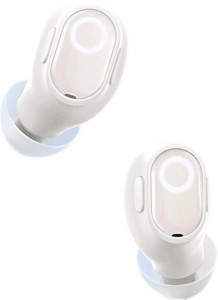
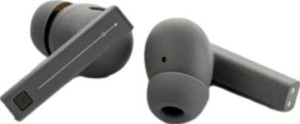
Baseus BD1 Moondrop Space Travel 2 Ultra

Overview

Welcome to this in-depth specification comparison between the Baseus BD1 and the Moondrop Space Travel 2 Ultra, two fully wireless in-ear earbuds that share a surprising amount of common ground while diverging in some meaningful areas. From battery endurance and Bluetooth versions to audio codec support and noise-handling features, this page breaks down exactly how these two earbuds stack up against each other to help you make the most informed choice.

Common Features

  • Both products have an in-ear fit.
  • Neither product has wires or cables.
  • Neither product is a neckband earbud design.
  • Neither product includes wingtips.
  • Neither product has RGB lighting.
  • Both products have stereo speakers.
  • Neither product has a UV light.
  • Neither product has a display.
  • Both products offer passive noise reduction.
  • The lowest frequency on both products is 20 Hz.
  • The highest frequency on both products is 20000 Hz.
  • Neither product supports spatial audio.
  • Neither product has Dolby Atmos.
  • Neither product has Dirac Virtuo.
  • Neither product has a neodymium magnet.
  • Both products have a charge time of 1.5 hours.
  • Neither product supports wireless charging.
  • Neither product has a solar power battery.
  • Both products have a battery level indicator.
  • Both products have a rechargeable battery.
  • Neither product supports fast pairing.
  • Both products have USB Type-C connectivity.
  • Neither product has LDHC.
  • Neither product has Bluetooth LE Audio.
  • Neither product has aptX Adaptive.
  • Neither product has aptX Low Latency.
  • Neither product has aptX HD.
  • Neither product has aptX.
  • Neither product has in-ear or on-ear detection.
  • Both products support fast charging.
  • Neither product can read notifications.
  • Both products have a mute function.
  • Both products can be used as a headset.
  • Both products have a control panel placed on the device.
  • Both products have voice prompts.
  • A travel bag is included with both products.
  • Both products have a noise-canceling microphone.

Main Differences

  • Active noise cancellation (ANC) is present on Moondrop Space Travel 2 Ultra but not available on Baseus BD1.
  • The driver unit size is 8.6 mm on Baseus BD1 and 13 mm on Moondrop Space Travel 2 Ultra.
  • Battery life is 8 hours on Baseus BD1 and 7 hours on Moondrop Space Travel 2 Ultra.
  • Battery life of the charging case is 27 hours on Baseus BD1 and 24 hours on Moondrop Space Travel 2 Ultra.
  • The Bluetooth version is 5.4 on Baseus BD1 and 6 on Moondrop Space Travel 2 Ultra.
  • LDAC support is present on Moondrop Space Travel 2 Ultra but not available on Baseus BD1.
  • Audio latency is 60 ms on Baseus BD1 and 55 ms on Moondrop Space Travel 2 Ultra.
  • AAC support is present on Moondrop Space Travel 2 Ultra but not available on Baseus BD1.
  • Ambient sound mode is available on Moondrop Space Travel 2 Ultra but not on Baseus BD1.
  • A find device feature is available on Baseus BD1 but not on Moondrop Space Travel 2 Ultra.
Specs Comparison
Baseus BD1

Baseus BD1

Moondrop Space Travel 2 Ultra

Moondrop Space Travel 2 Ultra

Design:
Fit In-ear In-ear
has no wires or cables
are neckband earbuds
wingtips included
has RGB lighting
has stereo speakers
has UV light
Has a display

In terms of design, the Baseus BD1 and the Moondrop Space Travel 2 Ultra are essentially identical across every measured attribute. Both are true wireless in-ear earbuds — no neckband, no wires, no wingtips included — making them equally portable and similarly suited for everyday use without additional accessories.

Neither model features RGB lighting, a display, or UV light, keeping their aesthetics clean and utilitarian. Both deliver stereo sound through their respective drivers, which is the standard expectation for this product category and offers no differentiation between the two.

Based strictly on the provided design specs, these two products are in a complete tie. There is no distinguishing design factor between them in this category — a user choosing between the two on design criteria alone would need to look beyond these specs, such as physical form factor details or build materials, which are not reflected in the available data.

Sound quality:
has active noise cancellation (ANC)
has passive noise reduction
driver unit size 8.6 mm 13 mm
lowest frequency 20 Hz 20 Hz
highest frequency 20000 Hz 20000 Hz
supports spatial audio
has Dolby Atmos
has Dirac Virtuo
has a neodymium magnet

The most significant divergence between these two earbuds lies in noise isolation. Both offer passive noise reduction, but the Moondrop Space Travel 2 Ultra goes further with active noise cancellation (ANC) — a meaningful real-world advantage for commuters, office users, or anyone in consistently noisy environments. The Baseus BD1 relies solely on the physical seal of the eartips to block ambient sound, which is notably less effective against low-frequency noise like engine rumble or HVAC hum.

Driver size is another key differentiator. The Space Travel 2 Ultra uses a 13 mm driver compared to the BD1's 8.6 mm unit. Larger drivers generally move more air, which can translate to fuller bass response and a more spacious soundstage — though driver size alone does not guarantee superior tuning. Still, the size gap here is substantial enough to suggest a different sonic character, with the Space Travel 2 Ultra likely leaning toward a more full-bodied presentation. Both share an identical 20 Hz – 20,000 Hz frequency range on paper, meaning neither has a specified technical edge in frequency coverage.

Neither model supports spatial audio, Dolby Atmos, or Dirac Virtuo, so advanced surround processing is off the table for both. Overall, the Moondrop Space Travel 2 Ultra holds a clear edge in this category — its ANC capability and larger driver give it tangible advantages in both noise management and potential sound depth that the Baseus BD1 cannot match on specs alone.

Power:
Battery life 8 hours 7 hours
Battery life of charging case 27 hours 24 hours
charge time 1.5 hours 1.5 hours
has wireless charging
Has a solar power battery
has a battery level indicator
has a rechargeable battery

Endurance is where the Baseus BD1 picks up a modest but practical advantage. Its earbuds last 8 hours per charge versus 7 hours for the Moondrop Space Travel 2 Ultra — a one-hour difference that may not sound dramatic, but can matter during long travel days or extended work sessions where returning to the case is inconvenient. The case extends this further to a combined 27 hours for the BD1 against 24 hours for the Space Travel 2 Ultra, giving the BD1 roughly an extra full charge cycle before needing a power outlet.

Where the two converge completely is on charge time and charging method — both replenish in 1.5 hours and neither supports wireless charging. The absence of wireless charging on both means users are tied to a cable regardless of preference, which is a minor but shared limitation at this tier. Both also include a battery level indicator, so monitoring remaining power is equally straightforward on either device.

The Baseus BD1 takes a clear, if slim, edge in this category. Its longer per-use battery life and higher combined case capacity make it the more capable option for users who prioritize going longer between charges — particularly relevant given that the Space Travel 2 Ultra's ANC feature, noted in sound specs, can typically accelerate battery drain in real-world use.

Connectivity:
has fast pairing
Has USB Type-C
Bluetooth version 5.4 6
has LDAC
has LDHC
has Bluetooth LE Audio
has aptX Adaptive
has aptX Low Latency
has aptX HD
has aptX
has aptX Lossless
audio latency 60 ms 55 ms
has aptX Voice
has Auracast
maximum Bluetooth range 10 m 10 m
supports Bluetooth pairing using NFC
Can be used wirelessly
has AAC

Codec support is where the gap between these two opens up considerably. The Moondrop Space Travel 2 Ultra supports both LDAC and AAC, while the Baseus BD1 supports neither — meaning the BD1 is limited to SBC by default. In practice, LDAC enables near-lossless audio transmission at up to 990 kbps, a significant benefit for users streaming high-resolution audio from compatible Android devices. AAC, meanwhile, is the preferred codec for Apple devices and delivers noticeably cleaner audio than SBC on iOS. The BD1's lack of both codecs puts it at a real disadvantage for audio quality over Bluetooth, regardless of its driver hardware.

The Space Travel 2 Ultra also runs on Bluetooth 6 versus the BD1's Bluetooth 5.4. Bluetooth 6 introduces improvements in connection precision and efficiency, and while both products share the same 10 m maximum range, the newer standard offers better stability and lower power overhead in congested wireless environments. The latency difference — 55 ms on the Space Travel 2 Ultra versus 60 ms on the BD1 — is marginal and unlikely to be perceptible during casual media consumption, but the Space Travel 2 Ultra retains the technical edge there as well.

This category is a decisive win for the Moondrop Space Travel 2 Ultra. Its combination of a newer Bluetooth version, LDAC for Android users, and AAC for Apple users gives it a substantially richer connectivity profile — one that directly impacts audio fidelity in everyday wireless listening scenarios.

Features:
release date January 2025 September 2025
has ambient sound mode
has in/on-ear detection
has find device feature
Supports fast charging
can read notifications
has a mute function
can be used as a headset
control panel placed on a device
Has voice prompts
travel bag is included
Has an in-line control panel
Has a temperature sensor
Has a built-in camera remote control function

Two features split these earbuds in opposite directions. The Moondrop Space Travel 2 Ultra includes an ambient sound mode, which uses the microphones to pipe in environmental audio — a genuinely useful safety and convenience feature for pedestrians, cyclists, or anyone who needs situational awareness without removing their earbuds. The Baseus BD1 counters with a find device feature, which helps locate misplaced earbuds — a practical perk given how easy it is to lose small true wireless earbuds. Neither feature is universally more valuable; it depends entirely on the user's lifestyle and habits.

Beyond those two points of difference, the feature sets are closely matched. Both support fast charging, include a travel bag, offer on-device controls, voice prompts, a mute function, and can function as a headset for calls. This shared foundation means neither product feels stripped-down in daily use — the core convenience features are present on both sides.

Declaring a winner here hinges on use case. For users who frequently navigate busy outdoor environments, the Space Travel 2 Ultra's ambient sound mode is the more broadly useful advantage. For those prone to misplacing their earbuds, the BD1's find device feature fills a real gap. On balance, ambient sound mode tends to serve a wider range of everyday scenarios, giving the Moondrop Space Travel 2 Ultra a slight edge in this category — but it is far from a decisive win.
Microphone:
has a noise-canceling microphone

Both the Baseus BD1 and the Moondrop Space Travel 2 Ultra are equipped with a noise-canceling microphone, meaning calls and voice input on either device benefit from active filtering of ambient sound. This is a meaningful baseline feature for anyone using their earbuds in noisy settings — on public transit, in open offices, or outdoors — where a standard microphone would otherwise pick up distracting background noise.

With only a single shared data point available for this category, there is no differentiating factor to analyze between the two products. Both clear the same functional threshold, and the provided specs offer no further granularity — such as microphone count, beam-forming technology, or wind noise reduction — that would allow a more nuanced comparison.

This category is a tie. Neither product holds an advantage over the other based on the available microphone data, and users can expect equivalent call quality credentials from both on paper.

Comparison Summary & Verdict

After reviewing all available specifications, the two earbuds serve slightly different listener profiles. The Baseus BD1 stands out with a longer 8-hour battery life and an extended 27-hour charging case, plus a handy find device feature for those prone to misplacing their earbuds. On the other side, the Moondrop Space Travel 2 Ultra brings a more feature-rich audio experience, offering active noise cancellation, ambient sound mode, LDAC and AAC codec support, a newer Bluetooth 6 standard, and a slightly lower 55 ms audio latency. Both share passive noise reduction, fast charging, a noise-canceling microphone, and a travel bag. Choose based on your priorities: endurance and device-finding utility, or immersive audio features and cutting-edge connectivity.

Baseus BD1
Buy Baseus BD1 if...

Buy the Baseus BD1 if you prioritize longer battery life and want a built-in find device feature to help locate your earbuds when misplaced.

Moondrop Space Travel 2 Ultra
Buy Moondrop Space Travel 2 Ultra if...

Buy the Moondrop Space Travel 2 Ultra if you want active noise cancellation, ambient sound mode, LDAC and AAC codec support, and the latest Bluetooth 6 connectivity.