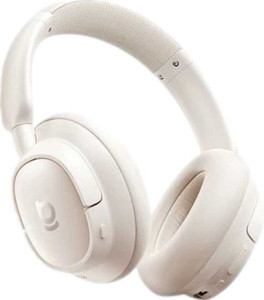
Baseus BH1
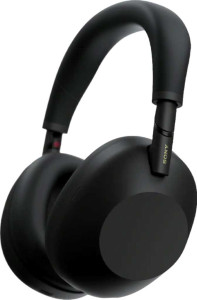
Sony WH-1000XM6

Baseus BH1 Sony WH-1000XM6

Overview

Welcome to our in-depth specification comparison between the Baseus BH1 and the Sony WH-1000XM6. These two over-ear wireless headphones both deliver LDAC support and multipoint connectivity, yet they take very different approaches when it comes to battery endurance, active noise cancellation, and smart features. Whether you are chasing marathon listening sessions or a premium, feature-rich audio experience, this side-by-side breakdown will help you find the right pair for your needs.

Common Features

  • Both headphones have an over-ear fit.
  • Both headphones have a detachable cable.
  • Neither headphone offers water resistance.
  • Neither headphone is designed for kids.
  • Both headphones have a tangle-free cable.
  • Neither headphone has an open-back design.
  • Both headphones have stereo speakers.
  • Both headphones support spatial audio.
  • Both headphones have passive noise reduction.
  • Both headphones charge via USB Type-C.
  • Both headphones have a battery level indicator.
  • Neither headphone supports wireless charging.
  • Neither headphone has a solar power battery.
  • Both headphones have a rechargeable battery.
  • Neither headphone has a removable battery.
  • Both headphones support LDAC.
  • Neither headphone supports aptX Adaptive, aptX, LDHC, aptX Low Latency, aptX HD, or aptX Lossless.
  • Both headphones offer wireless and wired connectivity.
  • Both headphones have a noise-canceling microphone.
  • Both headphones support multipoint connection for 2 devices simultaneously.
  • Both headphones have a control panel placed on the device.
  • Both headphones can be used as a headset.
  • Neither headphone has an in-line control panel.

Main Differences

  • Weight is 238 g on Baseus BH1 and 254 g on Sony WH-1000XM6.
  • Active noise cancellation (ANC) is present on Sony WH-1000XM6 but not available on Baseus BH1.
  • The lowest frequency is 20 Hz on Baseus BH1 and 4 Hz on Sony WH-1000XM6.
  • Driver unit size is 40 mm on Baseus BH1 and 30 mm on Sony WH-1000XM6.
  • A neodymium magnet is present in Sony WH-1000XM6 but not in Baseus BH1.
  • Battery life is 80 hours on Baseus BH1 and 30 hours on Sony WH-1000XM6.
  • Battery life with ANC is 55 hours on Baseus BH1 and 30 hours on Sony WH-1000XM6.
  • Bluetooth version is 6 on Baseus BH1 and 5.3 on Sony WH-1000XM6.
  • Bluetooth LE Audio support is present on Sony WH-1000XM6 but not available on Baseus BH1.
  • Auracast support is present on Sony WH-1000XM6 but not available on Baseus BH1.
  • Fast pairing is supported on Sony WH-1000XM6 but not on Baseus BH1.
  • Ambient sound mode is available on Sony WH-1000XM6 but not on Baseus BH1.
  • In/on-ear detection is present on Sony WH-1000XM6 but not on Baseus BH1.
  • Number of microphones is 10 on Baseus BH1 and 12 on Sony WH-1000XM6.
Specs Comparison
Baseus BH1

Baseus BH1

Sony WH-1000XM6

Sony WH-1000XM6

Design:
Fit Over-ear Over-ear
weight 238 g 254 g
has a detachable cable
water resistance None None
is designed for kids
has a tangle free cable
has an open-back design
has stereo speakers

In terms of overall design philosophy, the Baseus BH1 and Sony WH-1000XM6 are remarkably aligned. Both adopt an over-ear, closed-back form factor with stereo speakers, a tangle-free detachable cable, and no water resistance — meaning neither is built for workouts or outdoor exposure to the elements. For the average commuter or office user, this shared profile signals that both headphones are targeting the same core use case: focused, stationary or light-travel listening.

Where a meaningful real-world difference does emerge is in weight. The BH1 comes in at 238 g versus the XM6's 254 g — a delta of 16 grams. While this may sound negligible on paper, over multi-hour listening sessions that difference can translate into reduced fatigue and a more comfortable fit, particularly for users sensitive to headband pressure. It is not a dramatic gap, but it is a consistent, physical advantage.

Beyond weight, these two headphones are essentially identical in their design specifications. The Baseus BH1 holds a slight edge in this category purely on account of its lower weight, but users who are not sensitive to that difference will find no meaningful design distinction to sway their decision here.

Sound quality:
has active noise cancellation (ANC)
lowest frequency 20 Hz 4 Hz
driver unit size 40 mm 30 mm
supports spatial audio
has a neodymium magnet
has passive noise reduction

The most consequential difference in this category is noise isolation. The Sony WH-1000XM6 features active noise cancellation (ANC), while the Baseus BH1 relies solely on passive noise reduction. In practice, ANC uses microphones and signal processing to actively counteract ambient sound — particularly effective against low-frequency, continuous noise like airplane engines or air conditioning — whereas passive reduction depends purely on physical ear cup sealing. For commuters, frequent flyers, or open-office workers, this gap is substantial and likely the single most decisive factor in this group.

On the driver side, the picture is more nuanced. The BH1 uses a larger 40 mm driver compared to the XM6's 30 mm, which can contribute to a more physically expansive sound stage in passive designs. However, the XM6 pairs its smaller driver with a neodymium magnet and an extraordinarily low frequency floor of 4 Hz versus the BH1's 20 Hz — the lower boundary of human hearing. That sub-bass extension suggests the XM6's driver system is tuned for high-precision, full-spectrum audio reproduction, and the neodymium magnet adds efficiency and transient accuracy that raw driver size alone cannot capture.

Both headphones support spatial audio and passive noise reduction, so those traits offer no differentiation. The Sony WH-1000XM6 holds a clear advantage in this group: its ANC capability, superior low-frequency reach, and neodymium-equipped driver collectively represent a more capable and versatile sound quality package for demanding listening environments.

Power:
Battery life 80 hours 30 hours
Battery life (ANC) 55 hours 30 hours
Has USB Type-C
has a battery level indicator
has wireless charging
Has a solar power battery
has a rechargeable battery
has a removable battery

Battery life is where the Baseus BH1 pulls ahead decisively. At 80 hours of standard playback, it dwarfs the Sony WH-1000XM6's 30 hours — nearly three times the endurance. For context, 30 hours is already considered competitive in the premium headphone space, comfortably covering multiple long-haul flights or a full work week of daily commutes. The BH1's 80-hour figure pushes into a different category entirely, catering to users who travel for extended periods, work in remote settings, or simply dislike the routine of frequent charging.

A particularly telling data point is how each headphone handles ANC's battery cost. The XM6 maintains its 30-hour rating with ANC on — an impressive feat that suggests efficient power management in its noise-cancellation circuitry. The BH1 drops from 80 to 55 hours with ANC active, which is expected given that it must power the feature from a larger reserve. Crucially, even at 55 hours with ANC enabled, the BH1 still outlasts the XM6's maximum rated figure by a wide margin.

Shared features — USB Type-C charging, a battery level indicator, and a sealed non-removable rechargeable battery — mean neither product has a meaningful infrastructure advantage. The Baseus BH1 wins this group outright; its battery capacity advantage is not marginal but overwhelming, and it holds that lead whether ANC is on or off.

Connectivity:
connectivity Wireless & wired Wireless & wired
Bluetooth version 6 5.3
has aptX Adaptive
has aptX
has LDAC
has LDHC
has Bluetooth LE Audio
has aptX Low Latency
has aptX HD
has aptX Lossless
has AAC
has Auracast
maximum Bluetooth range 10 m 10 m
has fast pairing
supports Bluetooth pairing using NFC

Both headphones share a solid connectivity foundation — wireless and wired support, identical 10 m Bluetooth range, and the same high-quality codec pairing of LDAC and AAC. LDAC in particular is significant, as it transmits up to three times more data than standard SBC, enabling near-lossless wireless audio quality when paired with a compatible source. On that front, neither product has an edge over the other.

The version gap is worth examining critically. The Baseus BH1 runs Bluetooth 6 versus the Sony WH-1000XM6's Bluetooth 5.3, which theoretically offers improvements in connection precision and efficiency. However, the XM6 counters with features that have more immediate practical impact: Bluetooth LE Audio support enables the newer LC3 codec architecture and multi-stream capabilities, while Auracast broadcast audio allows the headphones to tune into public audio streams — in airports, gyms, or lecture halls — without pairing. Add fast pairing to the mix, and the XM6 delivers a noticeably more frictionless day-to-day experience.

The Sony WH-1000XM6 edges ahead in this category. While the BH1's newer Bluetooth version is a forward-looking advantage, the XM6's combination of LE Audio, Auracast, and fast pairing translates into tangible usability benefits available right now, tipping the balance in its favor.

Features:
release date July 2025 May 2025
has a noise-canceling microphone
has ambient sound mode
has in/on-ear detection
number of microphones 10 12
multipoint count 2 2
control panel placed on a device
can be used as a headset
Has an in-line control panel

Scratch beneath the surface of the shared features — noise-canceling microphone, dual-device multipoint, on-device controls, and headset capability — and meaningful differences emerge. The Sony WH-1000XM6 packs 12 microphones versus the Baseus BH1's 10. More microphones generally enable more sophisticated beamforming and noise-isolation algorithms, which matters both for call clarity in noisy environments and for the accuracy of ANC processing. It is not a dramatic gap, but it reinforces a pattern of the XM6 investing more heavily in microphone infrastructure.

Two features exclusive to the XM6 carry real daily-use weight. Ambient sound mode allows the headphones to pipe in external audio on demand — essential for staying aware of announcements, conversations, or traffic without removing the headset. In/on-ear detection automatically pauses playback when the headphones are taken off, a quality-of-life convenience that frequent wearers quickly come to rely on. The BH1 offers neither, which represents a noticeable gap in smart usability rather than a minor omission.

The Sony WH-1000XM6 is the clear winner here. Its higher microphone count, ambient sound mode, and ear-detection capability collectively add up to a more intelligent, context-aware feature set — advantages the BH1 simply does not match in this category.

Comparison Summary & Verdict

After reviewing every specification, two distinct profiles emerge. The Baseus BH1 stands out with an extraordinary 80-hour battery life and a larger 40 mm driver unit, making it an excellent choice for users who prioritize endurance above all else. The Sony WH-1000XM6, on the other hand, counters with a more complete feature set: active noise cancellation, ambient sound mode, in/on-ear detection, Bluetooth LE Audio, Auracast, and fast pairing, all backed by an impressive 4 Hz low-frequency response and a neodymium magnet. Both headphones share a strong connectivity foundation with LDAC and dual-device multipoint pairing. Your decision ultimately comes down to priorities: raw stamina or sophisticated, everyday functionality.

Baseus BH1
Buy Baseus BH1 if...

Buy the Baseus BH1 if exceptional battery life is your top priority, as it delivers up to 80 hours of playback and a larger 40 mm driver, all in a slightly lighter build.

Sony WH-1000XM6
Buy Sony WH-1000XM6 if...

Buy the Sony WH-1000XM6 if you want a fully-featured headphone with active noise cancellation, ambient sound mode, fast pairing, Bluetooth LE Audio, and a deeper 4 Hz low-frequency response for a richer listening experience.