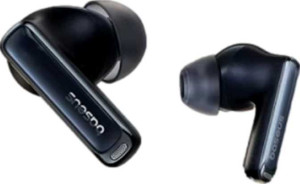
Baseus Bowie M2s Ultra
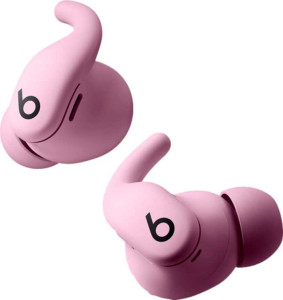
Beats Powerbeats Fit

Baseus Bowie M2s Ultra Beats Powerbeats Fit

Overview

When deciding between the Baseus Bowie M2s Ultra and the Beats Powerbeats Fit, two fully wireless in-ear headphones sharing a strong common foundation of ANC, spatial audio, and fast charging, the real story lies in the details that set them apart. This comparison digs into their distinct approaches to codec support, physical design choices, smart convenience features, and microphone configuration to help you determine which earbud is the better match for your lifestyle.

Common Features

  • Both products use an in-ear fit.
  • Neither product has wires or cables.
  • Neither product is a neckband earbud design.
  • Neither product features RGB lighting.
  • Both products have stereo speakers.
  • Neither product includes a UV light.
  • Both products support active noise cancellation (ANC).
  • Both products offer passive noise reduction.
  • Both products have a lowest frequency of 20 Hz.
  • Both products have a highest frequency of 20000 Hz.
  • Spatial audio is supported on both products.
  • Dolby Atmos is not available on either product.
  • Dirac Virtuo is not available on either product.
  • Neither product uses a neodymium magnet.
  • Both products offer a battery life of 7 hours.
  • Both products have a charge time of 1.5 hours.
  • Wireless charging is not available on either product.
  • Neither product has a solar power battery.
  • Both products include a battery level indicator.
  • Both products have a rechargeable battery.
  • Fast pairing is not available on either product.
  • Both products include a USB Type-C port.
  • LDAC is not supported on either product.
  • Bluetooth LE Audio is not supported on either product.
  • aptX Adaptive is not supported on either product.
  • aptX Low Latency is not supported on either product.
  • aptX HD is not supported on either product.
  • aptX is not supported on either product.
  • Both products feature an ambient sound mode.
  • Fast charging is supported on both products.
  • Neither product can read notifications.
  • Neither product has a built-in translator.
  • Both products include a mute function.
  • Both products can be used as a headset.
  • Both products have a control panel placed on the device.
  • Both products feature voice prompts.
  • Both products include a noise-canceling microphone.

Main Differences

  • Wingtips are included with the Beats Powerbeats Fit but not with the Baseus Bowie M2s Ultra.
  • A display is present on the Baseus Bowie M2s Ultra but not available on the Beats Powerbeats Fit.
  • LDHC support is present on the Baseus Bowie M2s Ultra but not available on the Beats Powerbeats Fit.
  • AAC support is present on the Baseus Bowie M2s Ultra but not available on the Beats Powerbeats Fit.
  • In/on-ear detection is available on the Beats Powerbeats Fit but not on the Baseus Bowie M2s Ultra.
  • A find device feature is present on the Beats Powerbeats Fit but not on the Baseus Bowie M2s Ultra.
  • The number of microphones is 4 on the Baseus Bowie M2s Ultra and 6 on the Beats Powerbeats Fit.
Specs Comparison
Baseus Bowie M2s Ultra

Baseus Bowie M2s Ultra

Beats Powerbeats Fit

Beats Powerbeats Fit

Design:
Fit In-ear In-ear
has no wires or cables
are neckband earbuds
wingtips included
has RGB lighting
has stereo speakers
has UV light
Has a display

Both the Baseus Bowie M2s Ultra and the Beats Powerbeats Fit share the same fundamental design philosophy: fully wireless, in-ear earbuds with no neckband. In practice, this means both offer freedom of movement with no cables to manage, and a compact, pocketable form factor typical of modern true wireless earbuds.

The most meaningful design differentiator is physical fit security. The Powerbeats Fit includes wingtips, which are anchoring hooks or fins that brace against the inner ear to lock the earbud in place during movement — a clear advantage for active users or workouts where stability matters. The M2s Ultra omits wingtips entirely, relying solely on the ear tip seal, which can be less secure during high-intensity activity. On the other side, the M2s Ultra features a built-in display — likely on the charging case — which provides at-a-glance information such as battery level without needing a companion app or phone. The Powerbeats Fit has no display, making that kind of quick status check less convenient.

Overall, neither product has a sweeping design advantage, but the edge depends on use case: the Powerbeats Fit is better suited for active, sport-oriented users who prioritize a secure fit, while the M2s Ultra offers a more informative, user-friendly interface through its display — a perk for everyday commuters or casual listeners who value convenience at a glance.

Sound quality:
has active noise cancellation (ANC)
has passive noise reduction
lowest frequency 20 Hz 20 Hz
highest frequency 20000 Hz 20000 Hz
supports spatial audio
has Dolby Atmos
has Dirac Virtuo
has a neodymium magnet

Across every sound quality specification provided, the Baseus Bowie M2s Ultra and the Beats Powerbeats Fit are in complete lockstep. Both cover the full standard human hearing range of 20 Hz to 20,000 Hz, meaning neither product has a stated frequency response advantage — on paper, both are tuned to reproduce the entirety of audible sound, from deep bass to the highest treble.

Both earbuds also feature active noise cancellation (ANC) combined with passive noise reduction, which is a meaningful pairing. ANC uses microphones to electronically cancel incoming sound waves, while passive reduction comes from the physical ear tip seal blocking ambient noise. Together, they offer a layered isolation approach suited for commuting, open offices, or noisy environments. Additionally, both support spatial audio, enabling a more immersive, three-dimensional soundstage — beneficial for music, movies, and gaming alike. Neither product implements Dolby Atmos or Dirac Virtuo, so spatial audio processing is present but not tied to a premium licensed format on either side.

This group ends in a complete tie. Every measured and listed sound quality attribute is identical between the two products. A buyer cannot differentiate them on these specs alone and should look to other specification groups — such as connectivity, battery, or microphone performance — to inform their decision.

Power:
Battery life 7 hours 7 hours
charge time 1.5 hours 1.5 hours
has wireless charging
Has a solar power battery
has a battery level indicator
has a rechargeable battery

When it comes to power, the Baseus Bowie M2s Ultra and the Beats Powerbeats Fit are once again perfectly matched. Both deliver 7 hours of battery life per charge — a respectable figure for earbuds with ANC enabled, comfortably covering a full workday commute or an extended workout session without needing to reach for the case.

Recharge time is equally identical at 1.5 hours, meaning neither product has a fast-charging edge over the other. Both also include a battery level indicator, which lets users monitor remaining charge without guessing, and both use standard rechargeable batteries with no wireless charging support. The absence of wireless charging is a minor convenience trade-off, but it is consistent across both products, so it does not shift the balance either way.

Just like the sound quality group, this is an unambiguous tie. No differentiation exists in any power-related specification. Buyers who prioritize battery longevity or charging speed will find no reason to choose one over the other based on this data alone.

Connectivity:
has fast pairing
Has USB Type-C
has LDAC
has LDHC
has Bluetooth LE Audio
has aptX Adaptive
has aptX Low Latency
has aptX HD
has aptX
has aptX Lossless
has aptX Voice
has Auracast
maximum Bluetooth range 10 m 10 m
supports Bluetooth pairing using NFC
Can be used wirelessly
has AAC

Connectivity is where this comparison finally surfaces a meaningful split. The shared foundation is solid but modest — both earbuds offer a 10 m Bluetooth range, USB-C charging, and wireless operation, with no fast pairing, NFC, aptX variants, or Bluetooth LE Audio on either side. The real story lies in codec support, which directly determines audio transmission quality.

The Baseus Bowie M2s Ultra supports LDHC, a high-resolution audio codec capable of transmitting at significantly higher bitrates than standard Bluetooth audio — making it a stronger choice for Android users who want to stream higher-fidelity audio from compatible sources. The Beats Powerbeats Fit, by contrast, supports AAC, which is Apple's preferred codec and delivers noticeably better audio quality than baseline SBC when paired with iPhones and iPads. Neither product supports LDAC or any aptX variant, so both are bounded in their high-res audio ambitions, but each has carved out a codec advantage within its respective ecosystem.

The edge here is ecosystem-dependent rather than absolute. The M2s Ultra holds an advantage for Android users via LDHC, while the Powerbeats Fit is the stronger pick for Apple device owners through AAC support. Neither wins universally — the right choice hinges entirely on what device the buyer intends to pair with.

Features:
release date February 2025 September 2025
has ambient sound mode
has in/on-ear detection
has find device feature
Supports fast charging
can read notifications
Has a built-in translator
has a mute function
can be used as a headset
control panel placed on a device
Has voice prompts
travel bag is included
Has an in-line control panel
Has a temperature sensor
Has a built-in camera remote control function

The feature sets of these two earbuds are largely aligned — both offer ambient sound mode, fast charging, mute, voice prompts, on-device controls, headset capability, and even a travel bag. For most everyday use cases, the shared feature base is genuinely competitive and well-rounded on both sides.

The differentiating features belong exclusively to the Beats Powerbeats Fit: it adds in/on-ear detection and a find device feature, neither of which the M2s Ultra offers. In-ear detection is a practical quality-of-life upgrade — it automatically pauses playback when an earbud is removed and resumes when reinserted, preventing missed audio and reducing unnecessary battery drain. The find device feature allows users to locate misplaced earbuds via a companion app, which is a meaningful safeguard given how easy small wireless earbuds are to lose.

The Powerbeats Fit holds a clear edge in this group. While the M2s Ultra is not deficient in the fundamentals, the two additional features on the Powerbeats Fit address real daily pain points — convenience during wear and peace of mind when the earbuds go missing. For users who value a smarter, more automated listening experience, these additions tip the scales noticeably.

Microphone:
number of microphones 4 6
has a noise-canceling microphone

Microphone hardware is straightforward to compare here, and the gap is real. Both earbuds feature noise-canceling microphones, which use beamforming or filtering algorithms to suppress background noise during calls — a baseline expectation for modern wireless earbuds. Where they diverge is in microphone count: the Baseus Bowie M2s Ultra carries 4 microphones, while the Beats Powerbeats Fit deploys 6 microphones.

More microphones generally enable more sophisticated noise isolation and voice pickup. With additional input points, the system has more data to work with when distinguishing the user's voice from ambient sound — particularly useful in windy outdoor environments, busy streets, or loud offices. The Powerbeats Fit's two extra microphones suggest a stronger foundation for call clarity and wind noise rejection, even if both products employ noise-canceling processing.

The Powerbeats Fit takes a clear spec-based edge in this category. While real-world microphone performance depends on software processing as much as hardware count, having 50% more microphones is a meaningful structural advantage that points toward better call quality, especially in challenging acoustic environments.

Comparison Summary & Verdict

Both the Baseus Bowie M2s Ultra and the Beats Powerbeats Fit deliver a remarkably similar core experience, sharing ANC, spatial audio, a 7-hour battery life, and fast charging. However, the differences reveal two distinct personalities. The Baseus Bowie M2s Ultra stands out with its onboard display and broader codec support including LDHC and AAC, making it appealing to audio enthusiasts who value richer wireless audio transmission and quick at-a-glance status checks. The Beats Powerbeats Fit, on the other hand, edges ahead with wingtips for a more secure fit, in/on-ear detection, a find device feature, and a higher 6-microphone array, positioning it as the stronger choice for active users and those who prioritize call clarity and practical smart features.

Baseus Bowie M2s Ultra
Buy Baseus Bowie M2s Ultra if...

Buy the Baseus Bowie M2s Ultra if you want a built-in display for status checks and broader codec support with both LDHC and AAC for higher-quality wireless audio.

Beats Powerbeats Fit
Buy Beats Powerbeats Fit if...

Buy the Beats Powerbeats Fit if you need a more secure wingtip fit, in/on-ear detection, a find device feature, and superior call quality thanks to its 6-microphone setup.