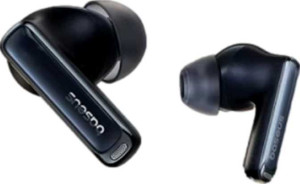
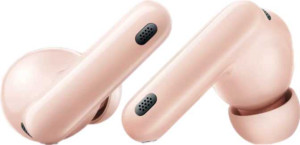
Baseus Bowie M2s Ultra
Huawei FreeBuds 7i

Baseus Bowie M2s Ultra Huawei FreeBuds 7i

Overview

Welcome to our in-depth specification comparison between the Baseus Bowie M2s Ultra and the Huawei FreeBuds 7i — two feature-rich in-ear wireless earbuds sharing a strong foundation in active noise cancellation and Bluetooth 5.4 connectivity. While both compete closely on audio fundamentals, they diverge in meaningful ways across codec support, battery endurance, and smart convenience features. Read on to discover which set of earbuds is the better fit for your lifestyle and listening needs.

Common Features

  • Both products have an in-ear fit.
  • Both products are wireless with no cables.
  • Neither product is a neckband earbud design.
  • Neither product includes wingtips.
  • Neither product has RGB lighting.
  • Both products feature stereo speakers.
  • Neither product has a UV light.
  • Both products support active noise cancellation (ANC).
  • Both products offer passive noise reduction.
  • Both products share a frequency range of 20 Hz to 20000 Hz.
  • Spatial audio is supported on both products.
  • Neither product supports Dolby Atmos.
  • Neither product supports Dirac Virtuo.
  • Neither product uses a neodymium magnet.
  • Both products have a charge time of 1.5 hours.
  • Wireless charging is not available on either product.
  • Neither product has a solar power battery.
  • Both products include a battery level indicator.
  • Both products have a rechargeable battery.
  • Fast pairing is not available on either product.
  • Both products feature a USB Type-C connector.
  • Both products use Bluetooth version 5.4.
  • Bluetooth LE Audio is not supported on either product.
  • aptX Adaptive, aptX Low Latency, aptX HD, and aptX are not supported on either product.
  • Both products have an ambient sound mode.
  • Both products support fast charging.
  • Neither product can read notifications.
  • Neither product has a built-in translator.
  • Both products have a mute function.
  • Both products can be used as a headset.
  • Both products have a control panel placed on the device.
  • Both products feature voice prompts.
  • Both products have a noise-canceling microphone.

Main Differences

  • A display is present on the Baseus Bowie M2s Ultra but not available on the Huawei FreeBuds 7i.
  • Battery life is 7 hours on the Baseus Bowie M2s Ultra and 8 hours on the Huawei FreeBuds 7i.
  • LDAC support is present on the Huawei FreeBuds 7i but not available on the Baseus Bowie M2s Ultra.
  • LDHC support is present on the Baseus Bowie M2s Ultra but not available on the Huawei FreeBuds 7i.
  • In/on-ear detection is present on the Huawei FreeBuds 7i but not available on the Baseus Bowie M2s Ultra.
  • A find device feature is present on the Huawei FreeBuds 7i but not available on the Baseus Bowie M2s Ultra.
  • The number of microphones is 4 on the Baseus Bowie M2s Ultra and 6 on the Huawei FreeBuds 7i.
Specs Comparison
Baseus Bowie M2s Ultra

Baseus Bowie M2s Ultra

Huawei FreeBuds 7i

Huawei FreeBuds 7i

Design:
Fit In-ear In-ear
has no wires or cables
are neckband earbuds
wingtips included
has RGB lighting
has stereo speakers
has UV light
Has a display

Both the Baseus Bowie M2s Ultra and the Huawei FreeBuds 7i share a nearly identical design foundation: fully wireless, in-ear fit with no neckband, no wingtips, no RGB lighting, and stereo speakers on both sides. For most users, this means a similarly compact, cord-free experience with a conventional earbud form factor on either side.

The one meaningful differentiator in this group is that the Bowie M2s Ultra features a display on its case, while the FreeBuds 7i does not. In practice, a case display typically shows battery level at a glance without needing to open the case or pair to a phone — a small but genuinely convenient quality-of-life feature, especially for users who frequently check remaining charge on the go.

Overall, the Baseus Bowie M2s Ultra holds a narrow design edge here, solely due to its case display. The two products are otherwise evenly matched in every other design dimension covered by this data.

Sound quality:
has active noise cancellation (ANC)
has passive noise reduction
lowest frequency 20 Hz 20 Hz
highest frequency 20000 Hz 20000 Hz
supports spatial audio
has Dolby Atmos
has Dirac Virtuo
has a neodymium magnet

Across every sound quality specification provided, the Baseus Bowie M2s Ultra and the Huawei FreeBuds 7i are a perfect match. Both cover the full standard human hearing range of 20 Hz to 20,000 Hz, offer both active and passive noise cancellation, support spatial audio, and neither carries Dolby Atmos, Dirac Virtuo, or a neodymium magnet driver.

The shared ANC plus passive noise reduction combination is worth noting: passive reduction (from the physical in-ear seal) handles consistent ambient noise, while ANC actively counters lower-frequency droning sounds like engines or HVAC systems. Together, they offer a meaningful isolation experience for commuters or open-office users on either device. Spatial audio support on both similarly means immersive, directional sound for compatible content — a feature increasingly standard in this segment.

With no differentiating data points between the two in this category, the verdict is a complete tie. Buyers cannot use sound quality specs alone to distinguish these two earbuds — other specification groups will need to drive the decision.

Power:
Battery life 7 hours 8 hours
charge time 1.5 hours 1.5 hours
has wireless charging
Has a solar power battery
has a battery level indicator
has a rechargeable battery

Power performance between these two earbuds is largely similar, but there is one tangible difference: the Huawei FreeBuds 7i edges ahead with 8 hours of battery life per charge, compared to 7 hours on the Baseus Bowie M2s Ultra. While a single hour may sound marginal, it translates to roughly 14% more continuous playback — enough to matter during a long-haul flight or an extended work session without access to the case.

Where the two converge is on charge time: both replenish in 1.5 hours, meaning neither has a speed advantage when running low. Neither supports wireless charging, so users on both sides will always need a cable handy. The presence of a battery level indicator on both is a practical convenience, removing any guesswork about when to top up.

The FreeBuds 7i holds a clear, if modest, edge in this category purely on the strength of its longer per-charge endurance. For users who prioritize going longer between charges, this is the deciding factor here.

Connectivity:
has fast pairing
Has USB Type-C
Bluetooth version 5.4 5.4
has LDAC
has LDHC
has Bluetooth LE Audio
has aptX Adaptive
has aptX Low Latency
has aptX HD
has aptX
has aptX Lossless
has aptX Voice
has Auracast
maximum Bluetooth range 10 m 10 m
supports Bluetooth pairing using NFC
Can be used wirelessly
has AAC

The connectivity foundations are identical: both earbuds run on Bluetooth 5.4, top out at a 10 m wireless range, charge via USB-C, and support AAC. Neither offers fast pairing, NFC, aptX in any form, or Bluetooth LE Audio — so for the vast majority of connection scenarios, users on either side will have a comparable experience.

The decisive split comes down to high-resolution audio codec support. The Huawei FreeBuds 7i supports LDAC, Sony's widely adopted codec capable of transmitting up to 990 kbps — broadly compatible with most modern Android devices and increasingly supported across the ecosystem. The Baseus Bowie M2s Ultra instead carries LDHC, a high-res codec developed by Savitech that also targets lossless-grade wireless audio, but with considerably narrower device compatibility in practice. For most users, LDAC's ubiquity on Android phones makes it the more immediately useful codec.

The FreeBuds 7i takes a meaningful edge in connectivity for Android users specifically, thanks to LDAC's broader real-world compatibility. The Bowie M2s Ultra's LDHC support is not without merit, but its limited ecosystem reach makes it a less reliable advantage for the average buyer.

Features:
release date February 2025 September 2025
has ambient sound mode
has in/on-ear detection
has find device feature
Supports fast charging
can read notifications
Has a built-in translator
has a mute function
can be used as a headset
control panel placed on a device
Has voice prompts
travel bag is included
Has an in-line control panel
Has a temperature sensor
Has a built-in camera remote control function

Feature parity between these two earbuds is strong: fast charging, ambient sound mode, mute, on-device controls, voice prompts, headset capability, and an included travel bag are all present on both. For everyday use cases, this means neither product feels stripped down relative to the other in terms of core functionality.

Where the Huawei FreeBuds 7i pulls ahead is in two practical quality-of-life features absent on the Bowie M2s Ultra: in/on-ear detection and a find device feature. Ear detection automatically pauses playback when an earbud is removed — a small but frequently appreciated convenience that reduces the need to manually pause. The find device feature adds a layer of security, helping users locate misplaced earbuds, which is a genuinely useful safeguard for small, easy-to-lose items like wireless earbuds.

The FreeBuds 7i holds a clear edge in this category. Neither omission on the Bowie M2s Ultra is a dealbreaker in isolation, but together they represent two tangible usability advantages that the FreeBuds 7i delivers and its competitor does not.

Microphone:
number of microphones 4 6
has a noise-canceling microphone

Both earbuds feature noise-canceling microphones, establishing a solid baseline for call clarity in moderately noisy environments. The meaningful distinction here is microphone count: the Huawei FreeBuds 7i deploys 6 microphones versus 4 on the Baseus Bowie M2s Ultra.

More microphones allow for more sophisticated beamforming and wind noise rejection algorithms — the system has additional reference points to isolate the user's voice and suppress ambient interference. In practice, this tends to translate to cleaner call audio in challenging conditions such as busy streets, wind, or open offices. The advantage is most noticeable during calls and voice input rather than passive listening.

The FreeBuds 7i has a clear structural edge in this category. While microphone count alone does not guarantee superior real-world performance, having 50% more microphones gives the FreeBuds 7i's noise-canceling algorithms significantly more raw input to work with, making it the stronger candidate for users who prioritize call quality and voice pickup.

Comparison Summary & Verdict

After examining every specification, a clear picture emerges for each audience. The Baseus Bowie M2s Ultra stands out with its built-in case display and LDHC codec support, making it an appealing choice for users who want quick at-a-glance battery information and a high-bandwidth wireless audio option. The Huawei FreeBuds 7i, however, pulls ahead in several practical areas: it offers a longer 8-hour battery life, LDAC support for high-resolution audio streaming, a superior 6-microphone array for calls and voice pickup, plus convenient extras like in/on-ear detection and a find-device feature. Both share an identical frequency range, fast charging, ANC, and spatial audio — so neither disappoints on core audio quality. Your choice ultimately comes down to whether you value the display and LDHC codec, or prefer the richer smart feature set and longer playback time of the FreeBuds 7i.

Baseus Bowie M2s Ultra
Buy Baseus Bowie M2s Ultra if...

Buy the Baseus Bowie M2s Ultra if you want a case with a built-in display for quick status checks and prefer LDHC codec support for high-bandwidth wireless audio.

Huawei FreeBuds 7i
Buy Huawei FreeBuds 7i if...

Buy the Huawei FreeBuds 7i if you prioritize longer battery life, LDAC high-resolution audio support, a larger 6-microphone setup for clearer calls, and handy smart features like in-ear detection and find-device functionality.