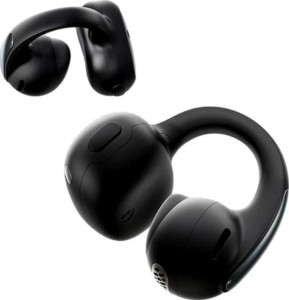
Baseus Bowie MC1
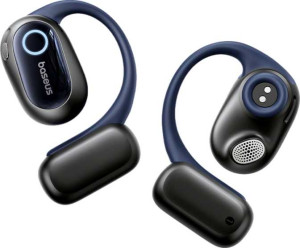
Baseus Bowie MF1

Baseus Bowie MC1 Baseus Bowie MF1

Overview

Welcome to our detailed specification comparison between the Baseus Bowie MC1 and the Baseus Bowie MF1. Both are wireless earbuds from Baseus sharing the same Bluetooth 5.4 standard and fast charging support, yet they take notably different approaches to fit and audio design. From ingress protection ratings to battery endurance and codec support, there are meaningful distinctions worth exploring before making your choice. Read on to see how these two earbuds stack up across every key specification.

Common Features

  • Both products are wireless with no wires or cables.
  • Neither product is a neckband earbud design.
  • Neither product includes wingtips.
  • Neither product has RGB lighting.
  • Both products feature stereo speakers.
  • Neither product has a UV light.
  • Neither product has a display.
  • Both products have a frequency range of 20 Hz to 20000 Hz.
  • Neither product has active noise cancellation (ANC).
  • Neither product supports spatial audio.
  • Neither product has Dolby Atmos.
  • Neither product has a neodymium magnet.
  • Neither product has wireless charging.
  • Neither product has a solar power battery.
  • Both products have a battery level indicator.
  • Both products have a rechargeable battery.
  • Neither product supports fast pairing.
  • Both products have a USB Type-C connector.
  • Both products use Bluetooth version 5.4.
  • Neither product has LDHC, Bluetooth LE Audio, aptX Adaptive, aptX Low Latency, or aptX HD support.
  • Neither product has an ambient sound mode.
  • Neither product has in/on-ear detection.
  • Both products support fast charging.
  • Both products support multipoint connection with 2 devices.
  • Neither product can read notifications.
  • Both products have a mute function.
  • Both products can be used as a headset.
  • Both products have a control panel placed on the device.
  • Both products have a noise-canceling microphone.

Main Differences

  • The fit style is open-ear on the Baseus Bowie MC1 and in-ear on the Baseus Bowie MF1.
  • The Ingress Protection rating is IP57 on the Baseus Bowie MC1 and IPX4 on the Baseus Bowie MF1.
  • The Baseus Bowie MC1 is water resistant, while the Baseus Bowie MF1 is sweat resistant.
  • Passive noise reduction is present on the Baseus Bowie MF1 but not available on the Baseus Bowie MC1.
  • The driver unit size is 10.8 mm on the Baseus Bowie MC1 and 16 mm on the Baseus Bowie MF1.
  • Battery life is 9 hours on the Baseus Bowie MC1 and 12 hours on the Baseus Bowie MF1.
  • The battery life of the charging case is 31 hours on the Baseus Bowie MC1 and 48 hours on the Baseus Bowie MF1.
  • Charge time is 1.5 hours on the Baseus Bowie MC1 and 2 hours on the Baseus Bowie MF1.
  • LDAC support is present on the Baseus Bowie MF1 but not available on the Baseus Bowie MC1.
  • AAC support is present on the Baseus Bowie MF1 but not available on the Baseus Bowie MC1.
Specs Comparison
Baseus Bowie MC1

Baseus Bowie MC1

Baseus Bowie MF1

Baseus Bowie MF1

Design:
Fit Open-ear In-ear
Ingress Protection (IP) rating IP57 IPX4
water resistance Water resistant Sweat resistant
has no wires or cables
are neckband earbuds
wingtips included
has RGB lighting
has stereo speakers
has UV light
Has a display

The most fundamental design difference between these two earbuds is the fit style. The Baseus Bowie MC1 uses an open-ear design, meaning it rests against the outer ear without sealing the ear canal. This preserves situational awareness — ideal for outdoor activities or office use where you need to hear your surroundings. The Baseus Bowie MF1, by contrast, uses a traditional in-ear fit, which creates a passive seal in the ear canal. This generally delivers better noise isolation and bass response, but blocks ambient sound more aggressively.

On water resistance, the MC1 holds a clear advantage. Its IP57 rating means it is fully dustproof and can withstand immersion in water up to 1 meter for 30 minutes — making it genuinely water resistant in real-world conditions like rain or splashing. The MF1's IPX4 rating only guarantees protection against sweat and light splashing from any direction, with no dust resistance certified at all. For workouts or outdoor use in unpredictable weather, the MC1 offers meaningfully stronger protection.

Both earbuds are fully wireless, lack neckbands, and include stereo speakers, so those aspects are evenly matched. Overall, the MC1 has a clear design edge in durability thanks to its superior IP rating, while the choice of fit style comes down to personal preference: open-ear for awareness and comfort, in-ear for isolation and audio immersion.

Sound quality:
has active noise cancellation (ANC)
has passive noise reduction
driver unit size 10.8 mm 16 mm
lowest frequency 20 Hz 20 Hz
highest frequency 20000 Hz 20000 Hz
supports spatial audio
has Dolby Atmos
has Dirac Virtuo
has a neodymium magnet

Driver size is where these two earbuds diverge most meaningfully. The Bowie MF1 packs a notably larger 16 mm driver compared to the MC1's 10.8 mm driver. In general, a larger driver moves more air, which tends to produce a fuller low-end response and greater overall sound pressure — though driver size alone does not guarantee superior tuning. Still, the MF1's larger driver is a tangible hardware advantage on paper, especially for listeners who prioritize bass weight and dynamic range.

Neither earbud offers active noise cancellation, but the MF1 does benefit from passive noise reduction — a direct consequence of its in-ear fit creating a physical seal in the ear canal. The MC1, with its open-ear design, explicitly provides no passive noise reduction at all. This means in noisy environments, MF1 users will hear meaningfully less background interference simply by wearing the earbuds, without any digital processing required. Both share an identical frequency range of 20 Hz to 20,000 Hz, covering the full standard range of human hearing, so neither holds an edge there.

Taken together, the MF1 has a clear sound quality edge in this group — its larger driver and built-in passive noise reduction combine to create a more immersive, isolated listening experience. The MC1's open-ear nature is a deliberate design trade-off favoring awareness over audio immersion, and these specs reflect that directly.

Power:
Battery life 9 hours 12 hours
Battery life of charging case 31 hours 48 hours
charge time 1.5 hours 2 hours
has wireless charging
Has a solar power battery
has a battery level indicator
has a rechargeable battery

Battery life tells a clear story here. The Bowie MF1 lasts 12 hours on a single charge versus the MC1's 9 hours — a 33% advantage that is genuinely noticeable in daily use. For commuters, travelers, or anyone listening through a full workday without access to a case, that extra three hours can be the difference between reaching for a charger or not. Factor in the charging case, and the gap widens further: the MF1's case extends total playback to 48 hours compared to the MC1's 31 hours, meaning fewer trips to a wall outlet over a multi-day stretch.

The one area where the MC1 reclaims ground is charge time. It refills in 1.5 hours versus the MF1's 2 hours — a modest but real difference if you are topping up quickly before heading out. Neither model supports wireless charging, so both require a cable regardless. Both also share a battery level indicator, which is a practical convenience that ensures neither product leaves users guessing about remaining charge.

On balance, the MF1 holds a clear power advantage in this group. Its longer per-session battery life and significantly larger case capacity make it the stronger choice for users who prioritize going longer between charges. The MC1's faster charge time is a minor consolation but does not offset the MF1's lead in total endurance.

Connectivity:
has fast pairing
Has USB Type-C
Bluetooth version 5.4 5.4
has LDAC
has LDHC
has Bluetooth LE Audio
has aptX Adaptive
has aptX Low Latency
has aptX HD
has aptX
has aptX Lossless
has aptX Voice
has Auracast
maximum Bluetooth range 10 m 10 m
supports Bluetooth pairing using NFC
Can be used wirelessly
has AAC

At the foundation, both earbuds share the same Bluetooth 5.4 core, a 10 m wireless range, and USB-C charging — so the baseline connectivity experience is identical. The meaningful separation comes down to audio codec support. The Bowie MF1 supports both LDAC and AAC, while the MC1 supports neither, falling back to the standard SBC codec by default.

This distinction matters more than it might appear. LDAC, developed by Sony, transmits audio at up to three times the bitrate of standard Bluetooth, making it the closest thing to lossless wireless audio currently available on consumer earbuds — provided the source device supports it (most modern Android phones do). AAC, meanwhile, is the preferred codec for Apple devices, delivering noticeably cleaner audio over SBC on iPhones. Without either, the MC1 is limited to SBC on virtually all connections, which compresses audio more aggressively and can result in a less detailed sound — reinforcing the audio quality gap already suggested by the hardware differences between these two models.

The MF1 has a clear connectivity advantage here. Its dual codec support makes it meaningfully more versatile across both Android and Apple ecosystems, and for listeners with LDAC-capable sources, it unlocks a substantially higher-quality wireless audio experience that the MC1 simply cannot access.

Features:
release date February 2025 March 2025
has ambient sound mode
has in/on-ear detection
Supports fast charging
multipoint count 2 2
can read notifications
has a mute function
can be used as a headset
control panel placed on a device
Has voice prompts
travel bag is included
Has an in-line control panel
Has a temperature sensor
Has a built-in camera remote control function

Across every feature in this group, the Baseus Bowie MC1 and MF1 are a perfect match. Both support fast charging, connect to 2 devices simultaneously via multipoint, include on-device controls, and ship with a travel bag — a practical inclusion that adds everyday carry value without extra cost.

For productivity use, both earbuds function as headsets with a mute function and voice prompts, making them equally capable for calls and virtual meetings. The shared multipoint support is worth highlighting: being able to stay connected to two devices at once — say, a laptop and a phone — without manual re-pairing is a genuine convenience feature that many budget-tier earbuds still omit.

Since no feature separates these two models in this category, the verdict is a complete tie. A buyer prioritizing feature set alone would have no reason to choose one over the other — the decision ultimately hinges on the differences surfaced in other spec groups, such as design, sound quality, and connectivity.

Microphone:
has a noise-canceling microphone

Both the Bowie MC1 and MF1 include a noise-canceling microphone, meaning each earbud applies processing to suppress background noise during calls — a feature that was once reserved for premium-tier products but has become an expected baseline for modern wireless earbuds. In practical terms, this helps ensure that wind, ambient chatter, or office noise is filtered out before your voice reaches the other end of a call.

With only a single shared data point in this group, this is a straightforward tie. Neither product holds any microphone advantage over the other based on the available specs, and the choice between them remains entirely determined by the differences in other categories.

Comparison Summary & Verdict

After examining all available specifications, it is clear that each earbud serves a distinct listener profile. The Baseus Bowie MC1 stands out with its open-ear fit and a stronger IP57 water resistance rating, making it a compelling choice for outdoor and active use where environmental awareness matters. The Baseus Bowie MF1, on the other hand, delivers advantages in audio performance with its larger 16 mm driver, passive noise reduction, and support for LDAC and AAC codecs, alongside a superior 48-hour total battery life with its charging case. If raw sound quality and longer battery endurance are your priorities, the MF1 is the stronger contender. If you prefer a more comfortable open-ear experience with better water protection, the MC1 is the more fitting option.

Baseus Bowie MC1
Buy Baseus Bowie MC1 if...

Buy the Baseus Bowie MC1 if you prefer an open-ear fit for environmental awareness and need stronger water resistance with its IP57 rating.

Baseus Bowie MF1
Buy Baseus Bowie MF1 if...

Buy the Baseus Bowie MF1 if you prioritize superior sound quality with a larger driver and LDAC support, plus a significantly longer total battery life of up to 48 hours with the charging case.