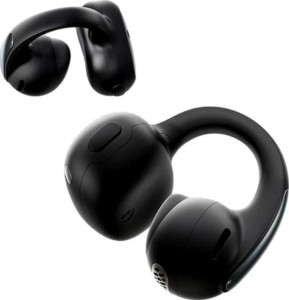
Baseus Bowie MC1
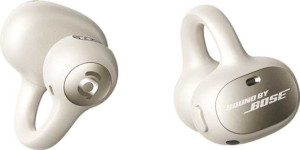
Baseus Inspire XC1

Baseus Bowie MC1 Baseus Inspire XC1

Overview

Welcome to our in-depth comparison of the Baseus Bowie MC1 and the Baseus Inspire XC1, two open-ear wireless earbuds from Baseus that share a strong foundation but differ in some meaningful ways. In this head-to-head, we examine key battlegrounds including water resistance ratings, battery performance, and audio codec support to help you decide which model best fits your needs.

Common Features

  • Both products have an open-ear fit.
  • Both products are water resistant.
  • Neither product has wires or cables.
  • Neither product is a neckband earbud design.
  • Neither product includes wingtips.
  • Neither product features RGB lighting.
  • Both products have stereo speakers.
  • Neither product has active noise cancellation.
  • Neither product offers passive noise reduction.
  • Both products have a lowest frequency of 20 Hz and a highest frequency of 20000 Hz.
  • Neither product supports spatial audio, Dolby Atmos, or Dirac Virtuo.
  • Both products have a charge time of 1.5 hours.
  • Neither product supports wireless charging.
  • Both products have a rechargeable battery with a battery level indicator.
  • Both products have a USB Type-C port.
  • Neither product supports fast pairing, LDHC, Bluetooth LE Audio, aptX, aptX HD, aptX Low Latency, or aptX Adaptive.
  • Both products support fast charging.
  • Both products have a mute function and can be used as a headset.
  • Both products have a control panel placed on the device and offer voice prompts.
  • Both products feature a noise-canceling microphone.

Main Differences

  • The ingress protection rating is IP57 on the Baseus Bowie MC1 and IP66 on the Baseus Inspire XC1.
  • Battery life is 9 hours on the Baseus Bowie MC1 and 8 hours on the Baseus Inspire XC1.
  • The battery life of the charging case is 31 hours on the Baseus Bowie MC1 and 32 hours on the Baseus Inspire XC1.
  • The Bluetooth version is 5.4 on the Baseus Bowie MC1 and 6.1 on the Baseus Inspire XC1.
  • LDAC support is present on the Baseus Inspire XC1 but not available on the Baseus Bowie MC1.
  • AAC support is present on the Baseus Inspire XC1 but not available on the Baseus Bowie MC1.
Specs Comparison
Baseus Bowie MC1

Baseus Bowie MC1

Baseus Inspire XC1

Baseus Inspire XC1

Design:
Fit Open-ear Open-ear
Ingress Protection (IP) rating IP57 IP66
water resistance Water resistant Water resistant
has no wires or cables
are neckband earbuds
wingtips included
has RGB lighting
has stereo speakers
has UV light
Has a display

Both the Baseus Bowie MC1 and the Baseus Inspire XC1 share a broadly identical design philosophy: fully wireless, open-ear form factors with no neckband, no wingtips, and no gimmicks like RGB lighting or UV emitters. For users who prioritize a lightweight, unobtrusive listen-while-aware experience, both earbuds deliver the same fundamental fit style and stereo audio setup.

The one meaningful differentiator in this group is ingress protection. The MC1 carries an IP57 rating, meaning it is dust-protected and can handle immersion in water up to one meter deep for 30 minutes — solid protection for workouts and rain. The Inspire XC1 steps up to IP66, which is fully dust-tight and rated to withstand powerful, sustained water jets from any direction. In practical terms, IP66 holds up better in heavy downpours, splashing environments, or dusty outdoor conditions where IP57 might eventually let particles through.

The Inspire XC1 holds a clear edge in durability for this group purely due to its superior ingress protection rating. If you frequently use earbuds in demanding or unpredictable outdoor conditions, the IP66 rating on the XC1 offers meaningfully greater peace of mind. For more typical everyday use, however, the MC1's IP57 is still more than adequate.

Sound quality:
has active noise cancellation (ANC)
has passive noise reduction
lowest frequency 20 Hz 20 Hz
highest frequency 20000 Hz 20000 Hz
supports spatial audio
has Dolby Atmos
has Dirac Virtuo
has a neodymium magnet

On paper, the Baseus Bowie MC1 and Baseus Inspire XC1 are acoustically identical across every measurable spec provided. Both cover the standard 20 Hz – 20,000 Hz frequency range — the full extent of human hearing — and neither product supports noise cancellation of any kind, whether active or passive. For open-ear earbuds, this is expected by design: the open fit is intentionally ambient-aware, so isolation is a non-goal rather than a shortcoming.

Neither earbud offers spatial audio, Dolby Atmos, Dirac Virtuo, or a neodymium magnet driver. The absence of a neodymium magnet is worth noting — most premium earbuds rely on neodymium for stronger, more efficient magnetic circuits that improve driver sensitivity and low-end response. Without one specified for either model, both sit at a similar baseline driver tier, with no data here to suggest one will out-perform the other in clarity, bass depth, or soundstage.

This group is a complete tie. Every sound quality specification is identical between the two products, and there is no differentiator to favor one over the other. Buyers for whom audio performance is the deciding factor should look to other specification groups — or real-world listening tests — since the data here offers no grounds for distinction.

Power:
Battery life 9 hours 8 hours
Battery life of charging case 31 hours 32 hours
charge time 1.5 hours 1.5 hours
has wireless charging
Has a solar power battery
has a battery level indicator
has a rechargeable battery

Battery performance is where these two earbuds finally diverge in a meaningful, if narrow, way. The Bowie MC1 delivers 9 hours of playback per charge versus the Inspire XC1's 8 hours — a one-hour gap that won't matter for most daily commutes but becomes relevant during long travel days or extended outdoor sessions where you can't easily top up the case.

Flip the perspective to total system endurance, though, and the XC1 edges ahead: its charging case provides 32 hours of combined battery life compared to the MC1's 31 hours. This means the XC1's case compensates for its shorter per-earbud runtime by squeezing out an extra charge cycle's worth of capacity. Both recharge in an identical 1.5 hours, and neither supports wireless charging — a feature increasingly common at this price tier that both products forgo.

Overall, this group is essentially a wash. The MC1 wins on single-session longevity while the XC1 wins on total combined runtime, and the difference in both cases is just one hour. Neither advantage is compelling enough to be a deciding factor on its own. Users who frequently forget to recharge their case may slightly prefer the XC1's larger reserve; those who prioritize going longest between case top-ups may lean toward the MC1.

Connectivity:
has fast pairing
Has USB Type-C
Bluetooth version 5.4 6.1
has LDAC
has LDHC
has Bluetooth LE Audio
has aptX Adaptive
has aptX Low Latency
has aptX HD
has aptX
has aptX Lossless
has aptX Voice
has Auracast
maximum Bluetooth range 10 m 10 m
supports Bluetooth pairing using NFC
Can be used wirelessly
has AAC

Connectivity is where the Inspire XC1 pulls ahead most decisively. It runs on Bluetooth 6.1 versus the Bowie MC1's Bluetooth 5.4 — a newer core standard that brings improvements in connection efficiency and interference resilience. More importantly, the XC1 supports LDAC and AAC, while the MC1 supports neither. LDAC allows audio transmission at up to three times the bitrate of standard Bluetooth SBC, which translates to noticeably more detail and dynamic range when streaming high-resolution audio from compatible sources like Android devices or hi-res streaming services. AAC, meanwhile, ensures cleaner, lower-latency audio for Apple device users compared to the SBC fallback the MC1 would be limited to.

Both earbuds share a 10-meter maximum Bluetooth range and USB-C charging, and neither offers fast pairing or NFC — conveniences that are absent on both sides. The shared range ceiling means neither will outperform the other in everyday walk-around use, but the XC1's newer Bluetooth version may provide a marginally more stable link in congested wireless environments.

The Inspire XC1 holds a clear advantage in this group. The combination of a newer Bluetooth standard and two additional audio codecs — particularly LDAC — makes it the stronger choice for users who stream high-quality audio or use Apple devices. The MC1, by contrast, is limited to SBC, which is a meaningful constraint for audio-conscious listeners.

Features:
release date February 2025 September 2025
has ambient sound mode
has in/on-ear detection
Supports fast charging
can read notifications
has a mute function
can be used as a headset
control panel placed on a device
Has voice prompts
travel bag is included
Has an in-line control panel
Has a temperature sensor
Has a built-in camera remote control function

Feature-for-feature, the Bowie MC1 and Inspire XC1 are carbon copies of each other in this category. Both support fast charging, include on-device touch controls, offer voice prompts, a mute function, and ship with a travel bag — a practical inclusion that hints at a shared target user who's frequently on the move.

Notably, both function as capable headsets for calls, which combined with their open-ear design makes them viable all-day companions for remote workers who need to stay aware of their surroundings. Neither offers ambient sound mode or ear-detection, but these omissions are consistent across both products and therefore don't shift the balance either way.

This group is a complete tie — every feature present or absent is identical between the two. Prospective buyers should weight other specification groups, particularly Connectivity and Design, where real differences between the two earbuds do emerge.

Microphone:
has a noise-canceling microphone

Both the Bowie MC1 and the Inspire XC1 include a noise-canceling microphone — a meaningful inclusion for open-ear earbuds, which are inherently more exposed to ambient sound than sealed designs. A noise-canceling mic helps filter out background noise during calls, making voice transmission cleaner for the person on the other end even in louder environments like streets or offices.

With only a single shared data point available for this group, there is no differentiator to analyze. This is a complete tie, and call quality performance in practice would depend on implementation details — such as microphone count and beamforming algorithms — that fall outside the scope of the provided specs.

Comparison Summary & Verdict

Both the Baseus Bowie MC1 and the Baseus Inspire XC1 are capable open-ear wireless earbuds that share a wide range of features, including fast charging support, a noise-canceling microphone, and identical frequency response. However, the differences are meaningful for certain users. The Baseus Inspire XC1 stands out with a superior IP66 water resistance rating, a newer Bluetooth 6.1 standard, and support for LDAC and AAC codecs, making it the stronger pick for audiophiles and outdoor users who need robust protection. The Baseus Bowie MC1, on the other hand, edges ahead with a slightly longer 9-hour battery life per charge, making it a solid choice for users who prioritize endurance over audio codec versatility.

Baseus Bowie MC1
Buy Baseus Bowie MC1 if...

Buy the Baseus Bowie MC1 if you prioritize longer per-charge battery life and a slightly lower price point matters more to you than advanced audio codec support.

Baseus Inspire XC1
Buy Baseus Inspire XC1 if...

Buy the Baseus Inspire XC1 if you need stronger water resistance, the latest Bluetooth 6.1 connectivity, or LDAC and AAC support for higher-quality audio streaming.