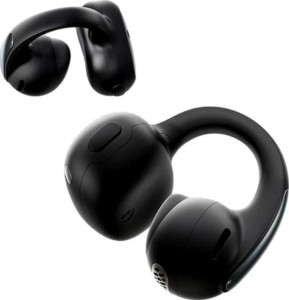
Baseus Bowie MC1
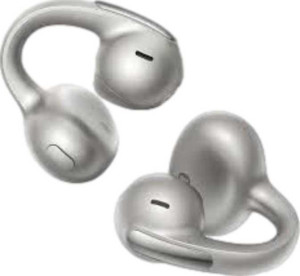
Baseus MC1 Pro

Baseus Bowie MC1 Baseus MC1 Pro

Overview

Welcome to our detailed spec comparison between the Baseus Bowie MC1 and the Baseus MC1 Pro, two open-ear wireless earbuds from Baseus sharing a similar foundation but differing in key areas. In this head-to-head, we examine how these two models stack up across water resistance ratings, audio performance, battery behavior, and Bluetooth connectivity — helping you identify which one truly fits your lifestyle and listening needs.

Common Features

  • Both products have an open-ear fit.
  • Both products are wireless with no wires or cables.
  • Neither product is a neckband earbud design.
  • Neither product includes wingtips.
  • Neither product has RGB lighting.
  • Both products feature stereo speakers.
  • Neither product has a UV light.
  • Neither product has a display.
  • Neither product has active noise cancellation (ANC).
  • Neither product has passive noise reduction.
  • Both products have a lowest frequency of 20 Hz.
  • Neither product supports spatial audio.
  • Neither product has Dolby Atmos.
  • Neither product has a neodymium magnet.
  • Both products have a charge time of 1.5 hours.
  • Neither product supports wireless charging.
  • Neither product has a solar power battery.
  • Both products have a battery level indicator.
  • Both products have a rechargeable battery.
  • Neither product supports fast pairing.
  • Both products have USB Type-C connectivity.
  • Neither product supports LDHC.
  • Neither product supports Bluetooth LE Audio.
  • Neither product supports aptX Adaptive, aptX Low Latency, aptX HD, or aptX.
  • Neither product has an ambient sound mode.
  • Neither product has in/on-ear detection.
  • Both products support fast charging.
  • Neither product can read notifications.
  • Both products have a mute function.
  • Both products can be used as a headset.
  • Both products have a control panel placed on the device.
  • Both products have voice prompts.
  • Both products have a noise-canceling microphone.

Main Differences

  • The Ingress Protection rating is IP57 on the Baseus Bowie MC1 and IP67 on the Baseus MC1 Pro.
  • The Baseus Bowie MC1 is water resistant, while the Baseus MC1 Pro is waterproof.
  • The weight is 10.4 g on the Baseus Bowie MC1 and 10 g on the Baseus MC1 Pro.
  • The highest frequency is 20000 Hz on the Baseus Bowie MC1 and 40000 Hz on the Baseus MC1 Pro.
  • Battery life is 9 hours on the Baseus Bowie MC1 and 8 hours on the Baseus MC1 Pro.
  • Battery life of the charging case is 31 hours on the Baseus Bowie MC1 and 32 hours on the Baseus MC1 Pro.
  • The Bluetooth version is 5.4 on the Baseus Bowie MC1 and 6 on the Baseus MC1 Pro.
  • LDAC support is present on the Baseus MC1 Pro but not available on the Baseus Bowie MC1.
  • AAC support is present on the Baseus MC1 Pro but not available on the Baseus Bowie MC1.
Specs Comparison
Baseus Bowie MC1

Baseus Bowie MC1

Baseus MC1 Pro

Baseus MC1 Pro

Design:
Fit Open-ear Open-ear
Ingress Protection (IP) rating IP57 IP67
water resistance Water resistant Waterproof
weight 10.4 g 10 g
has no wires or cables
are neckband earbuds
wingtips included
has RGB lighting
has stereo speakers
has UV light
Has a display

Both the Baseus Bowie MC1 and the Baseus MC1 Pro share the same fundamental design philosophy: open-ear, fully wireless earbuds with no neckband, no wingtips, no RGB lighting, and stereo playback. For users, this means a consistent, lightweight, cable-free experience on both sides of the comparison.

Where the two diverge is in water resistance and weight. The MC1 Pro carries an IP67 rating — meaning it is fully waterproof and can withstand submersion up to 1 meter for 30 minutes — while the MC1 is rated IP57, which offers strong water resistance but falls just short of that submersion threshold. In practice, both handle sweat and rain comfortably, but the Pro provides meaningfully more confidence around accidental water exposure. The Pro also shaves off a small but notable 0.4 g per earbud compared to the MC1's 10.4 g, a difference that can matter during extended wear on an open-ear form factor where fit relies on physical contact rather than a seal.

The MC1 Pro holds a clear edge in this group. Its superior IP67 waterproofing and marginally lower weight make it the better-designed product for active or outdoor use, while the two are otherwise identical in structural concept.

Sound quality:
has active noise cancellation (ANC)
has passive noise reduction
lowest frequency 20 Hz 20 Hz
highest frequency 20000 Hz 40000 Hz
supports spatial audio
has Dolby Atmos
has Dirac Virtuo
has a neodymium magnet

On noise isolation, both earbuds offer the same picture: no ANC, no passive noise reduction. As open-ear designs, this is expected — sound from the environment passes through freely by nature of the form factor, so neither product is suited for blocking out the world around you.

The one meaningful differentiator in this group is the upper frequency limit. The MC1 tops out at a standard 20,000 Hz, which covers the full range of human hearing. The MC1 Pro extends to 40,000 Hz, reaching into the ultrasonic range. In practical listening terms, this rarely translates to an audible difference for most people — human hearing generally does not perceive above 20 kHz — but it can indicate a driver tuned with higher headroom, which may contribute to cleaner reproduction near the top of the audible range. Neither earbud supports spatial audio, Dolby Atmos, or Dirac Virtuo, so there are no software-driven sound enhancements to separate them.

The MC1 Pro has a technical edge on paper with its extended high-frequency ceiling, though the real-world audible impact is limited for the vast majority of listeners. For practical purposes, this group is close to a tie, with the Pro holding a modest theoretical advantage.

Power:
Battery life 9 hours 8 hours
Battery life of charging case 31 hours 32 hours
charge time 1.5 hours 1.5 hours
has wireless charging
Has a solar power battery
has a battery level indicator
has a rechargeable battery

Total battery endurance is nearly identical across both products, but the split between earbud and case differs in a telling way. The MC1 delivers 9 hours of continuous playback per charge versus the MC1 Pro's 8 hours — a one-hour gap that gives the MC1 a slight advantage for long uninterrupted sessions, such as a full workday or a long-haul flight. The Pro partially compensates through its case, which offers 32 hours of total backup compared to the MC1's 31, making the combined endurance figures essentially equivalent at around 40 hours total.

Charge time is identical at 1.5 hours for both, and neither supports wireless charging — a feature increasingly common at higher price points but absent here. Both include a battery level indicator, which is a practical convenience that prevents unexpected shutdowns mid-use.

This group is effectively a near-tie, with a slight edge to the MC1 for per-session battery life. Users who prioritize fewer interruptions during a single listening session will prefer the MC1, while those who care more about total combined endurance will find the two products functionally equivalent.

Connectivity:
has fast pairing
Has USB Type-C
Bluetooth version 5.4 6
has LDAC
has LDHC
has Bluetooth LE Audio
has aptX Adaptive
has aptX Low Latency
has aptX HD
has aptX
has aptX Lossless
has aptX Voice
has Auracast
maximum Bluetooth range 10 m 10 m
supports Bluetooth pairing using NFC
Can be used wirelessly
has AAC

The connectivity gap between these two earbuds is significant. The MC1 Pro runs on Bluetooth 6 — the latest generation — while the MC1 uses Bluetooth 5.4. In practical terms, Bluetooth 6 brings improved connection stability, lower latency, and better coexistence with other wireless signals in crowded environments. Both share an identical 10 m maximum range, so the newer version does not extend reach here, but it does mean the Pro is better positioned for long-term device compatibility as the Bluetooth 6 ecosystem matures.

Audio codec support tells an equally clear story. The MC1 Pro adds LDAC and AAC — two codecs absent on the MC1, which relies solely on the standard SBC fallback. LDAC is particularly noteworthy: it transmits audio at up to three times the bitrate of SBC, making it the codec of choice for high-resolution audio playback on compatible Android devices. AAC, meanwhile, is the preferred codec for Apple devices, delivering noticeably cleaner audio over SBC on iPhones. The MC1's lack of both means it is at a disadvantage regardless of which mobile ecosystem a user is on.

The MC1 Pro holds a clear and meaningful edge in this group. A newer Bluetooth version combined with LDAC and AAC support makes it a substantially more capable wireless audio product, especially for listeners who stream high-quality audio or use Apple devices.

Features:
release date February 2025 May 2025
has ambient sound mode
has in/on-ear detection
Supports fast charging
can read notifications
has a mute function
can be used as a headset
control panel placed on a device
Has voice prompts
travel bag is included
Has an in-line control panel
Has a temperature sensor
Has a built-in camera remote control function

Across every single feature in this group, the Baseus Bowie MC1 and the MC1 Pro are identical. Both support fast charging, include on-device controls, offer voice prompts, carry a mute function, and ship with a travel bag — a practical inclusion that adds everyday portability value. Both can also function as a headset for calls, making them viable for work-from-home or on-the-go communication scenarios.

Notable absences apply equally to both: there is no ambient sound mode, no in-ear detection, and no notification readout. The lack of ambient mode is worth flagging for open-ear earbuds — while the form factor naturally lets in environmental sound, a dedicated ambient mode would offer more refined passthrough control, and neither product provides it.

This group is a complete tie. There is not a single feature difference to separate the two products here, so a buyer's decision should rest entirely on the distinctions found in other specification groups.

Microphone:
has a noise-canceling microphone

Microphone specs offer nothing to separate these two products: both the Baseus Bowie MC1 and the MC1 Pro include a noise-canceling microphone. For open-ear earbuds — which by design expose the mic to ambient sound — noise cancellation on the microphone side is a genuinely useful feature, helping to filter out background noise during calls so the person on the other end hears the speaker more clearly rather than their surroundings.

With only a single shared data point available in this group, there is no basis for differentiation. This is a complete tie, and call quality performance in practice would depend on implementation details not captured in these specs.

Comparison Summary & Verdict

After reviewing every specification, the Baseus Bowie MC1 and Baseus MC1 Pro emerge as closely matched open-ear earbuds with meaningful distinctions. The Baseus Bowie MC1 edges ahead in earbud battery life with 9 hours versus 8, and uses Bluetooth 5.4 — still a capable and widely supported standard. The Baseus MC1 Pro, on the other hand, raises the bar with a higher IP67 waterproof rating, an extended frequency range reaching 40000 Hz, the newer Bluetooth 6 standard, and support for both LDAC and AAC codecs for superior audio streaming quality. Buyers who need robust water protection and richer audio codec support will find the MC1 Pro the more compelling choice, while those prioritizing slightly longer earbud playback and a proven Bluetooth standard may be perfectly satisfied with the Bowie MC1.

Baseus Bowie MC1
Buy Baseus Bowie MC1 if...

Buy the Baseus Bowie MC1 if you want slightly longer earbud battery life at 9 hours and are comfortable with a water-resistant IP57 rating over full waterproofing.

Baseus MC1 Pro
Buy Baseus MC1 Pro if...

Buy the Baseus MC1 Pro if you need a fully waterproof IP67 build, a wider frequency range, Bluetooth 6, and LDAC and AAC codec support for higher-quality audio streaming.