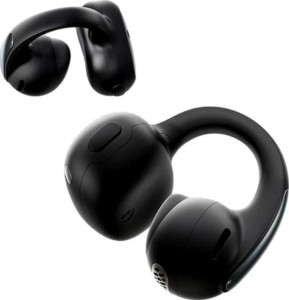
Baseus Bowie MC1
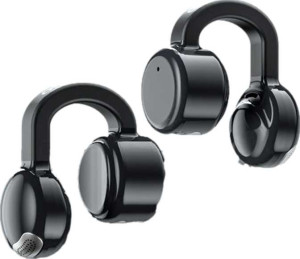
Roseselsa OpenFree

Baseus Bowie MC1 Roseselsa OpenFree

Overview

Welcome to our in-depth spec comparison between the Baseus Bowie MC1 and the Roseselsa OpenFree, two open-ear true wireless earbuds competing in a fast-growing audio segment. Both share a wireless, open-ear design with Bluetooth 5.4 and fast charging support, yet they take notably different approaches when it comes to water resistance ratings, battery endurance, and audio codec support. Read on to see how every spec stacks up before you decide.

Common Features

  • Both products use an open-ear fit design.
  • Neither product has wires or cables.
  • Neither product is a neckband earbud style.
  • Neither product includes wingtips.
  • Neither product features RGB lighting.
  • Both products have stereo speakers.
  • Neither product has a UV light.
  • Neither product has a display.
  • Neither product has active noise cancellation.
  • Neither product has passive noise reduction.
  • Both products share a lowest frequency of 20 Hz.
  • Both products share a highest frequency of 20000 Hz.
  • Neither product supports spatial audio.
  • Neither product has a neodymium magnet.
  • Neither product supports wireless charging.
  • Neither product has a solar power battery.
  • Both products have a battery level indicator.
  • Both products have a rechargeable battery.
  • Both products use Bluetooth version 5.4.
  • Neither product supports Bluetooth LE Audio.
  • Neither product supports aptX Adaptive, aptX Low Latency, aptX HD, or aptX.
  • Both products have USB Type-C charging.
  • Neither product has an ambient sound mode.
  • Neither product has in/on-ear detection.
  • Both products support fast charging.
  • Both products support multipoint connection for up to 2 devices.
  • Neither product can read notifications.
  • Both products have a mute function.
  • Both products can be used as a headset.
  • Both products have a control panel placed on the device.
  • Both products have a noise-canceling microphone.

Main Differences

  • Ingress Protection rating is IP57 on Baseus Bowie MC1 and IPX4 on Roseselsa OpenFree.
  • Baseus Bowie MC1 is water resistant, while Roseselsa OpenFree is sweat resistant.
  • Driver unit size is 10.8 mm on Baseus Bowie MC1 and 10 mm on Roseselsa OpenFree.
  • Battery life is 9 hours on Baseus Bowie MC1 and 10 hours on Roseselsa OpenFree.
  • Battery life of the charging case is 31 hours on Baseus Bowie MC1 and 42 hours on Roseselsa OpenFree.
  • Charge time is 1.5 hours on Baseus Bowie MC1 and 2 hours on Roseselsa OpenFree.
  • Earbud battery power is 48 mAh on Baseus Bowie MC1 and 45 mAh on Roseselsa OpenFree.
  • Charging case battery power is 600 mAh on Baseus Bowie MC1 and 500 mAh on Roseselsa OpenFree.
  • LDAC support is present on Roseselsa OpenFree but not available on Baseus Bowie MC1.
  • LDHC support is present on Roseselsa OpenFree but not available on Baseus Bowie MC1.
  • AAC support is present on Roseselsa OpenFree but not available on Baseus Bowie MC1.
Specs Comparison
Baseus Bowie MC1

Baseus Bowie MC1

Roseselsa OpenFree

Roseselsa OpenFree

Design:
Fit Open-ear Open-ear
Ingress Protection (IP) rating IP57 IPX4
water resistance Water resistant Sweat resistant
has no wires or cables
are neckband earbuds
wingtips included
has RGB lighting
has stereo speakers
has UV light
Has a display

Both the Baseus Bowie MC1 and the Roseselsa OpenFree share the same fundamental design philosophy: open-ear, fully wireless earbuds with stereo speakers and no neckband or wingtip attachments. For users who want situational awareness without sacrificing audio, this open-ear form factor is a meaningful shared strength. Neither model adds RGB lighting or a display, keeping the design clean and battery-focused.

The most significant differentiator in this group is water resistance. The Bowie MC1 carries an IP57 rating, meaning it is fully dust-tight and can withstand immersion in water up to 1 meter — making it genuinely suitable for workouts in the rain or accidental splashes. The OpenFree, rated at IPX4, is only tested against sweat and light splashing from any direction, with no dust protection certified at all. In practical terms, the Bowie MC1 offers substantially more environmental durability and peace of mind for active or outdoor use.

On design, the Baseus Bowie MC1 holds a clear edge due to its superior IP57 ingress protection. If you use earbuds in demanding conditions — heavy sweating, rain, or dusty environments — the MC1's rating is meaningfully more protective than the OpenFree's IPX4. For light, casual indoor use, the difference matters less, but the Bowie MC1 is the safer long-term choice for durability.

Sound quality:
has active noise cancellation (ANC)
has passive noise reduction
driver unit size 10.8 mm 10 mm
lowest frequency 20 Hz 20 Hz
highest frequency 20000 Hz 20000 Hz
supports spatial audio
has Dolby Atmos
has Dirac Virtuo
has a neodymium magnet

At the core of any earbuds comparison is sound quality, and here the two models converge on nearly identical specs. Both the Baseus Bowie MC1 and the Roseselsa OpenFree cover the full standard human hearing range of 20 Hz to 20,000 Hz, and neither offers ANC, passive noise reduction, or any spatial audio processing such as Dolby Atmos. For open-ear earbuds, the absence of noise cancellation is expected — the form factor is designed for ambient awareness, not isolation.

The one measurable difference is driver size: the Bowie MC1 uses a 10.8 mm driver versus the OpenFree's 10 mm. A slightly larger driver can, in theory, move more air and produce fuller low-end response, but this advantage is marginal at such a small size delta and is heavily dependent on tuning. Without additional data on driver quality or acoustic engineering, this gap should not be treated as a guaranteed sound improvement.

For this group, the two products are effectively tied. The specs are nearly identical across every meaningful dimension, and the minor driver size difference is too small to reliably predict a real-world audio advantage for the Bowie MC1. Users choosing between these two should not expect a meaningful sound quality difference based on the available data alone.

Power:
Battery life 9 hours 10 hours
Battery life of charging case 31 hours 42 hours
charge time 1.5 hours 2 hours
battery power 48 mAh 45 mAh
battery power (charging case) 600mAh 500mAh
has wireless charging
Has a solar power battery
has a battery level indicator
has a rechargeable battery

Battery endurance tells a revealing story here. The Roseselsa OpenFree edges ahead on per-session playback with 10 hours per charge compared to the Baseus Bowie MC1's 9 hours — a modest but real difference if you frequently go a full workday without reaching for the case. More striking is the total system endurance: the OpenFree's case delivers a combined total of 42 hours, versus 31 hours for the Bowie MC1. That is roughly a full extra day of listening before either the earbuds or the case need a wall outlet.

The Bowie MC1 counters with a faster charge time of 1.5 hours compared to the OpenFree's 2 hours, and it achieves this with a larger 600 mAh case battery versus the OpenFree's 500 mAh — which makes the OpenFree's longer total runtime particularly notable, suggesting more efficient energy management. Neither product supports wireless charging, so both require a wired top-up regardless.

On balance, the Roseselsa OpenFree holds the edge in power. Its longer earbud runtime and substantially greater total case capacity make it the stronger choice for travelers, commuters, or anyone who goes extended periods away from a charger. The Bowie MC1's faster recharge speed softens the gap but does not overcome the OpenFree's overall stamina advantage.

Connectivity:
has fast pairing
Has USB Type-C
Bluetooth version 5.4 5.4
has LDAC
has LDHC
has Bluetooth LE Audio
has aptX Adaptive
has aptX Low Latency
has aptX HD
has aptX
has aptX Lossless
has aptX Voice
has Auracast
maximum Bluetooth range 10 m 10 m
supports Bluetooth pairing using NFC
Can be used wirelessly
has AAC

The connectivity foundations are identical: both the Baseus Bowie MC1 and the Roseselsa OpenFree run on Bluetooth 5.4, share a 10-meter maximum range, use USB-C for charging, and lack fast pairing or NFC. At this level, neither product offers a meaningful edge in raw connection stability or convenience.

Where the two diverge sharply is audio codec support — and this matters for anyone who prioritizes streaming quality. The Bowie MC1 lists no high-quality codecs whatsoever, meaning it falls back on the baseline SBC codec for all audio transmission. The OpenFree, by contrast, supports LDAC, LDHC, and AAC. LDAC in particular is Sony's high-resolution codec capable of transmitting up to three times the data of standard Bluetooth audio, making a perceptible difference when streaming hi-res content from compatible sources. AAC is also the preferred codec for Apple device users, ensuring efficient, higher-quality playback in that ecosystem.

The Roseselsa OpenFree wins this category clearly. Codec support is a practical, real-world advantage: users with compatible streaming services or devices will get noticeably richer audio transmission with the OpenFree, while the Bowie MC1 offers no upgrade path beyond standard Bluetooth audio quality.

Features:
release date February 2025 June 2025
has ambient sound mode
has in/on-ear detection
Supports fast charging
multipoint count 2 2
can read notifications
has a mute function
can be used as a headset
control panel placed on a device
Has voice prompts
travel bag is included
Has an in-line control panel
Has a temperature sensor
Has a built-in camera remote control function

Across every single feature listed in this group, the Baseus Bowie MC1 and the Roseselsa OpenFree are a perfect match. Both support fast charging, connect to two devices simultaneously via multipoint, function as headsets with on-device controls, offer voice prompts, a mute function, and even include a travel bag in the box.

A few of the shared features are worth highlighting for their practical value. Multipoint connectivity at 2 devices means users can stay paired to both a laptop and a phone simultaneously — a genuine daily convenience for hybrid workers. Fast charging adds to the usability case, particularly relevant given the Bowie MC1's already shorter charge time noted previously. The included travel bag is a small but appreciated addition that speaks to each product's positioning as a portable daily driver.

This group is a complete tie. There is no differentiator to weigh — every feature is shared identically. Users deciding between these two earbuds should look to other spec groups, such as connectivity or design, where meaningful differences do exist.

Microphone:
has a noise-canceling microphone

Microphone data for this comparison is minimal but meaningful: both the Baseus Bowie MC1 and the Roseselsa OpenFree include a noise-canceling microphone. For open-ear earbuds — which by design let in ambient sound — microphone noise cancellation is particularly important. Without it, call recipients would hear everything in the user's environment; with it, the mic actively works to isolate the speaker's voice from background noise.

This group is a complete tie. With only one shared data point available, there is no basis to differentiate the two products on microphone performance. Factors like microphone count, beamforming technology, or call quality ratings are not provided, so no further conclusions can be drawn from the available specs alone.

Comparison Summary & Verdict

After a full spec-by-spec review, both earbuds share a strong common foundation: open-ear fit, Bluetooth 5.4, fast charging, dual-device multipoint, and a noise-canceling microphone. However, the two diverge in meaningful ways. The Baseus Bowie MC1 carries a superior IP57 water resistance rating and a larger 600 mAh charging case battery, making it the stronger pick for outdoor or active use where full water exposure is a concern. It also charges faster at just 1.5 hours. The Roseselsa OpenFree, on the other hand, pulls ahead with a longer 10-hour playback time, an impressive 42-hour case battery life, and support for LDAC, LDHC, and AAC codecs, giving it a clear edge for listeners who prioritize audio quality and all-day stamina over ruggedness.

Baseus Bowie MC1
Buy Baseus Bowie MC1 if...

Buy the Baseus Bowie MC1 if you need stronger water resistance for outdoor or active use and prefer a faster 1.5-hour charge time with a higher-capacity charging case.

Roseselsa OpenFree
Buy Roseselsa OpenFree if...

Buy the Roseselsa OpenFree if you want longer total battery life, superior audio codec support with LDAC and LDHC, and extended listening sessions without reaching for the case.