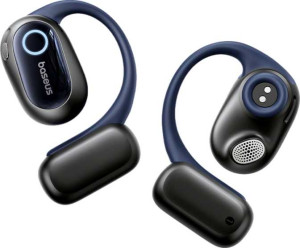
Baseus Bowie MF1
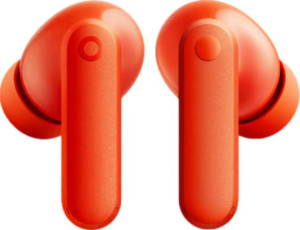
CMF Buds 2a

Baseus Bowie MF1 CMF Buds 2a

Overview

Welcome to our in-depth specification comparison between the Baseus Bowie MF1 and the CMF Buds 2a. Both earbuds share a solid wireless foundation built on Bluetooth 5.4, multipoint connectivity, and fast charging, yet they diverge sharply when it comes to battery endurance, audio features, and smart convenience tools. Read on to see how these two contenders stack up across every key category.

Common Features

  • Both products use an in-ear fit.
  • Both products are fully wireless with no cables.
  • Neither product is a neckband earbud style.
  • Neither product includes wingtips.
  • Neither product features RGB lighting.
  • Both products have stereo speakers.
  • Neither product has a UV light.
  • Neither product has a display.
  • Both products offer passive noise reduction.
  • The lowest frequency on both products is 20 Hz.
  • The highest frequency on both products is 20000 Hz.
  • Neither product supports spatial audio.
  • Neither product has a neodymium magnet.
  • Neither product supports wireless charging.
  • Both products have a battery level indicator.
  • Both products have a rechargeable battery.
  • Both products use USB Type-C for charging.
  • Both products use Bluetooth version 5.4.
  • Both products support fast charging.
  • Both products support multipoint connection with up to 2 devices.
  • Neither product can read notifications.
  • Both products have a mute function.
  • Both products can be used as a headset.
  • Both products have a control panel placed on the device.
  • Both products have voice prompts.
  • Both products have a noise-canceling microphone.

Main Differences

  • The ingress protection rating is IPX4 on Baseus Bowie MF1 and IP54/IPX2 on CMF Buds 2a.
  • The Baseus Bowie MF1 is rated as sweat resistant, while the CMF Buds 2a has no stated water resistance rating.
  • Active noise cancellation is present on CMF Buds 2a but not available on Baseus Bowie MF1.
  • The driver unit size is 16 mm on Baseus Bowie MF1 and 12.4 mm on CMF Buds 2a.
  • Battery life is 12 hours on Baseus Bowie MF1 and 8 hours on CMF Buds 2a.
  • The battery life of the charging case is 48 hours on Baseus Bowie MF1 and 27.5 hours on CMF Buds 2a.
  • Charge time is 2 hours on Baseus Bowie MF1 and 1.5 hours on CMF Buds 2a.
  • Fast pairing is available on CMF Buds 2a but not on Baseus Bowie MF1.
  • LDAC support is present on Baseus Bowie MF1 but not available on CMF Buds 2a.
  • Ambient sound mode is available on CMF Buds 2a but not on Baseus Bowie MF1.
  • A find device feature is present on CMF Buds 2a but not available on Baseus Bowie MF1.
Specs Comparison
Baseus Bowie MF1

Baseus Bowie MF1

CMF Buds 2a

CMF Buds 2a

Design:
Fit In-ear In-ear
Ingress Protection (IP) rating IPX4 IP54, IPX2
water resistance Sweat resistant None
has no wires or cables
are neckband earbuds
wingtips included
has RGB lighting
has stereo speakers
has UV light
Has a display

Both the Baseus Bowie MF1 and the CMF Buds 2a share the same fundamental design DNA: true wireless, in-ear fit, no neckband, no wingtips, no RGB lighting, and stereo speakers. For most users, the day-to-day form factor experience will feel essentially identical.

The key differentiator in this group is water resistance. The Bowie MF1 carries an IPX4 rating, which means it is protected against sweat and light splashes from any direction — a solid standard for workout use. The CMF Buds 2a, however, lists a dual rating of IP54 and IPX2. IP54 adds dust resistance (the ″5″ digit) alongside splash protection, while IPX2 covers dripping water from above. In practice, IP54 is arguably a more versatile real-world rating since dust ingress can be just as damaging as moisture over time, even if the water resistance ceiling (IPX2) is technically lower than the MF1′s IPX4.

On balance, neither product has a sweeping design advantage. The Bowie MF1 edges ahead for sweat-heavy athletic use thanks to its higher water resistance, while the CMF Buds 2a counters with added dust protection that makes it slightly better suited to outdoor or dusty environments. The winner here depends on use case: IPX4 favors gym goers, while IP54 favors commuters and outdoor users.

Sound quality:
has active noise cancellation (ANC)
has passive noise reduction
driver unit size 16 mm 12.4 mm
lowest frequency 20 Hz 20 Hz
highest frequency 20000 Hz 20000 Hz
supports spatial audio
has Dolby Atmos
has Dirac Virtuo
has a neodymium magnet

Both earbuds share an identical frequency range of 20 Hz to 20,000 Hz, covering the full audible spectrum, and neither supports spatial audio, Dolby Atmos, or Dirac Virtuo — so on paper, the sonic feature set is largely symmetrical. The real divergence lies in driver size and noise isolation approach.

The Bowie MF1 uses a notably larger 16 mm driver, compared to the CMF Buds 2a′s 12.4 mm unit. Larger drivers generally move more air, which tends to translate into fuller low-end response and a more expansive sound stage — though driver size alone does not guarantee superior tuning. On the noise isolation front, the Bowie MF1 relies solely on passive noise reduction, meaning it depends on the physical seal of the ear tip to block ambient sound. The CMF Buds 2a adds Active Noise Cancellation (ANC) on top of the same passive seal, giving it a meaningful practical edge in noisy environments like commutes or open offices where passive isolation alone falls short.

The two products trade blows here: the Bowie MF1′s larger driver is an advantage for raw acoustic potential, while the CMF Buds 2a′s ANC addresses a real-world pain point that driver size cannot solve. For users who prioritize immersive sound in quiet settings, the MF1 is compelling; for those regularly dealing with background noise, the ANC on the CMF Buds 2a is the more decisive advantage, giving it the overall edge in this category.

Power:
Battery life 12 hours 8 hours
Battery life of charging case 48 hours 27.5 hours
charge time 2 hours 1.5 hours
has wireless charging
Has a solar power battery
has a battery level indicator
has a rechargeable battery

Battery endurance is where the Baseus Bowie MF1 pulls ahead decisively. Its earbuds last 12 hours on a single charge versus 8 hours for the CMF Buds 2a — a 50% gap that is genuinely significant for long-haul travelers, remote workers, or anyone who simply forgets to charge regularly. Combined with a case that extends total playback to 48 hours, the MF1 can realistically go several days between case charges, whereas the Buds 2a′s 27.5 hours of combined life is more of a two-day solution.

The CMF Buds 2a does close some ground on charge time, refilling in 1.5 hours compared to the MF1′s 2 hours. That 30-minute difference is mildly convenient but unlikely to be a deciding factor for most users — it matters most in scenarios where you need a quick top-up before heading out. Neither model supports wireless charging, so both require a cable regardless.

Across the board, the Bowie MF1 holds a clear power advantage. More earbud runtime, a significantly larger case reserve, and only a modest charge time penalty make it the stronger pick for users who prioritize staying untethered from a power outlet for as long as possible.

Connectivity:
has fast pairing
Has USB Type-C
Bluetooth version 5.4 5.4
has LDAC
has LDHC
has Bluetooth LE Audio
has aptX Adaptive
has aptX Low Latency
has aptX HD
has aptX
has aptX Lossless
has aptX Voice
has Auracast
maximum Bluetooth range 10 m 10 m
supports Bluetooth pairing using NFC
Can be used wirelessly
has AAC

At the foundation, these two earbuds are well-matched: both run on Bluetooth 5.4, support AAC, max out at a 10 m wireless range, and charge via USB-C. For the majority of users pairing to a smartphone, this shared baseline delivers reliable, low-latency connectivity with no meaningful difference in day-to-day experience.

Where they diverge is in two specific features. The Bowie MF1 supports LDAC, Sony′s high-resolution audio codec that transmits up to three times more data than standard Bluetooth — a tangible benefit for audiophiles streaming lossless audio on Android devices that also support LDAC. The CMF Buds 2a skips LDAC entirely but counters with fast pairing, which streamlines the initial Bluetooth handshake for a quicker, more seamless first connection — particularly useful on Android.

The verdict hinges on the user′s priorities. LDAC is a meaningful codec advantage for high-fidelity listeners, but only when the source device supports it and the content warrants it. Fast pairing is a convenience feature that benefits everyone from day one. Neither advantage is universally superior, but for pure audio quality potential, the Bowie MF1 holds the edge; for effortless setup and broader everyday convenience, the CMF Buds 2a has the upper hand.

Features:
release date March 2025 April 2025
has ambient sound mode
has in/on-ear detection
has find device feature
Supports fast charging
multipoint count 2 2
can read notifications
has a mute function
can be used as a headset
control panel placed on a device
Has voice prompts
travel bag is included
Has an in-line control panel
Has a temperature sensor
Has a built-in camera remote control function

The feature set of these two earbuds shares a strong common core: both support fast charging, 2-device multipoint connectivity, on-device touch controls, voice prompts, a mute function, headset capability, and even include a travel bag. For everyday usability, this overlap means neither product feels stripped-down at the baseline level.

The differentiation comes from two features exclusive to the CMF Buds 2a: ambient sound mode and a find device function. Ambient sound mode — sometimes called transparency mode — uses the microphones to pipe in environmental audio, allowing the user to stay aware of surroundings without removing the earbuds. This is a genuinely practical feature for commuters, pedestrians, or anyone who needs to catch an announcement or hold a quick conversation. The find device feature adds a layer of peace of mind, helping locate misplaced earbuds via a companion app — a small but meaningful convenience that the Bowie MF1 simply does not offer.

The CMF Buds 2a holds a clear advantage in this category. Neither of the two features it adds over the Bowie MF1 is a niche luxury — ambient mode and device tracking address real, recurring scenarios that improve the ownership experience in a tangible way. The Bowie MF1 matches it on every shared spec but cannot compensate for these omissions.

Microphone:
has a noise-canceling microphone

The microphone spec data available for this comparison tells a straightforward story: both the Baseus Bowie MF1 and the CMF Buds 2a feature a noise-canceling microphone. This means both earbuds are designed to filter out background noise during calls — a meaningful baseline that makes either a viable option for phone calls, video meetings, or voice assistant use in moderately noisy environments.

Based strictly on the provided data, this category is a complete tie. There are no additional microphone specifications to differentiate the two products here, so neither holds an advantage over the other on this dimension alone.

Comparison Summary & Verdict

After examining all the evidence, it is clear that the Baseus Bowie MF1 and the CMF Buds 2a serve distinct listener profiles. The Baseus Bowie MF1 shines for users who prioritize raw endurance, offering 12 hours of battery life and a massive 48-hour charging case, along with LDAC support for higher-quality audio streaming. On the other hand, the CMF Buds 2a brings a more feature-rich daily experience with active noise cancellation, an ambient sound mode, fast pairing, and a find-device feature, making it better suited to commuters and multitaskers. Neither product is a clear all-around winner; the right choice depends entirely on whether you value long battery life and audio fidelity, or a smarter, more connected feature set.

Baseus Bowie MF1
Buy Baseus Bowie MF1 if...

Buy the Baseus Bowie MF1 if you want maximum battery endurance with 12 hours of playback and a 48-hour charging case, and you value LDAC support for higher-quality wireless audio.

CMF Buds 2a
Buy CMF Buds 2a if...

Buy the CMF Buds 2a if active noise cancellation, ambient sound mode, fast pairing, and a find-device feature are important to your daily routine.