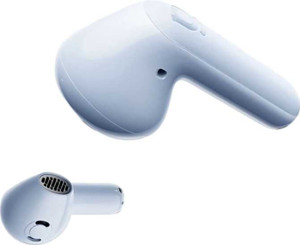
Baseus Bowie WX5
Baseus BS1

Baseus Bowie WX5 Baseus BS1

Overview

Welcome to our detailed spec comparison between the Baseus Bowie WX5 and the Baseus BS1. Both are fully wireless earbuds sharing a solid foundation of features, yet they take notably different paths when it comes to battery endurance, audio capabilities, and build quality. Whether you care most about spatial audio support or long-lasting charge cycles, this breakdown will help you decide which pair is the right fit for your lifestyle.

Common Features

  • Both products use an earbud fit style.
  • Neither product has wires or cables.
  • Neither product is a neckband earbud.
  • Neither product includes wingtips.
  • Neither product has RGB lighting.
  • Both products have stereo speakers.
  • Neither product has a UV light.
  • Neither product has a display.
  • Neither product has active noise cancellation (ANC).
  • Neither product has passive noise reduction.
  • Both products share a lowest frequency of 20 Hz.
  • Both products share a highest frequency of 20000 Hz.
  • Neither product supports Dolby Atmos.
  • Neither product supports Dirac Virtuo.
  • Neither product has a neodymium magnet.
  • Neither product supports wireless charging.
  • Neither product has a solar power battery.
  • Both products have a battery level indicator.
  • Both products have a rechargeable battery.
  • Neither product supports fast pairing.
  • Both products have USB Type-C connectivity.
  • Neither product supports LDAC.
  • Neither product supports LDHC.
  • Neither product supports Bluetooth LE Audio.
  • Neither product supports aptX Adaptive.
  • Neither product supports aptX Low Latency.
  • Neither product supports aptX HD.
  • Neither product has an ambient sound mode.
  • Neither product has in/on-ear detection.
  • Neither product has a find device feature.
  • Both products support fast charging.
  • Neither product can read notifications.
  • Neither product has a built-in translator.
  • Both products have a mute function.
  • Both products can be used as a headset.
  • Both products have 4 microphones.
  • Both products have a noise-canceling microphone.

Main Differences

  • Water resistance is present on Baseus BS1 but not available on Baseus Bowie WX5.
  • Driver unit size is 13 mm on Baseus Bowie WX5 and 10 mm on Baseus BS1.
  • Spatial audio support is present on Baseus Bowie WX5 but not available on Baseus BS1.
  • Battery life is 6.5 hours on Baseus Bowie WX5 and 8 hours on Baseus BS1.
  • Battery life of the charging case is 23.5 hours on Baseus Bowie WX5 and 42 hours on Baseus BS1.
  • Charge time is 1 hour on Baseus Bowie WX5 and 2 hours on Baseus BS1.
  • Battery power of the charging case is 40 mAh on Baseus Bowie WX5 and 600 mAh on Baseus BS1.
  • Bluetooth version is 5.3 on Baseus Bowie WX5 and 6 on Baseus BS1.
Specs Comparison
Baseus Bowie WX5

Baseus Bowie WX5

Baseus BS1

Baseus BS1

Design:
Fit Earbud Earbud
water resistance None Water resistant
has no wires or cables
are neckband earbuds
wingtips included
has RGB lighting
has stereo speakers
has UV light
Has a display

Both the Baseus Bowie WX5 and the Baseus BS1 share the same fundamental design DNA: a true wireless earbud form factor with no cables, no neckband, no wingtips, and no gimmicks like RGB lighting or a built-in display. For users, this means a clean, minimalist in-ear experience on both sides of the comparison.

The one meaningful differentiator in this group is water resistance. The BS1 carries a water-resistant rating, while the WX5 offers none. In practice, this matters: the BS1 can handle sweat during workouts or light rain during a commute without risk of damage, making it a safer choice for active or outdoor use. The WX5, lacking any such protection, is better suited to controlled, indoor environments where moisture is not a concern.

For the Design category, the Baseus BS1 has a clear edge solely due to its water resistance. All other design attributes are identical, so if durability against moisture is relevant to your use case, the BS1 is the more practical choice.

Sound quality:
has active noise cancellation (ANC)
has passive noise reduction
driver unit size 13 mm 10 mm
lowest frequency 20 Hz 20 Hz
highest frequency 20000 Hz 20000 Hz
supports spatial audio
has Dolby Atmos
has Dirac Virtuo
has a neodymium magnet

Neither the Baseus Bowie WX5 nor the Baseus BS1 offers active or passive noise cancellation, so both will let in ambient sound equally. That settled, the most tangible hardware difference here is driver size: the WX5 uses a 13 mm driver versus the BS1's 10 mm unit. Larger drivers generally move more air, which can translate to fuller bass response and greater overall loudness potential — though driver size alone does not guarantee superior tuning.

Both earbuds cover the standard 20 Hz–20,000 Hz frequency range, meaning neither has a measurable advantage in raw frequency reproduction on paper. Where they diverge meaningfully is spatial audio support: the WX5 includes it, while the BS1 does not. Spatial audio can significantly enhance the sense of soundstage and immersion — particularly for movies, gaming, and select music — giving the WX5 a feature the BS1 simply cannot replicate.

On sound quality specs, the Baseus Bowie WX5 holds the edge. Its larger driver and spatial audio support make it the stronger choice for users who prioritize an expansive, immersive listening experience, while the BS1 offers a more straightforward audio setup with no standout acoustic features to compensate.

Power:
Battery life 6.5 hours 8 hours
Battery life of charging case 23.5 hours 42 hours
charge time 1 hours 2 hours
battery power (charging case) 40mAh 600mAh
has wireless charging
Has a solar power battery
has a battery level indicator
has a rechargeable battery

Battery endurance is where the Baseus BS1 pulls decisively ahead. Its earbuds last 8 hours per charge compared to the WX5's 6.5 hours — a 23% advantage that adds up quickly for commuters or all-day listeners who would rather not reach for the case mid-session. The total system endurance gap is even more striking: the BS1 delivers a combined 42 hours versus the WX5's 23.5 hours, nearly doubling the time between wall-charger visits.

That dramatic gap in total runtime is directly explained by the charging case capacity: the BS1's case holds 600 mAh, while the WX5's case carries just 40 mAh. A larger case battery means more full top-ups on the go before the case itself needs recharging — a crucial real-world convenience for travel or extended trips away from a power outlet. The trade-off is charge time: the BS1 takes 2 hours to fully charge versus the WX5's faster 1 hour, so the WX5 is quicker to recover when you do plug in.

Overall, the Baseus BS1 wins the Power category convincingly. Longer earbud battery life, vastly greater case capacity, and far superior total runtime outweigh the WX5's one-hour charge-time advantage for most users. The WX5 is the better pick only if rapid recharging is a top priority over longevity.

Connectivity:
has fast pairing
Has USB Type-C
Bluetooth version 5.3 6
has LDAC
has LDHC
has Bluetooth LE Audio
has aptX Adaptive
has aptX Low Latency
has aptX HD
has aptX
has aptX Lossless
audio latency 60 ms 60 ms
has aptX Voice
has Auracast
maximum Bluetooth range 10 m 10 m
supports Bluetooth pairing using NFC
Can be used wirelessly
has AAC

Connectivity specs for these two earbuds are remarkably aligned — identical 10 m Bluetooth range, matched 60 ms audio latency, shared AAC codec support, and USB-C charging on both. The one spec that sets them apart is Bluetooth version: the Baseus BS1 runs on Bluetooth 6, while the Baseus Bowie WX5 uses Bluetooth 5.3.

In practical terms, Bluetooth 6 introduces improvements in connection precision and channel sounding, which can mean more stable links in congested wireless environments and groundwork for future feature compatibility. That said, neither earbud leverages advanced codecs like LDAC or aptX, and both share the same latency and range figures — so the real-world day-to-day difference for most listeners will be subtle rather than transformative.

The Baseus BS1 holds a narrow edge in connectivity thanks to its newer Bluetooth version, which offers a more future-proof foundation. However, given how closely matched every other connectivity attribute is, this advantage is modest — users unlikely to push the limits of Bluetooth performance will find both earbuds functionally equivalent in this category.

Features:
release date July 2025 August 2025
has ambient sound mode
has in/on-ear detection
has find device feature
Supports fast charging
can read notifications
Has a built-in translator
has a mute function
can be used as a headset
control panel placed on a device
Has voice prompts
travel bag is included
Has an in-line control panel
Has a temperature sensor
Has a built-in camera remote control function

Across every feature spec in this category, the Baseus Bowie WX5 and Baseus BS1 are a perfect match. Both support fast charging, include on-device controls, offer voice prompts, have a mute function, and ship with a travel bag — a practical set of conveniences that covers the essentials for everyday use and commuting.

It is equally worth noting what neither earbud offers: there is no ambient sound mode, no in-ear detection, and no find-my-device feature on either side. These omissions place both products in a similar tier — functional and well-equipped for core use cases, but without the premium quality-of-life additions found on higher-end earbuds.

This category is a complete tie. Every feature present on one is present on the other, and every feature absent is absent from both. Users should look to other spec groups — particularly Design, Sound Quality, and Power — to differentiate between these two earbuds.

Microphone:
number of microphones 4 4
has a noise-canceling microphone

Call and voice quality specs are identical across both earbuds. The Baseus Bowie WX5 and Baseus BS1 each feature 4 microphones with noise-canceling capability — a configuration that typically enables beamforming or multi-mic array processing to isolate the speaker's voice and suppress background noise during calls.

A 4-mic setup is a meaningful specification at this price tier, as it goes beyond the single or dual-mic arrangements common in budget earbuds. Combined with noise cancellation, both products are reasonably well-equipped for voice calls in moderately noisy environments such as offices or public transit.

The Microphone category is a complete tie. With no differences whatsoever in mic count or noise-canceling support, call quality hardware is identical on paper. Neither product has any advantage here, and users who prioritize microphone performance equally have no reason to favor one over the other on this basis alone.

Comparison Summary & Verdict

After examining the full spec sheet, both earbuds prove to be capable wireless options that share fast charging, a 4-microphone noise-canceling setup, and a broad 20 Hz to 20000 Hz frequency range. However, their differences are meaningful. The Baseus Bowie WX5 stands out with its larger 13 mm driver and spatial audio support, making it the stronger choice for listeners who prioritize immersive sound and faster 1-hour charging. On the other hand, the Baseus BS1 excels in practicality and durability, offering water resistance, a substantially longer 42-hour charging case battery life, and the newer Bluetooth 6 standard. Choose the Baseus Bowie WX5 if audio quality and spatial immersion come first; choose the Baseus BS1 if you need a resilient, long-lasting companion for daily active use.

Baseus Bowie WX5
Buy Baseus Bowie WX5 if...

Buy the Baseus Bowie WX5 if you value spatial audio support, a larger 13 mm driver for richer sound, and a faster 1-hour charge time.

Baseus BS1
Buy Baseus BS1 if...

Buy the Baseus BS1 if you need water resistance, a much longer 42-hour charging case battery life, and the latest Bluetooth 6 connectivity.