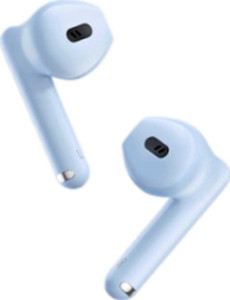
Baseus Bowie WX5
Huawei FreeBuds SE 4

Baseus Bowie WX5 Huawei FreeBuds SE 4

Overview

Welcome to our detailed spec comparison between the Baseus Bowie WX5 and the Huawei FreeBuds SE 4. Both are truly wireless earbuds sharing a number of fundamentals, yet they diverge meaningfully when it comes to noise cancellation, battery endurance, and audio customization. Whether you prioritize raw driver size or all-day stamina, this side-by-side breakdown will help you decide which of these two earbuds best fits your lifestyle and listening needs.

Common Features

  • Both products are wireless and have no wires or cables.
  • Neither product is a neckband earbud style.
  • Neither product includes wingtips.
  • Neither product has RGB lighting.
  • Both products have stereo speakers.
  • Neither product has a UV light.
  • Neither product has a display.
  • Both products have a frequency range of 20 Hz to 20000 Hz.
  • Dolby Atmos support is not available on either product.
  • Dirac Virtuo support is not available on either product.
  • Neither product has a neodymium magnet.
  • Both products take 1 hour to charge.
  • Wireless charging is not available on either product.
  • Neither product has a solar power battery.
  • Both products have a battery level indicator.
  • Both products have a rechargeable battery.
  • Fast pairing is not available on either product.
  • Both products have USB Type-C.
  • LDAC support is not available on either product.
  • Bluetooth LE Audio is not available on either product.
  • aptX Adaptive support is not available on either product.
  • aptX Low Latency support is not available on either product.
  • aptX HD support is not available on either product.
  • In/on-ear detection is not available on either product.
  • Both products support fast charging.
  • Neither product can read notifications.
  • Neither product has a built-in translator.
  • Both products have a mute function.
  • Both products can be used as a headset.
  • Both products have a control panel placed on the device.
  • Both products have voice prompts.
  • Both products have a noise-canceling microphone.

Main Differences

  • The fit style is earbud on Baseus Bowie WX5, while it is in-ear on Huawei FreeBuds SE 4.
  • Water resistance is absent on Baseus Bowie WX5, while Huawei FreeBuds SE 4 is sweat resistant.
  • Active noise cancellation (ANC) is present on Huawei FreeBuds SE 4 but not available on Baseus Bowie WX5.
  • Passive noise reduction is present on Huawei FreeBuds SE 4 but not available on Baseus Bowie WX5.
  • Driver unit size is 13 mm on Baseus Bowie WX5 and 10 mm on Huawei FreeBuds SE 4.
  • Spatial audio support is available on Baseus Bowie WX5 but not on Huawei FreeBuds SE 4.
  • Battery life is 6.5 hours on Baseus Bowie WX5 and 10 hours on Huawei FreeBuds SE 4.
  • Battery life of the charging case is 23.5 hours on Baseus Bowie WX5 and 40 hours on Huawei FreeBuds SE 4.
  • Battery power is 400 mAh on Baseus Bowie WX5 and 41 mAh on Huawei FreeBuds SE 4.
  • Charging case battery power is 40 mAh on Baseus Bowie WX5 and 510 mAh on Huawei FreeBuds SE 4.
  • Bluetooth version is 5.3 on Baseus Bowie WX5 and 5.4 on Huawei FreeBuds SE 4.
  • Ambient sound mode is available on Huawei FreeBuds SE 4 but not on Baseus Bowie WX5.
  • A find device feature is available on Huawei FreeBuds SE 4 but not on Baseus Bowie WX5.
  • The number of microphones is 4 on Baseus Bowie WX5 and 6 on Huawei FreeBuds SE 4.
Specs Comparison
Baseus Bowie WX5

Baseus Bowie WX5

Huawei FreeBuds SE 4

Huawei FreeBuds SE 4

Design:
Fit Earbud In-ear
water resistance None Sweat resistant
has no wires or cables
are neckband earbuds
wingtips included
has RGB lighting
has stereo speakers
has UV light
Has a display

The most meaningful design difference between these two earbuds lies in their fit style and water resistance. The Baseus Bowie WX5 uses an earbud fit — a shallower, ear-resting design that sits at the entrance of the ear canal without sealing it. The Huawei FreeBuds SE 4, by contrast, uses an in-ear fit, meaning it inserts into the ear canal to create a passive seal. In practice, this affects both comfort over long sessions and passive noise isolation: in-ear designs generally offer better sound isolation and more stable positioning during activity, while earbud-style designs tend to feel less intrusive for users sensitive to in-canal pressure.

Compounding this advantage, the FreeBuds SE 4 carries sweat resistance, whereas the Bowie WX5 has no water resistance rating at all. For users who plan to use these during workouts or in unpredictable conditions, this is a tangible real-world differentiator — the Baseus simply cannot handle moisture exposure by spec.

On shared traits, both are fully wireless, neither uses a neckband form factor, and both lack extras like wingtips, RGB lighting, or a display. These are clean, conventional truly-wireless designs. However, the Huawei FreeBuds SE 4 holds a clear design edge here: its in-ear fit offers better isolation and stability, and its sweat resistance adds durability that the Baseus Bowie WX5 cannot match.

Sound quality:
has active noise cancellation (ANC)
has passive noise reduction
driver unit size 13 mm 10 mm
lowest frequency 20 Hz 20 Hz
highest frequency 20000 Hz 20000 Hz
supports spatial audio
has Dolby Atmos
has Dirac Virtuo
has a neodymium magnet

Noise isolation is where these two earbuds diverge most sharply. The Huawei FreeBuds SE 4 offers both Active Noise Cancellation (ANC) and passive noise reduction — a meaningful combination that addresses ambient sound both electronically and through physical ear canal sealing. The Baseus Bowie WX5 has neither, meaning users hear their environment unfiltered. For commuters, office workers, or anyone in noisy settings, this is not a minor gap — it fundamentally changes the listening experience the two earbuds can deliver.

Flipping the advantage, the Bowie WX5 carries a larger 13 mm driver compared to the FreeBuds SE 4's 10 mm driver. A bigger driver moves more air and can, in principle, produce a fuller low-end response and greater overall dynamic range — though driver size alone does not guarantee superior sound tuning. Both share an identical 20 Hz – 20,000 Hz frequency range on paper, covering the full range of human hearing. The Bowie WX5 also supports spatial audio, adding a virtual surround dimension to compatible content, while the FreeBuds SE 4 does not.

This group does not produce a clean winner — it depends on the user's priority. Those who value immersive, distraction-free listening should lean toward the FreeBuds SE 4 for its ANC capability. Users who prioritize raw driver size and spatial audio support may find the Bowie WX5 more appealing — though without ANC, that advantage is harder to realize in noisy real-world environments.

Power:
Battery life 6.5 hours 10 hours
Battery life of charging case 23.5 hours 40 hours
charge time 1 hours 1 hours
battery power 400 mAh 41 mAh
battery power (charging case) 40mAh 510mAh
has wireless charging
Has a solar power battery
has a battery level indicator
has a rechargeable battery

Battery life tells the clearest story here. The Huawei FreeBuds SE 4 delivers 10 hours of playback per charge versus 6.5 hours for the Baseus Bowie WX5 — a 54% advantage on a single charge. Extend that to total system endurance including the charging case, and the gap widens further: 40 hours total for the FreeBuds SE 4 against 23.5 hours for the Bowie WX5. For users who travel frequently or go long stretches without access to a power outlet, this difference is substantial and directly affects how often the case itself needs to be recharged.

Where the two products converge is on charge time — both reach full charge in 1 hour, which is a reasonable and comparable recovery speed. Neither supports wireless charging, so both rely on a wired connection to top up. Both also include a battery level indicator, giving users visibility into remaining power without needing a companion app.

The FreeBuds SE 4 holds a decisive edge in this category. Across every endurance metric provided — per-charge playback and total case capacity — it outlasts the Bowie WX5 by a meaningful margin. For power-conscious users, this alone could be a determining factor.

Connectivity:
has fast pairing
Has USB Type-C
Bluetooth version 5.3 5.4
has LDAC
has LDHC
has Bluetooth LE Audio
has aptX Adaptive
has aptX Low Latency
has aptX HD
has aptX
has aptX Lossless
has aptX Voice
has Auracast
maximum Bluetooth range 10 m 10 m
supports Bluetooth pairing using NFC
Can be used wirelessly
has AAC

Connectivity is the most evenly matched category between these two earbuds. Both use USB Type-C for charging, support AAC as their highest-quality audio codec, cap out at a 10 m Bluetooth range, and skip advanced features like NFC pairing, LDAC, aptX variants, and Bluetooth LE Audio. For the vast majority of users pairing to a smartphone or tablet, the shared AAC support covers mainstream streaming quality adequately.

The only spec separating them is the Bluetooth version: the Huawei FreeBuds SE 4 runs Bluetooth 5.4 versus Bluetooth 5.3 on the Baseus Bowie WX5. In practical terms, 5.4 introduced refinements to connection efficiency and reliability over 5.3, but the real-world perceptible difference between these two adjacent versions is minimal for typical consumer use cases. Neither product takes advantage of LE Audio or Auracast, which would have made the version gap more consequential.

This category is effectively a tie. The FreeBuds SE 4 technically holds the newer Bluetooth version, but without any supporting features that leverage its improvements, it does not translate to a meaningful advantage. Users should not let connectivity specs drive their decision between these two products.

Features:
release date July 2025 August 2025
has ambient sound mode
has in/on-ear detection
has find device feature
Supports fast charging
can read notifications
Has a built-in translator
has a mute function
can be used as a headset
control panel placed on a device
Has voice prompts
travel bag is included
Has an in-line control panel
Has a temperature sensor
Has a built-in camera remote control function

Much of the feature set here is shared ground: both earbuds support fast charging, include on-device controls, offer voice prompts, carry a mute function, double as headsets for calls, and even come with a travel bag included. For everyday usability, this common baseline is solid and covers the essentials most users expect from a modern wireless earbud.

The FreeBuds SE 4 pulls ahead on two features that matter in practice. Ambient sound mode allows audio to pass through so users can stay aware of their surroundings — useful in transit, at a desk, or anywhere situational awareness is important — and the Bowie WX5 simply does not offer this. The FreeBuds SE 4 also includes a find device feature, which helps locate misplaced earbuds via a companion app. Losing a small earbud is a real and common frustration, making this a genuinely practical addition that the Bowie WX5 lacks.

The FreeBuds SE 4 takes a clear edge in this category. Neither exclusive feature is a novelty — ambient sound mode and device tracking address real daily use cases. The Baseus Bowie WX5 offers nothing unique in return within this spec group, making the Huawei the more feature-complete option here.

Microphone:
number of microphones 4 6
has a noise-canceling microphone

With only two data points available, the microphone comparison is focused but telling. Both earbuds feature noise-canceling microphones, meaning both are equipped to suppress background noise during calls — a baseline expectation for modern wireless earbuds that both products meet.

The meaningful difference is microphone count: the Huawei FreeBuds SE 4 packs 6 microphones versus 4 microphones on the Baseus Bowie WX5. More microphones generally enable more sophisticated beamforming — the technique of isolating the speaker's voice from surrounding noise by triangulating sound from multiple pickup points. A higher mic count gives the audio processing more spatial data to work with, which can translate to cleaner call quality in challenging environments like busy streets or open offices.

The FreeBuds SE 4 holds the edge here. While both earbuds bring noise-canceling mic capability to the table, the additional two microphones give the Huawei a structural advantage in call clarity potential. For users who frequently take calls in noisy conditions, this difference is worth noting.

Comparison Summary & Verdict

After examining every spec, a clear picture emerges for each product. The Baseus Bowie WX5 stands out with its larger 13 mm driver unit and spatial audio support, making it an appealing pick for listeners who value a more immersive soundstage and prefer an earbud-style fit. The Huawei FreeBuds SE 4, on the other hand, dominates on practicality: it offers active noise cancellation, an impressive 10-hour battery life with up to 40 hours from the case, sweat resistance, an ambient sound mode, and a higher Bluetooth 5.4 version. For commuters, fitness users, or anyone needing longer listening sessions with noise isolation, the FreeBuds SE 4 is the stronger all-round performer.

Baseus Bowie WX5
Buy Baseus Bowie WX5 if...

Buy the Baseus Bowie WX5 if you want a larger 13 mm driver with spatial audio support and prefer a classic earbud fit over in-ear noise isolation.

Huawei FreeBuds SE 4
Buy Huawei FreeBuds SE 4 if...

Buy the Huawei FreeBuds SE 4 if you need active noise cancellation, longer battery life, sweat resistance, and a richer feature set for everyday and active use.