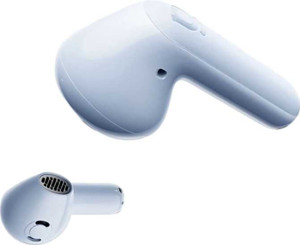
Baseus BS1
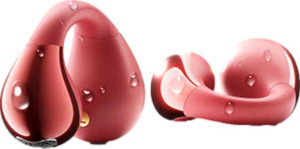
QCY Crossky C30S

Baseus BS1 QCY Crossky C30S

Common Features

  • Both products are water resistant.
  • Both products do not have wires or cables.
  • Both products are not neckband earbuds.
  • Both products do not include wingtips.
  • Both products do not have RGB lighting.
  • Both products have stereo speakers.
  • Both products do not have UV light.
  • Both products do not have a display.
  • Both products have a frequency range of 20 Hz to 20000 Hz.
  • Both products do not have Dolby Atmos support.
  • Both products do not have Dirac Virtuo support.
  • Both products do not have a neodymium magnet.
  • Both products have a rechargeable battery.
  • Both products have a battery level indicator.
  • Both products do not support ambient sound mode.
  • Both products have a mute function.
  • Both products can be used as a headset.
  • Both products have a control panel placed on a device.
  • Both products have four microphones.
  • Both products have a noise-canceling microphone.

Main Differences

  • Baseus BS1 has an earbud fit while QCY Crossky C30S has an open-ear fit.
  • Ingress protection is rated IP55 on Baseus BS1 and IPX5 on QCY Crossky C30S.
  • Baseus BS1 weighs 8.2 g while QCY Crossky C30S weighs 10 g.
  • Driver unit size is 10 mm on Baseus BS1 and 10.8 mm on QCY Crossky C30S.
  • Baseus BS1 does not support spatial audio, while QCY Crossky C30S supports it.
  • Battery life is 8 hours on Baseus BS1 and 6 hours on QCY Crossky C30S.
  • Battery life of the charging case is 42 hours on Baseus BS1 and 34 hours on QCY Crossky C30S.
  • Battery power of the charging case is 600mAh on Baseus BS1 and 460mAh on QCY Crossky C30S.
  • Baseus BS1 does not support LDAC, while QCY Crossky C30S supports it.
Specs Comparison
Baseus BS1

Baseus BS1

QCY Crossky C30S

QCY Crossky C30S

Design:
Fit Earbud Open-ear
Ingress Protection (IP) rating IP55 IPX5
water resistance Water resistant Water resistant
weight 8.2 g 10 g
has no wires or cables
are neckband earbuds
wingtips included
has RGB lighting
has stereo speakers
has UV light
Has a display

The Baseus BS1 and QCY Crossky C30S have distinct designs, with both offering a true wireless experience. The Baseus BS1 is an earbud-style design weighing 8.2 g, while the QCY Crossky C30S features an open-ear design that weighs 10 g, making it slightly heavier. Both are water-resistant, with the Baseus BS1 having an IP55 rating and the QCY Crossky C30S rated at IPX5. This means both products offer protection against water, but the Baseus BS1 provides slightly more robust protection against dust and water compared to the QCY Crossky C30S.

In terms of fit, the Baseus BS1 is an earbud design, while the QCY Crossky C30S adopts an open-ear fit, allowing for different user preferences. Neither product includes wingtips, and neither has RGB lighting or UV light. Both have stereo speakers for sound output. Neither product includes a display.

Both products are wireless with no cables, and neither is a neckband-style earbud. With the weight difference being minimal, the main distinction in design comes down to the fit type and the slightly higher water resistance of the Baseus BS1.

Sound quality:
has active noise cancellation (ANC)
has passive noise reduction
driver unit size 10 mm 10.8 mm
lowest frequency 20 Hz 20 Hz
highest frequency 20000 Hz 20000 Hz
supports spatial audio
has Dolby Atmos
has Dirac Virtuo
has a neodymium magnet

Both the Baseus BS1 and QCY Crossky C30S offer solid sound capabilities, but they differ in a few key areas. Neither product includes active noise cancellation (ANC) or passive noise reduction, so sound isolation will depend on the fit and design of the earbuds. The driver unit size is similar, with the Baseus BS1 featuring a 10 mm driver and the QCY Crossky C30S offering a slightly larger 10.8 mm driver.

Both products have the same frequency range of 20 Hz to 20,000 Hz, meaning they should perform similarly in terms of capturing the full spectrum of audio from low to high frequencies. However, the QCY Crossky C30S supports spatial audio, which the Baseus BS1 does not. Spatial audio can provide a more immersive listening experience with compatible content, giving the QCY an edge in this area.

Neither product supports Dolby Atmos, Dirac Virtuo, nor includes a neodymium magnet. Overall, the sound performance of both products is comparable, but the QCY Crossky C30S has the added advantage of spatial audio support for a more dynamic sound experience.

Power:
Battery life 8 hours 6 hours
Battery life of charging case 42 hours 34 hours
charge time 2 hours 2 hours
battery power (charging case) 600mAh 460mAh
has wireless charging
Has a solar power battery
has a battery level indicator
has a rechargeable battery

The Baseus BS1 and QCY Crossky C30S have similar power specifications, but there are a few differences. The Baseus BS1 offers a slightly longer battery life of 8 hours, compared to the 6 hours of the QCY Crossky C30S. However, the QCY model provides a slightly more compact battery case with 460mAh capacity, while the Baseus BS1 case has a 600mAh capacity, which allows for up to 42 hours of extra charge compared to the QCY's 34 hours.

Both models take the same amount of time to charge—2 hours for a full charge. Neither product offers wireless charging or solar power battery capabilities, and both include a battery level indicator, so users can monitor their remaining charge. Additionally, both products feature rechargeable batteries.

Overall, the Baseus BS1 offers slightly more battery life both for the earbuds and the charging case, but the QCY Crossky C30S is not far behind and still provides solid power performance.

Connectivity:
has fast pairing
Has USB Type-C
Bluetooth version 6 6
has LDAC
has LDHC
has Bluetooth LE Audio
has aptX Adaptive
has aptX Low Latency
has aptX HD
has aptX
has aptX Lossless
has aptX Voice
has Auracast
maximum Bluetooth range 10 m 10 m
supports Bluetooth pairing using NFC
Can be used wirelessly
has AAC

The Baseus BS1 and QCY Crossky C30S have very similar connectivity features. Both products support USB Type-C for charging and Bluetooth version 6, ensuring modern and efficient wireless communication. The maximum Bluetooth range for both models is 10 meters, and both can be used wirelessly without issues. Additionally, both support AAC for high-quality audio transmission over Bluetooth.

Neither product offers fast pairing, NFC Bluetooth pairing, or Bluetooth LE Audio. However, the QCY Crossky C30S does have LDAC support, while the Baseus BS1 does not. LDAC is a codec that allows for higher resolution audio streaming over Bluetooth, which gives the QCY an advantage for users with compatible devices.

Both models also lack support for aptX (Adaptive, Low Latency, HD, Lossless, or Voice) and Auracast, making them comparable in most other connectivity aspects, with the QCY offering an additional codec for higher audio quality.

Features:
release date August 2025 July 2025
has ambient sound mode
has in/on-ear detection
Supports fast charging
can read notifications
Has a built-in translator
has a mute function
can be used as a headset
control panel placed on a device
Has voice prompts
travel bag is included
Has an in-line control panel
Has a temperature sensor
Has a built-in camera remote control function

The Baseus BS1 and QCY Crossky C30S share many similar features, with both models offering the same set of core functions. Neither product has ambient sound mode or in/on-ear detection, and both support fast charging, allowing for quicker power-ups. Both also include a mute function, the ability to be used as a headset, a control panel placed on the device, and voice prompts for user interaction.

In addition, both products come with a travel bag included, enhancing their portability. Neither model has an in-line control panel, a temperature sensor, or a built-in camera remote control function, meaning they are both designed with similar feature sets in terms of extras.

Overall, the Baseus BS1 and QCY Crossky C30S are closely matched in this category, offering the same key features with no significant differences between them.

Microphone:
number of microphones 4 4
has a noise-canceling microphone

Both the Baseus BS1 and QCY Crossky C30S have identical microphone specifications. Each model is equipped with 4 microphones and features a noise-canceling microphone. This means both products should offer similar microphone performance, ensuring clear voice capture while reducing background noise during calls or recordings.

With the same microphone setup, users can expect comparable sound quality in terms of voice clarity from both models.

Comparison Summary

This is a specification comparison between the Baseus BS1 and QCY Crossky C30S. Both products are water resistant, do not have wires or cables, and have stereo speakers. However, the Baseus BS1 has an earbud fit, while the QCY Crossky C30S features an open-ear design. The Ingress Protection rating is IP55 for the Baseus BS1 and IPX5 for the QCY Crossky C30S. Additionally, the Baseus BS1 offers a longer battery life of 8 hours compared to the 6 hours on the QCY Crossky C30S. The charging case also has a larger battery power of 600mAh on the Baseus BS1, while the QCY Crossky C30S has 460mAh.