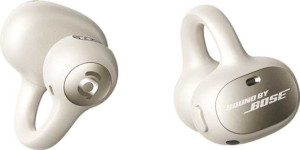
Baseus Inspire XC1
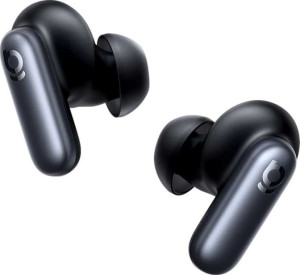
Baseus Inspire XP1

Baseus Inspire XC1 Baseus Inspire XP1

Overview

Welcome to our detailed specification comparison between the Baseus Inspire XC1 and the Baseus Inspire XP1. Both are wireless earbuds sharing a solid foundation — including Bluetooth 6.1, fast charging, and an 8-hour battery life — yet they take notably different approaches to fit and noise management. Whether you care about audio codec support or advanced call quality, this side-by-side breakdown will help you decide which model best suits your lifestyle.

Common Features

  • Neither product has wires or cables.
  • Neither product is a neckband earbud design.
  • Neither product includes wingtips.
  • Neither product has RGB lighting.
  • Both products have stereo speakers.
  • Neither product has a UV light.
  • Neither product has a display.
  • Both products have a lowest frequency of 20 Hz.
  • Both products have a highest frequency of 20000 Hz.
  • Spatial audio support is not available on either product.
  • Dolby Atmos support is not available on either product.
  • Dirac Virtuo support is not available on either product.
  • Neither product has a neodymium magnet.
  • Both products have a battery life of 8 hours.
  • Both products have a charge time of 1.5 hours.
  • Wireless charging is not available on either product.
  • Neither product has a solar power battery.
  • Both products have a battery level indicator.
  • Both products have a rechargeable battery.
  • Fast pairing is not available on either product.
  • Both products have USB Type-C.
  • Both products use Bluetooth version 6.1.
  • LDHC support is not available on either product.
  • Bluetooth LE Audio support is not available on either product.
  • aptX Adaptive support is not available on either product.
  • aptX Low Latency support is not available on either product.
  • aptX HD support is not available on either product.
  • In/on-ear detection is not available on either product.
  • Both products support fast charging.
  • Neither product can read notifications.
  • Both products have a mute function.
  • Both products can be used as a headset.
  • Both products have a control panel placed on the device.
  • Both products have voice prompts.
  • A travel bag is included with both products.
  • Both products have a noise-canceling microphone.
  • Both products support Dolby Audio.

Main Differences

  • The fit is open-ear on the Baseus Inspire XC1 and in-ear on the Baseus Inspire XP1.
  • Active noise cancellation (ANC) is present on the Baseus Inspire XP1 but not available on the Baseus Inspire XC1.
  • Passive noise reduction is present on the Baseus Inspire XP1 but not available on the Baseus Inspire XC1.
  • The battery life of the charging case is 32 hours on the Baseus Inspire XC1 and 36 hours on the Baseus Inspire XP1.
  • LDAC support is present on the Baseus Inspire XC1 but not available on the Baseus Inspire XP1.
  • AAC support is present on the Baseus Inspire XC1 but not available on the Baseus Inspire XP1.
  • Ambient sound mode is present on the Baseus Inspire XP1 but not available on the Baseus Inspire XC1.
  • The number of microphones is 4 on the Baseus Inspire XC1 and 6 on the Baseus Inspire XP1.
Specs Comparison
Baseus Inspire XC1

Baseus Inspire XC1

Baseus Inspire XP1

Baseus Inspire XP1

Design:
Fit Open-ear In-ear
has no wires or cables
are neckband earbuds
wingtips included
has RGB lighting
has stereo speakers
has UV light
Has a display

The most significant design difference between these two earbuds comes down to a single but consequential spec: fit style. The Baseus Inspire XC1 uses an open-ear design, meaning the drivers sit outside the ear canal rather than inside it. The Baseus Inspire XP1, by contrast, adopts a traditional in-ear fit, with ear tips that insert directly into the ear canal.

This distinction has real-world implications far beyond comfort preference. An open-ear design like the XC1 preserves situational awareness — ambient sound passes through freely, making it a safer choice for outdoor activities, commuting, or office environments where you need to stay alert. However, open-ear fits typically sacrifice passive noise isolation and bass response. The in-ear XP1 creates a physical seal that naturally blocks external noise and tends to deliver more impactful low-frequency audio, but at the cost of that environmental awareness.

Both models are fully wireless, lack neckband cables, and share stereo speaker support — so beyond fit, their physical design philosophy is largely equivalent. The edge here depends entirely on use case: the XC1 has the advantage for users who prioritize awareness and all-day wearability, while the XP1 has the advantage for those seeking better passive isolation and richer bass reproduction.

Sound quality:
has active noise cancellation (ANC)
has passive noise reduction
lowest frequency 20 Hz 20 Hz
highest frequency 20000 Hz 20000 Hz
supports spatial audio
has Dolby Atmos
has Dirac Virtuo
has a neodymium magnet

Both earbuds cover the standard 20 Hz–20,000 Hz frequency range, meaning neither has a measurable edge in raw frequency reproduction on paper. Neither model supports spatial audio, Dolby Atmos, or Dirac Virtuo, so advanced soundstage processing is off the table for both.

Where the two diverge sharply is noise management. The XP1 brings both active noise cancellation (ANC) and passive noise reduction to the table — a meaningful combination. ANC uses microphones and signal processing to actively counter ambient sound waves, while the physical seal of its in-ear design adds a second layer of passive attenuation. Together, these two mechanisms can make a substantial difference in noisy environments like public transit or open offices. The XC1, by contrast, offers neither — its open-ear design inherently lets sound pass through, and no ANC is present to compensate.

The XP1 holds a clear advantage in this category. For listeners who prioritize immersion and noise isolation, the XP1's dual-layer noise management is a decisive differentiator. The XC1 is not designed for noise-blocking scenarios, and users should go in with that expectation set accordingly.

Power:
Battery life 8 hours 8 hours
Battery life of charging case 32 hours 36 hours
charge time 1.5 hours 1.5 hours
has wireless charging
Has a solar power battery
has a battery level indicator
has a rechargeable battery

On per-session battery life, these two are perfectly matched: both deliver 8 hours of playback on a single charge and refill in 1.5 hours. For most daily use patterns — commutes, workouts, long work sessions — 8 hours is comfortably sufficient without needing to dip into the case mid-day.

The only measurable difference surfaces in the charging case capacity. The XP1's case extends total battery life to 36 hours, compared to 32 hours for the XC1. That 4-hour gap translates to roughly one additional full earbud charge stored in the case — a modest but real advantage for multi-day travel or users who charge infrequently. Neither model supports wireless charging, so both require a cable when topping up the case.

The XP1 has a narrow edge in this category solely due to its higher case capacity. For most users the difference will rarely be felt day-to-day, but for those who push their earbuds hard across several days between charges, the XP1's extra headroom provides a small but tangible buffer.

Connectivity:
has fast pairing
Has USB Type-C
Bluetooth version 6.1 6.1
has LDAC
has LDHC
has Bluetooth LE Audio
has aptX Adaptive
has aptX Low Latency
has aptX HD
has aptX
has aptX Lossless
has aptX Voice
has Auracast
maximum Bluetooth range 10 m 10 m
supports Bluetooth pairing using NFC
Can be used wirelessly
has AAC

The structural connectivity specs are identical across the board: both run Bluetooth 6.1, cap out at a 10 m wireless range, charge via USB-C, and lack fast pairing or NFC. For the vast majority of listening scenarios, this parity means neither model has an inherent connection stability or range advantage over the other.

The meaningful split comes down to audio codec support. The XC1 supports both LDAC and AAC — a notably strong combination. LDAC, developed by Sony, transmits up to three times the data of standard Bluetooth codecs, enabling near-lossless audio quality when paired with a compatible source device. AAC adds efficient compression quality for Apple device users. The XP1 supports neither, meaning it falls back to the SBC baseline codec — functional, but audibly inferior to LDAC on high-quality source material.

The XC1 has a clear advantage in connectivity for audio quality purposes. For listeners streaming high-resolution files or using LDAC-capable Android devices, the difference in perceived audio fidelity can be substantial. The XP1's codec limitations are a genuine drawback for discerning listeners, even if casual users streaming compressed audio may not notice.

Features:
release date September 2025 September 2025
has ambient sound mode
has in/on-ear detection
Supports fast charging
can read notifications
has a mute function
can be used as a headset
control panel placed on a device
Has voice prompts
travel bag is included
Has an in-line control panel
Has a temperature sensor
Has a built-in camera remote control function

Across the practical day-to-day feature set, these two earbuds are remarkably alike — both support fast charging, on-device controls, voice prompts, a mute function, headset use for calls, and even include a travel bag. For most users, this shared baseline means neither model feels stripped down relative to the other.

The single differentiator in this category is ambient sound mode, which the XP1 has and the XC1 lacks. Ambient mode uses the earbuds' external microphones to pipe in surrounding sound intentionally, letting the wearer stay aware of their environment without removing the earbuds. For an in-ear design like the XP1 — which otherwise seals off the ear canal — this feature is particularly valuable, effectively giving users the choice between full immersion and situational awareness on demand.

The XP1 holds the edge here, and the context makes it especially meaningful: because the XP1's in-ear fit blocks ambient sound by default, ambient mode directly compensates for that limitation. The XC1's open-ear design already allows natural sound through, so the absence of ambient mode is far less consequential for that product. Still, as an active, controllable feature, its presence on the XP1 adds genuine versatility.

Microphone:
number of microphones 4 6
has a noise-canceling microphone

Both earbuds feature noise-canceling microphones, so call clarity in moderately noisy environments is a baseline expectation for either model. The real differentiator here is microphone count: the XC1 carries 4 microphones, while the XP1 steps up to 6.

More microphones generally enable more sophisticated beamforming and noise isolation algorithms. With additional pickup points, the system has more acoustic data to work with when separating the speaker's voice from background noise — a meaningful advantage in windy outdoor settings, crowded spaces, or during calls while in motion. The XP1's extra two microphones also align with its ANC capability noted in other spec groups, where additional mics serve double duty for both environmental noise cancellation and voice pickup.

The XP1 holds the edge in this category. While both models offer noise-canceling mic functionality, the higher microphone count on the XP1 provides a structural advantage for call quality and voice intelligibility in challenging acoustic environments.

Miscellaneous:
has Dolby Audio

The only spec in this group is Dolby Audio support, and both the Baseus Inspire XC1 and XP1 share it equally. Dolby Audio is a broad audio processing certification that typically encompasses dynamic range optimization, virtual surround cues, and tuning enhancements intended to improve perceived sound quality across different content types.

This is a straightforward tie — neither product holds any advantage over the other based on the available data in this category. Both users can expect the same Dolby Audio processing baseline regardless of which model they choose.

Comparison Summary & Verdict

After examining every specification, a clear picture emerges for each audience. The Baseus Inspire XC1 suits listeners who prefer an open-ear fit and value high-quality audio transmission, thanks to its LDAC and AAC codec support — making it a strong pick for audiophiles who want wireless flexibility without sacrificing sound fidelity. The Baseus Inspire XP1, on the other hand, is built for users who need more immersive, distraction-free listening: its active noise cancellation, passive noise reduction, ambient sound mode, and 6-microphone array make it ideal for commuters, remote workers, and anyone frequently on calls. Its slightly larger 36-hour case battery also edges ahead for heavy travelers. Neither product is objectively superior — the right choice simply depends on whether you prioritize openness and codec quality or isolation and call performance.

Baseus Inspire XC1
Buy Baseus Inspire XC1 if...

Buy the Baseus Inspire XC1 if you prefer an open-ear fit and want premium codec support with LDAC and AAC for higher-fidelity wireless audio.

Baseus Inspire XP1
Buy Baseus Inspire XP1 if...

Buy the Baseus Inspire XP1 if you need active noise cancellation, ambient sound mode, and a larger 6-microphone setup for cleaner calls and focused listening.