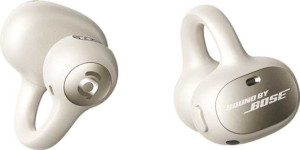
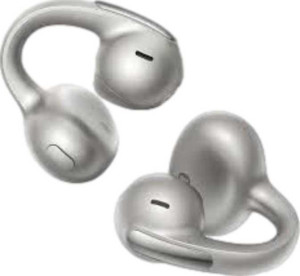
Baseus Inspire XC1
Baseus MC1 Pro

Baseus Inspire XC1 Baseus MC1 Pro

Overview

Welcome to our in-depth specification comparison between the Baseus Inspire XC1 and the Baseus MC1 Pro, two open-ear wireless earbuds that share a surprisingly strong foundation. While both models offer LDAC support, fast charging, and a noise-canceling microphone, the real question lies in the details: how do they differ in water protection, audio frequency range, and Bluetooth technology? Read on to find out which one is the better fit for your lifestyle.

Common Features

  • Both products have an open-ear fit.
  • Neither product uses wires or cables.
  • Neither product is a neckband earbud design.
  • Wingtips are not included with either product.
  • RGB lighting is not available on either product.
  • Both products feature stereo speakers.
  • UV light is not present on either product.
  • Neither product has a display.
  • Neither product has active noise cancellation.
  • Neither product has passive noise reduction.
  • Both products share a lowest frequency of 20 Hz.
  • Spatial audio is not supported on either product.
  • Dolby Atmos is not available on either product.
  • Dirac Virtuo is not available on either product.
  • A neodymium magnet is not present in either product.
  • Both products offer 8 hours of battery life.
  • Both products provide 32 hours of battery life from the charging case.
  • Both products have a charge time of 1.5 hours.
  • Wireless charging is not available on either product.
  • Neither product has a solar power battery.
  • Both products include a battery level indicator.
  • Both products have a rechargeable battery.
  • Fast pairing is not available on either product.
  • Both products feature a USB Type-C connection.
  • Both products support LDAC.
  • LDHC is not supported on either product.
  • Bluetooth LE Audio is not supported on either product.
  • aptX Adaptive is not supported on either product.
  • aptX Low Latency is not supported on either product.
  • aptX HD is not supported on either product.
  • Ambient sound mode is not available on either product.
  • In/on-ear detection is not present on either product.
  • A find device feature is not available on either product.
  • Both products support fast charging.
  • Neither product can read notifications.
  • Both products include a mute function.
  • Both products can be used as a headset.
  • Both products have a control panel placed on the device.
  • Both products feature a noise-canceling microphone.

Main Differences

  • Ingress Protection rating is IP66 on Baseus Inspire XC1 and IP67 on Baseus MC1 Pro.
  • Water resistance is rated as water resistant on Baseus Inspire XC1, while Baseus MC1 Pro is fully waterproof.
  • The highest frequency reaches 20000 Hz on Baseus Inspire XC1 and 40000 Hz on Baseus MC1 Pro.
  • Bluetooth version is 6.1 on Baseus Inspire XC1 and 6.0 on Baseus MC1 Pro.
Specs Comparison
Baseus Inspire XC1

Baseus Inspire XC1

Baseus MC1 Pro

Baseus MC1 Pro

Design:
Fit Open-ear Open-ear
Ingress Protection (IP) rating IP66 IP67
water resistance Water resistant Waterproof
has no wires or cables
are neckband earbuds
wingtips included
has RGB lighting
has stereo speakers
has UV light
Has a display

Both the Baseus Inspire XC1 and the Baseus MC1 Pro share the same fundamental design philosophy: fully wireless, open-ear earbuds with stereo playback and no frills like RGB lighting or a display. For users, this means a clean, cable-free experience with situational awareness preserved — a hallmark of the open-ear form factor.

The one meaningful differentiator in this group is water resistance. The Inspire XC1 carries an IP66 rating, which protects against powerful water jets — solid for workouts and light rain. The MC1 Pro steps up to IP67, adding the ability to withstand brief submersion in up to one meter of water. In practice, this distinction matters if the earbuds might be exposed to heavy rain, splashing, or accidental drops in water, where IP67 provides a meaningfully safer margin.

Overall, the MC1 Pro holds a clear edge in this category purely on the strength of its superior ingress protection. All other design attributes are identical between the two, so the IP67 rating is the deciding factor for users who prioritize durability in wet or unpredictable environments.

Sound quality:
has active noise cancellation (ANC)
has passive noise reduction
lowest frequency 20 Hz 20 Hz
highest frequency 20000 Hz 40000 Hz
supports spatial audio
has Dolby Atmos
has Dirac Virtuo
has a neodymium magnet

At the foundation, both earbuds share the same noise isolation story — neither offers active noise cancellation nor passive noise reduction, which is expected for open-ear designs. Situational awareness is preserved by default, but users in loud environments should not expect any sound blocking from either option.

The single differentiator in this group is the upper frequency limit. The Inspire XC1 reaches 20,000 Hz — the conventional ceiling of human hearing — while the MC1 Pro extends to 40,000 Hz, venturing into ultrasonic territory. In practice, frequencies above 20 kHz are inaudible to most people, so this difference rarely translates into a perceptible improvement for everyday listening. That said, proponents of high-resolution audio argue that a wider frequency envelope can subtly improve perceived detail and airiness in the upper registers, even if the ultrasonic content itself is not consciously heard.

On balance, the MC1 Pro holds a technical edge in this category due to its extended high-frequency range. For the majority of listeners, the real-world impact will be minimal, but audiophiles or hi-res audio enthusiasts may find it a meaningful advantage. In all other sound quality dimensions captured here, the two products are evenly matched.

Power:
Battery life 8 hours 8 hours
Battery life of charging case 32 hours 32 hours
charge time 1.5 hours 1.5 hours
has wireless charging
Has a solar power battery
has a battery level indicator
has a rechargeable battery

Across every power-related specification, the Baseus Inspire XC1 and MC1 Pro are a perfect match. Both deliver 8 hours of battery life per charge and extend to a total of 32 hours with the charging case — a combined endurance that comfortably covers multi-day use without needing to reach for a cable. A 1.5-hour charge time to refill the earbuds is reasonable, though neither model offers wireless charging for added convenience.

The presence of a battery level indicator on both is a practical touch, sparing users from unexpected shutdowns. The absence of wireless or solar charging is a shared limitation, but not an unusual one at this product tier.

This category is a clear tie. Every data point is identical, so power endurance and charging capabilities offer no basis for choosing one over the other. Users should look to other specification groups — such as Design or Sound Quality — to make their decision.

Connectivity:
has fast pairing
Has USB Type-C
Bluetooth version 6.1 6
has LDAC
has LDHC
has Bluetooth LE Audio
has aptX Adaptive
has aptX Low Latency
has aptX HD
has aptX
has aptX Lossless
has aptX Voice
has Auracast
maximum Bluetooth range 10 m 10 m
supports Bluetooth pairing using NFC
Can be used wirelessly
has AAC

Connectivity between these two is largely aligned. Both support LDAC and AAC — a strong codec pairing that covers high-resolution wireless audio for Android users via LDAC, and efficient compression for Apple devices via AAC. Neither model includes any aptX variants or Bluetooth LE Audio, and both are capped at a 10-meter Bluetooth range, which is standard for close-proximity personal audio use.

The one distinguishing factor is the Bluetooth version. The Inspire XC1 runs on Bluetooth 6.1 versus the MC1 Pro's Bluetooth 6.0. While both are modern and capable, the newer 6.1 revision introduces refinements that can improve connection stability and efficiency. In day-to-day use, the gap between these two versions is subtle rather than transformative, but it does give the XC1 a marginal forward-looking advantage.

The Inspire XC1 holds a narrow edge in this category, solely on the basis of its newer Bluetooth version. For most users the practical difference will be minimal, especially given that both products otherwise share identical connectivity features — including the absence of fast pairing, which is a shared shortcoming worth noting for users who frequently switch between devices.

Features:
release date September 2025 May 2025
has ambient sound mode
has in/on-ear detection
has find device feature
Supports fast charging
can read notifications
has a mute function
can be used as a headset
control panel placed on a device
Has voice prompts
travel bag is included
Has an in-line control panel
Has a temperature sensor
Has a built-in camera remote control function

When it comes to features, the Inspire XC1 and MC1 Pro are mirror images of each other. Both support fast charging, include on-device controls, offer voice prompts, and ship with a travel bag — a practical bundle that covers the essentials for commuters and frequent travelers alike.

Notably, both function as headsets for calls and include a mute function, making them viable for remote work or on-the-go communication. The absence of ambient sound mode or in-ear detection is a shared limitation that more feature-rich competitors often address, but neither product distinguishes itself from the other on these fronts.

This category is an unambiguous tie — every feature is identical across both models. Users prioritizing a richer feature set, such as find-my-device or ambient mode, will find neither product satisfies that need, but those looking for a straightforward, practical earbuds experience will find both equally equipped.

Microphone:
has a noise-canceling microphone

Microphone capabilities tell a straightforward story here: both the Inspire XC1 and the MC1 Pro are equipped with a noise-canceling microphone, which is a meaningful inclusion for open-ear earbuds. Given that this form factor offers no passive sound isolation, a noise-canceling mic helps compensate by filtering out ambient noise on the caller's end — particularly useful in busy streets, offices, or public spaces.

With only one data point available for this group and both products sharing it equally, there is no differentiator to analyze further. This is a straightforward tie — neither the XC1 nor the MC1 Pro holds any microphone advantage over the other based on the available specifications.

Comparison Summary & Verdict

After examining every specification, the Baseus Inspire XC1 and Baseus MC1 Pro emerge as closely matched open-ear earbuds with identical battery life, charging speed, and core feature sets. The key differentiators come down to three areas. The MC1 Pro holds an edge in water protection, carrying an IP67 fully waterproof rating versus the XC1's IP66, making it the stronger choice for intense workouts or rainy conditions. The MC1 Pro also extends its frequency range up to 40000 Hz, appealing to audiophiles who value high-resolution audio detail. The Inspire XC1, however, counters with the newer Bluetooth 6.1 standard, potentially offering a more stable and efficient wireless connection. Choose based on your priorities: durability and audio range favor the MC1 Pro, while cutting-edge connectivity favors the XC1.

Baseus Inspire XC1
Buy Baseus Inspire XC1 if...

Buy the Baseus Inspire XC1 if you want the latest Bluetooth 6.1 connectivity for a potentially more stable wireless experience, and can accept a slightly lower IP66 water-resistance rating.

Baseus MC1 Pro
Buy Baseus MC1 Pro if...

Buy the Baseus MC1 Pro if you need full IP67 waterproof protection for active or outdoor use and want a wider frequency range of up to 40000 Hz for higher-resolution audio playback.